Freezing of Water: Science Explained
By Dr. Zubair Khalid, DVM, MS, PhD ·
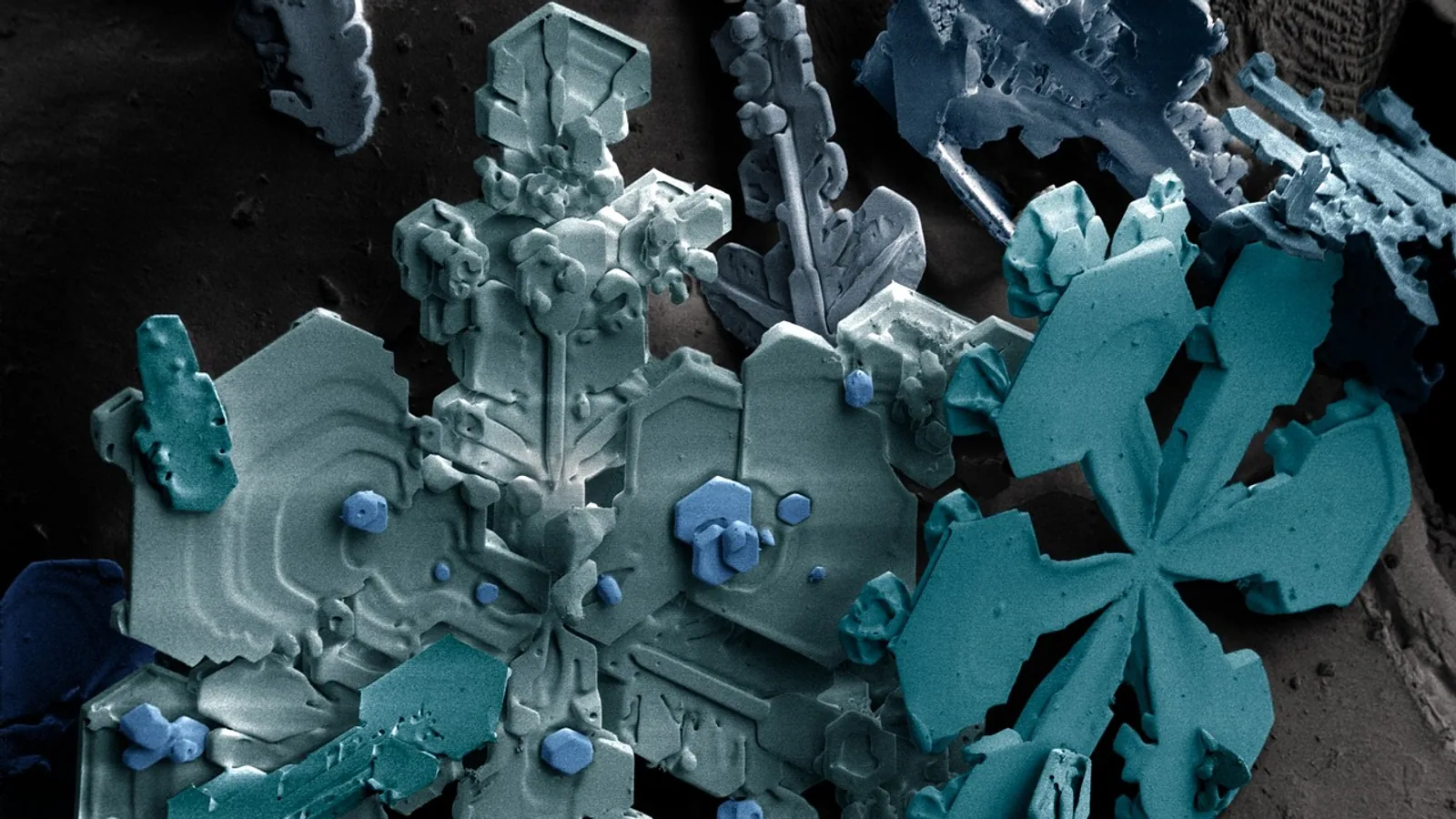
Freezing of water is the phase change in which liquid water molecules lock into a hexagonal crystal lattice and become ice, releasing 334 joules of heat per gram in the process. The freezing of water begins at 0 °C only when a nucleation site is present, because a nucleus must form before the crystal lattice can grow, and without one, pure water can remain liquid down to roughly -40 °C.
That single fact reshapes how you read almost everything about cold and life. A puddle, a cloud droplet, a fish swimming under Antarctic ice, and a cell in a cryopreservation vial all sit at the same temperature but behave differently because of nucleation. Understanding freezing of water means understanding three separate questions: when does the phase change start, how fast does it proceed, and what stops it. This guide answers all three with the physics, the numbers, and the biology that evolved to control it.
What Is Freezing of Water?
Freezing of water is the transition from the liquid phase to the solid phase (ice Ih, the ordinary hexagonal ice you see in a freezer) that occurs when water molecules lose enough thermal energy to settle into a repeating hydrogen-bonded lattice. Each water molecule can hydrogen bond to up to four neighbors, and in ice those bonds form a rigid tetrahedral network that holds the molecules farther apart than they sit in liquid water. That is why ice floats: the ordered lattice is less dense than the disordered liquid.
The phase change is not a gradual stiffening. It is a discrete event with a defined energy cost, or rather an energy release. When one gram of liquid water at 0 °C becomes ice at 0 °C, it releases 334 joules. This quantity is the latent heat of fusion. It is the same 334 J/g whether the water freezes in a cloud, in a fish's tissues, or in a laboratory freezer, because it reflects the energy stored in hydrogen bonds that must be given up when the lattice forms.
Why Freezing Matters Beyond the Weather
The freezing of water sets the thermal floor for life on Earth. Cells are mostly water, and ice crystals puncture membranes, concentrate solutes, and dehydrate proteins. Organisms that live below 0 °C must either prevent ice from forming, control where it forms, or tolerate it. The proteins they evolved to do this are now tools in food science, cryopreservation, and materials engineering.
Freezing also matters in the kitchen and the clinic. Frozen dough quality depends on ice crystal size and on how much water remains unfrozen [1]. Organ preservation for transplantation depends on suppressing uncontrolled ice nucleation while keeping tissue cold [2]. Every one of these applications rests on the same physical rules.
The Temperature-Energy Chart: Following Water Through the Phase Change
A temperature-energy chart (physicists call it a cooling curve) plots temperature on the vertical axis and the heat removed on the horizontal axis. If you cool one gram of water from room temperature, the chart has three distinct regions.
Region 1: Cooling the liquid. From 25 °C down to 0 °C, temperature falls steadily as you remove heat. The specific heat of liquid water is about 4.18 J per gram per degree Celsius, so cooling one gram by 25 degrees removes roughly 105 joules.
Region 2: The flat plateau at 0 °C. Once the water reaches 0 °C and freezing begins, the temperature stops falling. You keep removing heat, but the temperature does not change until all the liquid has become ice. The length of this plateau is the latent heat of fusion: 334 J/g. This is the single most important number in the chart. It means freezing one gram of water releases as much heat as cooling that same gram by about 80 °C. The plateau is flat because the energy you remove is spent converting liquid to solid, not lowering temperature.
Region 3: Cooling the ice. After all the water has frozen, temperature falls again. The specific heat of ice is about 2.09 J per gram per degree Celsius, roughly half that of liquid water.
| Stage | What happens | Energy involved (per gram) |
|---|---|---|
| Cooling liquid water | Temperature falls toward 0 °C | ~4.18 J per °C |
| Phase change at 0 °C | Liquid becomes ice, temperature holds steady | 334 J released (latent heat of fusion) |
| Cooling ice | Temperature falls below 0 °C | ~2.09 J per °C |
| Supercooled liquid (no nucleus) | Stays liquid below 0 °C | No latent heat released yet |
| Homogeneous nucleation limit | Spontaneous freezing near -40 °C | Latent heat released suddenly |
The plateau is where most student confusion lives. If you plot the chart and see a flat line at 0 °C, that line is not a measurement error. It is the latent heat doing its work.
Nucleation: Why Water Needs a Starting Point
A crystal cannot appear from nothing. Some tiny ordered cluster of molecules must reach a critical size before the ice lattice becomes stable and grows. That initial cluster is a nucleus, and the process of forming it is nucleation. This is the concept that explains why the freezing of water does not simply happen the moment a thermometer reads 0 °C.
Homogeneous Nucleation
Homogeneous nucleation is nucleation that happens spontaneously in pure water with no foreign surface helping it along. It requires the water to be cooled well below 0 °C. As temperature drops, random molecular motion produces transient ice-like clusters. Most fall apart. Only when the water reaches roughly -40 °C do clusters form fast enough and survive long enough to trigger freezing. That temperature, about -40 °C, is the homogeneous nucleation limit for pure water. Below it, liquid water essentially cannot persist.
Reaching -40 °C without freezing is called deep supercooling. Supercooled water is still liquid, still flowing, still a solvent, but it is metastable. Any disturbance that creates a nucleus can trigger sudden freezing. This is why supercooled water can flash to ice when you tap the container or drop in a seed crystal.
Heterogeneous Nucleation
Heterogeneous nucleation is nucleation assisted by a foreign surface, particle, or protein. A dust grain, a mineral surface, a bacterium, or a scratch on a container wall can template the ice lattice and lower the energy barrier for nucleus formation. Because the barrier is lower, freezing starts much closer to 0 °C.
Heterogeneous nucleation is the rule in the real world. Pure water with no surfaces and no particles is rare outside a carefully cleaned laboratory vial. Most natural water freezes at temperatures well above -40 °C because something in it acts as a nucleator.
Ice Nucleation Proteins: Biology That Starts Freezing
Some bacteria build proteins that deliberately promote heterogeneous nucleation. Ice nucleation proteins (INPs) allow water to freeze at high subzero temperatures, and certain plant-associating bacteria use them as a pathogenic tool: the ice they trigger damages plant tissue and gives the bacteria access to nutrients [3]. The best-studied example is Pseudomonas syringae.
The structure explains the function. A predicted model of the Pseudomonas borealis INP shows a beta-helical fold with internal serine and glutamine ladders for stability, and it is predicted to dimerize by burying a solvent-exposed tyrosine ladder [4]. Dimerization doubles the width and increases the length of the ice-active surface, presenting identical ice-forming surfaces on both sides of the protein [4]. That large, repetitive surface acts as a template. A 96-residue fragment of the P. syringae INP can shape an ice crystal into a hexagonal bipyramid, the same morphology antifreeze proteins produce, and it retards ice growth in a nonlinear, concentration-dependent way [5].
The size difference between nucleators and inhibitors is the key. Theoretical analysis shows that the distinguishing feature between an ice inhibitor and an ice nucleator is the size of the ice-interacting surface: INPs present a surface larger than the critical ice embryo needed for growth, while antifreeze proteins are small enough to bind ice and block growth without themselves nucleating [6]. Experiments confirm this. Two antifreeze proteins, fish type-III AFP and beetle TmAFP, can both inhibit ice growth and trigger nucleation above the homogeneous freezing temperature, and molecular size predicts their nucleation temperature well [7]. Simulations of the P. syringae INP identify two distinct ice-binding sites on opposite sides of the beta-helix, one using an anchored clathrate motif and one ice-like, both comparably efficient [8]. Aggregation matters too: assemblies of at most 34 INP molecules already reach high nucleation efficiency in modeling [9].
Supercooling: Liquid Water Below Zero
Supercooling is the state of liquid water below its freezing point. It exists whenever nucleation is slow relative to cooling. The deeper the supercooling, the more the water is out of equilibrium and the more energy it will release when it finally freezes.
Supercooled water is not just cold water. Its physical properties shift. Simulations of supercooled NaCl and LiCl solutions show a pronounced minimum in thermal conductivity near 220 K, coinciding with maxima in isothermal compressibility and minima in the speed of sound, signatures of critical fluctuations tied to a hypothesized liquid-liquid phase transition between low-density and high-density liquid water [10]. The anomalies fade as salt concentration rises and vanish at 4 molal, suggesting the transition is suppressed [10]. Simulations of supercooled nanodroplets show the same liquid-liquid transition can be driven by Laplace pressure as droplet size shrinks [11].
For practical freezing, the takeaway is simpler. Supercooling delays the phase change. It does not prevent it forever. Anything that supplies a nucleus, whether a particle, a surface, or a protein, ends the delay.
Suppressing Nucleation
Researchers actively try to suppress nucleation to protect cells and tissues. Surface vibrations do it two ways: they induce acoustothermal heating in the adjacent liquid, reducing supercooling and lowering nucleation rates, and they kinetically disrupt the interfacial water structure, increasing molecular mobility and dispersing the spatial arrangement of molecules so stable pre-nucleation structures cannot form [12]. Structural analysis confirms that both the population of ice-like clusters and the tetrahedral order of interfacial water decrease under vibration [12]. Kinetic disruption alone can suppress freezing even when the liquid temperature is held constant [12].
A separate hypothesis proposes that bicarbonate ions, generated when CO2 dissolves and adsorbs on hydrophobic interfaces, coat solid particles that would otherwise act as nucleators, retarding freezing and enhancing supercooling [13]. This idea is offered as an explanation for the deep supercooling seen in sealed, boiled, and oil-topped water samples [13].
Antifreeze Proteins: Depressing the Freezing Point and Stopping Ice Growth
Antifreeze proteins (AFPs) are proteins that bind to ice crystal surfaces and inhibit their growth. They do not melt ice. They keep it from growing, and they keep small crystals from merging into large ones. The gap between the temperature at which ice melts and the temperature at which it grows in the presence of AFP is called thermal hysteresis.
The magnitude of the effect is modest in most fish. Fish AFPs typically depress the freezing point by about 1 to 2 °C. That sounds small, and it is, but it is enough. Antarctic fish live in water at roughly -1.9 °C, and a 1 to 2 °C depression of the freezing point is the difference between liquid blood and lethal ice.
Antarctic Fish
Antarctic notothenioid fish produce antifreeze glycoproteins that circulate in blood and body fluids. These molecules adsorb onto ice crystal surfaces and prevent the crystals from growing. The fish still supercools slightly, but the glycoproteins keep any small ice nuclei from expanding into damaging crystals. Without them, seawater at -1.9 °C would freeze the fish's tissues.
Insects
Insect antifreeze proteins are often hyperactive, meaning they produce larger thermal hysteresis than fish AFPs. The beetle Tenebrio molitor produces TmAFP, a hyperactive AFP that has become a standard laboratory model. In vitrified dimethylsulfoxide solutions, both fish type-III AFP and TmAFP depress devitrification at -80 °C, and when devitrification does occur, they depress ice recrystallization during warming [14]. That result matters because it shows AFPs remain active at temperatures below the homogeneous nucleation regime, far colder than their natural environment [14].
Ice Recrystallization Inhibition
Ice recrystallization is the process by which small ice crystals merge into larger ones over time, even at constant temperature. Large crystals do more mechanical damage to cells than small ones. AFPs inhibit recrystallization by binding to ice surfaces and blocking the migration of water molecules from small crystals to large ones. This function is distinct from thermal hysteresis and is often the more important one for preserving frozen tissue and food.
Plant and Bacterial Antifreeze Proteins
Plants make AFPs too. Recombinant AFP from perennial ryegrass (Lolium perenne, LpAFP) was combined with INP preparations from Pseudomonas syringae, and the ice nucleation point of the INP was depressed by up to 1.9 °C in the presence of LpAFP [3]. A recombinant fish AFP did not lower the INP-imposed freezing point in the same assay [3]. The authors propose that plant AFPs may act as a defensive strategy against ice-nucleating bacteria, in addition to controlling ice growth [3].
The Arctic plant growth-promoting rhizobacterium Pseudomonas putida GR12-2 secretes an AFP that also shows a low level of ice nucleation activity, an unusual combination [15]. The purified native protein is a 164 kDa lipoglycoprotein, and its carbohydrate component is required for ice nucleation activity [15].
Snow fleas (the arthropod Collembola) collected in northern Israel produce ice-binding proteins with hyperactive antifreeze properties and low ice-nucleation activity consistent with their small size [16].
Solutes and Colligative Properties: Why Salt Water Freezes Lower
Dissolving a solute in water lowers its freezing point. This is a colligative property, meaning it depends on the number of dissolved particles, not on what those particles are. One mole of dissolved particles lowers the freezing point of water by about 1.86 °C, a value called the cryoscopic constant.
The mechanism is straightforward. Solute particles disrupt the hydrogen-bond network and make it harder for water molecules to organize into the ice lattice. The freezing point drops in proportion to solute concentration. This is why seawater freezes near -1.9 °C rather than 0 °C, and why road salt melts ice: the salt dissolves in the thin liquid layer on the ice surface and lowers its freezing point, so the ice melts.
Colligative freezing point depression is distinct from the effect of antifreeze proteins. Solutes lower the temperature at which ice is thermodynamically stable. AFPs do not change the equilibrium freezing point. They bind to ice surfaces and kinetically inhibit growth, creating a hysteresis gap between melting and freezing. Both mechanisms protect organisms, and many cold-adapted species use both.
How Freezing Is Studied and Controlled in Practice
Scientists measure freezing behavior with several standard techniques.
Nanoliter osmometry measures thermal hysteresis by observing a single ice crystal in a tiny droplet of solution as temperature changes. It is the standard method for characterizing AFP activity, and it was used to confirm the hyperactive antifreeze properties of snow flea proteins [16].
Cryomicroscopy visualizes ice crystal morphology and growth. A 96-residue INP fragment shaped ice into a hexagonal bipyramid under the microscope, a morphology typical of antifreeze proteins [5].
Molecular dynamics simulation models nucleation at the molecular level. Simulations have been used to identify ice-binding motifs on hyperactive insect AFPs and on the P. syringae INP, revealing anchored clathrate and ice-like binding sites [8]. Simulations also quantified how surface vibrations disrupt interfacial water structure and suppress nucleation [12].
Isochoric freezing is an engineering approach that exploits pressure-temperature coupling in a rigid sealed chamber to suppress uncontrolled ice growth. A double-phasic isochoric system physically separates the sample chamber from an external nucleation chamber and uses cholesterol-crystal nucleators to direct ice formation away from the sample, generating endogenous pressure that sustains supercooling at 43.8 ± 3.7 MPa at -4 °C and reducing random freezing incidence by 50 percent [2]. After 24 hours of isochoric freezing at -4 °C, HEK293T cells retained 92 ± 3.1 percent viability, and after 72 hours they showed superior proliferation and lower reactive oxygen species damage compared with conventional 4 °C static cold storage [2].
Food science applications use AFPs to control ice in frozen dough. Recombinant carrot AFP at 0.7 percent concentration significantly improved frozen dough bread quality, reduced freezable water content, suppressed water state transitions, decreased water mobility, increased the supercooling degree and ice crystal initial growth rate, and inhibited ice growth in the dough [1]. Bovine serum albumin, used as a non-specific protein control, provided only marginal improvement [1].
Common Mistakes and Limitations
Mistake 1: Assuming water always freezes at exactly 0 °C. Pure water freezes at 0 °C only when a nucleation site is present. Without one, it can supercool to about -40 °C. In practice, most water contains particles or contacts surfaces, so it freezes near 0 °C, but the distinction matters in clean systems and in biology.
Mistake 2: Confusing freezing point depression with thermal hysteresis. Solutes lower the equilibrium freezing point by a colligative mechanism. AFPs create a gap between melting and freezing temperatures by binding ice surfaces. These are different phenomena with different physics.
Mistake 3: Thinking antifreeze proteins melt ice. They do not. They inhibit ice growth and recrystallization. Ice that has already formed stays formed unless the temperature rises above the melting point.
Mistake 4: Assuming bigger AFP effects are always better. The magnitude of thermal hysteresis varies by protein type and organism. Fish AFPs typically give 1 to 2 °C. Insect AFPs can be hyperactive. The right protein for an application depends on the temperature range and the specific damage mechanism being targeted.
Mistake 5: Ignoring recrystallization. Thermal hysteresis gets most of the attention, but ice recrystallization inhibition is often the more important function for preserving cells, tissues, and food. Small crystals are less damaging than large ones.
Mistake 6: Treating supercooling as stable. Supercooled water is metastable. Any nucleation event ends it, sometimes abruptly. Isochoric systems and AFP additives manage this risk, but they do not eliminate it.
Individual biological samples and clinical applications require case-specific evaluation, and any decision about cryopreservation of cells, tissues, or organs belongs with a qualified specialist.
Quick Review
- Freezing of water releases 334 J/g of latent heat at 0 °C, and the temperature holds steady during the phase change.
- Nucleation is required to start freezing. Homogeneous nucleation needs about -40 °C. Heterogeneous nucleation happens near 0 °C on surfaces or particles.
- Ice nucleation proteins are large and template ice formation. Antifreeze proteins are small and inhibit ice growth.
- Antarctic fish AFPs depress the freezing point by about 1 to 2 °C, enough to survive seawater at -1.9 °C.
- Insect AFPs like TmAFP are hyperactive and remain active at -80 °C, depressing devitrification and recrystallization.
- Solutes lower the freezing point by colligative properties, about 1.86 °C per mole of dissolved particles.
- Ice recrystallization inhibition is distinct from thermal hysteresis and often more important for preserving biological material.
Frequently Asked Questions
Does pure water always freeze at 0 °C?
No. Pure water freezes at 0 °C only when a nucleation site is present. Without one, it can remain liquid down to about -40 °C, the homogeneous nucleation limit.
What is the difference between homogeneous and heterogeneous nucleation?
Homogeneous nucleation happens spontaneously in pure water near -40 °C. Heterogeneous nucleation happens on a foreign surface or particle and can start near 0 °C.
How much do antifreeze proteins lower the freezing point?
Fish antifreeze proteins typically depress the freezing point by about 1 to 2 °C. Insect antifreeze proteins can be hyperactive and produce larger effects.
Why does salt water freeze at a lower temperature than fresh water?
Dissolved salt particles disrupt the hydrogen-bond network and make it harder for water to organize into ice. This colligative effect lowers the freezing point by about 1.86 °C per mole of dissolved particles.
What is supercooling?
Supercooling is the state of liquid water below 0 °C. It happens when nucleation is slow relative to cooling, and it ends as soon as a nucleus forms.
Do antifreeze proteins melt ice?
No. Antifreeze proteins bind to ice surfaces and inhibit growth and recrystallization. They do not melt ice that has already formed.
Related Articles
- Underwater Canine Treadmills & Hydrotherapy: Rehabilitation Science, Water Depth, and Joint Care
- Why Fish Leap: The Science Behind Aerial Behavior in Fish
- Circulating Smart Pet Water Fountains: Hydration Health, Filtration Science, and Microbial Prevention
- Amphibian Safe Water Guide
- Best Cat Dog Water Fountain
- Best Cat Water Fountain For Cleanliness
- Recalcitrant Definition: Meaning in Science and Medicine
- Sterile Definition: What Sterile Means in Science
- How Dogs Know Owner Love: Science Explained
Sources
- Effects of recombinant carrot antifreeze protein concentrations on frozen dough and bread: Insights into dynamic changes of water and ice crystals.
- Enhanced Preservation of HEK293T Cells and Rat Kidneys by Optimizing Double-Phase Isochoric Freezing with Active Nucleation Management.
- Perturbation of bacterial ice nucleation activity by a grass antifreeze protein.
- Novel dimeric β-helical model of an ice nucleation protein with bridged active sites.
- A part of ice nucleation protein exhibits the ice-binding ability.
- Modeling Pseudomonas syringae ice-nucleation protein as a beta-helical protein.
- Contrasting Behavior of Antifreeze Proteins: Ice Growth Inhibitors and Ice Nucleation Promoters.
- Ice-Nucleating and Antifreeze Proteins Recognize Ice through a Diversity of Anchored Clathrate and Ice-like Motifs.
- How Size and Aggregation of Ice-Binding Proteins Control Their Ice Nucleation Efficiency.
- Thermal transport anomalies of electrolyte solutions in the water supercooled regime: Signatures of the liquid-liquid water phase transition.
- Liquid-Liquid Phase Transition in Simulated Supercooled Water Nanodroplets.
- Freezing under motion: How surface vibrations suppress ice nucleation in water nanofilms.
- An Alternative Hypothesis on Enhanced Deep Supercooling of Water: Nucleator Inhibition via Bicarbonate Adsorption.
- Extended Temperature Range of the Ice-Binding Protein Activity.
- Cloning and expression of afpA, a gene encoding an antifreeze protein from the arctic plant growth-promoting rhizobacterium Pseudomonas putida GR12-2.
- Ice Nucleation Properties of Ice-binding Proteins from Snow Fleas.