Sterile Definition: What Sterile Means in Science
By Dr. Zubair Khalid, DVM, MS, PhD ·
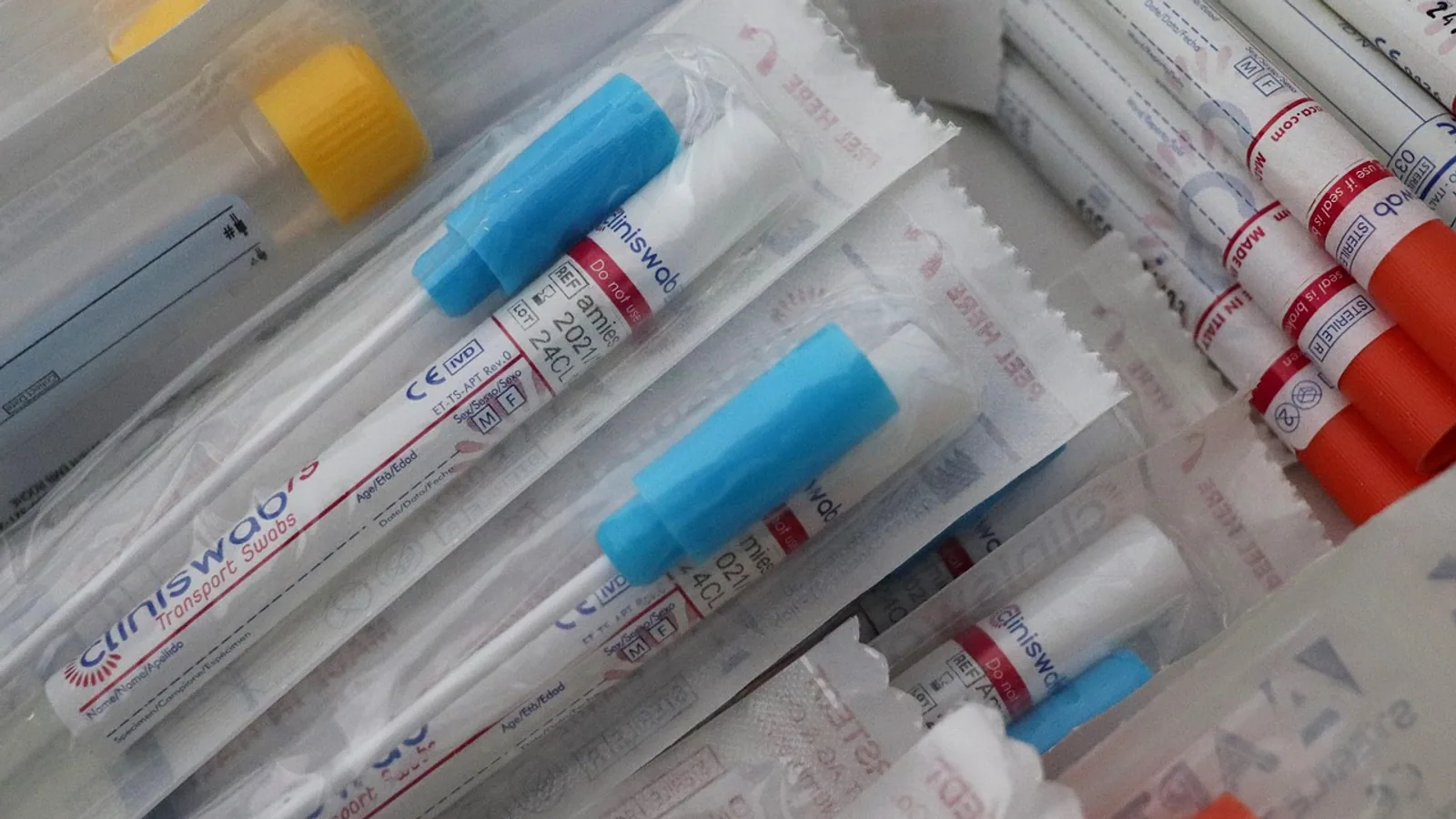
Sterile means the complete absence of all viable microorganisms, including bacteria, fungi, viruses, and the highly resistant bacterial endospores that survive most killing methods. A surface, fluid, or device is sterile only when no living microbe on it can reproduce, which is a stricter standard than simply being clean, disinfected, or even aseptic.
That single distinction drives a huge amount of laboratory, medical, and food-safety practice. The sterile def you learn in a microbiology course is not the same as the everyday meaning of "sterile" in a hospital hallway or the meaning of "sterile" in a genetics lecture about hybrids. Getting the definitions straight prevents real errors: treating a wiped bench as if it were sterile, assuming an alcohol pad sterilizes skin, or confusing a sterile organism with a sterile procedure.
The Core Definition, Word by Word
The word sterile comes from the Latin sterilis, meaning barren or unfruitful. In science it keeps that sense of "unable to produce offspring," applied to microorganisms. A sterile object cannot give rise to a microbial population because there are no viable cells or spores present to grow.
Two words in that definition do the heavy lifting.
Viable means capable of living and reproducing. A dead bacterium, a broken cell fragment, or a naked strand of DNA is not viable. A culture can be full of microbial debris and still be sterile if nothing in it can divide.
Microorganisms covers bacteria, archaea, fungi (yeasts and molds), protozoa, and viruses. Viruses are a special case because they cannot replicate on their own and are not always classified as living. In practice, sterilization targets viruses too, because a virus particle that reaches a host cell can still cause infection.
The hardest part of sterility is the endospore. Certain bacteria, notably Bacillus and Clostridium species, form dormant spores with thick coats and dehydrated cores. Spores resist heat, radiation, disinfectants, and drying far better than the growing (vegetative) cells that produced them. Any method that claims to sterilize must kill spores, not just the easy targets. This is why the standard definition of sterilization explicitly includes spore destruction.
Sterile vs. Sterilization vs. Sterility
These three terms are related but not interchangeable.
- Sterile is a state. It describes the condition of an object or fluid at a given moment.
- Sterilization is a process. It is the validated procedure that destroys or removes all viable microorganisms, including spores.
- Sterility is the property of being sterile, and in manufacturing it is often expressed as a probability rather than an absolute.
That last point matters. Industrial sterilization is usually defined by a sterility assurance level (SAL), a probability that a single unit remains non-sterile after processing. A common target for medical devices is a SAL of 10⁻⁶, meaning fewer than one in a million units is expected to carry a viable organism. Sterility at that scale is a statistical claim backed by validation, not a direct inspection of every item.
Why the Definition Matters
Sterility is the foundation of several fields at once. In microbiology, a sterile medium or sterile workspace is the starting condition for any experiment, because a contaminating microbe can outgrow the organism you intend to study. In medicine, sterile instruments and sterile fields reduce the risk of surgical-site and bloodstream infections. In food science, aseptic processing and canning rely on sterilization to make shelf-stable products. In cell and reproductive biology, sterile handling protects embryos and cultures from microbial overgrowth.
The stakes are practical. Aseptic technique, the set of practices that keeps things sterile during handling, is taught as a core laboratory skill because microorganisms are everywhere: in air, soil, water, on skin, and on inanimate surfaces like benches and keyboards [1]. Every transfer of a liquid, every opening of a culture flask, and every dressing change is a chance for contamination. Understanding what sterile actually means is what lets you judge whether a given method is good enough for the task in front of you.
Sterile, Aseptic, Disinfected, Sanitized: The Comparison Table
These four terms describe different levels of microbial control, and they are the ones students most often mix up. The table below contrasts them.
| Term | What it means | What it removes or kills | Spores? | Typical example |
|---|---|---|---|---|
| Sterile | Complete absence of all viable microorganisms | All viable microbes, including spores and viruses | Yes, killed or removed | Autoclave cycle, gamma irradiation, sterile filtration |
| Aseptic | Free of contamination during a procedure | Prevents introduction of microbes, does not necessarily kill them | Not the goal | Flaming a loop, sterile gloves, non-touch technique |
| Disinfected | Reduction of pathogenic microorganisms on a surface or object | Most pathogens, but not necessarily all spores | Usually no | Alcohol wipe on a bench, povidone-iodine on skin |
| Sanitized | Reduction of microbes to a level judged safe by public health standards | Reduces microbial load, does not sterilize | No | Hand hygiene, food-contact surface cleaning |
The key insight is that only one of these four words promises the absence of all viable life. Aseptic is about behavior and technique. Disinfected and sanitized are about reducing numbers, not eliminating them.
Aseptic Is a Technique, Not a State
Aseptic technique is the practice of preventing contamination. It is what you do, not what an object is. In the laboratory, aseptic transfer of liquids requires preparing a sterile workspace, accurately setting instruments, and manipulating cultures within a sterile field, often created by a Bunsen burner [1]. The goal is that your actions never introduce a microbe into a sterile medium or onto a sterile surface.
The word "aseptic" also appears in clinical settings with a slightly different flavor. Aseptic non-touch technique (ANTT) is a standardized approach that avoids touching key parts of a device directly. A cohort study comparing traditional sterile/aseptic technique with Standard-ANTT for training patients to manage home parenteral support found that training time dropped from a mean of 85 hours to 8 hours, while catheter-related bloodstream infections were tracked as the safety outcome [2]. The point for our purposes is that aseptic technique can be effective without sterile gloves in some contexts, because the technique, not the glove, is doing the work.
That finding echoes a systematic review of aseptic technique in parenteral nutrition administration, which concluded that evidence did not support any one aseptic technique over another, and that use of sterile gloves versus non-sterile gloves did not appear to affect catheter-related bloodstream infection rates [3]. Aseptic is a process standard, and its strength depends on how well it is performed.
Disinfected and Sanitized Are About Reduction
Disinfection reduces the number of pathogenic microorganisms on a surface or object. It typically kills vegetative bacteria and many viruses and fungi, but it does not reliably destroy spores. That is why a 70% alcohol wipe is a disinfectant, not a sterilant. It is excellent for a lab bench between tasks, and it is not a substitute for an autoclave.
Sanitizing goes one step further down the ladder. Sanitization reduces the microbial load to a level that public health authorities consider safe, without any claim of eliminating all pathogens. Hand hygiene and routine cleaning of food-contact surfaces are sanitizing actions. They lower risk. They do not create sterility.
A study on three-dimensional printed surgical templates illustrates how these categories behave in practice. The researchers compared hydrogen peroxide gas plasma sterilization, 5% povidone-iodine disinfection, 75% ethyl alcohol disinfection, and steam autoclave sterilization, and found that steam autoclave sterilization affected the accuracy of printed resin templates [4]. Different processes, different effects, different levels of microbial kill. Disinfection and sterilization are not interchangeable, and the choice depends on the material and the goal.
How Sterility Is Achieved and Verified
Sterilization methods fall into a few families. Each has strengths and limits, and each is validated against spores because spores are the toughest test.
Heat
Moist heat in an autoclave is the workhorse of laboratories and clinics. Pressurized steam at roughly 121°C for 15 to 20 minutes at about 15 psi, or 134°C for a shorter time, denatures proteins and kills spores. Dry heat uses higher temperatures for longer. Both are standard textbook knowledge in microbiology.
Radiation
Gamma irradiation and electron-beam irradiation are used industrially for single-use medical devices and some biological materials. They damage nucleic acids and are validated to a target sterility assurance level.
Chemical Sterilants
Some chemicals, such as hydrogen peroxide gas plasma, achieve sterilization when spores are the target. The surgical template study used hydrogen peroxide gas plasma as one of its sterilization arms [4]. Liquid chemical sterilants exist too, but they require specific contact times and are not the same as a quick alcohol wipe.
Filtration
Sterile filtration passes a liquid or gas through a membrane with pores small enough (commonly 0.22 micrometers) to remove bacteria and fungi. It does not remove viruses or mycoplasma reliably, so it is used for heat-sensitive solutions where those are not a concern.
Verification
You cannot see sterility with the naked eye, so verification relies on indicators and biological tests. Chemical indicators change color with temperature or steam exposure. Biological indicators contain spores of a resistant organism and are incubated after the cycle to confirm that spores were killed. For aseptically processed materials, sterility testing involves incubating samples in media that would reveal any surviving organism.
A microbiological study of acellular dermal matrices, which are tissue-derived sheets used in reconstructive surgery, compared aseptically processed and terminally sterilized products. It detected bacterial DNA on all matrices, with more in the aseptic group than the sterile group (3.4 versus 1.6, p = 0.003), while the number of positive cultures was the same between groups at 3.8% [5]. This is a useful lesson: DNA traces and viable organisms are different things. Sterility is about viability, not about the absence of every molecular remnant.
Sterile in Reproduction: A Completely Different Meaning
In genetics and reproductive biology, sterile means incapable of producing offspring. This is the original sense of the word, and it has nothing to do with microorganisms.
A sterile hybrid is the classic example. When two species cross, the offspring may be healthy but unable to reproduce because its chromosomes cannot pair properly during meiosis. The mule, the offspring of a horse and a donkey, is the textbook case. The hybrid is sterile in the reproductive sense even though it is perfectly free of microbial contamination.
The same word appears in plant breeding, where sterile lines are used to control pollination, and in medicine, where sterility refers to the inability to conceive. In all these uses, sterility is a property of an organism's reproductive capacity, not a measure of microbial cleanliness.
This dual meaning is one of the most common sources of confusion for students. When you read "sterile" in a genetics paper, check the context. If the subject is an organism's ability to reproduce, you are in the reproductive sense. If the subject is a medium, instrument, or surface, you are in the microbiological sense.
Sterile vs. Aseptic in Real Settings
The distinction between sterile and aseptic shows up constantly in clinical and research practice, and the evidence is more nuanced than the definitions suggest.
Wound Care
A systematic review and meta-analysis compared aseptic technique with clean technique during wound management. The random-effects relative risk of infection for clean dressings rather than aseptic dressings was 0.86 (95% CI 0.67, 1.12), with no evidence showing inferiority of clean techniques compared to aseptic methods [6]. In other words, for the wounds studied, the stricter aseptic approach did not produce measurably fewer infections. The authors noted that higher-risk procedures would need laboratory simulation before clinical study.
Parenteral Nutrition and Dialysis
A study of peritoneal dialysis fluid compared a non-touch aseptic technique with sterile technique for admixing antibiotics. Sterility was maintained in all 80 bags tested, independent of technique, fluid type, or operator [7]. A separate systematic review of aseptic technique in parenteral nutrition administration found only low-quality evidence and concluded that no single aseptic technique was clearly superior [3].
Vascular Access
Peripheral venous access is traditionally performed with a clean but non-sterile technique. A commentary argued that ultrasound probe covers provide a physical barrier but do not render the procedure sterile, and that basic hygiene practices such as probe disinfection, hand hygiene, and skin antisepsis matter more [8]. The authors point out that confusion on this topic stems partly from inconsistent definitions of "sterile" versus "clean."
Surgical Materials
The acellular dermal matrix literature is a running debate about whether "aseptically processed" is good enough compared with "terminally sterilized." Several studies found no significant difference in infection rates between aseptic and sterile matrices [9][10][11], while others reported higher failure or infection rates with freeze-dried aseptic products [12][13][14]. One study even found a higher rate of seroma with a sterile matrix [15]. The takeaway is not that one product wins. It is that "sterile" and "aseptic" label different processing routes, and clinical outcomes do not always track the label.
Common Mistakes and Limitations
Several errors recur when people learn this material.
Treating disinfection as sterilization. An alcohol wipe reduces microbial numbers. It does not kill spores. A bench wiped with alcohol is disinfected, not sterile.
Assuming skin can be sterilized. Skin antisepsis reduces the microbial population dramatically, but skin is never truly sterile. This is one reason sterile gloves and aseptic technique exist.
Confusing aseptic with sterile. Aseptic describes a technique that avoids contamination. A sterile field is a state. You can perform an aseptic procedure in a non-sterile room, and you can contaminate a sterile field with a single touch.
Believing any surface is sterile outside controlled conditions. In the open environment, no surface stays sterile. Air carries spores and dust, and every contact reintroduces microbes. Sterility is maintained only inside controlled systems: sealed packaging, a laminar flow hood, a sealed bioreactor, or a validated process chain. The moment a sterile item is exposed to ordinary air, sterility begins to degrade.
Reading "sterile" as "clean." Clean means visibly free of dirt. Sterile means free of viable life. A surface can look spotless and be covered in spores.
Ignoring the reproductive meaning. In genetics contexts, sterile has nothing to do with microbes. Misreading the context leads to nonsense conclusions.
Overstating the guarantee. Industrial sterility is a probability, not a certainty. A SAL of 10⁻⁶ is a very low probability of a non-sterile unit, not a proof that every unit is sterile.
A final limitation is that definitions do not resolve clinical judgment. The evidence on aseptic versus clean technique, sterile versus non-sterile gloves, and aseptic versus sterile materials is mixed, and the right choice depends on the procedure, the patient, and local guidelines. Individual cases need a qualified professional, not a dictionary.
Quick Review
- Sterile means no viable microorganisms, including spores and viruses.
- Sterilization is the process. Sterile is the state. Sterility is often a probability (SAL).
- Aseptic is a technique that prevents contamination. It does not necessarily kill anything.
- Disinfected means pathogens reduced, usually without spore kill. Sanitized means reduced to a safe level.
- Sterile in reproduction means incapable of fertilization or offspring, as in a sterile hybrid.
- No surface is truly sterile outside controlled conditions.
- Spores are the benchmark. If a method does not kill spores, it is not sterilization.
Frequently Asked Questions
What does sterile mean in science?
Sterile means the complete absence of all viable microorganisms, including bacteria, fungi, viruses, and bacterial spores. A sterile object cannot give rise to microbial growth because nothing viable remains on it.
Is sterile the same as aseptic?
No. Sterile is a state of being free of all viable microbes. Aseptic is a technique or practice that prevents contamination during a procedure. An aseptic procedure aims to keep things sterile, but the two words describe different things.
Does alcohol sterilize a surface?
No. Alcohol is a disinfectant. It kills many vegetative bacteria, fungi, and enveloped viruses, but it does not reliably destroy bacterial spores. A surface wiped with alcohol is disinfected, not sterile.
Can skin ever be sterile?
No. Skin antisepsis reduces the microbial population but does not eliminate it, and skin is never truly sterile. This is why sterile gloves and aseptic technique are used for procedures that require a sterile field.
What does sterile mean in reproduction?
In reproduction and genetics, sterile means incapable of producing offspring or fertilizing an egg. A sterile hybrid, such as a mule, is healthy but cannot reproduce. This meaning has nothing to do with microorganisms.
Why are spores so important to the definition of sterile?
Spores are dormant, highly resistant forms of certain bacteria that survive heat, radiation, drying, and many chemicals. Because they are the hardest microbial form to kill, a method only counts as sterilization if it destroys spores. Anything less is disinfection.
Related Articles
- What Does Conservation Mean in Science?
- Dog Eye Discharge: Clear vs. Colored - What It Means
- Conservation Science Explained: Meaning, Examples, and Career Paths
- biology def
- Genome Def
- Common Lab Report Prompt Keywords and What They Mean: A Glossary for Students
- Recalcitrant Definition: Meaning in Science and Medicine
- Stability Definition: Meaning in Science and Biology
- Optimum Definition: Meaning in Biology and Physiology
Sources
- Aseptic laboratory techniques: volume transfers with serological pipettes and micropipettors.
- Comparison of traditional aseptic technique versus standard aseptic non-touch technique (ANTT) in training patients to manage home parenteral support - A single centre cohort study.
- Association of catheter-related blood stream infections and aseptic technique(s) used in administration of parenteral nutrition: a systematic review and narrative synthesis.
- Influence of Material, Sterilization, and Disinfection on the Accuracy of Three-Dimensional Printed Surgical Templates: An In Vitro Study.
- A Microbiological and Ultrastructural Comparison of Aseptic versus Sterile Acellular Dermal Matrix as a Reconstructive Material and a Scaffold for Stem Cell Ingrowth.
- Aseptic versus clean technique during wound management? Systematic review with meta-analysis.
- Non-Touch Aseptic Technique Maintains Sterility of Antibiotic-Admixed Peritoneal Dialysis Fluid.
- Con: Sterile Technique for Peripheral Vascular Access: Are We as Sterile as We Think?
- Aseptic versus Sterile Acellular Dermal Matrices in Breast Reconstruction: An Updated Review.
- Safety and histologic characteristics of aseptic and sterile acellular dermal matrices in irradiated implant-based breast reconstruction.
- The Effect of Sterile Acellular Dermal Matrix Use on Complication Rates in Implant-Based Immediate Breast Reconstructions.
- Aseptic Freeze-Dried versus Sterile Wet-Packaged Human Cadaveric Acellular Dermal Matrix in Immediate Tissue Expander Breast Reconstruction: A Propensity Score Analysis.
- Implant-based Breast Reconstruction Outcomes Comparing Freeze-dried Aseptic Alloderm and Sterile Ready-to-use Alloderm.
- Immediate Implant-Based Breast Reconstruction with Acellular Dermal Matrix: A Comparison of Sterile and Aseptic AlloDerm in 2039 Consecutive Cases.
- Comparison of sterile versus nonsterile acellular dermal matrices for breast reconstruction.