Can Dogs Get Flu from Humans? Influenza Risk
By Dr. Zubair Khalid, DVM, MS, PhD ·
The short answer is yes, dogs can be exposed to human influenza viruses, and serological studies confirm that household dogs do develop antibodies against human seasonal flu strains. However, the direct answer to "can dogs get flu virus from humans" requires nuance: while exposure and subclinical infection are documented, severe clinical illness in dogs from human influenza viruses appears to be uncommon. The more pressing concern in veterinary medicine is the potential for dogs to act as mixing vessels, where different influenza viruses reassort and generate novel strains with pandemic potential.
A 2026 serological study of 256 household dogs found that 77.34% had antibodies against human seasonal H3N2 influenza, and 0.78% had antibodies against human seasonal H1N1 [1]. This indicates that household dogs are frequently exposed to human influenza viruses, even when they show no clinical signs. The same study found no antibodies against avian or canine influenza viruses in the tested population, which suggests that household dogs are far more likely to encounter human flu viruses than canine or avian strains in a typical domestic setting [1].
This article explains what veterinary science currently knows about influenza transmission between humans and dogs, including the distinct canine influenza viruses, the risk factors, diagnostic approaches, treatment options, and prevention strategies.
At a Glance: Human Flu vs. Canine Flu in Dogs
| Question | What the Evidence Shows |
|---|---|
| Can dogs catch human influenza viruses? | Yes, exposure is documented through serological surveys, but clinical illness is uncommon [2][1] |
| What are the primary canine influenza viruses? | H3N2 (avian origin) and H3N8 (equine origin) [3][4] |
| Do dogs transmit canine influenza to humans? | No confirmed cases of CIV transmission from dogs to humans have been reported [2] |
| Are dogs at risk for avian influenza? | Hunting dogs that retrieve waterfowl have higher exposure risk [5][6] |
| Is there a vaccine for canine influenza? | Yes, vaccines exist for CIV H3N2, with intranasal live attenuated options showing superior protection [7] |
| What are the main flu signs in dogs? | Coughing, nasal discharge, fever, lethargy, reduced appetite [8][4] |
| When should I contact my veterinarian? | If respiratory signs persist beyond 48 hours, if breathing becomes difficult, or in very young, very old, or immunocompromised dogs |
Anatomy and Physiology: Why Dogs Can Catch Influenza
Influenza A viruses have a broad host range that includes humans, dogs, cats, pigs, horses, seals, and numerous bird species [8][9]. The key to this cross-species transmission lies in the hemagglutinin (HA) protein on the viral surface, which binds to sialic acid receptors on host cells. Avian influenza viruses preferentially bind to α2,3-linked sialic acids, while human influenza viruses bind to α2,6-linked sialic acids [10][4].
The canine respiratory tract expresses both types of sialic acid receptors, which makes dogs susceptible to a wide range of influenza viruses from different species [11]. This dual receptor expression is what positions dogs as potential mixing vessels, similar to pigs, where different influenza viruses can co-infect the same cell and reassort their gene segments [12][11].
Canine influenza viruses have demonstrated successful mammalian adaptation through accumulated mutations across multiple viral proteins, particularly in the polymerase and hemagglutinin genes [8]. These adaptations have enabled sustained dog-to-dog transmission, which is what distinguishes the established canine influenza viruses from sporadic spillover infections [8][4].
A recent study demonstrated that specific HA mutations in H3N2 canine influenza virus, specifically HA1-T138A and HA1-Q226L, enhance viral replication in cells that predominantly express human-type α2,6-linked sialic acid receptors [10]. This finding underscores that the canine respiratory tract can support the evolution of influenza viruses toward human receptor binding, which has direct implications for zoonotic risk assessment [10].
Causes and Differentials: What Flu Viruses Affect Dogs?
Canine Influenza H3N2
The avian-origin H3N2 canine influenza virus first emerged in South Korea in 2007 and has since spread internationally, establishing sustained transmission lineages in dog populations across Asia and North America [3][11][4][9]. This virus continues to circulate in canine populations and has become enzootic in several regions [3][4].
Canine Influenza H3N8
The equine-origin H3N8 canine influenza virus represents the other major canine influenza subtype. It originated from cross-species transmission of an equine influenza virus and has established sustained transmission in dog populations [3][4]. The H3N8 subtype shows the broadest cross-species transmissibility among H3 subtype avian influenza viruses, having established sustained transmission lineages in horses and dogs while also causing sporadic infections in seals and humans [9].
Human Influenza Viruses in Dogs
Dogs can be exposed to human seasonal influenza viruses, as demonstrated by serological surveys. A global meta-analysis of 97 studies spanning 27 countries found that the seroprevalence of human influenza virus was notably higher in pet dogs compared to non-pet dogs [2]. This suggests that close contact with humans increases the likelihood of exposure to human influenza strains [2].
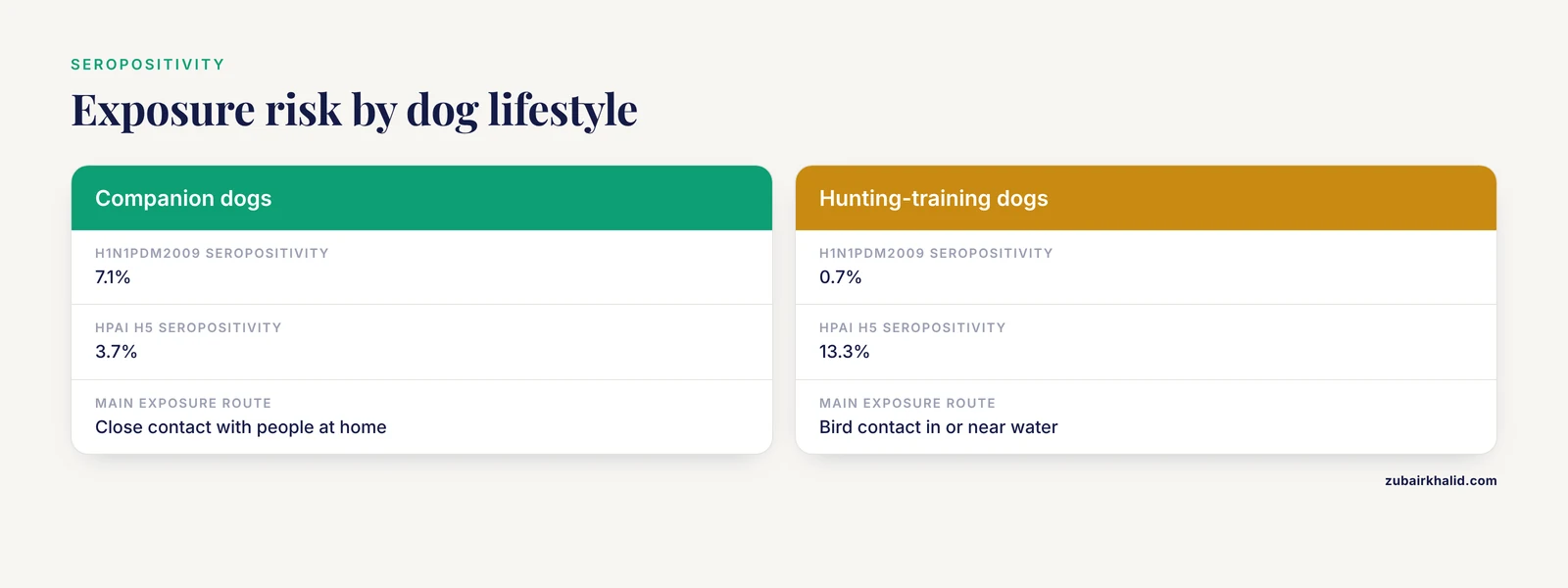
A recent study from the Netherlands found that seropositivity to H1N1pdm2009 was more frequent in companion dogs (7.1%) than in hunting-training dogs (0.7%), which indicates that household dogs are more likely to encounter human H1N1 viruses than dogs that spend more time outdoors [6].
Avian Influenza Viruses
Highly pathogenic avian influenza (HPAI) H5 viruses have been detected in a range of wild and domestic mammals in North America since 2022 [5]. While H5N1 HPAIV detections in dogs are rare, hunting dogs that retrieve waterfowl are at increased exposure risk due to their physical contact with reservoirs and contaminated environments [5]. A 2025 Dutch study found that seropositivity to HPAI H5 was more frequent in hunting-training dogs (13.3%) than in companion dogs with unknown bird contact (3.7%) [6]. Based on owner questionnaires, seropositivity to HPAI H5 in hunting-training dogs was significantly associated with recent bird contact in or near water, with an odds ratio of 6.9 [6].
Differential Diagnoses
Influenza in dogs shares clinical signs with several other respiratory conditions. The primary differentials include canine infectious respiratory disease complex (kennel cough), canine distemper virus, canine adenovirus type 2, canine parainfluenza virus, canine respiratory coronavirus, and bacterial pneumonia. A veterinary examination with appropriate diagnostic testing is required to differentiate these conditions.
Risk Factors: Which Dogs Are Most Vulnerable?
Housing and Social Environment
Dogs transmit influenza viruses via respiratory droplets in high-density settings such as shelters and kennels [8]. Dogs housed in these environments face a substantially higher risk of exposure to canine influenza viruses compared to single-dog households. Outbreaks of CIV H3N2 in shelters and kennels have been documented across North America and Asia [3][4].
Hunting and Outdoor Exposure
Hunting dogs that retrieve waterfowl are at increased exposure risk for HPAI H5 virus due to physical contact with infected birds and contaminated environments [5][6]. A 2024 cross-sectional survey of hunters in the United States found that 93.8% of participants considered their hunting dog as part of the family, and less than half considered their dog a pet [5]. Despite this close bond, 96.4% of hunters did not utilize personal protective equipment (PPE) when handling a sick dog, and 81.3% did not use PPE when handling harvested birds [5]. This close physical contact without protective measures creates a pathway for potential zoonotic transmission [5].
Close Human Contact
Pet dogs have a higher seroprevalence of human influenza virus compared to non-pet dogs [2]. This finding is consistent with the close physical proximity between pet dogs and their owners, which creates opportunities for bidirectional virus transmission [2][1].
Age and Health Status
While specific age-related data for canine influenza are limited in the current literature, it is clinically recognized that very young puppies and senior dogs with underlying health conditions are generally more susceptible to severe respiratory infections. Dogs with pre-existing respiratory or cardiac disease may experience more severe clinical signs if infected with influenza virus [4].
Veterinary Examination and Diagnostics
Clinical Signs
The most common clinical signs of influenza in dogs include a persistent cough, nasal discharge, fever, lethargy, reduced appetite, and ocular discharge [8][4]. Many dogs develop a soft, moist cough that can persist for 2 to 3 weeks. Some infected dogs remain subclinical and show no outward signs of illness despite active viral shedding [2][1].
Physical Examination
A veterinarian will perform a thorough physical examination, including auscultation of the lungs to assess for abnormal lung sounds, measurement of body temperature, and evaluation of hydration status. The presence of fever, abnormal lung sounds, and nasal discharge supports a respiratory infection, but these findings are not specific to influenza.
Laboratory Diagnostics
Diagnostic testing for canine influenza typically involves molecular or serological methods. A multiplex reverse-transcriptase polymerase chain reaction (mRT-PCR) assay has been developed for the simultaneous detection and differentiation of H1N1/2009, avian-origin canine H3N2, seasonal human-origin H3N2, and equine-origin H3N8 influenza viruses in dogs [13]. This assay demonstrated high specificity and sensitivity for the four CIV subtypes, and results from 420 clinical samples were consistent with conventional virus isolation methods [13].
Serological testing using hemagglutination inhibition (HAI) assays and virus neutralization tests can detect antibodies against specific influenza strains [1][14]. These tests are useful for confirming past exposure and for seroprevalence studies, but they are less helpful for diagnosing acute infections because antibodies take 1 to 2 weeks to develop [14].
Imaging
Thoracic radiographs (chest X-rays) may be recommended in dogs with suspected pneumonia to assess the lung fields for evidence of consolidation or interstitial patterns. The presence of a cranioventral alveolar pattern is consistent with bronchopneumonia, which can be a complication of influenza virus infection.
Evidence-Based Management
Supportive Care
The cornerstone of influenza management in dogs is supportive care. Most dogs with uncomplicated influenza recover without specific antiviral therapy within 2 to 3 weeks [8][4]. Supportive measures include ensuring adequate hydration, providing a quiet and comfortable environment, and maintaining good nutrition. Dogs with reduced appetite may benefit from highly palatable food or appetite stimulants prescribed by a veterinarian.
Antiviral Therapy
Research into antiviral therapies for canine influenza is ongoing. One study investigated the antiviral effects of heme oxygenase-1 (HO-1) against canine influenza virus H3N2 using cell-based assays [15]. Both HO-1 expression and exogenous protein treatment effectively inhibited CIV replication in vitro, which suggests that HO-1 may represent a potential therapeutic target [15].
Another study found that all-trans retinoic acid (ATRA), a bioactive metabolite of vitamin A, inhibits canine influenza virus replication in Madin-Darby canine kidney and mink lung cells through a keratin 27-mediated autophagy modulation pathway [16]. Notably, ATRA's antiviral effect was species-specific, showing no inhibition in human BEAS-2B or A549 cells, which suggests that host-directed therapies may need to be tailored to the specific species [16].
These findings are preliminary and based on in vitro studies. Antiviral medications for influenza in dogs are not routinely used in clinical practice, and their use should be guided by a veterinarian.
Vaccination
Vaccination is the most effective preventive strategy for canine influenza. A 2025 study evaluated a novel intranasal live attenuated canine influenza vaccine (LAIV) carrying a truncated NS1 gene in beagle dogs [7]. The NS1-truncated LAIV was well tolerated and induced robust mucosal and systemic immune responses, including high titers of virus-specific secretory IgA [7]. Following challenge with virulent CIV H3N2 at 120 days post-vaccination, LAIV-immunized dogs exhibited complete clinical protection and minimal viral shedding, whereas dogs receiving the inactivated vaccine showed moderate disease signs [7].
The intranasal LAIV represents a promising next-generation platform for canine influenza control within a One Health framework [7]. Traditional inactivated vaccines are also available but offer limited mucosal immunity and suboptimal protection compared to the live attenuated intranasal vaccine [7].
According to the American Veterinary Medical Association and the American Animal Hospital Association, vaccination for canine influenza should be considered for dogs that are at increased risk of exposure, including dogs that frequent boarding facilities, dog shows, grooming salons, or dog parks. The vaccine does not completely prevent infection but significantly reduces the severity of clinical signs and viral shedding.
Antibiotics
Antibiotics are not effective against influenza viruses. However, they may be prescribed if a secondary bacterial infection develops, which is a common complication of viral respiratory infections in dogs. The decision to use antibiotics should be based on clinical signs, diagnostic findings, and the veterinarian's judgment.
Unsafe Home Remedies
Several home remedies are commonly suggested for dogs with respiratory infections, but many are unsafe or ineffective. Do not give your dog human over-the-counter cold or flu medications, as many of these contain ingredients that are toxic to dogs, including acetaminophen, ibuprofen, and pseudoephedrine. Do not use essential oil diffusers or vapor rubs around dogs, as these can cause respiratory irritation. Do not attempt to administer any antiviral medication without veterinary supervision.
The safest approach is to contact your veterinarian for guidance. Keep your dog comfortable, ensure access to fresh water, and monitor for any worsening of clinical signs.
Prevention
Reducing Human-to-Dog Transmission
Given that household dogs are frequently exposed to human seasonal influenza viruses [2][1], owners who are sick with the flu should take precautions to protect their dogs. These precautions include washing hands before handling your dog, avoiding close face-to-face contact, and limiting kisses and cuddles while you are symptomatic. If you have influenza, consider having another household member care for your dog until your symptoms resolve.
Reducing Environmental Exposure
For hunting dogs, minimizing contact with sick or dead birds is the most important preventive measure [6]. Owners should not allow dogs to retrieve sick or dead waterfowl, and dogs should be kept away from areas where HPAI outbreaks have been reported [5][6]. After hunting trips, dogs should be thoroughly cleaned to remove any potential viral contamination from their coat and paws [5].
Raw Meat-Based Diets
A 2025 study in South Korea detected live low pathogenic avian influenza H9N2 viruses in two commercial raw meat-based diets (RMBDs) for dogs and cats [17]. This finding substantiates potential avian influenza risks associated with RMBDs and emphasizes the necessity for ongoing surveillance and viral transmission management [17]. Owners who feed raw meat-based diets should be aware of this risk and should discuss it with their veterinarian.
Vaccination
Vaccination remains the most effective tool for preventing canine influenza. Discuss with your veterinarian whether your dog's lifestyle warrants vaccination against CIV H3N2 and H3N8 [7][4].
Prognosis
The prognosis for dogs with uncomplicated influenza is generally good. Most dogs recover fully within 2 to 3 weeks with supportive care. The global seroprevalence of influenza in dogs consistently registered below 10% and exhibited relative stability over the past decade, which suggests that the overall burden of influenza in dogs is manageable [2].
However, dogs that develop secondary bacterial pneumonia or that have underlying health conditions may have a more guarded prognosis. In severe cases, influenza can be fatal, particularly in very young puppies, senior dogs, and immunocompromised individuals.
Emergency Red Flags
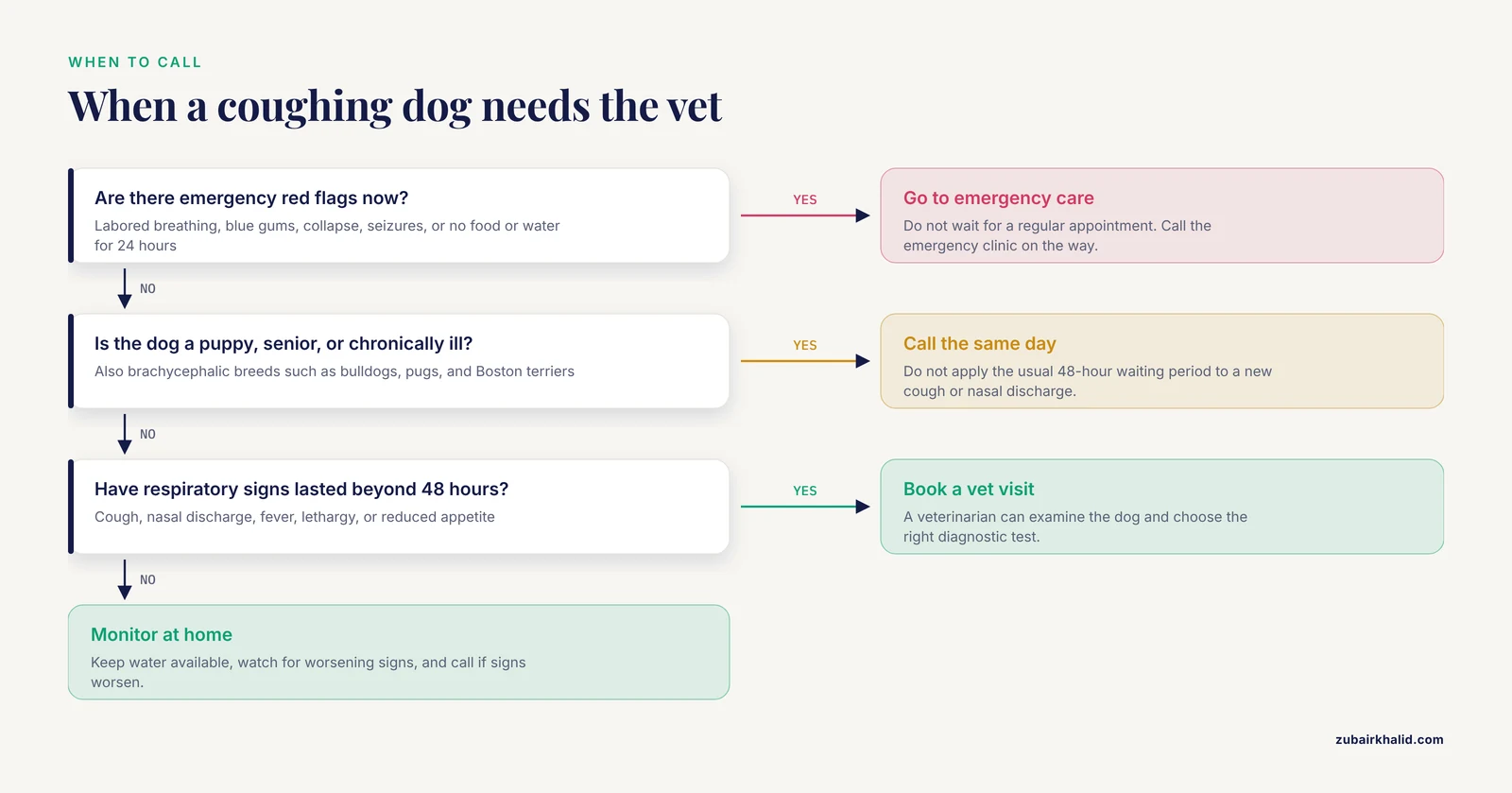
Contact your veterinarian immediately or seek emergency veterinary care if your dog shows any of the following:
- Difficulty breathing or rapid, labored breathing
- Blue-tinged gums or tongue
- Collapse or inability to stand
- Seizures
- Refusal to eat or drink for more than 24 hours
- Vomiting or diarrhea
- High fever (above 104°F or 40°C)
- Cough that worsens or persists beyond 2 weeks
- Lethargy that worsens over time
Limitations and When to Contact a Veterinarian
The scientific understanding of influenza in dogs continues to evolve. While serological surveys confirm that dogs are exposed to human influenza viruses [2][1], the clinical significance of this exposure is not fully understood. The lack of confirmed cases of CIV transmission from dogs to humans is reassuring [2], but the ongoing evolution of canine influenza viruses, including the emergence of reassortants with pandemic potential, warrants continued surveillance [3][12][11][4].
This article is educational and is not a substitute for veterinary diagnosis or treatment. Individual cases vary, and only a veterinarian who examines your dog can provide an accurate diagnosis and treatment plan. If you have any concerns about your dog's health, contact your veterinarian promptly.
Household Flu Care: Protecting Your Dog While You Recover
When you are sick with influenza, the same hygiene measures that protect the people around you can reduce the chance of passing the virus to your dog. Household dogs are frequently exposed to human seasonal influenza strains [1], and close physical contact with an infected owner is the most plausible route of exposure [2].
Hand Hygiene and Personal Contact
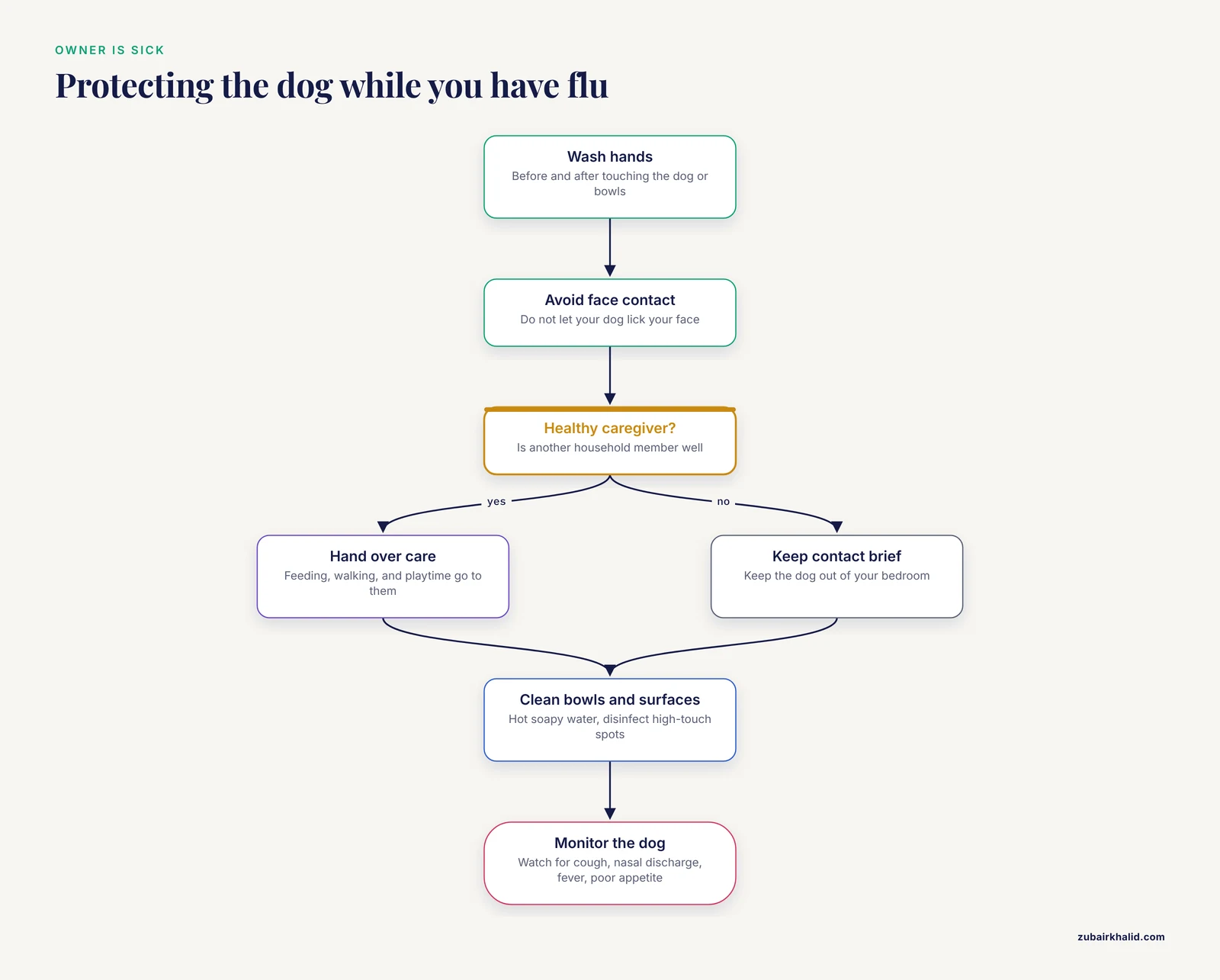
Wash your hands with soap and water or use an alcohol-based hand sanitizer before and after touching your dog, preparing its food, or refilling its water bowl. Avoid face-to-face contact. Do not let your dog lick your face, and do not kiss or nuzzle your dog while you are symptomatic. If you must be near your dog, consider wearing a mask. Cough or sneeze into a tissue or your elbow, away from your dog.
Food and Water Bowls
Do not share utensils, plates, or cups with your dog, and do not let your dog eat from your plate or drink from your glass. Use separate food and water bowls and wash them in hot, soapy water.
Assign a Healthy Caregiver
If another person in the household is well, ask them to handle feeding, walking, and playtime until your symptoms resolve. If you live alone, keep interactions with your dog brief and maintain the hygiene measures described above. Consider keeping your dog out of your bedroom while you are sick.
Clean Surfaces and Belongings
Influenza viruses can survive on hard surfaces for hours. Clean and disinfect doorknobs, countertops, and other high-touch surfaces regularly. Wash your dog's bedding and toys in hot water if they may have been contaminated by your respiratory secretions.
Monitor Your Dog
Watch for coughing, nasal discharge, fever, lethargy, or reduced appetite. Most dogs exposed to human influenza viruses show no clinical illness [2][1], but if respiratory signs develop, contact your veterinarian for guidance. Call promptly if the cough persists beyond 48 hours, breathing becomes difficult, or your dog stops eating.
Canine Influenza in Multi-Dog Homes and Boarding Facilities: Isolation and Cleaning
Canine influenza spreads mainly through respiratory droplets, and the risk rises sharply where dogs are housed close together, such as kennels and shelters [8]. In a multi-dog home or boarding setting, do not wait for a laboratory result before acting. A dog with a new cough, nasal discharge, fever, or reduced appetite should be treated as a suspected case and separated from other dogs.
Separation and equipment
- Move the suspected dog to a separate room or crate, away from shared air space where possible. Keep other dogs out of that area.
- Use dedicated bowls, leashes, toys, bedding, and grooming tools for the affected dog. Label them and store them separately.
- Assign one caregiver if possible. If not, care for healthy dogs first, then the suspected dog, and wash hands thoroughly before and after each contact.
- Change outer clothing after close handling, and keep that clothing away from shared laundry until washed. Hand hygiene matters most after touching the dog, bowls, leash, or bedding.
Cleaning
Remove visible organic material first, then wash surfaces with detergent and water before applying a disinfectant labeled for veterinary use. Follow the label contact time. Wash bowls, leashes, and bedding in hot water with detergent, then dry fully. Clean food preparation areas, door handles, and other high-touch surfaces. Avoid dry sweeping or misting that can aerosolize contaminated material. Bag waste and place it out of reach of other dogs.
Notify the facility
Call the boarding facility, daycare, groomer, or trainer before bringing the dog in. Report that the dog is suspected or confirmed and give the dates of recent visits. Do not bring the dog inside the building. The facility can isolate the dog at pickup and notify other owners as needed.
Return to activity
Return to boarding, daycare, dog parks, training classes, and group walks only after veterinary clearance. A reasonable guide is that fever has resolved, appetite and energy are normal, and the cough is improving. Reintroduce activity gradually with short leashed walks, and call your veterinarian if coughing, lethargy, or poor appetite returns. Dogs without obvious signs can still be part of the transmission picture, so conservative timing is safer for the group [2].
Puppies, Senior Dogs, and Dogs with Chronic Illness: Flu Precautions and When to Call the Vet
Influenza is often mild, but the margin for error is smaller in dogs with limited respiratory or immune reserve. Puppies have immature immune systems and small airways. Senior dogs often have reduced cough strength, muscle mass, and concurrent disease. Brachycephalic breeds such as bulldogs, pugs, and Boston terriers already work harder to breathe because of shortened, crowded upper airways. Dogs with pre-existing respiratory or cardiac disease may experience more severe clinical signs if infected with influenza virus [4]. The same concern applies to dogs with immunosuppression, endocrine disease, or kidney disease, especially when dehydration develops. Their smaller reserve means a mild fever or a few missed meals can tip them into dehydration or worsening breathing.
Lower the threshold for veterinary assessment
For these dogs, do not apply the usual 48-hour waiting period to a new cough or nasal discharge. Call your veterinarian when the first signs appear, particularly if appetite, activity, or breathing has changed. A puppy that stops eating, a senior that seems weak or confused, and a brachycephalic dog with increased respiratory effort need same-day advice. Mention all medications and chronic conditions when you call, since they affect hydration, oxygen demand, and the safety of any treatment. For example, a senior dog with a heart murmur and a new nighttime cough should be seen promptly, because a respiratory infection can worsen heart failure and because the cough has more than one possible cause. Breathing rate at home is useful to report.
Vaccination conversations
Discuss canine influenza vaccination before illness or anticipated exposure, not during an active cough. The vaccine does not prevent every infection, but it reduces severity and viral shedding [7][4]. For a fragile dog, your veterinarian can weigh timing against current health and lifestyle risk.
Signs that need urgent care
Seek emergency care for labored or rapid breathing at rest, noisy breathing that worsens, blue or pale gums, collapse, seizures, inability to eat or drink, or fever with marked lethargy. In brachycephalic dogs, increased snorting, retching, or restlessness can signal worsening airway obstruction. In puppies and seniors, poor feeding, weakness, or confusion can precede obvious respiratory distress.
Related Guides
- Avian Influenza (Bird Flu) in Chickens: Clinical Signs, Diagnosis, and Control: Avian influenza in chickens provides context for zoonotic transmission
- Bird Flu in Backyard Chickens: Signs and Biosecurity: Biosecurity measures for backyard chickens relate to avian flu risk
- Can Cat Flu Spread to Dogs? What Owners Should Know: Explains cross-species flu transmission between cats and dogs
- Epidemiological Modeling: Lessons from the Spanish Flu to COVID-19: Epidemiological modeling helps understand influenza pandemic potential
Frequently Asked Questions
Can my dog catch the flu from me?
Yes, dogs can be exposed to human influenza viruses. Serological studies show that household dogs frequently develop antibodies against human seasonal influenza strains, particularly H3N2 [1]. However, clinical illness in dogs from human influenza viruses appears to be uncommon, and most exposed dogs show no signs of disease [2][1].
What are the symptoms of flu in dogs?
The most common symptoms of influenza in dogs include a persistent cough, nasal discharge, fever, lethargy, reduced appetite, and ocular discharge [8][4]. Some dogs develop a soft, moist cough that can persist for 2 to 3 weeks, while others remain completely asymptomatic [2].
Is canine influenza the same as human influenza?
No. Canine influenza is caused by two distinct subtypes of influenza A virus: avian-origin H3N2 and equine-origin H3N8 [3][4]. These viruses are antigenically distinct from contemporary human H3N2 influenza viruses [3]. While dogs can be exposed to human influenza viruses, the canine-adapted strains are different from the human seasonal strains [2][1].
Can dogs spread the flu to humans?
No confirmed cases of canine influenza virus transmission from dogs to humans have been reported [2]. However, the potential for viral reassortment in dogs, where different influenza viruses mix to create novel strains, is a documented concern that requires ongoing surveillance [3][12][11][4].
How is influenza diagnosed in dogs?
Influenza is diagnosed through molecular testing, such as multiplex RT-PCR, which can detect and differentiate multiple influenza subtypes simultaneously [13]. Serological testing using hemagglutination inhibition assays can detect antibodies against specific strains and confirm past exposure [1][14].
Is there a vaccine for canine influenza?
Yes. Vaccines are available for canine influenza, including a novel intranasal live attenuated vaccine that has shown superior protection compared to inactivated vaccines in beagle studies [7]. Talk to your veterinarian about whether your dog's lifestyle warrants vaccination.
Can dogs get avian flu from birds?
Yes, dogs can be exposed to avian influenza viruses. Hunting dogs that retrieve waterfowl are at increased risk of exposure to HPAI H5 virus, with seropositivity rates of 13.3% in hunting-training dogs compared to 3.7% in companion dogs [6]. Owners should avoid allowing dogs to contact sick or dead birds [5][6].
When should I take my dog to the veterinarian for flu symptoms?
Contact your veterinarian if your dog shows a persistent cough, nasal discharge, fever, or reduced appetite for more than 48 hours. Seek emergency care immediately if your dog has difficulty breathing, blue-tinged gums, collapses, or refuses to eat or drink for more than 24 hours.
Sources
- Exposure of dogs to influenza A and B viruses.
- Global seroprevalence and prevalence of infection of influenza in dogs (Canis familiaris): A systematic review and meta-analysis.
- Zoonotic Risk, Pathogenesis, and Transmission of Avian-Origin H3N2 Canine Influenza Virus.
- Canine influenza virus at the human-animal interface: origins, adaptive evolution, and implications for public health.
- Human and Hunting Dog Interactions in the United States: Exploring Potential Transmission Pathways of Zoonotic Diseases and Highly Pathogenic Avian Influenza Virus.
- Hunting-training dogs and companion dogs in the Netherlands are frequently exposed to highly pathogenic avian influenza (HPAI H5) and human H1N1 virus, 2021-2023.
- Intranasal NS1-truncated live attenuated canine influenza vaccine confers superior protection compared to inactivated vaccine in beagles.
- Mammalian adaptation and zoonotic risk of influenza A viruses in companion animals.
- H3 Subtype Avian Influenza Virus: Ecology, Cross-Species Evolution, and Public Health Threats.
- HA1-T138A and HA1-Q226L substitutions in H3N2 canine influenza virus contribute to binding to human-type α2,6-linked sialic acid receptors.
- Viral characterization of the reassortants between canine influenza H3N2 and human pandemic (2009) H1N1 and avian H9N2 viruses in canine ex vivo tracheal explants.
- Viral dominance of reassortants between canine influenza H3N2 and pandemic (2009) H1N1 viruses from a naturally co-infected dog.
- A Multiplex RT-PCR Assay for Detection and Differentiation of Avian-Origin Canine H3N2, Equine-Origin H3N8, Human-Origin H3N2, and H1N1/2009 Canine Influenza Viruses.
- Serological and Molecular Surveillance of Influenza A Virus in Dogs and Cats in Central Chile.
- Antiviral effects of heme oxygenase-1 against canine coronavirus and canine influenza virus in vitro.
- All-Trans Retinoic Acid Inhibits Canine Influenza Virus Replication Through Keratin 27-Mediated Autophagy Modulation.
- Detection of H9N2 Avian Influenza Virus in commercial raw meat-based diets for dogs and cats in South Korea.