Genetic Transduction: How Phages Move Bacterial Genes
By Dr. Zubair Khalid, DVM, MS, PhD ·
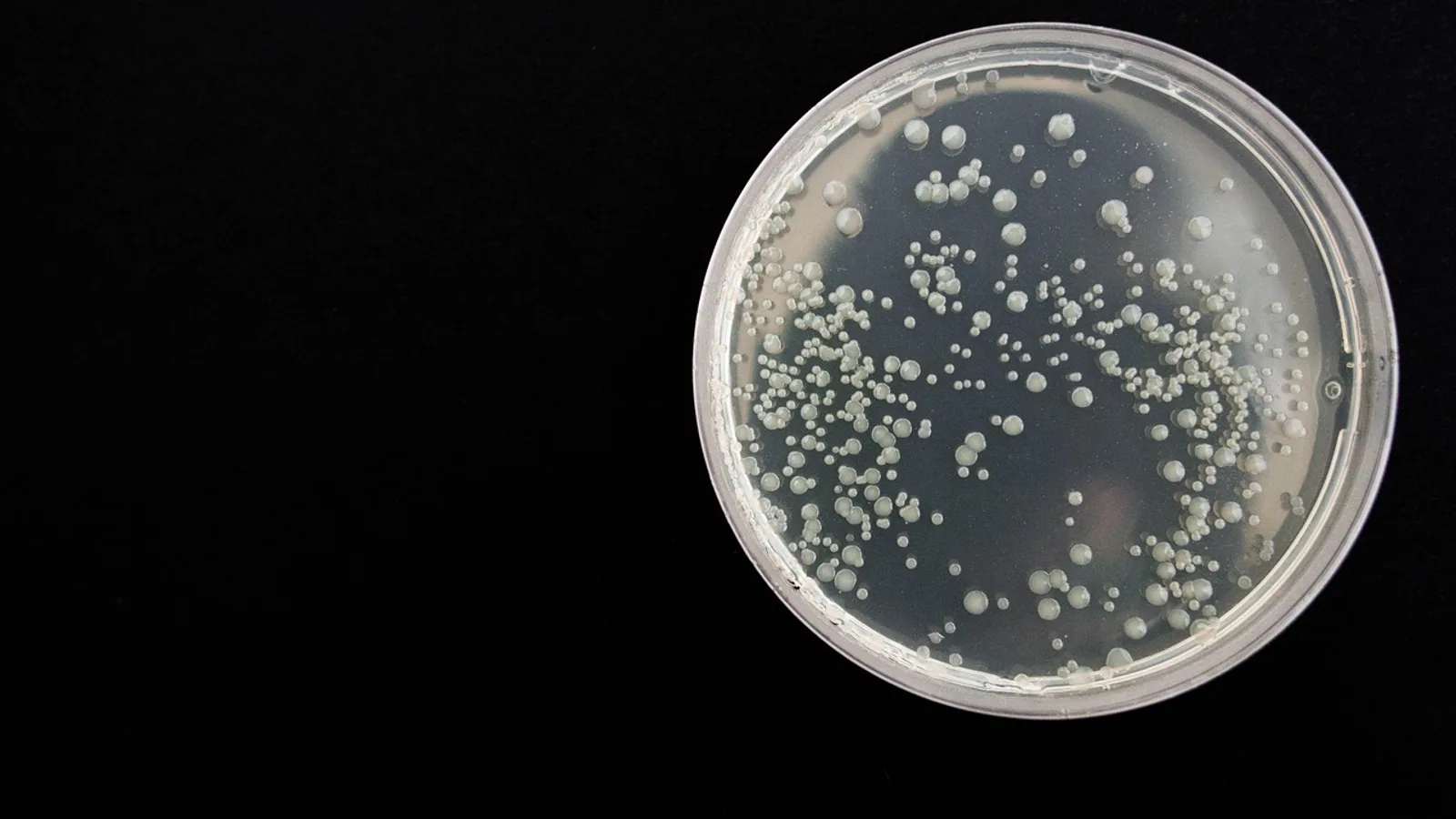
Genetic transduction is the transfer of bacterial DNA from one bacterium to another by a bacteriophage, a virus that infects bacteria. The phage accidentally packages host DNA instead of, or in addition to, its own genome and delivers that DNA into a new bacterial cell, where it can recombine into the chromosome or persist as a plasmid.
Transduction matters because it moves genes without any direct contact between bacteria and without free DNA in the environment. It is one of the three canonical mechanisms of horizontal gene transfer in bacteria, alongside conjugation and transformation, and it is the mechanism most often misattributed to the wrong process in student exams and in clinical reasoning about how resistance and virulence genes spread.
The Three Mechanisms of Horizontal Gene Transfer
Horizontal gene transfer (HGT) is the movement of genetic material between organisms other than by descent from parent to offspring. In bacteria, three mechanisms dominate, and confusing them is the single most common error in this topic.
Transduction is phage-mediated. A bacteriophage infects a donor bacterium, and during viral assembly a piece of bacterial DNA is packaged into a phage capsid. When that particle attaches to a new host and injects its contents, bacterial genes enter the recipient. No cell-to-cell contact is required, and the process is resistant to DNase because the DNA is inside a protein capsid.
Conjugation requires direct cell-to-cell contact. A donor cell extends a conjugative pilus or forms a mating junction, and a plasmid or conjugative transposon is transferred to a recipient. Conjugation is the dominant route for plasmid-borne antibiotic resistance genes, and it is the mechanism most often studied in biofilms because biofilms provide extensive cell-to-cell contact, a prerequisite for plasmid-mediated conjugative transfer [1].
Transformation is the uptake of free DNA from the environment by a competent bacterial cell. Competence is a regulated physiological state, and the DNA taken up is naked and exposed. Transformation is therefore DNase-sensitive: adding DNase to the medium destroys the transforming DNA and abolishes the transfer.
The table below summarizes the distinctions that examiners and clinicians care about most.
| Mechanism | Mediator | DNA transferred | Cell contact required | Example |
|---|---|---|---|---|
| Transduction | Bacteriophage capsid | Bacterial chromosomal or plasmid DNA packaged by mistake | No | Phage-mediated transfer of mobile genetic elements carrying virulence and resistance genes in Staphylococcus aureus [2] |
| Conjugation | Conjugative pilus or mating junction | Plasmid or conjugative transposon, often carrying resistance genes | Yes | Transfer of RP4 and clinically relevant resistance plasmids in Escherichia coli [3] |
| Transformation | Competence machinery of the recipient | Free extracellular DNA | No | Uptake of naked DNA by naturally competent bacteria |
A fourth route, membrane vesicle transport, is sometimes listed alongside these three in environmental literature [4], but the three classical mechanisms remain the framework for veterinary microbiology.
What a Bacteriophage Is and How It Packages DNA
A bacteriophage is a virus with a protein capsid that encloses a nucleic acid genome, either DNA or RNA, single-stranded or double-stranded. Tailed phages of the class Caudoviricetes, which include the T4-related coliphages, are the classic models for transduction [5]. The capsid has a fixed internal volume, called the headful capacity. That physical constraint is the reason transduction exists at all: if the phage packaging machinery grabs the wrong DNA, it can only fit so much of it.
Phages follow two broad life cycles.
In the lytic cycle, the phage attaches to a host receptor, injects its genome, replicates its DNA, synthesizes capsid and tail proteins, packages genomes into new capsids, and lyses the cell to release progeny. Generalized transduction occurs during this cycle.
In the lysogenic cycle, the phage genome integrates into the bacterial chromosome as a prophage, or persists as a plasmid, and is replicated along with the host DNA for many generations. Specialized transduction arises from this state when the prophage excises imprecisely.
Some phages can switch between the two, and the switch is often triggered by host stress. The bacterial SOS response, a DNA damage response, can induce latent prophages to enter the lytic cycle. Wastewater influent samples have been shown to induce the SOS response in a reporter E. coli strain to a level higher than that produced by mitomycin C at 0.5 ng/mL, and SOS induction at such concentrations has previously been shown to induce latent bacteriophages in E. coli [6]. That link matters because it connects environmental stress to phage induction and therefore to the opportunity for transduction.
Generalized Transduction
Generalized transduction occurs when host DNA is packaged into a phage capsid during the lytic cycle. The packaging machinery of a phage normally recognizes its own DNA, usually through a specific sequence called a pac site. Occasionally the machinery makes a mistake and packages a headful of host DNA instead. The result is a transducing particle: a phage capsid that looks normal but contains bacterial genes.
The steps are as follows.
- A lytic phage infects a donor bacterium.
- The phage replicates, and host DNA is degraded into fragments.
- During assembly, the packaging machinery loads a headful of DNA. Sometimes that headful is host DNA rather than phage DNA.
- The donor cell lyses, releasing a mixture of normal phage particles and transducing particles.
- A transducing particle attaches to a recipient cell and injects the bacterial DNA.
- The injected DNA can recombine into the recipient chromosome if it shares homology, or it can be degraded if it does not.
Because packaging is imprecise, generalized transduction can move essentially any gene from the donor. This is why generalized transduction is a workhorse of bacterial genetics: it is routinely used to move plasmids and chromosomal DNA between Staphylococcus aureus strains for strain construction [2]. The same property makes it a genuine concern in nature, because any gene in the donor's genome, including a resistance gene or a virulence gene, is a potential passenger.
Two features define generalized transduction experimentally. First, the transferred DNA is protected from DNase because it is inside a capsid. Second, the frequency of transfer for any single gene is low, because the packaging error is rare. A transducing particle can only carry a headful of DNA, so genes that are close together on the chromosome are more likely to be co-transferred than genes that are far apart. That property, called cotransduction frequency, is the basis for classical genetic mapping.
Specialized Transduction
Specialized transduction occurs when a prophage excises imprecisely from the bacterial chromosome and carries adjacent host genes with it. The mechanism depends on the lysogenic state.
A temperate phage integrates at a specific attachment site, called attB in the bacterial chromosome, by recombination with its own attP site. The integrated prophage is flanked by hybrid attachment sites. When the prophage is induced to excise, the recombinase normally cuts precisely at those sites and restores the intact chromosome. Occasionally the excision is aberrant: the cut occurs at a secondary site, and a segment of flanking bacterial DNA is excised along with the phage genome. The excised DNA is packaged, and because the phage has lost some of its own genes in the process, the resulting particle is often defective, meaning it cannot replicate on its own unless a helper phage provides the missing functions.
The steps are as follows.
- A temperate phage integrates into the host chromosome as a prophage.
- On induction, the prophage excises. Usually excision is precise. Rarely it is aberrant.
- Aberrant excision produces a phage genome that carries adjacent bacterial genes.
- The hybrid genome is packaged into a capsid.
- The particle injects the hybrid DNA into a recipient.
- The bacterial genes carried along can integrate into the recipient chromosome by homologous recombination, and the defective phage genome may persist or be lost.
Because the carried genes are those adjacent to the integration site, specialized transduction is gene-specific rather than random. The classic example is the transfer of the galactose utilization genes by lambda phage in E. coli. In veterinary pathogens, the same logic applies to phage-encoded toxins and other virulence factors, where the prophage integration site sits next to genes that benefit the phage's host.
Lateral Transduction and the Mobilization of Defense Genes
Lateral transduction is a high-frequency variant that has changed how the field thinks about phage-mediated gene movement. In lateral transduction, phage DNA replicates in situ while still integrated, and packaging initiates from the integrated prophage, so large stretches of adjacent chromosomal DNA are packaged and transferred at high frequency.
Lateral transduction is a highly efficient horizontal gene transfer mechanism, and it facilitates the transfer of bacterial defense genes between bacteria [7]. Defense systems, such as restriction-modification systems and CRISPR-Cas arrays, are often positioned near phage or phage-inducible chromosomal island attachment sites, which allows them to exploit lateral transduction for mobility [7]. The consequence is that lateral transduction diversifies the defense genes carried by prophages and phage-inducible chromosomal islands, driving immune system evolution and turnover, and it provides phage resistance to new bacterial hosts [7].
For veterinary students, the practical point is that transduction is not only a mechanism for spreading resistance and virulence. It also spreads the defenses that bacteria use against phages, which in turn shapes which phages can infect which strains.
How Transduction Is Detected and Measured
Transduction is detected in the laboratory by a donor-recipient design. A donor strain carrying a selectable marker is infected with a phage, the lysate is collected, and the lysate is applied to a recipient strain that lacks the marker. Transductants are selected on medium containing the relevant agent. Because the DNA is encapsidated, treating the lysate with DNase does not reduce the transfer frequency, which distinguishes transduction from transformation.
For S. aureus, optimized generalized transduction protocols are used to move plasmid or chromosomal DNA from donor to recipient strains, and these protocols are standard tools in molecular microbiology [2]. The choice of phage matters. Some T4-related coliphages are being screened specifically for genes that reduce the frequency of genetic transduction, because a phage that transduces efficiently is a poor candidate for any application where gene movement is a concern [5].
Metagenomic approaches complement culture-based assays. Viral operational taxonomic units (vOTUs) can be screened for antibiotic resistance genes, and virus-host links can be predicted from CRISPR spacers, tRNA matches, and sequence homology. In one anaerobic digestion study of 13,895 vOTUs, only 21 carried resistance genes, accounting for 0.57 ± 0.43 percent of the antibiotic resistome, while resistance genes located on plasmids and integrative and conjugative elements accounted for more than 61.0 percent [8]. That contrast is a useful reality check: in that system, conjugation potential far exceeded transduction potential for resistance genes. In the same study, 80.2 percent of viruses could not infect across genera, and among 480 high-quality metagenome-assembled genomes, 95 carried resistance genes, with lytic phages identified for 66 of those putative resistant bacteria and devoid of resistance genes [8].
Other environmental studies reach different conclusions about magnitude, which is exactly why the mechanism must be understood rather than memorized as a single number. In a coculture system using multidrug-resistant bacteria and phage consortia from a municipal wastewater treatment plant aerobic tank, phage addition significantly increased resistance gene abundance, especially in phage DNA, and 9 of 11 identified resistance genes increased significantly [9]. In that system, only 3.36 percent of 686 detected plasmids were conjugative, well below the 25.2 percent reported among previously published plasmids [9]. In mangrove sediment microcosms, 77 ± 2.1 percent of vOTUs were lytic, 154 of 185 phage-antibiotic-resistant bacteria links were lytic, and only 0.68 ± 0.46 percent of host-infecting lysogenic phages carried resistance genes, so lytic phages dominated in controlling resistant bacteria rather than proliferating resistance [10].
The lesson is that phage communities can push resistance genes in either direction. Lytic phages kill hosts and can reduce resistant populations. Lysogenic and transducing phages can move genes. Which effect dominates depends on the community, the environment, and the phage-host relationships.
Conjugation: The Contact-Dependent Counterpart
Conjugation is the transfer of DNA from a donor to a recipient cell by direct cell-to-cell contact [11]. The transferred element is usually a conjugative plasmid, a circular extrachromosomal DNA molecule that carries the genes needed for its own transfer, or a conjugative transposon, an element that can excise, transfer, and integrate.
The steps are as follows.
- A donor cell carrying a conjugative plasmid builds a mating pair formation apparatus, typically a type IV secretion system, which forms the conjugative pilus.
- The pilus contacts a recipient cell and brings the two membranes together.
- The plasmid is nicked at the origin of transfer, and one strand is transferred to the recipient as single-stranded linear DNA.
- In the recipient, the complementary strand is synthesized, and the plasmid re-forms as a double-stranded circle.
- The transconjugant now carries the plasmid and any genes it encodes.
The molecular details of step 4 and 5 are an active area. After transfer, the incoming plasmid must re-form its double-stranded circular form, and the recipient cell promptly and robustly induces anti-defense genes to protect the incoming DNA [11]. Because donor and transconjugant cells are otherwise indistinguishable in a mating mixture, methods such as ED-TA, which selectively eliminates donor cells so that transconjugants can be analyzed, were developed to study plasmid establishment at early stages [11].
Conjugation is the workhorse of resistance gene spread in biofilms and in wastewater. Free chlorine at an initial dose of 5 mg Cl/L significantly enhanced plasmid-mediated resistance gene transfer in biofilms, likely because chlorine disrupted the recipient biofilm structure, allowing donor colonization and closer contact with recipient bacteria [1]. In multispecies biofilms, the hotspot for conjugative transfer shifted from the surface at 18 ± 2 micrometers to the inner layer at 27 ± 3 micrometers under free chlorine exposure [1]. Environmental stressors, including disinfectants and sub-inhibitory antibiotics, can therefore modulate conjugation frequency.
Plasmid transfer is not limited to close relatives. Intergeneric conjugative transfer of plasmid-associated resistance genes from environmental Aeromonas species to E. coli and Salmonella enterica serovar Typhimurium has been demonstrated, with transfer of tet(A), OXA-513, KPC-2, mexC, and vanA, and with selective plasmid mobilization, since no transfer occurred from two of the donor strains [12]. That result captures two important principles: conjugation can cross genus boundaries, and not every plasmid in a donor population is mobilizable.
Quantification of conjugation is methodologically treacherous. In a model using plasmid pRK2013 between E. coli strains, hybrid whole-genome sequencing showed that conjugation frequently resulted in partial plasmid acquisition and chromosomal integration rather than stable episomal maintenance, and conventional plate-based enumeration systematically overestimated true liquid-phase conjugation [13]. After correcting for that artifact, sub-inhibitory concentrations of antibiotics common in wastewater did not broadly stimulate plasmid transfer, contrary to common belief, and levofloxacin at 32 to 256 micrograms per liter imposed a modest but significant reduction in LB at 37 degrees Celsius [13]. Students should treat any single reported conjugation frequency with healthy skepticism about the assay behind it.
Environmental chemicals can also shift conjugation. The sucralose-based sweetener Zerocal did not significantly alter planktonic growth of ESBL-producing E. coli, E. coli, Klebsiella pneumoniae, or Enterococcus faecalis at 0.5 mM and 1 mM over 24 hours, but it markedly enhanced biofilm formation in a strain-dependent manner, with K. pneumoniae biofilm biomass rising by about 260 percent at 0.5 mM, and it significantly enhanced conjugative plasmid transfer from K. pneumoniae to E. coli, increasing transconjugants by 61.7 percent at 12 hours [14]. Sub-inhibitory colistin enhanced conjugative transfer of RP4 and multiple clinically relevant resistance plasmids in E. coli without affecting growth, and the effect depended on induction of the outer membrane porin OmpF through the EnvZ/OmpR two-component system in both donor and recipient strains [3].
Transformation: Free DNA Uptake
Transformation is the uptake of free DNA from the environment by a competent cell. Competence is a regulated state, and it is not universal. Naturally competent genera include Bacillus, Streptococcus, Haemophilus, Neisseria, and Acinetobacter, among others. Competence is induced by specific signals such as high cell density, nutrient limitation, or DNA damage, and it requires a dedicated uptake machinery, including a pilus-like structure in Gram-positive bacteria and a type IV pilus in Gram-negative bacteria.
The steps are as follows.
- The recipient cell enters the competent state.
- Double-stranded DNA binds to the cell surface.
- One strand is degraded, and the other is translocated into the cytoplasm.
- The incoming single strand recombines into the chromosome if it shares homology with resident DNA.
- If the DNA is a plasmid with a replicon that functions in the recipient, it can recircularize and replicate.
Transformation is DNase-sensitive. Adding DNase to the medium destroys the free DNA and abolishes transfer. That single test separates transformation from transduction in any experimental design where both are plausible.
Where Phages and Resistance Genes Meet in Practice
Phages are increasingly recognized as vectors for resistance gene movement in environments where conjugation has traditionally been the focus. Wastewater treatment plants are a well-documented hotspot, and phages can persist in receiving waters for one to four weeks, modulated by temperature, solar ultraviolet light, and water chemistry, with broad host range phages having the potential to transfer resistance genes to environmental bacteria [15]. Disinfection efficacy varies by technology: ozonation was significantly more effective than chlorination, membrane processes, ultraviolet irradiation, and peracetic acid or thermal treatment in a meta-analysis of 79 experimental observations across 6 technology categories [15].
Heavy metal stress can also drive phage-mediated movement. Integrative metagenomic, viromic, and metabolomic analyses of paddy soils across China showed that soil phages promote resistance gene dissemination under heavy metal stress, likely through two mechanisms: phage-encoded auxiliary metabolic genes reprogram host metabolism to enhance survival and adaptation, facilitating cotransfer of adjacent resistance genes, and phage-encoded heavy metal detoxification genes mediate detoxification while driving cotransfer of neighboring resistance gene fragments and inducing lipid peroxidation-associated increases in membrane permeability [16]. Lysogenic phages coharboring resistance genes with auxiliary metabolic genes or detoxification genes were significantly enriched, and phage transplantation experiments confirmed that elevated heavy metal stress triggers lysogenic phage-mediated resistance gene transduction to bacterial hosts [16].
For veterinary practice, the relevant setting is often not a wastewater plant but a farm, a kennel, a hospital cage bank, or a feedlot. The same principles apply. Biofilms on water lines and equipment surfaces provide the contact that conjugation needs [1]. Phage populations in gut and environmental microbiomes provide the vehicles that transduction needs. Chemical stressors, including disinfectants and antibiotic residues, modulate both.
The mermaid diagram below traces the decision path for identifying which mechanism produced a gene transfer event.
flowchart TD
    A[Gene transfer observed] --> B{Cell contact required}
    B -->|Yes| C[Conjugation]
    B -->|No| D{DNA inside a capsid}
    D -->|Yes| E[Transduction]
    D -->|No| F{Free DNA in medium}
    F -->|Yes| G[Transformation]
    F -->|No| H[Consider membrane vesicles]
    C --> I[Plasmid or conjugative transposon]
    E --> J[Generalized or specialized]
    G --> K[Competent recipient required]
Clinical Relevance, Limitations and Common Mistakes
Transduction, conjugation, and transformation are not academic distinctions. They determine which interventions can plausibly reduce gene spread. A contact-dependent mechanism can be interrupted by physical separation, by disrupting biofilms, or by targeting the conjugative machinery. A phage-mediated mechanism can be interrupted by reducing phage induction, which links to the SOS response and to environmental stressors that trigger it [6]. A transformation-based mechanism can be interrupted by degrading free DNA in the environment.
The most common student mistakes are these.
Confusing transduction with transformation. Transduction uses a phage capsid and is DNase-resistant. Transformation uses free DNA and is DNase-sensitive. If a DNase treatment abolishes transfer, the mechanism was transformation.
Assuming all transduction is generalized. Specialized transduction is restricted to genes adjacent to the prophage integration site and often produces defective particles. Lateral transduction is a distinct, high-frequency variant that packages large stretches of adjacent chromosomal DNA [7].
Assuming conjugation requires a pilus in every case. Some conjugative systems use a mating junction without a long extracellular pilus, and some plasmids are mobilizable rather than self-transmissible, meaning they need a helper plasmid to provide transfer functions.
Treating any single conjugation frequency as a biological constant. Plate-based enumeration can systematically overestimate liquid-phase conjugation, and partial plasmid acquisition with chromosomal integration is common [13].
Assuming that finding a resistance gene in a phage genome proves recent transduction. Metagenomic association is not the same as demonstrated transfer. Phage transplantation experiments and culture-based assays are needed to establish causality [16].
Assuming that phages always increase resistance gene spread. In several systems, lytic phages dominate and reduce resistant bacterial populations, and the fraction of phages carrying resistance genes is small [8][10]. The direction of the effect depends on the phage community and the environment.
The practical limitation is that individual host, herd, or environmental situations vary. Laboratory findings from one system do not transfer directly to a clinical case, and a veterinarian should be consulted for any decision about infection control or antimicrobial use in animals.
This article is educational and is not a substitute for veterinary diagnosis or treatment.
Quick Review
- Transduction is phage-mediated gene transfer and requires no cell-to-cell contact.
- Generalized transduction packages random host DNA during the lytic cycle.
- Specialized transduction results from imprecise prophage excision and carries genes adjacent to the integration site.
- Lateral transduction is a high-frequency variant that mobilizes defense genes near phage attachment sites.
- Conjugation requires direct contact and moves plasmids or conjugative transposons, often carrying resistance genes.
- Transformation is uptake of free DNA by competent cells and is DNase-sensitive.
- DNase resistance distinguishes transduction from transformation in the laboratory.
Frequently Asked Questions
What is genetic transduction in simple terms?
Genetic transduction is the transfer of bacterial DNA from one bacterium to another by a bacteriophage. The phage packages bacterial DNA by mistake and injects it into a new host.
How does transduction differ from conjugation?
Transduction uses a phage capsid and needs no cell contact. Conjugation requires direct cell-to-cell contact and transfers a plasmid or conjugative transposon through a mating apparatus.
Is transduction sensitive to DNase?
No. The bacterial DNA in a transducing particle is inside a protein capsid, so DNase in the medium cannot reach it. Transformation, by contrast, is abolished by DNase.
What is the difference between generalized and specialized transduction?
Generalized transduction packages random host DNA during the lytic cycle and can move almost any gene. Specialized transduction results from imprecise prophage excision and moves only genes adjacent to the prophage integration site.
Can transduction move antibiotic resistance genes?
Yes. Resistance genes can be packaged and transferred by transducing phages, and phage communities in wastewater and soil have been linked to resistance gene movement. The magnitude varies widely by system.
Why does conjugation matter in biofilms?
Biofilms provide extensive cell-to-cell contact, which is a prerequisite for plasmid-mediated conjugative transfer. Disruption of biofilm structure can change where and how efficiently transfer occurs.
Related Articles
- Transduction Biology
- Gene Flow Vs Genetic Drift
- Genetic Imprinting: How Parental Genes Shape Expression
- Selectable Marker Genes: Essential Tools for Genetic Engineering
- Signal Transduction: Pathways, Mechanisms, and Cellular Responses
- Bacterial Pangenome Analysis: Core And Accessory Genes
- Binary Fission: Steps and Bacterial Growth
- c-Myc Gene: Function, Regulation, and Cancer Role
Sources
- Chlorination Enhances Bacterial Invasion and Conjugative Transfer of Antibiotic Resistance Genes in Biofilms.
- Phage Transduction of Staphylococcus aureus.
- EnvZ/OmpR-dependent OmpF induction contributes to colistin-enhanced plasmid conjugation.
- Co-selection mechanism for bacterial resistance to major chemical pollutants in the environment.
- Treatment of E. coli Infections with T4-Related Bacteriophages Belonging to Class Caudoviricetes: Selecting Phage on the Basis of Their Generalized Transduction Capability.
- Bacterial SOS response as a potential driver of antibiotic resistance gene transfer in wastewater.
- Bacteriophages mobilize bacterial defense systems via lateral transduction.
- Viral Communities Contribute More to the Lysis of Antibiotic-Resistant Bacteria than the Transduction of Antibiotic Resistance Genes in Anaerobic Digestion Revealed by Metagenomics.
- The role of bacteriophages in facilitating the horizontal transfer of antibiotic resistance genes in municipal wastewater treatment plants.
- Experimental evidence for the role of phages in mitigating antibiotic resistance genes in mangrove sediments.
- Selective elimination of donor bacteria to analyze plasmid reactions during conjugative transfer.
- Intergeneric conjugative transfer of plasmid-associated antibiotic resistance genes from environmental Aeromonas spp. to gram-negative recipient strains.
- Correcting the on-plate conjugation artifact reveals limited antibiotic stimulation of plasmid dissemination.
- A sucralose-based sweetener promotes biofilm formation and plasmid-mediated antibiotic resistance transfer in opportunistic gut bacteria.
- Bacteriophage survival and ARG dissemination from wastewater treatment plants to the environment.
- Phages drive the dissemination of antibiotic resistance genes by facilitating host adaptation to heavy metal stress.