Cat With Thumbs and Polydactyl Cats
By Dr. Zubair Khalid, DVM, MS, PhD ·
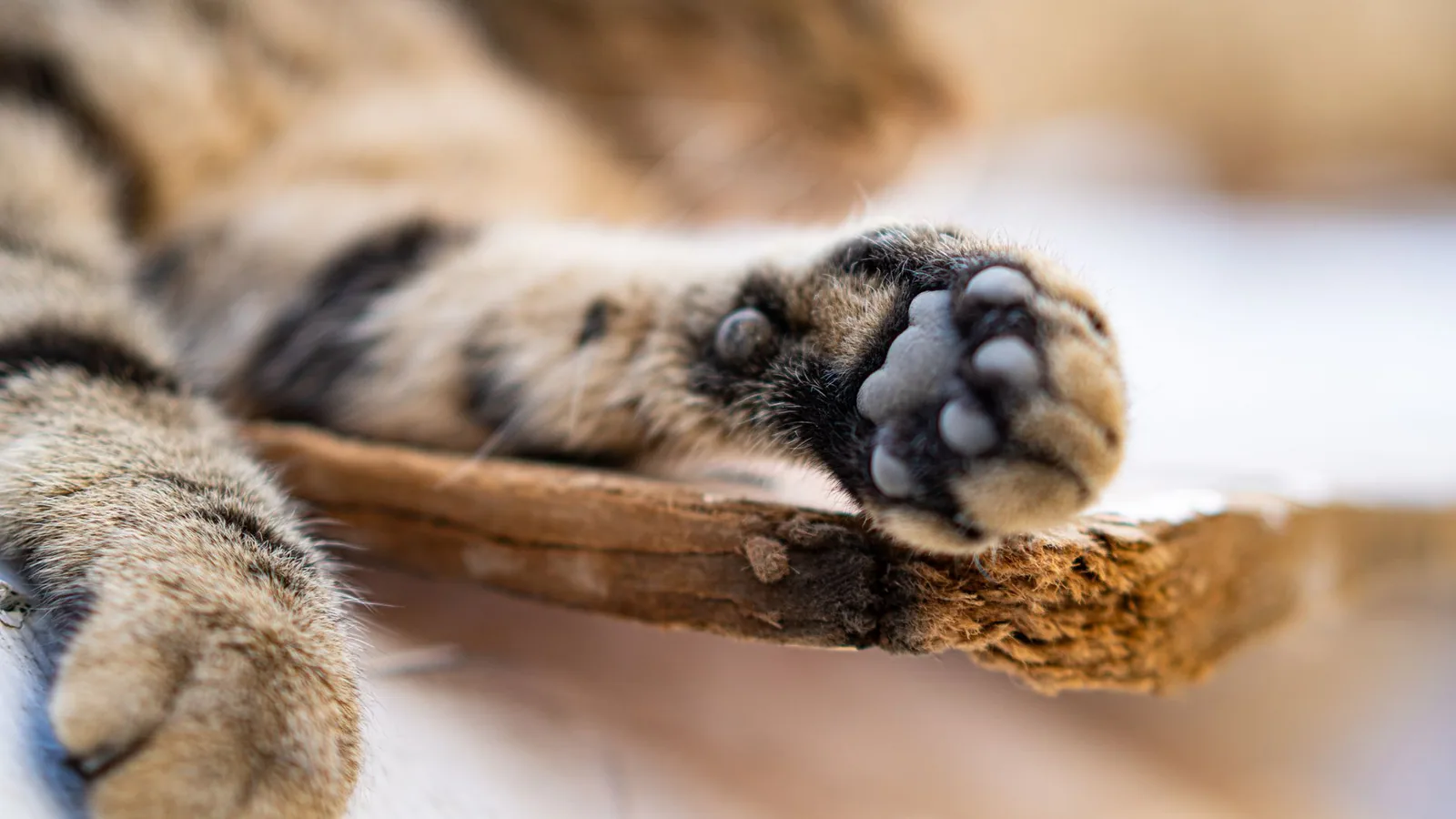
A cat with thumbs is almost always a polydactyl cat, meaning a cat born with one or more extra toes. The extra digit most often sits on the inner side of a front paw, in the position where a thumb would be, and that is why owners call them thumbs. The trait usually comes from a small inherited change in a stretch of DNA called the ZRS, which controls where the Sonic hedgehog gene is switched on while the limb bud is forming [1]. The result is a real, fully formed toe in most cats, although its bones, joints, and position vary widely from cat to cat [2]. For the great majority of affected cats, the extra digits cause no pain, no lameness, and no reduction in quality of life, and no treatment is needed [2].
This article is educational and is not a substitute for veterinary diagnosis or treatment.
At a Glance
| Topic | Practical takeaway for owners |
|---|---|
| What the cat has | One or more supernumerary digits, most often on the inner front paw |
| Underlying cause | Inherited changes in the ZRS limb regulator that alter Sonic hedgehog signaling [1] |
| Typical effect on health | Broad variation in paw shape, with no apparent harm to welfare in studied cats [2] |
| Routine care | Wellness visits, gait checks, claw checks on the extra digits, weight control |
| Surgery | Not routine. Discuss with a veterinarian only if a digit is causing a problem |
| Breeding | Confirm the variant and registry policy with your veterinarian before breeding [3] |
What a Cat With Thumbs Really Has
Standard feline anatomy gives a cat five digits on each forepaw and four on each hind paw. A polydactyl cat has more than that, and the extra digit is usually on the side of the paw that faces inward, toward the midline of the body. Veterinarians describe extra digits on that inner, thumb-side edge as preaxial. Extra digits on the outer edge are called postaxial. Preaxial polydactyly is the pattern seen in most polydactyl cats, including the well-known Hemingway cats and many Maine Coon breeding lines [3].
The word thumb is a convenient label rather than an anatomical fact. A cat with thumbs does not have an opposable digit like a primate hand. The extra toe sits alongside the normal first digit, and it does not rotate across the pad to create a grasping grip. What the cat gains is an additional toe, sometimes with a full set of bones and joints, sometimes with a smaller and partially formed structure.
The number and shape of extra digits vary a great deal. A radiographic and physical examination study of 70 Maine Coon cats, 48 of them polydactyl, found variability in digit number, digit conformation, and even in the structure of the carpus and tarsus, the wrist and ankle joints [2]. One published case described a 14-year-old male cat with supernumerary digits described as two preaxial extra digits plus one extra digit on each hind limb [4]. That range, from a single extra front toe to extra digits on all four feet, is normal for the trait.
How Extra Digits Are Built
Bones, joints, and paw shape
An extra digit is not a skin tag or a soft appendage. Classic anatomical descriptions of polydactyl cats document supernumerary toes with their own bones, joints, and claws, and the morphology of the polydactyl foot differs from the standard feline foot in ways that go beyond a simple extra toe [5][6]. The extra digit may be fully articulated and mobile, partially fused with a neighboring digit, or reduced to a small structure. Some cats have a split or duplicated pad under the extra toes.
The wrist and ankle are affected too
Polydactyly is not confined to the toes. In the Maine Coon cohort, the carpus and tarsus conformation also differed in polydactyl cats [2]. That finding matters for owners because it explains why some polydactyl paws look wider or flatter than usual. The same study compared radius length in polydactyl and non-polydactyl three-month-old kittens and adult females and found no difference, which argues against the idea that extra toes come with a shorter or weaker forearm [2].
A note on the normal feline first digit
Every cat forepaw includes a first digit, the equivalent of a thumb. In the extinct sabre-toothed cat Promegantereon ogygia, researchers described strong forelimbs and a short, robust thumb adapted to immobilizing prey [7]. That fossil comparison is a reminder that the feline first digit is a normal weight-bearing and gripping structure in its own right, and that the extra digits of a polydactyl cat are added to an already specialized limb.
The Genetics Behind Polydactyl Cats
ZRS and Sonic hedgehog
Most feline polydactyly traces to a noncoding region of DNA called the ZRS, short for zone of polarizing activity regulatory sequence. The ZRS is a long-range switch that controls Sonic hedgehog (Shh) expression in the developing limb bud. When the ZRS carries certain single-letter DNA changes, Shh is switched on in the wrong place at the wrong time, in the anterior part of the limb bud where the thumb-side digits form. The result is an extra digit.
The cat evidence is direct. Researchers found ZRS mutations in populations of domestic cats with extra digits, including the celebrated Hemingway cats, and showed in a mouse transgenic assay that these single nucleotide substitutions act as gain-of-function mutations that activate Shh at an ectopic embryonic site [1]. The same work showed that the sequence context of the mutation affects how strong the regulatory signal becomes, which helps explain why polydactyl cats differ so much in how many extra toes they have and how those toes are built [1].
A mechanism shared with other species
Feline polydactyly is part of a broader story. Point mutations in the ZRS region are associated with polydactyly in humans, cats, and mice [8]. By the time one human genetics study was published, 19 point mutations, 10 duplications, and 1 triplication of the ZRS had been reported across humans, mice, cats, and chickens [9]. In Silkie chickens, the dominant polydactyly locus maps to a single nucleotide change in the same ZRS region, and that change produces ectopic and prolonged Shh expression in the developing leg [8]. The cat sits within this conserved pathway, which is why feline polydactyly is best understood as a limb-patterning disorder rather than a bone disease.
Inheritance in cats
Polydactyly has long been recognized as an inherited trait in cats [10]. Early work also established that polydactyly and dominant white coat color assort independently, so a cat can inherit one without the other [11]. In many pedigrees the trait behaves as a dominant characteristic with variable expression, which fits the ZRS gain-of-function mechanism.
The picture is not identical in every breed. In a cohort of 75 polydactyl and non-polydactyl Maine Coon cats from Europe, Canada, and the USA, the Hw allele was found in only a subset of polydactyl cats. Sequencing of two regulatory sequences involved in limb development found no other variant in the polydactyl cats that lacked Hw, and segregation analysis revealed an unusual inheritance pattern in this breed [3]. The same study found genetic structure differences among breeding lines. In practical terms, a Maine Coon with extra toes may not carry the same mutation as the cat next door, and a negative test for one variant does not rule out polydactyly in that breed [3].
Why some lines have more polydactyl cats
Three ZRS variants have been tied to feline polydactyly. Two were identified in outbred domestic cats in the United Kingdom, and a third, the Hw variant, was identified in Hemingway cats in the United States [3]. Because the trait is inherited, a breeding line that selects for it will produce more affected kittens. Surveys of domestic cats in the Canadian Atlantic Provinces and the French colony of Saint Pierre and Miquelon found regional homogeneity for most mutant allele frequencies, and the polydactyly mutant, described as of New England origin, appeared to have been spread largely by Loyalist refugees from New England [12]. That history explains why polydactyl cats cluster in some regions and some family lines rather than appearing evenly across all cat populations.
Is Polydactyly Harmful to the Cat?
For most cats, no. The Maine Coon study concluded that polydactyly in that breed is characterized by broad phenotypic diversity and that the trait has no apparent deleterious consequence on feline welfare, even though it changes digit number, digit conformation, and the shape of the carpus and tarsus [2]. Cats with extra toes run, jump, climb, and groom normally. Many live ordinary lives with no veterinary attention directed at the paw.
The caveat is that polydactyly is a visible marker of a developmental pathway that can occasionally go wrong in more serious ways. When a kitten is born with extra toes plus a limb deformity, the limb deformity is the problem that needs attention, not the toe count.
Health Problems Reported Alongside Polydactyly
Radial hemimelia and heart changes in littermates
Two feline littermates presented at about 10 weeks of age with bilateral varus deformities of the thoracic limbs and pelvic limb polydactyly. Radiographs showed bilateral radial hypoplasia (hemimelia), generalized cardiomegaly, and the pelvic limb polydactyly. No treatment was instituted and the cardiopulmonary changes were to be monitored periodically [13]. The authors noted that heritability of radial hemimelia has been suggested but not proven, and that in utero teratogen exposure is another possible cause. They suggested that the combination of findings in these littermates may offer information about the origins of the orthopedic disorder and about undesirable outcomes that can occur when breeding polydactyl cats or cats affected by radial hemimelia [13].
The lesson for owners is specific. A kitten with extra toes and a visibly bowed or shortened front leg needs a veterinary examination and radiographs. Radial hemimelia is a serious congenital limb defect, and it is not caused by the extra toes themselves.
Skin cancer in one hypopigmented polydactyl cat
A case report described a 14-year-old hypopigmented male cat with supernumerary digits, including two preaxial extra digits and one extra digit on each hind limb, that was presented with a lesion in the left periocular region. Biopsy was positive for squamous cell carcinoma, and a micronucleus assay of peripheral red blood cells found 8.6 micronucleated erythrocytes per 1000 erythrocytes, a count the authors described as high compared with other domestic and wild cats [4]. The authors proposed that this marker of genomic instability could help identify vulnerable cats.
That report does not show that polydactyly causes cancer. It documents the coincidence of polydactyly, hypopigmentation, and squamous cell carcinoma in a single cat, and it raises a question about shared genomic instability that needs far more study [4]. Owners of lightly pigmented cats should focus on the practical message, which is sun exposure and skin monitoring, and should have any new eyelid or nose lesion examined promptly.
Breeding Decisions and Welfare
Polydactyly is inherited, so breeding choices determine how often it appears in a line [3]. The Maine Coon data show that the trait is genetically heterogeneous, which means a single genetic test may not capture every cause in every breed [3]. If you plan to breed a polydactyl cat, discuss the available testing with your veterinarian and confirm the current registration policy of the relevant breed registry before you commit to a mating.
The radial hemimelia report adds a welfare dimension. The authors explicitly raised concern about undesirable results when breeding polydactyl cats or cats affected by radial hemimelia [13]. Any kitten with a limb deformity should be evaluated before it is considered for breeding, and a cat with a known congenital limb defect should not be bred without veterinary guidance.
Living With a Cat With Thumbs: Step by Step
- Confirm what you are seeing. Count the toes on all four paws at the first veterinary visit and have the pattern recorded in the medical chart. Note which digits are extra and whether each one has a claw.
- Watch the gait once a month. Observe your cat walking and jumping on a level surface. A cat that favors a paw, bunny-hops, or refuses to jump is showing a sign that needs a veterinary examination.
- Check the extra claws. Extra digits can sit in unusual positions and conformations. Ask your veterinary team to check each extra claw at every wellness visit and to show you a safe trimming technique for your cat's specific paw shape.
- Keep your cat lean. Body condition affects every joint, including the carpus and tarsus that polydactyly can reshape [2]. Ask your veterinarian for a target weight and body condition score at each annual visit.
- Photograph the paws. A dated photo set gives your veterinarian a baseline if the paw ever swells or a digit changes shape.
- Handle the paws gently when the cat is young. Short, positive handling sessions make claw checks and veterinary exams easier for life.
- Book routine wellness care. Use the scheduled wellness visit, following AAHA wellness guidelines, as the moment to raise any question about the paw, gait, or claw growth.
- Do not assume surgery is needed. Most polydactyl cats never need an operation on the extra digits [2].
Claw Care and Home Monitoring
The extra digit is a real toe with a real claw. Because extra digits can be positioned differently from the standard four or five, the claw may not wear down the way the other claws do. Your veterinarian can tell you whether each claw is wearing normally or needs routine trimming, and can demonstrate the technique on your cat's own paw.
Watch for these changes between visits. A claw that curves back toward the pad, a swollen or red tissue around a digit, a cat that licks one toe repeatedly, or a new reluctance to jump all warrant a call to your clinic. None of these signs is specific to polydactyly, and each one deserves a proper examination rather than a home remedy.
Surgery and Digit Removal
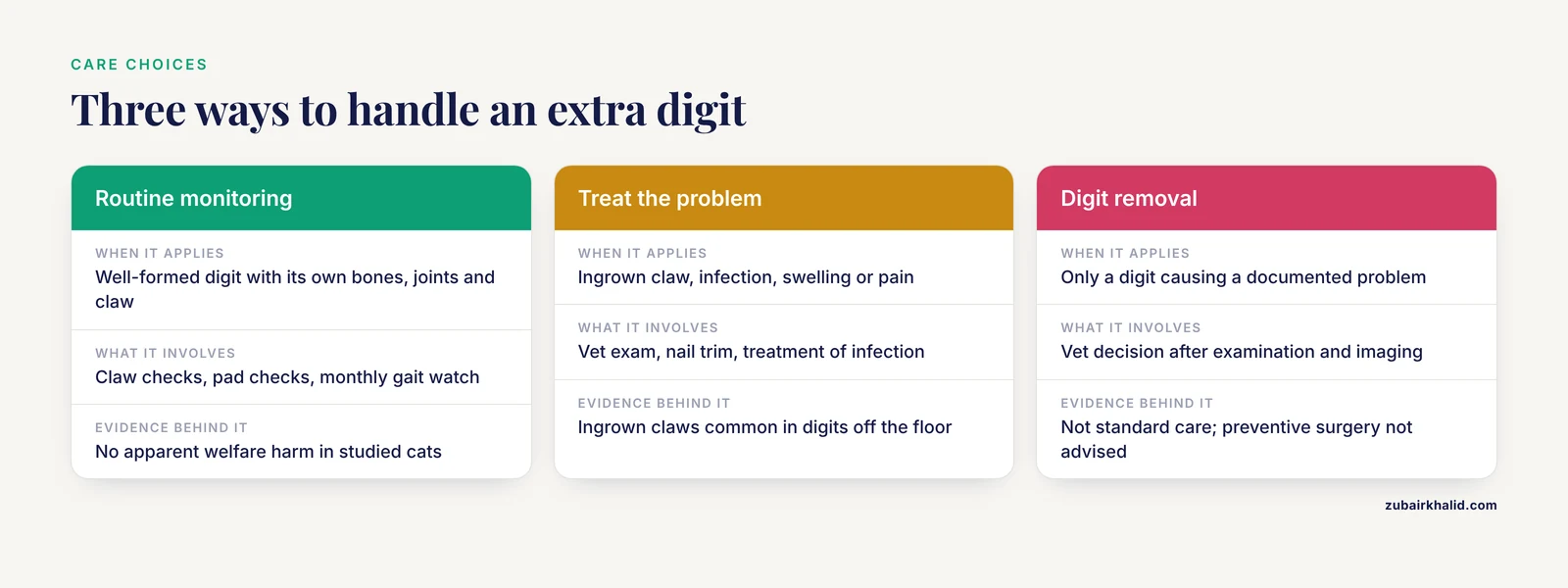
Elective removal of extra digits is not standard care for polydactyl cats. The Maine Coon study found no apparent deleterious consequence of polydactyly on feline welfare, which is the main reason veterinarians do not recommend preventive surgery [2]. Removal is considered when a specific digit is causing a documented problem, and that decision belongs to the cat's veterinarian after examination and imaging.
Owners sometimes ask about outcomes after surgery on extra digits. The closest long-term data come from human medicine. A follow-up study of 27 preaxial polydactyly reconstructions in 25 patients, with a median follow-up of 36 years, found patient-reported outcomes and measured strength similar to the general population, with no significant difference in pinch, side pinch, or grip strength compared with the opposite hand [14]. Those results describe reconstructive surgery in children with a thumb-side extra digit, not amputation of an extra toe in a cat, so they cannot be transferred directly. They do show that careful reconstruction of a preaxial extra digit can preserve good long-term function in a species that depends on fine hand use.
Limitations and When to Contact a Veterinarian
Most polydactyl cats need nothing more than routine care, and most extra digits never cause a problem. Individual cats still need a veterinarian, because a photo or a description cannot distinguish a harmless extra toe from a digit that is fused, deviated, or associated with a deeper limb defect.
Contact a veterinarian promptly if you see any of the following:
- A kitten with a bowed, shortened, or outwardly deviated front leg, or any obvious limb deformity at birth [13]
- Lameness, reluctance to bear weight, or a sudden refusal to jump
- Swelling, redness, discharge, or a foul odor around any digit
- A claw growing into the pad or a claw that you cannot see clearly
- A cat repeatedly licking or chewing one toe
- A new lump, crust, or nonhealing sore anywhere on the skin, especially on lightly pigmented eyelids, ears, or nose
- Bleeding from a claw that does not stop with gentle pressure
- Any question about breeding a polydactyl cat [3]
How Veterinarians Examine a Polydactyl Kitten
The first examination of a polydactyl kitten usually happens at the newborn check or at the first wellness visit around eight weeks of age. The goal is not to decide whether the extra toe is normal, because most are. The goal is to find out what the paw is built like and whether any finding points to a deeper limb problem.
The newborn check
In the first days of life, the veterinarian inspects the kitten in the nest. The kitten is held gently and each limb is moved through its full range. The vet counts toes on all four feet, notes which digits are extra, and watches whether the kitten bears weight evenly on all four limbs. At this age the focus is on finding a limb deformity that would interfere with nursing and movement, not on counting toes for its own sake.
The first wellness visit
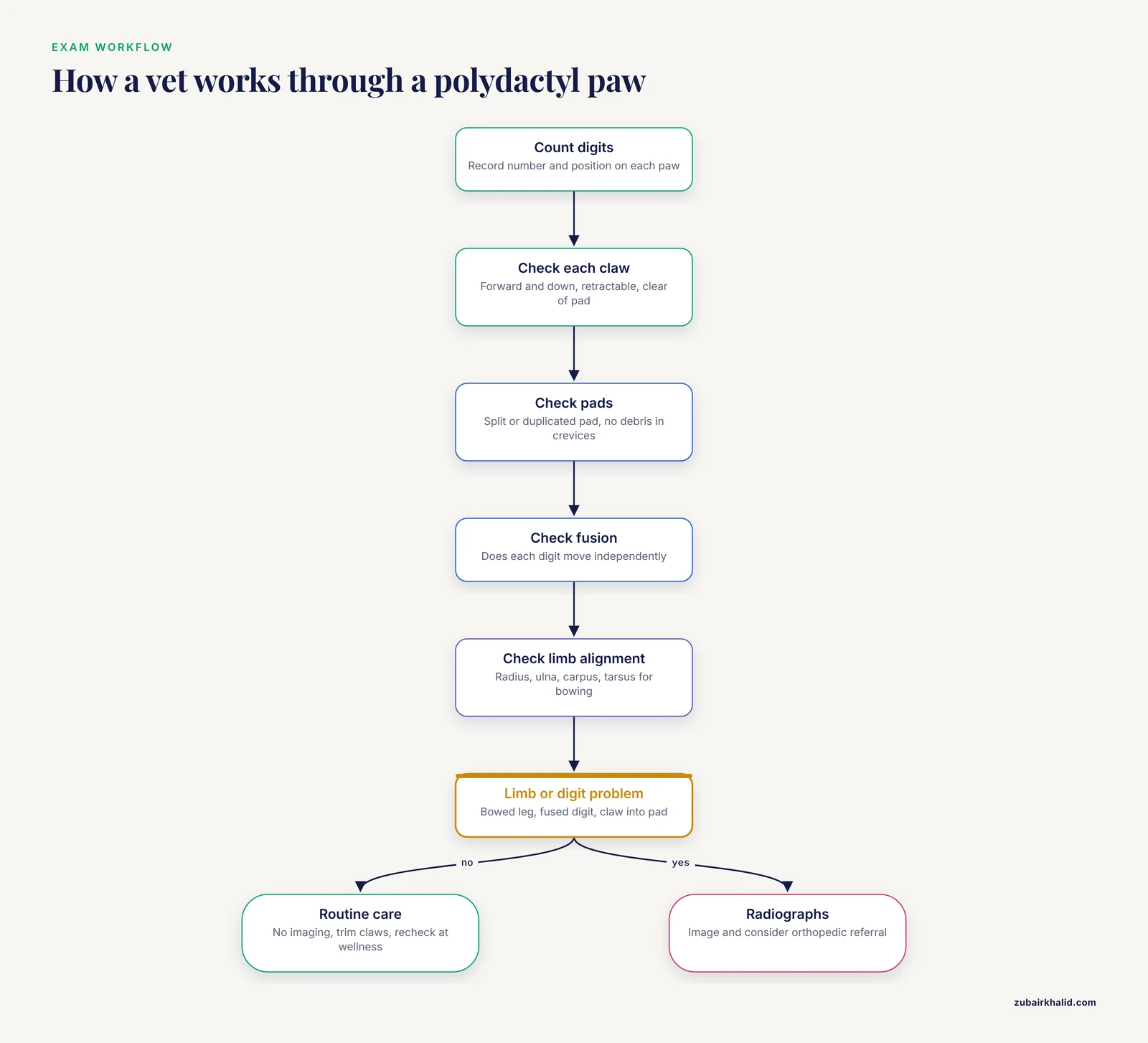
At the first full veterinary visit, the paw exam follows a set order.
- Digit count and position. Each paw is examined and the number and location of digits is recorded. Extra digits on the inner, thumb-side edge are preaxial; extra digits on the outer edge are postaxial.
- Claw placement. Each digit should have a claw that points forward and down. A claw that curves toward the pad, or sits so the cat cannot retract it, needs attention. Because extra digits vary widely in conformation, the vet checks each claw individually.
- Pad splitting. Some polydactyl paws have a split or duplicated pad under the extra toes. The vet checks that the pad surface is intact and that no crevice collects debris.
- Digit fusion. Extra digits can be partially fused with a neighboring digit. The vet palpates each digit to see whether it moves independently or is joined to its neighbor, since fused digits may trap dirt or develop skin irritation.
- Limb alignment. The vet checks the radius, ulna, carpus, and tarsus for bowing or shortening. This step matters because polydactyly can coexist with radial hemimelia, a serious congenital limb defect [13].
Benign toe or deformity?
Most polydactyl paws are benign. A well-formed extra digit with its own bones, joints, and claw, normal skin, and full movement does not need imaging or treatment. The available evidence shows no apparent welfare harm from polydactyly in studied cats [2]. Imaging is reserved for kittens with a visibly bowed or shortened limb, a digit that is malformed or fused in a way that interferes with walking, or a paw the kitten will not bear weight on. Those kittens need radiographs and likely referral to a veterinary orthopedic specialist.
When to seek urgent care
Contact a veterinarian promptly if a kitten shows lameness, a bowed or shortened front leg, swelling or redness around any digit, a claw growing into the pad, or repeated licking of one toe. A kitten with any obvious limb deformity at birth should be examined without delay [13].
Do Extra Toes Have Feeling and Function?
An extra toe that looks complete usually is complete. Anatomical descriptions of polydactyl cats document supernumerary digits with their own bones, joints, and claws, and note that the whole foot differs structurally from the standard feline foot [5][6]. Where a digit is fully formed, it also carries its own digital nerve branches and blood vessels, just like the toes beside it. The quick inside the claw has nerve endings and a blood supply, so cutting an extra claw too short hurts and bleeds in exactly the same way as cutting a normal one.
Weight bearing and grip
Whether an extra digit does useful work depends on where it sits and how mobile it is. Digits that reach the ground take load with every step. Others sit higher on the paw and never touch the floor. Conformation varies widely between cats, and some extra digits are partially fused or reduced in size [2].
Even a digit that carries no weight is not dead tissue. It still has sensation. It can still be injured, infected, or painful, and it can still affect how the cat walks and grooms.
Signs that an extra digit is in trouble
Judge the toe by what the cat does with it, not by whether you think it is useful:
- Repeated licking or chewing at one toe, or flinching when that paw is handled
- Swelling, redness, heat, discharge, or odor at the base of a digit
- A claw curving down into the pad, or a claw you cannot see clearly enough to judge
- Lameness, reluctance to jump, or a cat that stops grooming a paw
- A digit that suddenly sits at a new angle
Ingrown claws are the common problem in digits that never touch the floor, because walking does not wear the claw down. An ingrown claw can pierce the pad and seed a bacterial infection.
When to call the veterinarian
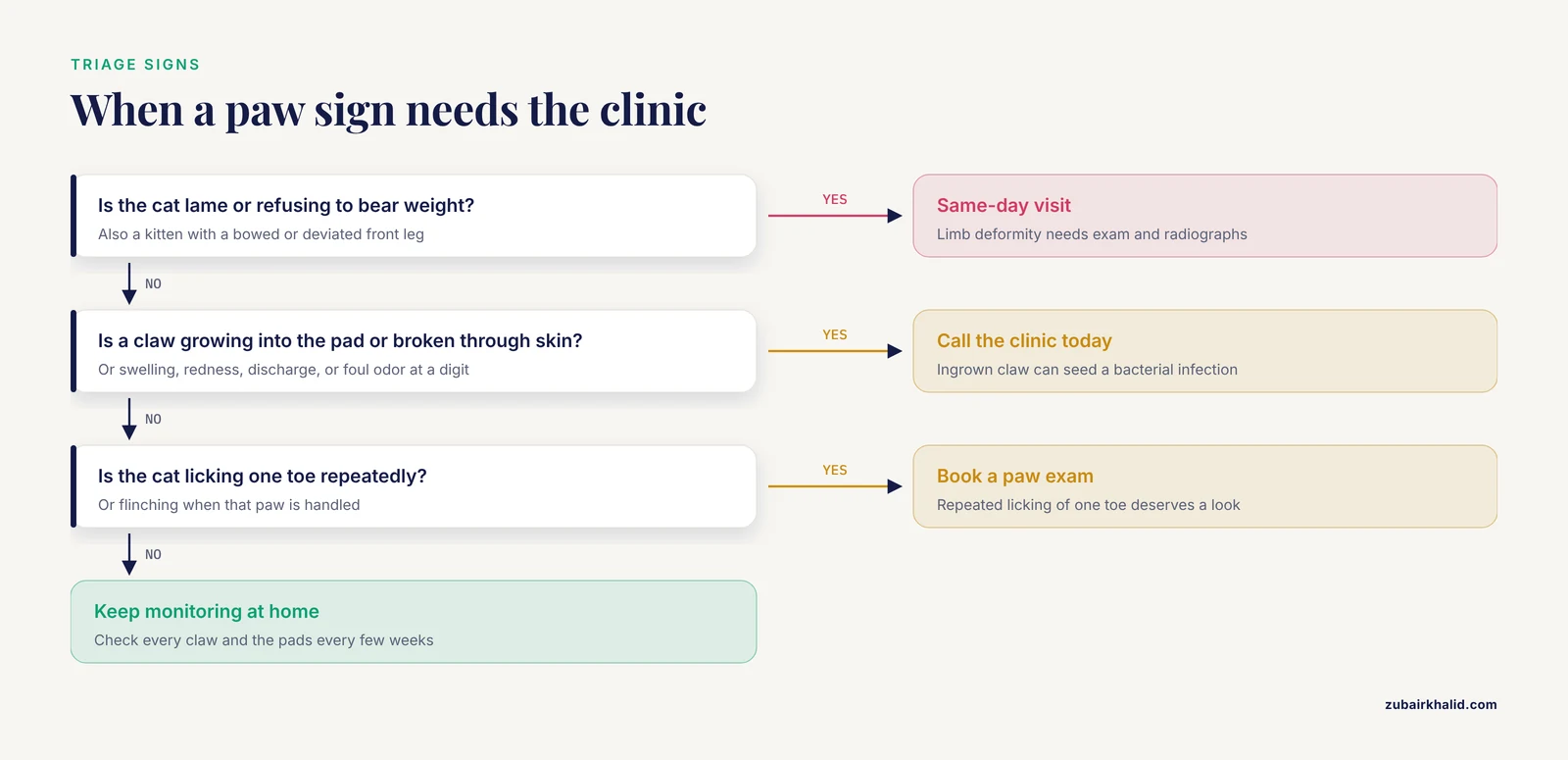
Call your clinic the same day for an ingrown claw that has broken the skin, spreading swelling or redness, discharge, or a cat that will not bear weight. A kitten with a bowed or outwardly deviated front leg needs examination and radiographs, because limb deformity can accompany polydactyly and is the finding that matters [13]. Do not cut deeply into a claw you cannot see clearly, and do not attempt home removal of a digit. A digit that is merely extra needs no treatment. A digit that is painful, swollen, or infected does.
Special Gear and Home Setups for a Cat With Thumbs
Most polydactyl cats need ordinary cat equipment. The extra toes do not require a special litter box, scratching post, toy, bootie, or paw balm. They do require routine claw care, paw hygiene, weight control, and a lower threshold for veterinary review when gait or skin changes.
| Item | Practical setup |
|---|---|
| - | - |
| Litter box | Standard large box, with low entry for a senior cat; extra toes do not change box design |
| Scratching post | Stable vertical or horizontal post; let the cat choose the style |
| Toys | Ordinary wand, ball, and kick toys; the extra digit is not opposable |
| Booties | Not routine; use only for a medical reason and check fit daily |
| Paw balm | Not routine; use only a cat-safe product approved by your vet, and avoid between toes |
Extra digits vary in position and conformation, and polydactyly can alter the carpus and tarsus [2]. That variation matters for nails. An extra claw may sit at an angle that does not wear normally on carpet or scratching surfaces. You do not need special clippers. Standard cat nail clippers are fine if you can see the claw and the quick. Check every claw at home every few weeks, and ask your veterinary team to show you the trim line for each paw. If a claw is hard to see or curves toward the pad, book a nail trim rather than guessing.
Paw hygiene is simple. Inspect the pads and the skin between digits weekly. Remove litter, mud, and ice balls, and dry wet paws. Clean the litter box often. Avoid medicated balms and home remedies unless your vet has examined the paw. A plain cat-safe pad balm can be used on cracked pads, but not between toes or over broken skin. Stop if the cat licks the area, or if redness or swelling appears.
Keep the cat lean. Ask your vet for a body condition score and target weight. Extra toes and a differently shaped wrist or ankle do not justify extra body weight, and obesity increases load on every joint.
Call your vet for limping, favoring a paw, reluctance to jump, swelling, discharge, bad odor, a claw growing into the pad, or repeated licking of one toe. A new lump, crust, or nonhealing sore also needs review, especially on lightly pigmented skin. Most extra digits cause no apparent welfare problem [2], but individual paw problems still need examination.
Related Guides
- Lump or Tumor on a Cat's Paw: Causes and When to Worry: For new paw lumps, tumors, and when to seek care
- Cat Lump on Paw: Pododermatitis and Other Causes: Explains paw lumps, pododermatitis, and other causes of swelling
- Cat Paw Abscess: Causes, Signs, and Treatment: Useful if an extra digit becomes swollen, painful, or infected
- Cat Paw Arthritis and Joint Pain: Signs, Causes, and Relief: Covers arthritis and joint pain behind limping or jumping changes
- Cat Bump on the Paw Pad: Causes and When to Worry: Helps assess a new bump or sore on a paw pad
- Polydactyl Cat Personality: Myth vs Reality: Explains polydactyl personality myths for curious owners
- Cat Bathing and Paw Wipes: Safe Use and Limits: Paw cleaning and wipe safety for routine home paw hygiene
Frequently Asked Questions
Are polydactyl cats rare?
Polydactyly is a fairly common inherited trait in cats and is well documented in specific breeding lines and regional cat populations [2][3][12].
Do polydactyl cats have health problems?
Most do not. Studies of polydactyl Maine Coon cats found wide variation in paw structure but no apparent harm to welfare [2].
Is polydactyly in cats inherited?
Yes. Polydactyly is an inherited trait, and in many cats it tracks with single-letter changes in the ZRS regulator of Sonic hedgehog [10][1].
Why are polydactyl cats called Hemingway cats?
The nickname refers to the celebrated polydactyl cats associated with Ernest Hemingway, and those cats carry a specific ZRS variant known as Hw [3][1].
Can a cat with thumbs hold things?
No. The extra digit is an additional toe, not an opposable thumb, so it does not create a primate-style grasping hand.
Should extra toes be removed?
Usually no. Removal is not routine and is considered only when a specific digit is causing a documented problem, which is a decision for a veterinarian.
Does polydactyly change a cat's gait?
Often it does not. Imaging studies show that polydactyly can reshape the carpus and tarsus, yet the cats studied had no apparent welfare problem [2].
Can polydactyly be prevented?
No. It is a congenital, inherited trait, so breeding choices are the only way to change how often it appears in a family line [3].
Sources
- Point mutations in a distant sonic hedgehog cis-regulator generate a variable regulatory output responsible for preaxial polydactyly.
- Clinical characterisation of polydactyly in Maine Coon cats.
- Genetic heterogeneity of polydactyly in Maine Coon cats.
- Genetic Instability of a Polydactyl Hypopigmented Cat With Squamous Cell Carcinoma-A Case Report.
- The anatomy of polydactylism in cats with observations on genetic control.
- Morphology of the feet in polydactyl cats.
- Functional anatomy of the forelimb in Promegantereon* ogygia (Felidae, Machairodontinae, Smilodontini) from the late miocene of spain and the origins of the sabre-toothed felid model.
- The chicken polydactyly (Po) locus causes allelic imbalance and ectopic expression of Shh during limb development.
- Identification of two novel mutations in Shh long-range regulator associated with familial pre-axial polydactyly.
- Heredity of polydactyly in the cat.
- The independent assortment of dominant white and polydactyly in the cat.
- Mutant allele frequencies among domestic cats in some eastern areas of Canada: regional homogeneity of factors in Canadian Atlantic Provinces and the French colony of Saint Pierre.
- Bilateral radial hemimelia, polydactyly and cardiomegaly in two cats.
- Long-Term Clinical and Radiographic Follow-Up of Preaxial Polydactyly Reconstruction.