Polydactyl Cat Paws: Toes, Anatomy, and Care
By Dr. Zubair Khalid, DVM, MS, PhD ·
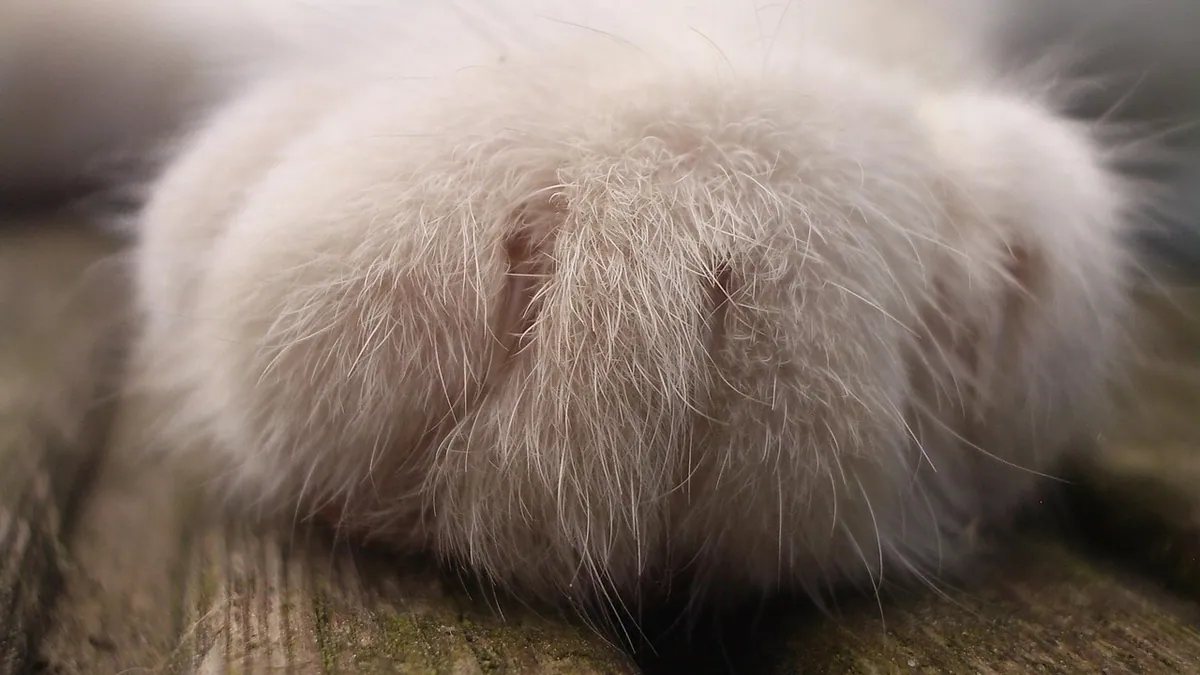
Polydactyl paws in cats are paws with more toes than the usual number. A typical cat has 18 toes total, while a polydactyl cat often has 20 to 24, with the extra toes most common on the front feet. The extra toes are usually harmless, but they change how you trim nails and check for problems.
This article is educational and is not a substitute for veterinary diagnosis or treatment.
Quick Answer
- A normal cat has 5 toes on each front paw and 4 on each back paw, for 18 total.
- Polydactyl cats most often have 6 or 7 toes on each front paw, and extra toes are less common on the back paws.
- The trait is genetic and present from birth, so you will not see it develop later in life.
- Extra toes can grow nails that curl inward because the cat cannot wear them down normally, so check them every 2 to 4 weeks.
- Most polydactyl cats live normal, active lives and do not need surgery unless a nail or toe causes problems.
What Makes Polydactyl Paws Different From a Normal Cat Paw
To understand polydactyl toes in cats, start with the standard paw. A normal cat has five toes on each front foot. Four of those touch the ground, and one sits higher on the inside of the leg as a dewclaw. Each back foot has four toes. That adds up to 18 toes.
A polydactyl cat has at least one extra toe. The extra toes usually appear on the front feet, and they often sit on the inner side of the paw, near the dewclaw. Some cats have one extra toe per foot, and some have two or more.
The word polydactyl comes from Greek roots meaning "many fingers." In cats, this is a non-syndromic preaxial polydactyly in most cases, meaning the extra toes are not linked to other body system problems [1]. Preaxial means the extra digits form on the thumb side of the paw.
The genetics behind this trait are well studied. Variants in a regulatory sequence called the ZRS, which controls limb development, are responsible for feline polydactyly [1]. This same region affects limb development in other species too, including humans, mice, and chickens [2]. In Maine Coon cats, researchers found the Hw allele in a subset of polydactyl cats, and the trait shows broad variation in how it appears [3][1].
That variation matters. Polydactyly does not just change toe count. It can also change the shape of the carpus (the wrist joint) and the tarsus (the ankle joint) [3]. In a study of 70 Maine Coon cats, including 48 polydactyl cats, the phenotype varied widely in digit number, conformation, and joint structure [3]. Even so, the researchers found no difference in radius size between polydactyl and non-polydactyl cats, so the extra toes do not appear to make the long bones grow differently [3].
How Many Toes Do Polydactyl Cats Have?
There is no single number. The count depends on the cat. A polydactyl cat might have:
- 6 toes on one front paw and 5 on the other
- 7 toes on both front paws
- Extra toes on all four feet (less common)
- A mix of extra toes and a split or fused toe
Some cats have what looks like a double paw, where the extra toes form a small extra pad. Others have extra toes that look like a normal toe but sit in an odd spot. Because the range is so wide, your veterinarian may count and record your cat's toes at a routine visit so you have a baseline.
How to Trim Nails on Polydactyl Paws in Cats
Trimming nails on a polydactyl cat follows the same basic steps as any cat, but you have more nails to track and some may be harder to reach. Here is a practical routine.
Step 1: Gather Your Supplies
You need cat nail clippers (scissor style or guillotine style both work), styptic powder in case you cut the quick, a towel, and good lighting. A headlamp or a bright desk lamp helps you see the nail and the pink quick inside.
Step 2: Find Every Toe
Spread the paw gently with your thumb. Count the toes out loud. Extra toes often tuck behind or beside the dewclaw, and some sit higher on the leg. If you are not sure you found them all, ask your veterinarian to show you at your next visit.
Step 3: Trim in Good Light
Hold the paw steady. Press the pad gently so the nail extends. Cut only the clear tip, staying 2 to 3 millimeters away from the pink quick. If you cannot see the quick, take off tiny slivers until the nail looks shorter.
Step 4: Check the Curled Nails First
Extra toes often produce nails that curve inward toward the pad because the cat cannot scratch them down. Trim these first. A nail that has already grown into the pad needs veterinary care, not a home trim.
Step 5: Reward and Repeat
Give a treat after each paw. If your cat struggles, do one paw per day. A calm, short session beats a long, stressful one.
Step 6: Set a Schedule
Most cats need a trim every 2 to 4 weeks. Polydactyl cats may need it more often because the extra nails grow faster relative to wear. Check the paws weekly with your fingers to feel for sharp tips or curled nails.
Polydactyl Paw Care Schedule and Checklist
| Task | How Often | What to Look For |
|---|---|---|
| Visual paw check | Weekly | Curled nails, redness, swelling, discharge |
| Nail trim | Every 2 to 4 weeks | Clear tips, no quick exposure |
| Feel for ingrown nails | Weekly | Nail tip touching or piercing the pad |
| Check paw pads | Monthly | Cracks, cuts, foreign objects, soft spots |
| Full veterinary exam | Once yearly, or as advised | Toe count, joint movement, gait |
| Senior cat exam | Twice yearly after age 8 | Arthritis, nail overgrowth, mobility changes |
This schedule is a general guide. Your veterinarian may adjust it based on your cat's age, activity level, and any joint or skin conditions.
Signs Something Is Wrong With a Polydactyl Paw
Extra toes can cause problems, and some are easy to miss. Watch for these signs.
- Limping or favoring one leg
- Licking or chewing at one paw more than others
- A bad smell from the paw
- Redness, swelling, or warmth around a toe
- Discharge or crusting near a nail
- A nail that disappears into the pad
- Bleeding from a toe or nail
- Your cat pulling away when you touch a specific toe
- Changes in how your cat walks or jumps
An ingrown claw is the most common issue. The nail curls into the paw pad, which is painful and can lead to infection. If you see a nail touching the pad, call your veterinarian. Do not try to cut it out yourself.
Other paw problems can look similar. If your cat also has eye changes, such as a visible third eyelid, that points to a different issue. You can read about Cat Third Eyelid Protrusion for more on that sign. Eye discharge, squinting, or cloudiness may relate to Cat Eyes: Understanding Feline Vision, Common Eye Problems & Care Tips.
Common Mistakes Owners Make With Polydactyl Cats
Cutting too close to the quick. Extra toes often have a longer, thicker quick than you expect. Cutting too deep causes bleeding and pain, and your cat may refuse future trims.
Missing hidden toes. Some extra toes sit high on the leg or tuck behind the dewclaw. If you only trim the toes you can see from the top, you will miss nails that curl inward.
Assuming extra toes mean extra problems. Most polydactyl cats are healthy. The trait itself does not cause disease. Problems come from nail overgrowth and, in some cats, joint shape changes [3].
Skipping trims because the cat hates it. A stressed cat still needs nail care. Ask your veterinarian or a groomer for help if home trims are not working.
Ignoring a limp. Cats hide pain well. A limp that lasts more than a day or two needs a veterinary visit.
Using human nail clippers. They crush the nail instead of cutting it cleanly. Use clippers made for cats.
Forgetting the back feet. Even if the extra toes are only on the front, the back nails still need trimming.
Supplies and Setup That Matter for Paw Health
Good tools make nail care easier and safer.
- Cat-specific nail clippers, kept sharp
- Styptic powder for minor bleeding
- A bright lamp or headlamp
- A nonslip mat so your cat feels steady
- Treats your cat loves
- A towel for wrapping a squirmy cat
- A small notebook or phone note to track trim dates and toe counts
Keep the clippers clean and store them dry. Replace them when they dull, because dull blades crush the nail.
If your cat has long hair between the toes, trim that hair carefully with blunt-tip scissors. Hair can trap debris and hide a curled nail.
When Extra Toes Affect Movement
Most polydactyl cats walk, run, and jump normally. Some have a slightly wider stance because the extra toes change the shape of the paw. In Maine Coon cats, polydactyly can also change the carpus and tarsus conformation, which may affect how the joint moves [3].
If your cat seems stiff, reluctant to jump, or slow on stairs, that could be joint pain. Arthritis is common in older cats, and extra toes do not prevent it. Your veterinarian can assess gait and joint movement during an exam.
Some owners worry that extra toes mean a higher cancer risk. There is no evidence that polydactyly itself causes cancer. One case report described a polydactyl cat with squamous cell carcinoma and hypopigmentation, but that is a single case and does not show cause and effect [4]. If you notice a lump, sore, or non-healing wound on a paw, have it checked.
Limitations and When to Contact a Veterinarian
This article covers general care. Your cat's individual case needs a veterinarian who can examine the paws, count the toes, and check joint movement.
Contact your veterinarian the same day if you see:
- A nail growing into the paw pad
- Bleeding that does not stop after a few minutes of pressure
- Swelling, heat, or pus around a toe
- A sudden limp or refusal to bear weight
- A foul smell from the paw
- A wound or lump on the paw that does not heal
Go to an emergency clinic now if:
- Your cat is crying or screaming when the paw is touched
- The paw is bent at an odd angle
- There is heavy bleeding
- Your cat cannot stand or walk
- You see exposed bone or a deep cut
Schedule a routine visit if:
- You cannot safely trim the nails at home
- You are not sure you found all the toes
- Your cat has never had a paw exam
- Your cat is older and showing stiffness
- You notice a nail that looks thicker or discolored
For urinary or other systemic signs, see Cat Urinary Tract Infection Care. For ear issues that can affect balance and head tilt, see Ear Polyps in Cats: Signs, Diagnosis, Surgery, and Recurrence.
Frequently Asked Questions
Are polydactyl cats healthy?
Yes, most polydactyl cats are healthy and live normal lives. The extra toes are a genetic trait, not a disease. The main health concern is nail overgrowth and ingrown claws, which you can manage with regular trimming and paw checks.
Do polydactyl cats need special litter boxes?
No, most polydactyl cats use standard litter boxes without trouble. A wider, lower-sided box can help if your cat has joint pain or is a senior. Keep the box clean and easy to reach.
Can polydactyl cats climb and jump normally?
Most can climb and jump as well as any cat. Some have a slightly wider stance because of the extra toes. If your cat stops jumping or seems stiff, have your veterinarian check the joints.
Is polydactyly in cats inherited?
Yes, polydactyly is inherited. Variants in the ZRS regulatory sequence are linked to the trait in cats, and the Hw allele has been found in some Maine Coon lines [1]. The trait is present at birth, so a cat cannot develop extra toes later in life.
Should I remove extra toes from my cat?
No, removal is not routine. Extra toes are usually left alone unless a toe causes repeated injury, infection, or nail problems that cannot be managed. Your veterinarian will discuss surgery only if there is a medical reason.
How do I know if my cat has an ingrown claw?
Look for a nail tip that curves toward or into the paw pad. You may see redness, swelling, a bad smell, or your cat licking the paw. If the nail has pierced the pad, call your veterinarian the same day.
Related Articles
- Ear Polyps in Cats: Signs, Diagnosis, Surgery, and Recurrence
- Cat Eyes: Understanding Feline Vision, Common Eye Problems & Care Tips
- Cat Third Eyelid Protrusion
- Cat Urinary Tract Infection Care
- Feline Renal Anatomy and Physiology: A Clinical Correlation
- Polydactyl Gene in Cats: How Extra Toes Happen
- Cat Paw Anatomy: Bones, Pads, and How Paws Work
- Polydactyl Cat Personality: Myth vs Reality
References
- Genetic heterogeneity of polydactyly in Maine Coon cats. Journal of feline medicine and surgery, 2020.
- The chicken polydactyly (Po) locus causes allelic imbalance and ectopic expression of Shh during limb development. Developmental dynamics : an official publication of the American Association of Anatomists, 2011.
- Clinical characterisation of polydactyly in Maine Coon cats. Journal of feline medicine and surgery, 2017.
- Genetic Instability of a Polydactyl Hypopigmented Cat With Squamous Cell Carcinoma-A Case Report. Frontiers in veterinary science, 2020.