Poison Ivy and Dogs: Can Dogs Get It or Spread It to You?
By Dr. Zubair Khalid, DVM, MS, PhD ·
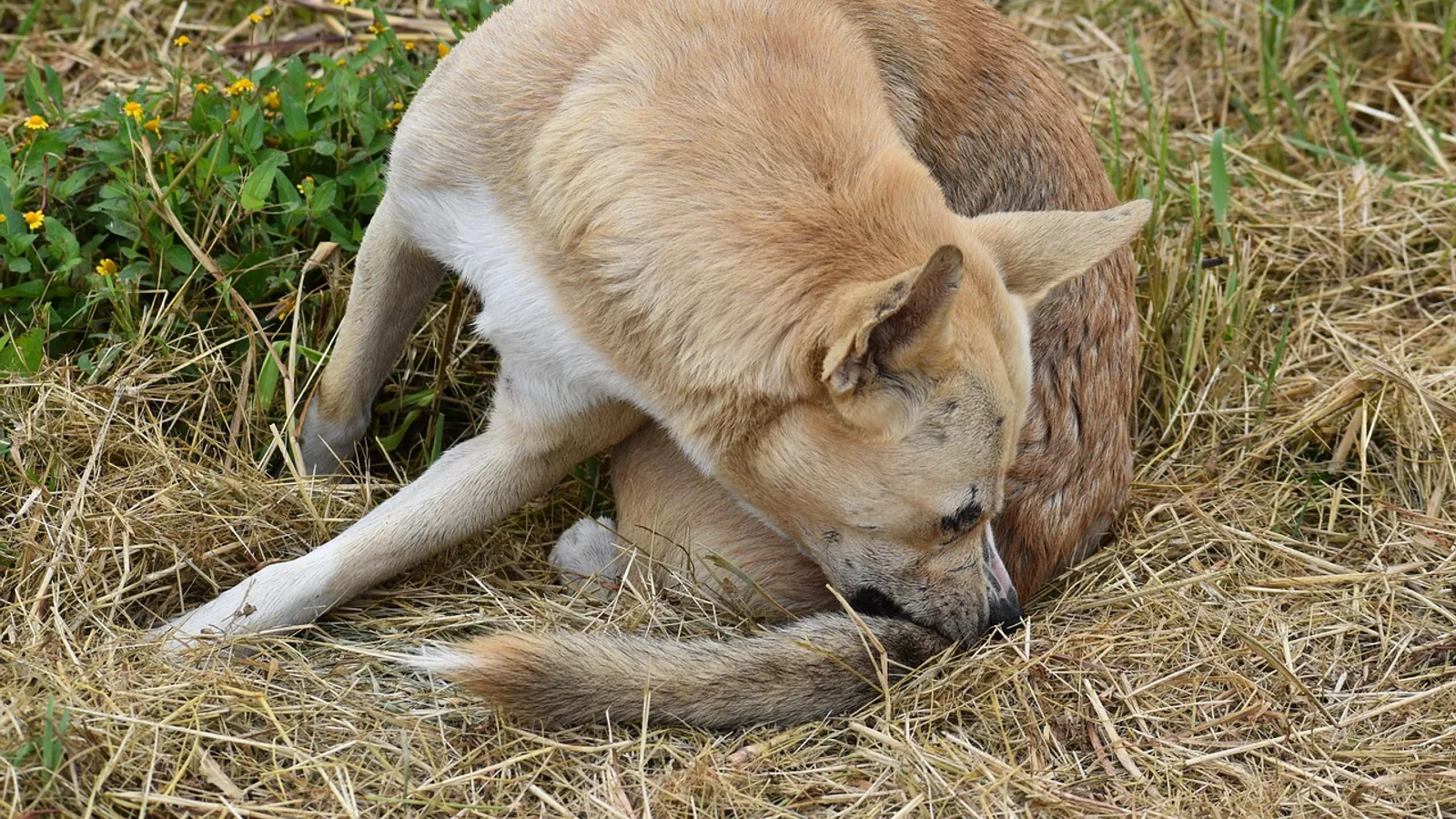
Yes, dogs can get poison ivy, but most do not. The thick fur coat blocks the plant oil from reaching skin, so a dog walking through a patch often comes away with nothing more than contaminated fur. The real problem is that contaminated fur carries urushiol, the oily allergen in poison ivy, straight to your hands, your couch, and your face. That is how dogs spread poison ivy to people.
This article explains what urushiol does to canine skin, which body parts are at risk, how to bathe a contaminated dog safely, what to do if your dog eats the plant, and when a veterinarian needs to be involved.
This article is educational and is not a substitute for veterinary diagnosis or treatment.
The Short Answer
Poison ivy is a member of the genus Toxicodendron, and its allergen is a mixture of oily compounds called urushiol [1]. Urushiol causes allergic contact dermatitis, a type IV hypersensitivity reaction, in people who have been sensitized to it [1]. That reaction is what produces the itchy, red, blistering rash that most Americans recognize on sight.
Dogs are built differently in two important ways. First, their skin is largely covered by fur, which acts as a physical barrier between urushiol and the living layers of skin. Second, even where skin is exposed, dogs appear no more susceptible to contact sensitizers than humans are, based on a review of the canine immune response to contact allergens [2]. The same four key events that drive skin sensitization in people are present in dogs, but the evidence does not suggest dogs react more easily [2].
So the honest answer has two parts:
- Can dogs get poison ivy? Yes, in the thin-haired areas where urushiol can touch skin. The belly, groin, muzzle, lips, and the skin around the eyes are the most exposed.
- Does poison ivy affect dogs the way it affects people? Usually far less. Many dogs never develop a rash at all. When they do, it tends to be mild and localized.
The bigger practical issue for a household is transfer. A dog can run through poison ivy, pick up urushiol on the coat, and then brush against a person. That person develops the classic rash without ever having touched the plant. Dogs are a common and underrecognized route of human exposure.
How Urushiol Works on Skin
Urushiol is not a poison in the classic sense. It does not burn or corrode tissue on contact. It is an allergen, which means it trains the immune system to react, and the rash is the immune system's own response.
The Sensitization Step
The first time a person or animal contacts urushiol, nothing may happen. The immune system is learning the shape of the molecule. This is called sensitization. On a later exposure, the immune system recognizes urushiol and launches a delayed inflammatory response. In people, that response can appear within 1 to 2 days in someone already sensitized, or up to 3 weeks after a first exposure [3].
Why the Rash Itches
Recent research has mapped the itch pathway in urushiol dermatitis. In a mouse model using urushiol, the allergen produced a Th2-biased immune response with elevated thymic stromal lymphopoietin (TSLP), serotonin, and endothelin, but not histamine [4]. That last detail matters. It helps explain why antihistamines often do not stop the itch of poison ivy dermatitis, and why blocking TSLP or other cytokine signals is being studied as an alternative to the standard steroid and antihistamine approach [4].
A separate study identified TRPA1, an ion channel on sensory nerves, as central to the inflammation and scratching behavior in urushiol contact dermatitis [5]. Blocking TRPA1 reduced skin swelling, immune cell infiltration, and scratching in mice, while blocking a related channel did not [5]. This is the biology behind the intense, hard-to-suppress itch.
The Coat as a Barrier
Fur is the reason dogs get off lightly. Urushiol is an oil, and it clings to hair easily. But hair keeps the oil off skin. A dog with a dense double coat can wade through a poison ivy patch and never let the allergen reach a living cell.
That same property makes the coat a reservoir. Urushiol stays potent on fur and on fabric for a long time. It does not evaporate. It does not wash away in dew. It sits there until something removes it or something brushes against it.
What a Poison Ivy Reaction Looks Like on a Dog
When a dog does react, the signs mirror human allergic contact dermatitis but are usually milder and more localized. Look for these changes in thin-coated areas.
- Redness and inflammation of the skin
- Small raised bumps or pimple-like lesions
- Itching, scratching, rubbing, or chewing at the area
- Blisters or oozing in more severe cases
- Swelling around the muzzle or eyes if the face was exposed
The distribution tells the story. A rash on the belly, inner thighs, groin, or muzzle points toward direct plant contact. A rash on the back or sides is less likely to be poison ivy, because the fur there usually prevents contact.
A useful comparison comes from human medicine. Black-spot Toxicodendron dermatitis occurs when urushiol oxidizes on the skin and turns dark, producing black dots or streaks with or without surrounding redness [6]. The same oxidation can happen on a dog's coat or on exposed skin, though the black spots are far more often reported in people. If you see dark, tarry residue on your dog after a woodland walk, treat it as contaminated material and wash it off.
What It Is Not
Contact dermatitis in dogs has many causes, and poison ivy is only one. Irritant contact dermatitis is a direct, non-immune reaction to a chemical, while allergic contact dermatitis is an immune-mediated, antigen-specific reaction [7]. The two look similar but have different mechanisms. Shampoos and other topical products are known causes of allergic contact dermatitis in dogs, and people have even developed contact dermatitis after washing their dogs with dog shampoo [2].
That means a rash on your dog is not automatically poison ivy. If the dog never went near Toxicodendron, the plant is not the likely culprit. Diagnosis of contact dermatitis relies on history, clinical examination, and dermatological testing, and there is no single fully validated diagnostic test for it [7].
The Bigger Risk: Spreading Poison Ivy to People
The most common way a dog causes a human poison ivy rash is mechanical transfer. Urushiol on the coat rubs onto human skin. The dog never has to be sick for this to happen.
Think about the contact points in a normal evening:
- Hands petting the dog's back and neck
- A leash hand brushing the shoulder
- The dog leaning against a bare leg
- The dog sleeping on a bed or couch
- Children hugging and kissing the dog
Every one of those is a transfer route. Urushiol is not alive, so it does not need the plant to stay active. It just needs to stay on a surface.
Contaminated Objects
Urushiol also transfers to gear. Collars, harnesses, leashes, car seats, blankets, and grooming tools can all hold the oil. Handling those items with bare hands is enough to trigger a rash in a sensitized person. A dog that rolled in poison ivy can contaminate a car interior in a single ride home.
Why This Matters for Sensitized Households
People who already react to poison ivy tend to react again, and often more quickly. The delay shortens with repeat exposure, so a person who once took two days to break out may now show a rash within a day [3]. In a household where one person is highly sensitized, a contaminated dog becomes a recurring problem until the coat is properly cleaned.
A Safe Bathing Protocol for a Contaminated Dog
If your dog has been in poison ivy, the goal is to remove urushiol before it transfers to skin or furniture. Do this outdoors or in a space you can clean afterward.
Before You Start
- Put on gloves. Use nitrile or rubber gloves. Do not use thin disposable food gloves that tear. Urushiol passes through many materials, so a sturdy barrier matters.
- Cover your arms and legs. Long sleeves and pants reduce the chance of contact with splash and runoff.
- Gather everything first. Shampoo, towels, a leash, and a trash bag. You do not want to leave a wet, contaminated dog unattended while you search for supplies.
- Choose the location. A driveway, a patio, or a utility tub is better than a bathroom. If you must use a bathtub, plan to clean it immediately afterward.
The Wash
- Wet the coat thoroughly with cool to lukewarm water. Hot water is uncomfortable and does not help remove oil.
- Apply a pet-safe shampoo and work it into a lather. Focus on the areas most likely to have contacted the plant: the legs, belly, chest, and any place the coat is thin. A degreasing or dish-style cleanser is often used for oil removal, but confirm with your veterinarian that it is appropriate for your dog's skin and coat before using it.
- Let the shampoo sit briefly. Give the surfactant time to lift the oil off the hair shafts.
- Rinse completely. Residual shampoo can irritate skin. Rinse until the water runs clear.
- Repeat the wash. A second lather and rinse improves oil removal. For heavy exposure, a third wash is reasonable.
- Wash the face carefully. Use a damp cloth rather than a full rinse near the eyes and nose. Do not let shampoo run into the eyes.
- Dry with towels you are willing to discard or wash separately. Urushiol on a towel can transfer later. Wash contaminated towels in hot water with detergent, and handle them with gloves until washed.
- Clean the area. Rinse the tub or surface, then wipe it down. Wash your hands and forearms with soap and water even though you wore gloves.
What Not to Do
- Do not bathe the dog and then let it back on the bed or couch before it is fully dry and clean.
- Do not use your bare hands to check the coat for oil.
- Do not reuse the same towel on multiple dogs without washing it.
- Do not assume a single rinse is enough. Urushiol is persistent.
Jewelweed and Other Folk Remedies
Jewelweed, Impatiens capensis, has a long history of use by American Indian tribes as a plant mash to reduce poison ivy dermatitis [8]. A study testing a saponin-containing extract of jewelweed found that the extract had biological activity, and the authors validated the hypothesis that saponins are responsible for its traditional use [8]. That work was done on human volunteers and in laboratory assays, not in dogs. It does not establish a canine treatment.
Barrier creams such as bentoquatam can protect human skin from urushiol, but they must be applied before plant contact [3]. There is no equivalent product with established canine dosing. If you want a preventive barrier for your dog, ask your veterinarian rather than adapting a human product.
If Your Dog Eats Poison Ivy
Owners often panic when they see a dog chewing on a Toxicodendron leaf. The realistic outcome is usually mild.
What to Expect
Urushiol is not a systemic poison in the way that, for example, rodenticides are. The main concern after ingestion is irritation of the mouth, lips, and gastrointestinal tract. In people, eating foods that contain urushiol can cause systemic contact dermatitis, a skin reaction triggered by swallowed allergen in a sensitized person [9]. A well-documented example is Rhus chicken, a traditional Korean remedy, which caused systemic contact dermatitis in some patients, with generalized maculopapular eruptions appearing several days after ingestion [10]. That is a human food-preparation scenario, not a dog eating a leaf, but it shows that swallowed urushiol can produce skin signs in a sensitized individual.
For dogs, the typical picture after eating poison ivy is stomach upset. Vomiting, drooling, and diarrhea are the common signs. Most cases are mild and self-limiting.
What to Do
- Remove the plant material from the dog's mouth if it is safe to do so.
- Offer water.
- Withhold food for a short period if the dog is vomiting, then reintroduce bland food gradually.
- Watch for worsening signs over the next 24 hours.
- Call your veterinarian or a pet poison control service if vomiting is repeated, if the dog seems painful, or if you are unsure how much was eaten.
Do not induce vomiting unless a veterinarian tells you to. Do not give human medications without veterinary guidance.
When Ingestion Is More Serious
Seek veterinary care promptly if you see any of the following:
- Repeated or forceful vomiting
- Blood in vomit or stool
- Severe abdominal pain or a tense, painful belly
- Lethargy or weakness
- Difficulty breathing or facial swelling
- Signs of anaphylaxis such as collapse, pale gums, or widespread hives
Anaphylaxis after plant ingestion is uncommon, but it is an emergency if it happens.
Poison Ivy on Dogs: Treatment Options
There is no specific antidote for urushiol dermatitis. Treatment is supportive and aimed at controlling inflammation and itch.
First-Line Care at Home
For mild, localized reactions, the priorities are stopping further exposure and preventing self-trauma.
- Remove the allergen. Bathe the dog as described above.
- Prevent scratching. An Elizabethan collar or a light covering over the affected area can stop chewing and secondary infection.
- Keep the area clean and dry. Gentle cleansing with a pet-safe product reduces irritation.
- Cool compresses. A cool, damp cloth can soothe inflamed skin for short periods.
Veterinary Treatment
If the reaction is more than mild, a veterinarian may prescribe anti-inflammatory or immunosuppressive therapy. In a controlled canine study of experimentally induced allergic contact dermatitis, oral prednisolone at 0.25 mg/kg every other day for 30 days reduced clinical symptoms [11]. That is a research setting, not a home dosing instruction. The exact drug, dose, and duration for your dog must come from your veterinarian, because steroids carry real risks and the right protocol depends on the severity and location of the rash.
The same study found that oral probiotics containing Bacillus subtilis and Bacillus coagulans spores reduced clinical symptoms and shortened wound repair time in dogs with induced allergic contact dermatitis, and improved serum bactericidal activity against Staphylococcus aureus and Escherichia coli [11]. This is early evidence, not a standard prescription. Do not start a probiotic for a skin reaction without asking your veterinarian.
What About Antihistamines?
Human poison ivy itch is famously resistant to antihistamines. The mouse urushiol model found that histamine was not elevated in urushiol-challenged skin, and antihistamines did not reduce scratching, while TSLP and serotonin pathway inhibitors did [4]. This is one reason a veterinarian may reach for steroids rather than an antihistamine for a significant reaction. It also explains why owners often report that over-the-counter allergy pills do not help a poison ivy rash.
Emerging and Adjunct Approaches
Research into urushiol dermatitis continues on several fronts.
- TRPA1 inhibition. Blocking this ion channel reduced inflammation and scratching in mice exposed to urushiol [5].
- Aloe-emodin. This anthraquinone derivative inhibited mast cell degranulation and suppressed inflammatory cytokines in a mouse model of urushiol-induced acute itch and allergic contact dermatitis [12].
- Monoclonal antibody therapy. A monoclonal antibody reacting with the catechol moiety of urushiol suppressed the contact sensitivity response in mice already sensitized to urushiol [13].
- Oral desensitization. A systematic review of six studies with 410 human participants found that small oral doses of urushiol may reduce the severity and incidence of poison ivy reactions, with side effects including rash, pruritus ani, and flushing [3]. This is a human preventive strategy under investigation, not a canine treatment.
None of these are standard veterinary care today. They are directions for future research.
The Role of the Immune System
It helps to understand why treatment focuses on the immune response rather than the plant. Urushiol triggers a complex cascade involving resident skin cells, immune cells, and pro-inflammatory cytokines and chemokines [7]. The reaction is the body attacking its own skin in an effort to fight a harmless molecule. Suppressing that response is the therapeutic goal.
Preventing Exposure in the First Place
Avoidance is the principal way to prevent Toxicodendron dermatitis, and that starts with learning to identify the plants [1]. Poison ivy, poison oak, and poison sumac all contain urushiol [1].
Know the Plant
Teach yourself the leaf patterns and growth habits of the Toxicodendron species in your region. The classic caution applies: leaves of three, let it be. The plants can appear as ground cover, vines, or shrubs.
Manage the Yard
- Clear poison ivy from areas your dog uses. Wear gloves and protective clothing, and dispose of the plant material in sealed bags.
- Do not burn poison ivy. Burning can aerosolize urushiol and cause serious respiratory exposure.
- Recheck the yard each season. The plants regrow.
Manage the Dog After Walks
- If you walk in wooded or overgrown areas, assume the coat may be contaminated.
- Wipe down the dog's legs and belly with a damp cloth after high-risk walks.
- Keep a dedicated towel and gloves near the door for this purpose.
- Wash your hands after handling the dog.
Manage Yourself
If you are highly sensitized, take extra care. Wear gloves when petting a dog that may have been exposed. Change clothes after hikes. Wash exposed skin with soap and water.
Myths and Common Questions
Myth: Dogs cannot get poison ivy at all.
False. Dogs can develop allergic contact dermatitis from urushiol in thin-haired areas. It is simply less common and usually milder than in people.
Myth: If my dog has a rash, I caught it from the dog.
Poison ivy is not contagious in the person-to-person sense. You cannot catch the rash from someone else's blisters. But you can pick up urushiol from a contaminated surface, including a dog's coat, and develop your own rash. The distinction matters because it changes what you clean.
Myth: The rash spreads because it is in the blood.
The rash does not spread through the bloodstream. New areas of rash usually mean new contact with urushiol, often from contaminated hands, clothing, or fur.
Myth: A dog that ate poison ivy will get a rash all over.
Not usually. The main effect of ingestion is gastrointestinal upset. Systemic contact dermatitis from swallowed urushiol is documented in humans, particularly with Rhus chicken, but it is not the typical canine presentation [10].
Myth: Any shampoo will remove urushiol.
Ordinary lathering helps, but oil removal is the goal. Multiple washes and careful rinsing matter more than the specific product. Ask your veterinarian which shampoo is safe for your dog's skin.
What Is Still Uncertain
Several questions do not have clean answers in the current literature.
How common is poison ivy dermatitis in dogs? The prevalence of contact dermatitis in veterinary medicine has not been established [7]. Most reports are clinical impressions rather than population data.
How much urushiol does it take to sensitize a dog? The threshold is not known for canines. The limited evidence suggests dogs are not more susceptible to sensitizers than humans, but the data are not strong enough to set a number [2].
How effective are barrier products in dogs? Barrier creams and protective clothing show promise for preventing poison oak dermatitis in humans, but the research is still developing and the products are not validated for canine use [14].
Do probiotics help real-world cases? The canine probiotic study used an induced model of allergic contact dermatitis, not natural poison ivy exposure [11]. Results may not translate directly.
Does oral desensitization have a canine equivalent? The human systematic review found promising but limited evidence [3]. No canine protocol is established.
Limitations and When to Contact a Veterinarian
This article describes general principles. Every dog is an individual, and a rash, a swollen face, or vomiting after plant exposure deserves a professional assessment. Contact your veterinarian if any of the following apply.
- The rash is spreading, worsening, or covering a large area
- The dog is scratching or chewing to the point of bleeding
- There is swelling of the face, muzzle, or eyelids
- The dog is vomiting repeatedly, has diarrhea, or refuses food
- The dog seems painful, lethargic, or weak
- You see blisters, open sores, or signs of infection such as pus or foul odor
- The dog ate a large amount of plant material
- You are unsure whether the plant was poison ivy
- Your dog has a known skin condition or is on medication that affects the immune system
- The signs do not improve within a few days of home care
Call an emergency veterinary service or a pet poison control line immediately if you see difficulty breathing, collapse, pale gums, or widespread hives.
For human exposure, contact your own physician or a poison control center. Urushiol dermatitis in people can be severe and may require prescription treatment.
Frequently Asked Questions
Can dogs get poison ivy?
Yes, dogs can get poison ivy, but it is uncommon because fur blocks urushiol from reaching skin. Reactions are most likely in thin-haired areas such as the belly, groin, muzzle, and around the eyes.
Does poison ivy affect dogs the same way it affects people?
No. Dogs are not more susceptible to contact sensitizers than humans, and their coat provides real protection [2]. When a dog does react, the rash tends to be milder and more localized than the widespread, intensely itchy rash people develop.
Can my dog spread poison ivy to me?
Yes. This is the most common way dogs cause human poison ivy rashes. Urushiol clings to fur, collars, leashes, and bedding. Petting a contaminated dog or handling its gear with bare hands can transfer the oil to your skin.
What does poison ivy rash look like on a dog?
Look for redness, small raised bumps, itching, and sometimes blisters in thin-coated areas. The distribution usually follows where the plant touched the dog, such as the belly or muzzle. Black spots from oxidized urushiol can also appear on skin or fur [6].
What should I do if my dog ate poison ivy?
Most dogs that eat poison ivy develop only mild stomach upset, such as vomiting, drooling, or diarrhea. Remove any plant material from the mouth, offer water, and monitor closely. Call your veterinarian if vomiting is repeated, if the dog seems painful, or if you are unsure how much was eaten.
How do I bathe a dog that was exposed to poison ivy?
Wear gloves and cover your arms and legs. Wet the coat, lather with a pet-safe shampoo, rinse thoroughly, and repeat the wash at least once. Wash the face with a damp cloth rather than a full rinse. Discard or separately wash the towels, and clean the bathing area afterward.
Is there a treatment for poison ivy on dogs?
There is no specific antidote. Mild cases are managed by removing the urushiol, preventing scratching, and keeping the skin clean. More significant reactions may need veterinary treatment with anti-inflammatory medication. In a research setting, oral prednisolone reduced symptoms in dogs with induced allergic contact dermatitis [11]. Do not give your dog steroids without veterinary direction.
When should I call a veterinarian about poison ivy exposure?
Call if the rash is spreading or severe, if the dog is scratching until it bleeds, if there is facial swelling, if vomiting or diarrhea is repeated, or if the dog seems lethargic or painful. Seek emergency care for difficulty breathing, collapse, or widespread hives.
Related Articles
- Dog Ate Rat Poison: What to Do Before Symptoms Appear
- My Dog Ate a Mouse Poison: What Should I Do Immediately?
- Dog Ear Infection Spread To Brain Symptoms Treatment
- Dog Ate Chicken Bones Treatment
- Dog Ate Ibuprofen or Tylenol: Toxicity Signs and Emergency Treatment
- How Does A Dog Get Pneumonia
- Salt Toxicity in Dogs and Cats: Sources, Signs, and Treatment
- Lead Poisoning in Dogs and Cats: Sources, Symptoms, Treatment
- Mold Poisoning in Dogs: Moldy Food, Compost, and Tremors
Sources
- Botanical Briefs: Toxicodendron Dermatitis.
- Reapplication of the Type IV Hypersensitivity Quantitative Risk Assessment to Assess Ingredients Used on Canines.
- Oral desensitization therapy for poison ivy urushiol contact allergy: A systematic review.
- Transcriptome profiling reveals Th2 bias and identifies endogenous itch mediators in poison ivy contact dermatitis.
- TRPA1 controls inflammation and pruritogen responses in allergic contact dermatitis.
- Black-Spot Toxicodendron Dermatitis With Varied Presentation.
- Contact dermatitis: a comparative and translational review of the literature.
- Efficacy of the saponin component of Impatiens capensis Meerb.in preventing urushiol-induced contact dermatitis.
- Systemic contact dermatitis to foods: nickel, BOP, and more.
- Ingestion of Rhus chicken causing systemic contact dermatitis in a Korean patient.
- Effect of Bacillus subtilis and Bacillus coagulans spores on induced allergic contact dermatitis in dogs.
- Aloe-emodin relieves allergic contact dermatitis pruritus by inhibiting mast cell degranulation.
- Regulation of the contact sensitivity response to urushiol with anti-urushiol monoclonal antibody ALG 991.
- Innovation in prevention of poison oak contact dermatitis.