Are Maidenhair and Foxtail Ferns Toxic to Cats?
By Dr. Zubair Khalid, DVM, MS, PhD ·
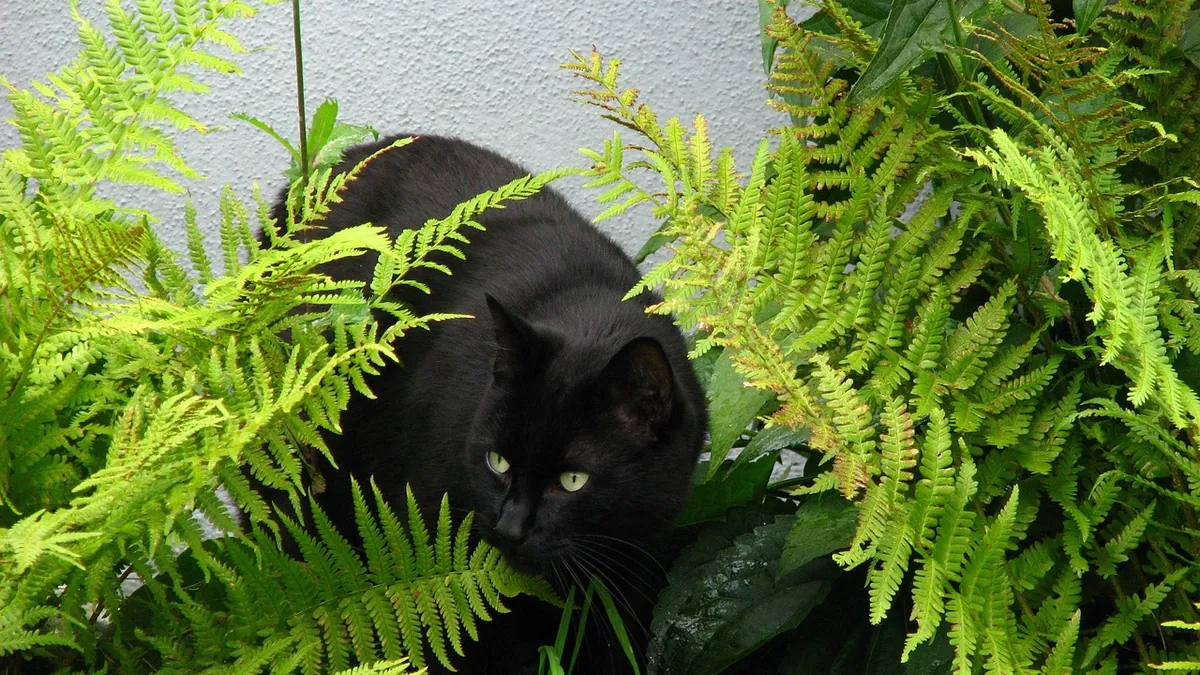
Is maidenhair fern toxic to cats? No. True maidenhair ferns (Adiantum species) are not listed as toxic to cats, and most ferns sold as houseplants are considered safe. The confusion comes from the name "foxtail fern," which can point to a harmless ornamental plant or to a toxic plant with the same common name [1]. This article is educational and is not a substitute for veterinary diagnosis or treatment.
Quick Answer
- Maidenhair fern is not known to be toxic to cats, but the ornamental foxtail fern (Asparagus densiflorus) is a type of asparagus fern, which the ASPCA lists as toxic to cats.
- The ASPCA lists a plant called "Foxtail" as toxic to cats, but that plant is Acalypha hispida, a completely different species with the same nickname [1].
- "Foxtail" also refers to dried grass awns that can burrow into a cat's skin, nose, or mouth, and those are a physical hazard, not a poisoning.
- If your cat chews any fern, watch for drooling, vomiting, or diarrhea, and call your veterinarian if signs appear.
- When in doubt, call the ASPCA Animal Poison Control Center at (888) 426-4435 or Pet Poison Helpline at (855) 764-7661.
Is Maidenhair Fern Toxic to Cats?
No. Maidenhair fern does not appear on veterinary toxic plant lists, and it is widely grown indoors around pets. The ASPCA's toxic and non-toxic plant database does not flag Adiantum species as a danger to cats. That said, "not toxic" does not mean "good to eat." A cat that chews a lot of any plant fiber can still vomit or have loose stool simply because plant material irritates the stomach.
Several ferns that people keep as houseplants are formally listed as non-toxic to cats. Mother fern (Asplenium bulbiferum), also called king and queen fern, spleenwort, parsley fern, or hen and chickens fern, is listed as non-toxic to both dogs and cats [2]. Moss fern (Selaginella kraussiana), also called club moss, Irish moss, or trailing Irish moss, is likewise listed as non-toxic to dogs, cats, and horses [3]. These records support the general pattern that many common fern houseplants are safe choices.
The catch is naming. Common plant names are not standardized, and the same nickname can be attached to unrelated plants. That is exactly what happens with "foxtail."
Is Foxtail Fern Toxic to Cats?
This is where owners get tripped up. The ASPCA database has a plant record called "Foxtail" that is listed as toxic to dogs, cats, and horses [1]. If you search that record, you will find the scientific name is Acalypha hispida, in the Euphorbiaceae (spurge) family [1]. Its other common names include bristly copperleaf, chenille, red hot cat's tail, red cattail, and cat's tail [1]. This is a flowering shrub, not a fern.
The plant most gardeners call foxtail fern is Asparagus densiflorus, an ornamental with fluffy, tail-like fronds. It is not the same plant as Acalypha hispida, and it is not the plant in that toxic record [1]. So when someone asks "is foxtail fern toxic to cats," the honest answer depends on which plant they actually have. A label that says "foxtail fern" on a nursery pot usually means the asparagus relative, which is not listed as toxic. A label that says "foxtail" or "red hot cat's tail" on a flowering shrub means the spurge family plant, which is toxic [1].
There is a third meaning too. In veterinary medicine, "foxtail" often refers to the dried seed heads of certain grasses. These are barbed and can work their way into skin, ears, nostrils, and gums. That is a mechanical injury problem, not a poisoning problem, and it is common in dogs who run through tall grass. Cats can be affected, especially outdoor cats, but the risk is different from eating a houseplant.
If you are unsure which plant you own, take a clear photo of the leaves and any flowers, and ask your veterinarian or a poison control service to help identify it. You can also compare your plant against photo references for house plants toxic to cats pictures to narrow it down.
The Toxic Principle and What It Does in the Body
For the toxic "foxtail" (Acalypha hispida), the toxic principle is diterpene esters [1]. These compounds are irritants. In the spurge family, the irritating compounds are often present in the sap, so chewing a leaf or stem can cause local irritation of the mouth and stomach lining. That irritation is what drives the signs owners see.
The reported clinical signs for this plant are drooling, vomiting, and diarrhea [1]. These are signs of gastrointestinal upset, not signs of organ failure. That matters for how worried you need to be. A cat that nibbles a leaf and drools is a very different situation from a cat that swallowed a household medication or a rodenticide.
For maidenhair fern, mother fern, and moss fern, there is no listed toxic principle because they are classified as non-toxic [3][2]. If your cat eats one of these, the main concern is stomach upset from eating plant matter, not a specific poison.
Signs and Their Typical Timeline
For the toxic Acalypha plant, the expected signs are drooling, vomiting, and diarrhea [1]. These usually show up within a few hours of chewing the plant, because they come from direct irritation of the mouth and gut. Mild cases often settle with supportive care.
For non-toxic ferns, there is no specific poison syndrome. If your cat eats a large amount, you might see a single episode of vomiting or a soft stool. Many cats show no signs at all.
Watch for these signs after any plant exposure:
- Drooling or pawing at the mouth
- Vomiting, with or without plant pieces visible
- Diarrhea or loose stool
- Refusing food or acting quieter than usual
- Lip smacking, head shaking, or rubbing the face (which can suggest a grass awn stuck in the mouth or nose)
If your cat is sneezing repeatedly from one nostril, has a bloody or foul discharge from the nose, or keeps pawing at an ear, a foxtail grass awn is a real possibility. That needs a veterinary exam, often the same day, because awns do not dissolve and can migrate deeper.
What to Do Right Now
First, move your cat away from the plant and take the plant, a photo of it, or the nursery tag with you. Identification changes the advice you get.
Call one of these right away if you think your cat ate a plant you cannot identify, or if it ate the toxic "foxtail" (Acalypha hispida):
- Your veterinarian or a local emergency clinic
- ASPCA Animal Poison Control Center at (888) 426-4435
- Pet Poison Helpline at (855) 764-7661
Do not induce vomiting unless a veterinarian tells you to. Forcing vomiting can cause aspiration, and it is the wrong move for many plant exposures. Never give human medications, milk, oil, or hydrogen peroxide on your own.
If your cat only nibbled a maidenhair fern and is acting normal, you can monitor at home. Offer water, keep the plant out of reach, and watch for vomiting or diarrhea over the next few hours. If signs appear, call your veterinarian.
If you see a grass awn stuck in the fur, nose, or mouth, do not pull hard on it. You can gently remove one that is clearly loose and sitting on the surface, but anything embedded needs a veterinarian. Trying to yank out an embedded awn can break it and push fragments deeper.
Veterinary Treatment
Treatment depends on what your cat ate and how sick it is. For a mild plant irritation, your veterinarian may give anti-nausea medication, fluids under the skin or into a vein, and a bland diet for a day or two. Many cats improve quickly with this kind of supportive care.
For a cat with repeated vomiting or diarrhea, bloodwork may be recommended to check hydration and electrolyte status. This is standard care and helps rule out other causes. The veterinarian calculates any medication dose from your cat's weight and current health, so doses are not something you should estimate at home.
If a grass awn is the problem, treatment is procedural. Your veterinarian will examine the ears, nose, mouth, and skin, sometimes with sedation, and remove the awn with instruments. Imaging may be needed if the awn has migrated. Antibiotics or anti-inflammatories are sometimes used afterward.
If your cat ate something else entirely, the treatment plan changes. For example, grape ingestion is a known kidney risk in pets, and a large case review of emergency records looked at outcomes after fresh and processed grape exposure in dogs and cats [4]. That is a different problem from fern ingestion, but it shows why accurate identification matters so much. Other serious poisonings, such as anticoagulant rodenticide exposure, are confirmed with laboratory testing of stomach contents in forensic cases [5]. Your veterinarian picks the right tests based on the history you give.
Outlook
For the toxic Acalypha plant, the outlook is generally good when signs are limited to drooling, vomiting, and diarrhea [1]. These are irritant effects, and most cats recover with supportive care. Cats that eat a large amount or have ongoing vomiting need closer monitoring.
For maidenhair fern and other non-toxic ferns, the outlook is excellent. Most cats have no signs or only mild stomach upset [3][2].
For grass awns, the outlook depends on how quickly the awn is removed and whether it has migrated. Awns caught early in the mouth or ear usually resolve well. Awns that have traveled into the nose, chest, or deeper tissues need more involved care and can cause chronic drainage or infection if missed.
Prevention and Safer Alternatives
The simplest prevention is placement. Put ferns on shelves, in hanging baskets, or in rooms your cat cannot reach. Cats climb, so "high up" only works if there is no nearby launch point.
If your cat chews plants, offer safe alternatives. Cat grass (wheat or oat grass) gives them something to nibble. You can also rotate in plants that are documented as non-toxic, such as mother fern or moss fern [3][2]. For a broader list of safe and unsafe options, see plants toxic to cats and house plants toxic to cat.
Check labels before you buy. If a tag says "foxtail," confirm the scientific name. If it says Acalypha hispida, keep it out of your home or well out of reach [1]. If it says Asparagus densiflorus, you have an asparagus fern, which can irritate the skin and stomach of cats.
Keep outdoor cats away from tall, dry grass in late summer and fall, when grass awns are most common. Brush your cat after outdoor time and check the ears, toes, and under the collar for awns.
Finally, if you are choosing a new houseplant and want a low-risk option, spider plants are another common choice. You can read more at are spider plants toxic to cats. If you already own snake plants, check are snake plants toxic to cats before deciding where to place them.
Limitations and When to Contact a Veterinarian
Plant identification from a photo is not always exact, and common names cause real confusion. Your veterinarian can only give you solid advice when they know what your cat actually ate. Individual cases need a veterinarian who can examine your cat and ask about its health history.
Call now (emergency) if your cat has repeated vomiting, trouble breathing, collapse, tremors, a swollen face, or severe drooling that will not stop. Also call now if you see a foxtail awn embedded in the nose, eye area, or mouth, or if your cat is sneezing blood.
Call the same day if your cat ate a plant you cannot identify, ate the toxic Acalypha plant, or has vomited more than once or had diarrhea for more than a few hours [1]. Same-day care also applies if your cat stops eating or seems painful.
Schedule a routine visit if your cat had a mild upset that has fully resolved but you want the plant identified, or if you want help choosing cat-safe plants for your home. Bring a cutting or a clear photo.
Frequently Asked Questions
Can my cat eat maidenhair fern safely?
Maidenhair fern is not listed as toxic to cats, so a small nibble is unlikely to cause poisoning. A cat that eats a large amount may vomit or have soft stool from the plant fiber alone. If signs last more than a few hours, call your veterinarian.
Is foxtail fern safe for cats?
It depends on which plant you mean. The ornamental foxtail fern (Asparagus densiflorus) is a different plant from the one in the "Foxtail" record, but as an asparagus fern it is also considered toxic to cats. The toxic record refers to Acalypha hispida, a spurge family shrub with the same nickname [1]. Check the scientific name on the tag.
Which ferns are non-toxic to cats?
Mother fern and moss fern are both listed as non-toxic to cats [3][2]. Maidenhair fern is also widely considered safe. Keep in mind that any plant can cause mild stomach upset if a cat eats enough of it.
What if my cat ate a fern and is drooling?
Drooling after chewing a plant usually means mouth irritation. Rinse the mouth gently with water if your cat allows it, and offer fresh water to drink. If drooling continues, or if vomiting starts, call your veterinarian or a poison control line.
Do foxtail grass awns poison cats?
No, grass awns do not poison cats. They cause injury by burrowing into skin, ears, noses, and gums, and they can migrate deeper over time. An embedded awn needs a veterinary exam and removal, often the same day.
Related Articles
- Are Spider Plants Toxic To Cats
- House Plants Toxic To Cat
- Plants Toxic To Cats
- House Plants Toxic To Cats Pictures
- Are Snake Plants Toxic To Cats
- House Plants Toxic To Kittens
- Are Ferns Toxic to Cats? Holly, Staghorn and More
- Are Boston Ferns Toxic to Cats? Safe or Not?
- Is Button Fern Toxic to Cats? Safety Information
References
- Toxic and Non-toxic Plants: Foxtail. ASPCA Animal Poison Control Center.
- Toxic and Non-toxic Plants: Mother Fern. ASPCA Animal Poison Control Center.
- Toxic and Non-toxic Plants: Moss Fern. ASPCA Animal Poison Control Center.
- A multicenter, retrospective, cross-sectional analysis of fresh and processed Vitis vinifera (grape) ingestion in dogs and cats. Frontiers in veterinary science, 2026.
- Forensic LC-MS/MS Monitoring of Anticoagulant Rodenticide Poisoning in Cats Over a Half-Decade. Veterinary medicine and science, 2026.