Are Boston Ferns Toxic to Cats? Safe or Not?
By Dr. Zubair Khalid, DVM, MS, PhD ·
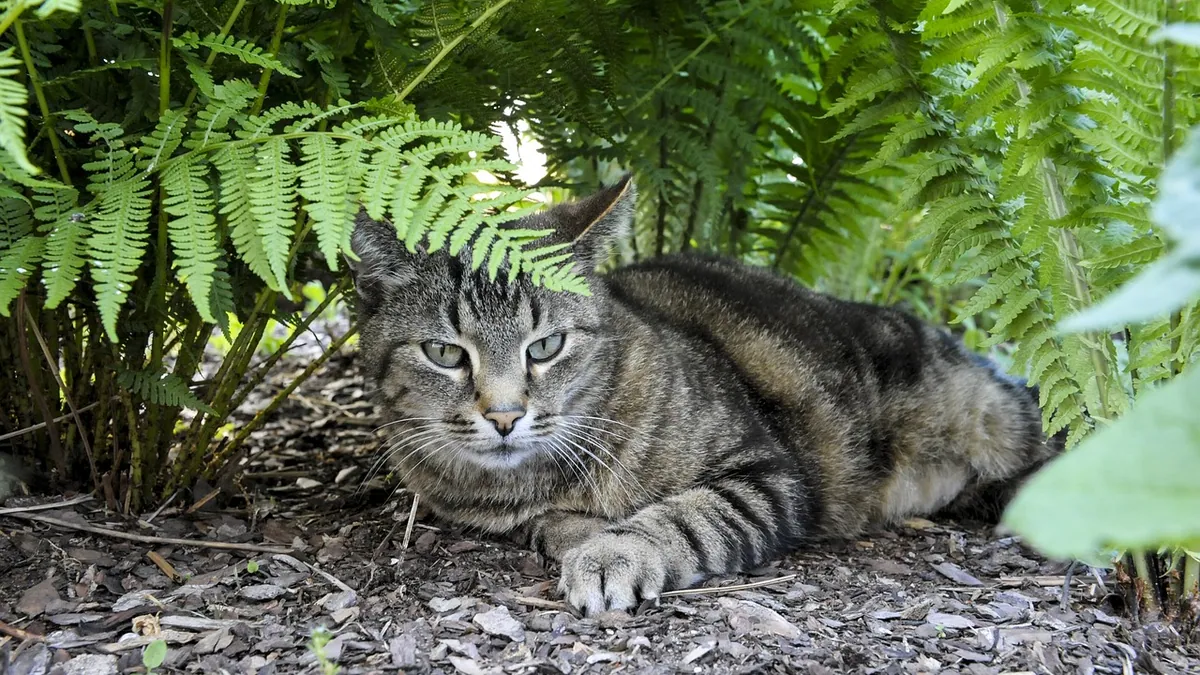
Is Boston sword fern toxic to cats? No. The Boston fern (Nephrolepis exaltata bostoniensis) is listed as non-toxic to cats by the ASPCA Animal Poison Control Center, so it is not expected to cause poisoning if your cat chews on it [1]. That said, "non-toxic" does not mean "risk-free," and a cat that eats a lot of any plant can still vomit or have diarrhea.
This article is educational and is not a substitute for veterinary diagnosis or treatment.
Quick Answer
- Boston ferns are classified as non-toxic to cats, meaning they do not contain a known poison that harms cats [1].
- The scientific name is Nephrolepis exaltata bostoniensis [1].
- Eating fern leaves can still irritate a cat's stomach and cause vomiting or diarrhea, even when the plant is non-toxic.
- If your cat eats a Boston fern and seems fine, watch it for a few hours and keep fresh water available.
- Call your veterinarian or a pet poison hotline if your cat vomits repeatedly, drools heavily, or acts lethargic.
Is Boston Sword Fern Toxic to Cats?
No, the Boston sword fern is not considered toxic to cats. The ASPCA Animal Poison Control Center lists the Boston fern as non-toxic to both dogs and cats [1]. This means there is no known plant toxin in this species that causes poisoning in cats.
The name "Boston sword fern" is often used for the same plant or for very close relatives in the same group. The classic Boston fern is Nephrolepis exaltata bostoniensis [1]. If you have a fern labeled "Boston sword fern," it is almost certainly the same plant or a similar Nephrolepis cultivar. These ferns are popular houseplants because they are safe to keep around pets.
Which Parts of the Plant Matter?
All the usual parts matter, including the fronds, the stems, and the roots. Because the plant is non-toxic, no single part is considered poisonous [1]. The bigger concern is how much your cat eats and whether the plant was treated with anything.
What About Fertilizers and Pesticides?
The fern itself is safe, but the products you put on it may not be. Fertilizers, insect sprays, and leaf shine products can contain ingredients that irritate a cat's mouth and stomach. If your cat chews a fern that was recently sprayed or fed, the plant is not the problem. The chemical on the leaves is. Rinse the leaves with plain water and call your veterinarian or a poison hotline for guidance.
Are Boston Ferns Safe for Cats to Be Around?
Yes. You can keep a Boston fern in a home with cats. Hanging the plant or placing it on a high shelf reduces the chance your cat will dig in the soil or chew the leaves. If your cat ignores the plant, there is no reason to remove it.
The Toxic Principle: Why Boston Ferns Are Different From Some Other Ferns
Boston ferns do not have a known toxic principle for cats [1]. That is the main reason they earn a non-toxic rating. Not every fern shares that status, though, and it helps to understand the difference.
Some ferns contain compounds that can harm animals that eat them in large amounts. Bracken fern is a well-known example in livestock. In cattle, eating bracken fern has been linked to cancer of the upper digestive tract, and researchers have studied how the plant and viruses may work together in that disease [2]. That is a serious problem for grazing cattle, not for a cat nibbling a houseplant. Still, it shows that "fern" is a broad category and not every fern is harmless.
Other fern species have been studied for their chemical content in laboratory settings. One fern species, Macrothelypteris torresiana, was tested in rats for liver-protective effects, and the researchers analyzed polyphenolic compounds in the plant [3]. This kind of research looks at possible benefits, not at cat poisoning. It does not change the safety rating of the Boston fern.
The practical point is simple. The Boston fern your cat lives with is not the same as bracken fern in a pasture, and it is not the same as a fern being studied in a lab [1][2][3]. For cats, the ASPCA rating is the one that matters, and it says non-toxic [1].
What Happens in the Body When a Cat Eats a Boston Fern?
Because there is no known toxin, there is no specific poison pathway to describe [1]. What usually happens is mechanical and digestive. Plant fibers are tough and hard for cats to break down. A cat that swallows a chunk of frond may vomit it back up or pass it in stool. Some cats drool because the leaf texture feels odd in the mouth. Others get loose stool for a day.
If your cat eats a large amount, the stomach and intestines can become irritated. That leads to the signs below. None of this means the plant is poisonous. It means the plant is bulky and not meant to be food.
Signs to Watch For and Their Timeline
Most cats that chew a Boston fern show no signs at all. When signs do appear, they are usually mild and start within a few hours of eating the plant.
Common signs include:
- Vomiting, sometimes with pieces of leaf in it
- Diarrhea or soft stool
- Drooling or lip smacking
- Refusing food for a short time
- Mild lethargy
Less common signs include repeated vomiting, gagging, or a cat that seems uncomfortable in the belly. These can happen if a large piece of plant is swallowed or if the cat has a sensitive stomach.
Signs often show up within 1 to 6 hours after eating. Mild stomach upset usually settles within 12 to 24 hours with supportive care at home. If signs last longer than a day, or if they get worse, your cat needs to be seen.
When It Might Not Be the Fern
Cats get sick for many reasons. Vomiting and diarrhea can come from a new food, an infection, a foreign object, or a medical condition. If your cat is sick and you are not sure the fern is the cause, treat it as a medical problem and call your veterinarian. Do not wait to see if it passes.
What to Do Right Now If Your Cat Ate a Boston Fern
First, stay calm. A non-toxic plant is not an emergency by itself [1]. Take these steps:
- Move your cat away from the plant.
- Check the plant label and note whether it was recently fertilized or sprayed.
- Look in your cat's mouth for any large piece of leaf or stem that could be stuck.
- Offer fresh water.
- Watch for vomiting, diarrhea, drooling, or changes in behavior.
If your cat has signs, call your veterinarian. You can also call the ASPCA Animal Poison Control Center at (888) 426-4435 or Pet Poison Helpline at (855) 764-7661. These services may charge a consultation fee, and they can help you decide whether your cat needs to be seen.
Do not induce vomiting unless a veterinarian tells you to. Making a cat vomit at home can cause harm, especially if the cat is already drooling or having trouble breathing. Let a professional guide that decision.
If you are unsure whether your plant is truly a Boston fern, bring a photo or a cutting with you to the vet visit. Plant identification helps your veterinarian give the right advice.
Veterinary Treatment for Boston Fern Ingestion
Treatment depends on your cat's signs, not on the plant alone. For a cat with no signs, your veterinarian may simply advise monitoring at home. For a cat with vomiting or diarrhea, the visit usually starts with a physical exam and questions about what and how much was eaten.
If your cat is dehydrated or vomiting often, your veterinarian may give fluids under the skin or into a vein. Medications to settle the stomach and control nausea may be used. The dose is calculated from your cat's weight and health, so there is no set number you can use at home.
If a large piece of plant is stuck in the mouth or throat, it may need to be removed. If your veterinarian suspects a blockage in the stomach or intestines, imaging such as x-rays or ultrasound may be recommended. Surgery is rare with plant material, but it can be needed if a piece cannot pass.
Blood work is not usually needed for a non-toxic plant exposure. It may be done if your cat has other health problems or if the signs are severe. Your veterinarian will decide what testing is useful for your cat.
What About Other Poisoning Concerns?
If your cat ate something else along with the fern, the plan changes. For example, if a cat ate rodent bait, treatment is very different. One study looked at dogs and cats treated for anticoagulant rodenticide poisoning and found that an intravenous form of vitamin K1 was given safely, with no adverse effects recorded after administration [4]. That is a specific treatment for a specific poison. It does not apply to Boston fern ingestion, and it should only be used under veterinary care.
Outlook After a Cat Eats a Boston Fern
The outlook is excellent. Because the Boston fern is non-toxic, most cats recover fully with no treatment or with simple supportive care [1]. Mild stomach upset typically resolves within a day or two.
Cats with repeated vomiting or diarrhea may need a short course of medication and fluids. Even then, the prognosis is good as long as the cat gets care. Serious outcomes are rare and usually involve a large swallowed piece or another underlying illness.
If your cat has eaten a Boston fern and is acting normal, you can relax. Keep an eye on it for the rest of the day and call your veterinarian if anything changes.
Prevention and Safer Plant Choices
The best prevention is to make the plant less interesting or less reachable. Try these steps:
- Hang Boston ferns from the ceiling or place them on a high shelf.
- Use a sturdy pot that will not tip when a cat brushes against it.
- Cover the soil with decorative stones or a screen so your cat cannot dig.
- Offer cat grass or another safe chew option.
- Give your cat playtime and climbing spots so it has other outlets.
If your cat keeps attacking the fern, you may need to move the plant to a room your cat cannot enter. Some cats simply enjoy chewing leaves, and no amount of training stops it.
Other Plants to Consider
If you want to build a cat-safe plant collection, several common houseplants are good choices. Spider plants are non-toxic and often attract cats, so they can be a good substitute for a fern. You can read more about them in Are Spider Plants Toxic To Cats. Orchids are another option, and you can learn about their safety in Are Orchids Toxic To Cats.
Some popular plants are not safe. Snake plants can cause stomach upset in cats, and you can read the details in Are Snake Plants Toxic To Cats. If you want a broader list, Plants Toxic To Cats covers many common species. You can also check House Plants Toxic To Cat for more examples.
A Note on Plant Products and Pet Food
Plant safety is not the only thing to think about in a pet home. Contamination in pet food is a real concern. One large testing project looked at many pet food samples for bacteria such as Salmonella, Listeria, and toxigenic Escherichia coli [5]. The takeaway for owners is simple. Wash your hands after handling pet food, store it properly, and follow your veterinarian's advice on diet. This does not relate to Boston ferns, but it is part of keeping your cat healthy.
Limitations and When to Contact a Veterinarian
No article can tell you what is happening with your individual cat. Your cat's age, weight, health history, and the amount of plant eaten all matter. A veterinarian who examines your cat can give you a real answer.
Contact your veterinarian the same day if your cat:
- Vomits more than once or twice
- Has diarrhea that lasts more than a few hours
- Drools heavily or paws at its mouth
- Refuses food or water
- Seems tired or hides more than usual
Go to an emergency clinic right away if your cat:
- Has trouble breathing
- Collapses or cannot stand
- Has a swollen, painful belly
- Vomits blood or has bloody stool
- Shows severe weakness or tremors
Call for a routine visit if your cat keeps eating plants and you want help cat-proofing your home. Your veterinarian can also check for other causes of stomach upset.
Frequently Asked Questions
Are Boston ferns non-toxic to cats?
Yes, Boston ferns are listed as non-toxic to cats by the ASPCA Animal Poison Control Center [1]. There is no known toxin in the plant that harms cats. Eating the leaves can still cause mild stomach upset because plant material is hard to digest.
Are Boston ferns safe for cats to live with?
Yes, they are safe to keep in a home with cats. The plant does not release anything harmful into the air, and touching it is not a problem. The main risk is your cat chewing the leaves and getting an upset stomach.
Is Boston fern harmful to cats in any way?
The plant itself is not harmful in the sense of poison. The harm comes from eating a lot of tough plant fiber, which can lead to vomiting or diarrhea. Fertilizers and sprays on the leaves can also cause problems, so keep those away from your cat.
Is Boston fern bad for cats that already have stomach issues?
It can be. A cat with a sensitive stomach may vomit after eating any plant material, even a non-toxic one. If your cat has a history of digestive problems, keep the fern out of reach and talk to your veterinarian about safe chew options.
What should I do if my cat ate a Boston fern and is acting normal?
Watch your cat for the rest of the day and make sure it has water. If no signs appear, no treatment is needed. Call your veterinarian if vomiting, diarrhea, drooling, or tiredness starts.
Related Articles
- Are Orchids Toxic To Cats
- Are Snake Plants Toxic To Cats
- Plants Toxic To Cats
- House Plants Toxic To Cat
- Are Spider Plants Toxic To Cats
- What Plants Can Be Toxic To Cats
- Are Ferns Toxic to Cats? Holly, Staghorn and More
- Is Button Fern Toxic to Cats? Safety Information
- Are Maidenhair and Foxtail Ferns Toxic to Cats?
References
- Toxic and Non-toxic Plants: Boston Fern. ASPCA Animal Poison Control Center.
- Bovine upper alimentary squamous cell carcinoma associated with bracken fern poisoning: Clinical-pathological aspects and etiopathogenesis of 100 cases. PloS one, 2018.
- Hepatoprotective activity of Macrothelypteris torresiana (Gaudich.) aerial parts against CCl4-induced hepatotoxicity in rodents and analysis of polyphenolic compounds by HPTLC. Journal of pharmaceutical analysis, 2017.
- Intravenous Administration of Vitamin K1 in Dogs and Cats Presented for Anticoagulant Rodenticide Poisoning: A Retrospective Study of 58 Cases. Journal of veterinary emergency and critical care (San Antonio, Tex. : 2001), 2026.
- Investigation of Listeria, Salmonella, and toxigenic Escherichia coli in various pet foods. Foodborne pathogens and disease, 2014.