Is Fiddle Leaf Fig Toxic to Cats? Symptoms and Care
By Dr. Zubair Khalid, DVM, MS, PhD ·
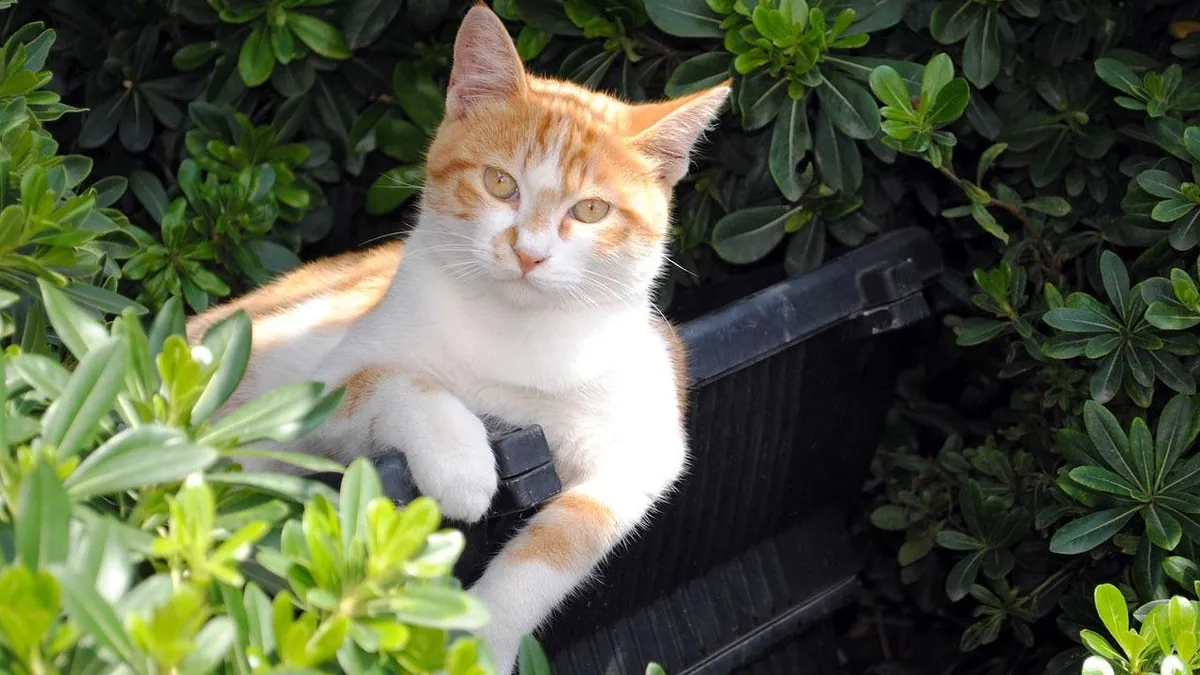
Is fiddle leaf fig toxic to cats? Yes. The plant is toxic to cats, and the milky sap inside its leaves and stems contains insoluble calcium oxalates that cause mouth pain, drooling, and vomiting when a cat chews on it [1]. Most exposures are mild and messy instead of deadly, but a cat that swallows a lot of plant material or has swelling in the throat needs veterinary care right away.
This article is educational and is not a substitute for veterinary diagnosis or treatment.
Quick Answer
- Fiddle leaf fig is listed as toxic to cats by the ASPCA Animal Poison Control Center because of insoluble calcium oxalates in the plant tissue [1].
- The sap is the problem, so any chewed leaf, stem, or broken cutting can cause oral irritation and drooling [1].
- Signs usually show up within minutes to a few hours of chewing and include mouth pain, pawing at the face, drooling, vomiting, and trouble swallowing [1].
- Call your veterinarian, the ASPCA Animal Poison Control Center at (888) 426-4435, or Pet Poison Helpline at (855) 764-7661 for guidance. Do not induce vomiting unless a veterinarian tells you to.
- The safest setup is a plant your cat cannot reach, or swapping the fiddle leaf fig for a non-toxic houseplant.
Is Fiddle Leaf Fig Toxic to Cats?
Yes. Fiddle leaf fig is toxic to cats, and the ASPCA Animal Poison Control Center lists it as toxic to both dogs and cats [1]. The plant belongs to the Araceae family, the same family as many philodendrons and other common houseplants that contain insoluble calcium oxalates [1]. If you have searched for "is fiddle leaf tree toxic to cats" or "fiddle leaf fig toxic to cats ASPCA," the answer is the same across those wordings. The plant is not a safe chew toy.
Which Parts of the Plant Are Toxic?
The toxic principle is in the plant tissue itself, so the leaves, stems, and sap all carry it [1]. That means a cat does not have to eat a whole leaf to react. A few bites, a nibble on a fallen leaf, or licking sap off a paw after brushing against a broken stem can be enough to cause irritation [1]. The white, milky latex that leaks from a cut stem is especially irritating because it coats the mouth and lips.
Are Fiddle Leaf Fig Leaves Toxic to Cats?
Yes, the leaves are toxic to cats because they contain the same insoluble calcium oxalates as the rest of the plant [1]. A cat that chews a leaf may spit it out quickly because of the burning sensation, which is actually helpful. The bigger risk is a cat that keeps chewing or swallows pieces, because the irritation can extend down the throat and cause vomiting [1].
Is Bambino Fiddle Leaf Fig Toxic to Cats?
Yes. Bambino is a smaller cultivar of the same fiddle leaf fig species, and it carries the same toxic principle [1]. Size does not change the chemistry. A tiny Bambino on a windowsill is just as irritating to a cat's mouth as a tall floor plant, and it may be easier for a cat to reach.
Are Fiddle Leaf Figs Safe for Cats?
No, fiddle leaf figs are not safe for cats. They are toxic plants, not just mildly unpleasant ones [1]. Some owners report that their cat ignores the plant completely, and that can be true for years. But you cannot count on that. A bored cat, a kitten, or a cat that likes to chew greenery can decide to sample the plant any day.
If you are building a cat-safe plant collection, it helps to know which plants are risky before you buy. Our guide to plants toxic to cats covers the common household offenders, and what plants can be toxic to cats explains how plant poisonings are grouped.
The Toxic Principle and What It Does in the Body
Insoluble calcium oxalate crystals are the toxic principle in fiddle leaf fig [1]. These microscopic, needle-shaped crystals are packaged inside plant cells. When a cat bites or chews the plant, the cells break open and the crystals are released onto the moist tissues of the mouth, tongue, and lips [1].
The crystals do not act like a poison that travels through the bloodstream. They act like tiny physical irritants. They poke and scrape the lining of the mouth, which triggers immediate pain, drooling, and pawing at the face [1]. If plant material is swallowed, the same irritation can affect the throat and stomach, leading to vomiting and difficulty swallowing [1].
This is why the signs are so often dramatic right after a bite but settle down once the plant material is out of the mouth. It is also why rinsing the mouth and offering water or milk can help in mild cases, while severe swelling needs a veterinarian.
Signs of Fiddle Leaf Fig Poisoning in Cats
The classic signs of insoluble calcium oxalate exposure are oral irritation, intense burning and irritation of the mouth, tongue, and lips, excessive drooling, vomiting, and difficulty swallowing [1]. You may also see your cat paw at its mouth, chatter its teeth, refuse food, or hide.
How Soon Do Symptoms Start?
Signs usually begin within minutes of chewing, because the crystals irritate tissue on contact [1]. Drooling and mouth pawing are often the first things you notice. Vomiting can follow within the first hour or two if the cat swallowed plant material. If your cat chewed the plant and shows no signs after a couple of hours, the exposure was likely minor, but keep watching for the rest of the day.
Mild Versus Serious Signs
Mild reactions are limited to the mouth and include drooling, lip smacking, and a few episodes of spitting up. Serious reactions include repeated vomiting, swelling around the lips or tongue, trouble breathing, and difficulty swallowing [1]. Swelling in the throat is the emergency. A cat that cannot swallow its own saliva or is breathing noisily needs to be seen immediately.
What to Do Right Now
If you saw your cat chewing the plant, take the plant material away and check the mouth. Look for leaves, stems, or sap on the lips and tongue. Wipe the mouth gently with a damp cloth and offer fresh water. Do not induce vomiting unless a veterinarian tells you to, because vomiting can worsen irritation in a cat that is already struggling to swallow.
Call your veterinarian, the ASPCA Animal Poison Control Center at (888) 426-4435, or Pet Poison Helpline at (855) 764-7661 for advice [1]. Have the plant name ready, along with your cat's weight, age, and how much you think was chewed. A photo of the plant helps the veterinary team confirm the species.
If your cat is drooling heavily, vomiting repeatedly, or having trouble breathing, skip the phone call and go to the nearest emergency veterinary hospital.
How Veterinarians Treat Fiddle Leaf Fig Exposure
Treatment depends on how much plant material was chewed and how severe the signs are. For mild cases, a veterinarian may simply rinse the mouth, give a soft bland meal, and send your cat home with instructions to watch for worsening signs. For moderate to severe cases, treatment may include intravenous fluids, medications to control vomiting and pain, and medications to reduce swelling in the mouth and throat.
A veterinarian may also give activated charcoal or perform other decontamination steps if a large amount was swallowed, but that decision is made case by case. Your veterinarian calculates any medication dose from your cat's weight and health status, so never give human pain relievers or antihistamines on your own. Some of those drugs are toxic to cats.
Most cats that chew a fiddle leaf fig and receive prompt care recover fully. The crystals cause local irritation, not organ damage, so the outlook is generally good once the mouth and stomach settle [1]. Cats with severe throat swelling are the exception and need aggressive care.
Preventing Fiddle Leaf Fig Poisoning
The simplest prevention is distance. Put the fiddle leaf fig in a room your cat cannot enter, or hang it where the leaves are out of reach. Cats can jump, so a high shelf is not always enough. A closed glass cabinet or a room with a closed door is more reliable.
If your cat is a dedicated plant chewer, consider replacing the fiddle leaf fig with a non-toxic houseplant. Spider plants, Boston ferns, and calatheas are common alternatives that do not contain insoluble calcium oxalates. If you want to keep the fig, trim lower leaves so the canopy is above cat height, and pick up fallen leaves right away. Clean up any sap that drips onto the floor, because a cat can lick it off its paws.
You can also give your cat safe chewing outlets, such as cat grass or a catnip plant, to redirect the behavior. If your cat chews plants constantly, mention it at the next wellness visit. Pica and stress-related chewing are real problems that a veterinarian can help you manage.
For a broader look at which houseplants are risky, see what plants are toxic to cats indoor. If you also keep cut flowers in the house, flowers that are toxic to cats is a useful companion read.
Limitations and When to Contact a Veterinarian
This article covers the general pattern of fiddle leaf fig exposure, but every cat is different. A small nibble in a healthy adult cat is not the same as a large ingestion in a kitten or a cat with other medical problems. Individual cases need a veterinarian who can examine your cat and decide on treatment.
Contact a veterinarian the same day if your cat chewed the plant and is drooling, vomiting, or refusing food, even if the signs seem mild. Go to an emergency clinic now if you see swelling of the lips, tongue, or throat, noisy or labored breathing, repeated vomiting that will not stop, or collapse. Call a veterinarian or poison control right away if you are not sure whether your cat actually ate the plant, because early advice is safer than waiting.
Schedule a routine visit if your cat has a habit of chewing plants, if you want help choosing cat-safe houseplants, or if you need a plan to keep the plant and the cat apart in a small home.
Frequently Asked Questions
Can a cat die from eating a fiddle leaf fig?
Death is very unlikely from a fiddle leaf fig alone. The crystals cause local irritation instead of organ failure, and most cats recover with supportive care [1]. The main danger is throat swelling that interferes with breathing, which is a medical emergency.
Will my cat get sick from just licking the sap?
Yes, licking sap can cause drooling, lip smacking, and mouth pain. The sap contains the same insoluble calcium oxalate crystals as the rest of the plant [1]. Wipe the sap off the fur and paws so your cat does not keep licking it.
Should I make my cat throw up after eating a fiddle leaf fig?
No, do not induce vomiting unless a veterinarian tells you to. Vomiting can worsen irritation in a cat whose mouth and throat are already sore. Call your veterinarian or a poison control line for instructions first.
How long do fiddle leaf fig symptoms last in cats?
Mild mouth irritation often eases within a few hours once the plant material is gone. Vomiting and drooling may last longer if a larger amount was swallowed. If signs are still going strong after a day, your cat needs to be seen.
Is it safe to keep a fiddle leaf fig in a home with cats?
It is safe only if your cat cannot reach the plant at all. A closed room, a tall locked cabinet, or a hanging planter in a cat-free space works. If your cat has any access to the leaves, choose a non-toxic plant instead.
Related Articles
- Plants Toxic To Cats
- What Plants Can Be Toxic To Cats
- Flowers That Are Toxic To Cats
- Flowers Toxic To Cats
- What Plants Are Toxic To Cats Indoor
- What Flowers Are Toxic To Cats
- Is Ficus Rubber Plant Toxic to Cats? Signs to Watch
- Is Fiddle Leaf Fig Toxic to Dogs? Signs to Watch
- Are Ferns Toxic to Cats? Holly, Staghorn and More
References
- Toxic and Non-toxic Plants: Fiddle-Leaf. ASPCA Animal Poison Control Center.