Cyanide Poisoning in Dogs: Fruit Pits, Plants, and Real Risk
By Dr. Zubair Khalid, DVM, MS, PhD ·
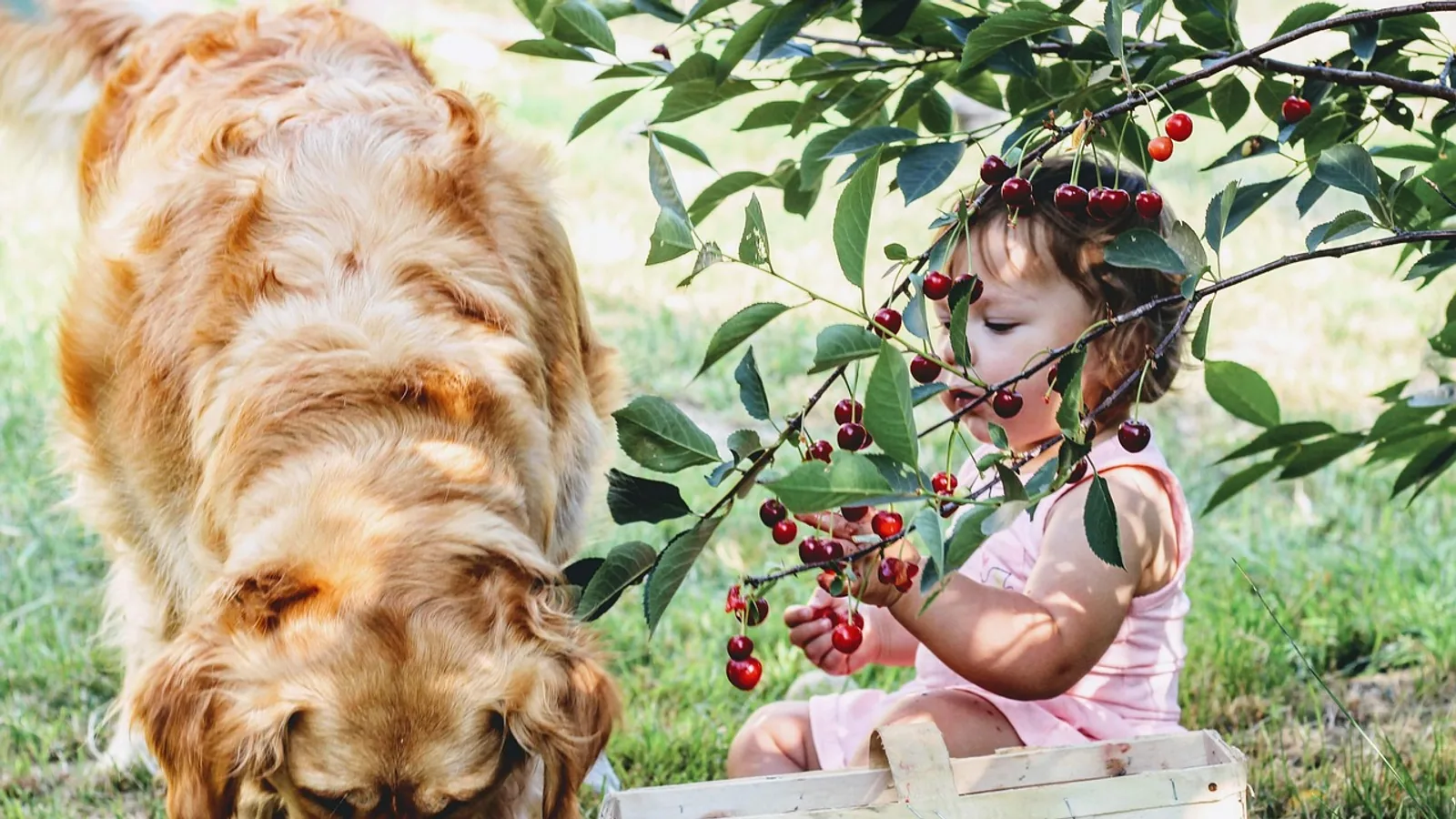
Cyanide poisoning in dogs is uncommon, but when it happens it moves faster than almost any other poisoning a veterinarian sees. The classic picture is a dog that chewed and swallowed a large number of stone fruit kernels, ate wilted leaves from a Prunus plant such as cherry or laurel, or was pulled from a house fire. Signs can appear within minutes, and the earliest reliable clue is often gums and mucous membranes that look unusually bright red rather than pale or blue. If you suspect any of these exposures and your dog is drooling, breathing hard, wobbling, or collapsing, treat it as an emergency and call a veterinarian or pet poison hotline immediately. Do not wait for symptoms to "get worse" before seeking help.
The everyday fear most owners bring to search engines is the apple. A dog that stole a slice of apple and swallowed a few seeds is almost never in danger. A dog that crunched through a bowl of cherries and left the pits cracked open is a different situation. This article separates those two scenarios clearly, explains the biochemistry behind cyanide release, describes what veterinarians look for and how they treat it, and gives you a decision framework you can use in the first five minutes.
This article is educational and is not a substitute for veterinary diagnosis or treatment.
At a Glance: Risk by Source
| Source | Cyanide risk to a dog | Realistic danger threshold | What to do |
|---|---|---|---|
| A few apple seeds swallowed whole | Very low | Seeds must be crushed and eaten in large numbers | Monitor, offer water, call if any sign appears |
| Apple seeds chewed in bulk (a cup or more) | Low to moderate | Requires substantial chewing of many seeds | Call a veterinarian or poison hotline |
| Single cherry pit swallowed whole | Very low for cyanide, moderate for obstruction | Intact pit passes or lodges, does not release much cyanide | Monitor for vomiting and obstruction signs |
| Multiple cherry pits chewed and cracked | High | Chewing releases amygdalin and cyanide | Emergency visit |
| Peach or apricot kernel chewed | High | Kernels are amygdalin-rich | Emergency visit |
| Bitter almond | High | Amygdalin content is high | Emergency visit |
| Wilted cherry, laurel, or other Prunus leaves | Moderate to high | Wilted leaves concentrate cyanogenic precursors | Emergency visit |
| Smoke from a house fire | Moderate to high | Cyanide is a combustion product | Emergency visit regardless of appearance |
This table is a triage aid, not a diagnosis. Any dog showing neurologic or respiratory signs after a possible exposure needs to be seen.
What Cyanide Actually Is and Why It Is So Fast
Cyanide is not a single chemical. The toxic agent is hydrogen cyanide (HCN), a small, volatile molecule that plants and some animals produce as a defense. In plants, HCN is stored safely inside a larger molecule called a cyanogenic glycoside. The glycoside itself is not dangerous. It becomes dangerous only when plant tissue is damaged.
When a leaf, seed, or pit is crushed, chewed, or wilted, enzymes called beta-glucosidases come into contact with the glycosides and split them apart. That reaction releases a reactive hydroxynitrile, which then breaks down to release free hydrogen cyanide [1]. This is why the physical act of chewing matters so much. A swallowed apple seed passes through largely intact. A chewed apple seed releases its payload into the mouth and stomach.
The same compartmentalization principle explains why wilted leaves are more dangerous than fresh ones. In intact plant tissue, the glycosides and the enzymes that activate them are kept in separate compartments. Damage to that compartmentation is what triggers cyanogenesis, the release of HCN [2]. Wilting, freezing, drought stress, and physical maceration all disrupt those compartments.
Once HCN enters the bloodstream, it attacks the mitochondrial electron transport chain. It binds to cytochrome c oxidase and blocks the cell's ability to use oxygen. The result is histotoxic hypoxia. Blood is fully oxygenated, but tissues cannot extract that oxygen. This is the physiologic reason a poisoned dog can have bright red mucous membranes while its brain and heart are starving for usable energy. The hyperacute and acute manifestations of cyanide poisoning result from this blockade of the respiratory chain [3].
Because the block is at the cellular level, the body's usual responses (faster breathing, faster heart rate) cannot fix it. That is why the clinical course can be measured in minutes rather than hours.
The Real Sources of Cyanide Exposure in Dogs
Stone Fruit Pits and Kernels
Cherry, peach, apricot, plum, and bitter almond all belong to the genus Prunus. Their seeds and pits contain amygdalin, a cyanogenic glycoside that releases hydrogen cyanide when the tissue is disrupted [4]. Amygdalin is enriched in the tissues of many edible plants, including the seeds of cherry (Prunus avium), peach (Prunus persica), and apple (Malus domestica) [5].
The key phrase in that sentence is "seeds of." The flesh of a peach or cherry contains essentially none of the toxin. The kernel inside the pit is where amygdalin concentrates. For a dog to be poisoned, it has to break the pit open and chew the kernel. A dog that swallows a whole cherry pit is at low risk for cyanide and a more realistic risk for gastrointestinal obstruction.
This distinction is the single most useful thing an owner can understand. When a dog eats a cherry pit and swallows it whole, the pit is a foreign body problem. When a dog cracks the pit and chews the kernel, it is a toxicology problem.
Wilted Prunus Leaves
Laurel (Prunus laurocerasus) is a cyanogenic plant in the same family. A case report from Ireland described the deaths of 36 dairy-cross weanlings after they entered a field bounded by a laurel hedge [6]. The animals showed lethargy and profuse green diarrhea, and many did not respond to antimicrobials, B vitamins, or fluid therapy. Recumbency and death followed, with cyanosis noted terminally. Laurel leaves were identified in the rumen contents of one animal.
Dogs are not ruminants, and their digestive physiology differs in ways that matter. Ruminants have a rumen full of microbes that rapidly hydrolyze cyanogenic glycosides, which makes them especially sensitive [7]. Dogs lack that fermentation chamber, so the release of cyanide depends more on chewing and on stomach acid hydrolysis. That does not make Prunus leaves safe for dogs. It means the exposure has to be larger or better chewed to produce the same effect.
Wilted leaves are the highest-risk form. A storm that knocks cherry branches into a yard, or a hedge that gets trimmed and left on the ground, creates a concentrated source.
Apple Seeds
Apple seeds contain amygdalin, and that is the origin of the widespread belief that apple seeds are poisonous to dogs [5]. They are, in the sense that the molecule is present. The practical question is dose and chewing.
A few apple seeds swallowed whole with a piece of fruit are extremely unlikely to cause poisoning. The seed coat is tough, the amygdalin is compartmentalized, and the amount of HCN that could be released is small. The realistic risk rises when a dog chews a large quantity of seeds, such as raiding a bowl of apple cores that someone left on a counter. Even then, the amount of apple seed needed to produce clinical cyanide toxicity is substantial.
Owners often ask whether they should induce vomiting after a dog eats an apple seed. The answer is almost always no. Inducing vomiting for a trivial exposure creates more risk than it removes. Save that decision for a veterinarian.
Bitter Almonds
Bitter almonds are the amygdalin-rich cousin of the sweet almond sold in grocery stores. Amygdalin occurs in the seeds of some edible plants such as bitter almonds and peaches, and high-dose exposure to amygdalin can produce cyanide toxicity [4]. A dog that eats a handful of bitter almonds is in a genuinely different risk category than a dog that eats a few apple seeds.
Sorghum and Other Forage Plants
Sorghum species produce dhurrin, a cyanogenic glycoside that hydrolyzes to cyanide [7]. A poisoning outbreak in northwest Italy killed 66 cows and caused acute toxicosis in many others after they were fed cultivated or wild sorghum. Rapid onset, severe respiratory distress, recumbency, and convulsions were the main clinical features, and necropsy consistently showed bright red blood, a bitter almond smell, and lung emphysema [7]. Sodium thiosulfate given intravenously and orally produced rapid improvement.
Dogs are unlikely to graze sorghum pasture, but they can access ornamental plantings or forage intended for livestock. The broader lesson is that cyanogenic glycosides are present in a wide range of forage plants, including Sorghum species, Trifolium species, and Lotus species [8].
Cassava and Processed Plant Foods
Cassava contains linamarin, another cyanogenic glycoside. In a rodent study, linamarin was metabolized into cyanide and cyanate, and both metabolites produced measurable memory deficits at sublethal doses [9]. Cassava is not a typical dog food, but it appears in some human food products and traditional preparations. Improperly processed cassava is a recognized food safety concern, and the same principles of tissue disruption and enzymatic release apply.
Smoke Inhalation
Smoke from a house fire is a major and often overlooked source of cyanide exposure. Hydrogen cyanide is a combustion product of nitrogen-containing materials such as wool, silk, and polyurethane foam. A dog rescued from a burning building may have cyanide toxicity alongside carbon monoxide poisoning and thermal airway injury. The clinical picture can be confusing because both carbon monoxide and cyanide impair oxygen use, and both can leave mucous membrane color misleading.
Any dog pulled from a fire needs veterinary evaluation even if it looks alert and normal at the scene. Smoke inhalation is not a "wait and see" exposure.
How Cyanide Poisoning Presents in Dogs
The Early Signs
The earliest signs of cyanide poisoning are neurologic and respiratory. Owners may notice:
- Rapid, labored breathing that does not improve with rest
- Bright red gums and mucous membranes
- Drooling and salivation
- Dilated pupils
- Restlessness, anxiety, or confusion
- Muscle twitching
- Vomiting
The bright red mucous membrane color is the most distinctive early clue. It reflects the fact that arterial blood is fully oxygenated but the tissues cannot use that oxygen. This is different from the pale gums of shock or the blue-tinged gums of severe respiratory failure.
The Late Signs
As the mitochondrial blockade continues, the brain and heart lose usable energy. Late signs include:
- Collapse and recumbency
- Convulsions and seizures
- Coma
- Respiratory arrest
- Cardiac arrest
The progression from early to late signs can be extremely rapid. In the cattle outbreak, rapid onset and severe respiratory distress were dominant features, and death often followed quickly [7]. In the laurel case, recumbency and death ensued after a period of lethargy and diarrhea [6].
Why the Bitter Almond Smell Is Unreliable
Cyanide has a reputation for smelling like bitter almonds. Necropsy in the sorghum outbreak consistently detected a bitter almond smell [7]. However, a large fraction of people cannot detect that odour at all, and the smell is faint even for those who can. Never use the absence of a bitter almond smell to rule out cyanide poisoning. It is a supportive finding, not a diagnostic test.
Cyanide Versus Carbon Monoxide in Smoke Inhalation
Both agents cause histotoxic or hypoxic injury, and both can produce misleading mucous membrane colors. Carbon monoxide poisoning classically produces cherry-red mucous membranes. Cyanide poisoning produces bright red membranes for a different reason. When a dog comes out of a fire, the two can coexist. A veterinarian will treat the clinical picture rather than trying to separate them at the scene.
What Happens Inside the Body
The mechanism is worth understanding because it explains why treatment is so specific.
Cyanide binds to the ferric form of cytochrome c oxidase in the mitochondrial inner membrane. This enzyme is the final step in the electron transport chain, the process that converts oxygen into usable ATP. When cyanide blocks it, the entire chain backs up. Oxygen arrives at the tissue but cannot be reduced to water, so ATP production collapses.
Tissues with the highest oxygen demand suffer first. The brain and heart are the most vulnerable. This is why neurologic signs and cardiac collapse dominate the clinical picture.
The body has a limited natural detoxification pathway. The enzyme rhodanese transfers sulfur from thiosulfate to cyanide, producing thiocyanate, which is far less toxic and is excreted in urine. This pathway is rate-limited by the availability of sulfur donors, which is the biochemical basis for thiosulfate therapy.
Some animals have evolved additional defenses. Herbivorous arthropods acquired a gene from bacteria that lets them detoxify HCN to beta-cyanoalanine [1]. The nematode C. elegans detoxifies amygdalin through a genetic pathway involving cysl-1 and cysl-2, genes likely acquired from green algae [5]. These adaptations are fascinating, but they are not present in dogs. A dog relies on the rhodanese pathway and on whatever treatment a veterinarian can provide.
Risk Factors That Change the Picture
Body Size
A small dog reaches a toxic dose with less plant material than a large dog. A Chihuahua that chews three apricot kernels is in more danger than a Great Dane that chews the same three kernels. This is simple dose-per-kilogram arithmetic.
Chewing Behavior
Dogs that chew and crush plant material are at higher risk than dogs that swallow things whole. A dog that gulps a whole peach pit may develop an obstruction, but it may not release much cyanide. A dog that gnaws a pit until it cracks is releasing amygdalin into a mouth full of salivary enzymes.
Access to Ornamental Plants
Yards with cherry, laurel, or other Prunus hedges create a seasonal risk, especially after storms or pruning. Dogs that habitually chew sticks and branches are at higher risk.
Fire Exposure
Any dog in a structural fire is at risk. This is not a behavior or breed issue.
Concurrent Conditions
Dogs with pre-existing heart or lung disease have less reserve to tolerate the hypoxic insult. Dogs with liver or kidney disease may clear thiocyanate more slowly, though this is a theoretical concern rather than a documented one in the veterinary literature.
Veterinary Examination and Diagnostics
History and Physical Examination
The veterinarian's first task is to establish the exposure. Useful questions include what plant or food was involved, how much was eaten, whether it was chewed or swallowed whole, how long ago it happened, and what signs the owner has observed.
The physical examination focuses on mucous membrane color, respiratory rate and effort, heart rate and rhythm, neurologic status, and body temperature. Bright red mucous membranes in a dog with rapid breathing and neurologic signs after a known exposure is a strong clinical picture.
Point-of-Care and Laboratory Testing
Blood cyanide can be measured. A modified picrate method has been described for determining cyanide in blood, with a linear relationship between cyanide concentration and absorbance across a wide range [10]. This kind of assay is useful in a research or reference setting but is not typically available in a general practice emergency room.
In practice, most veterinarians diagnose cyanide poisoning clinically, based on exposure history and compatible signs, and begin treatment without waiting for a laboratory result. The disease moves too fast to wait.
Ancillary Testing
Blood gas analysis may show a high venous oxygen content relative to what the tissues should be extracting, a pattern consistent with impaired oxygen utilization. Lactate is often elevated because cells shift to anaerobic metabolism. These findings support the diagnosis but are not specific.
Necropsy Findings
When an animal does not survive, necropsy can support the diagnosis. In the cattle outbreak, bright red blood, a bitter almond smell, and lung emphysema were consistently observed [7]. These findings are useful for confirming an outbreak source and for protecting other animals.
Evidence-Based Management
Emergency Stabilization
The first priority is airway, breathing, and circulation. A dog in respiratory distress may need supplemental oxygen. Intravenous access is established. Seizures are controlled. The goal is to buy time while antidotal therapy takes effect.
Sodium Thiosulfate
Sodium thiosulfate is the classic antidote. It provides the sulfur donor that rhodanese uses to convert cyanide to thiocyanate. In the sorghum outbreak, combined intravenous and oral administration of sodium thiosulfate produced rapid improvement of clinical signs [7]. A review of sorghum poisoning in ruminants and horses also recommends sodium thiosulfate for acute poisoning [3].
The drug is generally well tolerated. It works by accelerating an endogenous pathway rather than by binding cyanide directly, so its effectiveness depends on the enzyme system being functional.
Hydroxocobalamin
Hydroxocobalamin is a form of vitamin B12 that binds cyanide directly to form cyanocobalamin, which is excreted in urine. It is used in human medicine for smoke inhalation and industrial cyanide exposure and is increasingly available in veterinary emergency settings. It has the advantage of not causing methemoglobinemia, which is a concern with older nitrite-based antidotes. A veterinarian will choose between hydroxocobalamin and sodium thiosulfate based on availability, the clinical picture, and the suspected source.
Supportive Care
Supportive care includes intravenous fluids, seizure control, thermoregulation, and monitoring for complications. A dog that has been recumbent may develop aspiration pneumonia or pressure sores. A dog that has had seizures may need ongoing anticonvulsant therapy.
Decontamination
If the exposure was recent and the dog is stable, a veterinarian may consider decontamination. This is a clinical decision, not a home decision. Inducing vomiting at home after a possible cyanide exposure can be dangerous if the dog is already neurologically impaired.
Treatment of Concurrent Problems
A dog that swallowed a whole peach pit may need imaging to assess for obstruction. A dog from a fire may need treatment for carbon monoxide poisoning, thermal airway injury, and smoke-related lung damage. These problems can coexist with cyanide toxicity and each needs its own management.
What Not to Do at Home
Do Not Induce Vomiting Without Veterinary Direction
Inducing vomiting is a medical procedure with real risks. It can cause aspiration, esophageal injury, and worsening of neurologic signs. For a trivial exposure such as a few swallowed apple seeds, it is unnecessary. For a significant exposure, it delays definitive care.
Do Not Give Home Antidotes
There is no safe home antidote for cyanide poisoning. Activated charcoal does not bind cyanide well and is not a substitute for veterinary care. Do not give hydrogen peroxide, salt water, or any other home remedy.
Do Not Rely on Milk or Bread
Giving milk or bread to "soak up" a toxin is a folk remedy with no basis in cyanide toxicology. It delays transport to a veterinarian.
Do Not Wait for Symptoms
If a dog has chewed multiple stone fruit kernels or eaten wilted Prunus leaves, the correct action is to call a veterinarian or pet poison hotline immediately, before signs appear. The window for effective treatment is short.
Prevention
Manage Fruit and Pits
Keep bowls of cherries, peaches, apricots, and plums out of reach. Dispose of pits in a closed trash container rather than an open bin. Do not leave apple cores on counters or in low trash cans.
Manage Ornamental Plants
Identify any Prunus species in your yard, including cherry, laurel, and ornamental flowering varieties. Prune them so that fallen branches and leaves are removed promptly. Do not compost wilted Prunus material in an area the dog can access.
Supervise Outdoor Time
Dogs that chew sticks and branches need supervision in yards with cyanogenic plants. This is especially true after storms, when damaged branches are most likely to be on the ground.
Fire Safety
Working smoke detectors and a practiced escape plan protect the whole household, including the dog. If a fire does occur, get the dog out and to a veterinarian even if it seems fine.
Know Your Poison Hotline
Save the number for a pet poison hotline and your regular veterinarian in your phone. In an emergency, you will not want to search for it.
Prognosis
The prognosis for cyanide poisoning depends on how much was absorbed, how quickly treatment was started, and how much neurologic injury occurred before treatment. Dogs treated early, before collapse or seizures, generally do well. Dogs that present already recumbent or seizing have a guarded to poor prognosis.
The cattle outbreak provides a useful reference point for how rapidly treatment can work when it is given in time. Combined intravenous and oral sodium thiosulfate produced rapid improvement of clinical signs [7]. That said, species differences matter, and a dog's response may differ from a cow's.
Dogs that survive a significant exposure may have lingering neurologic effects. Sublethal cyanide exposure has been associated with memory deficits in rodent studies [9]. Whether similar subtle deficits occur in dogs after recovery is not well documented, but it is a reasonable concern for a dog that had prolonged seizures or coma.
Limitations and When to Contact a Veterinarian
This article describes general principles. It cannot tell you whether your individual dog is poisoned, how much is too much for your dog's size, or what treatment your dog needs. Those questions require a veterinarian who can examine the dog and take a history.
Contact a veterinarian or pet poison hotline immediately if:
- Your dog chewed and swallowed multiple cherry, peach, apricot, or plum kernels
- Your dog ate bitter almonds
- Your dog ate wilted leaves from a cherry, laurel, or other Prunus plant
- Your dog was in a house fire, even briefly
- Your dog has bright red gums, rapid breathing, drooling, twitching, wobbling, or collapse after any possible exposure
- Your dog swallowed a whole peach pit and is vomiting or showing abdominal pain
- You are unsure whether the exposure was significant
Do not wait for signs to develop. Do not induce vomiting unless a veterinarian tells you to. Call first.
Frequently Asked Questions
Are apple seeds poisonous to dogs?
Apple seeds contain amygdalin, a cyanogenic glycoside that can release hydrogen cyanide when the seed is crushed [5]. The practical risk from a few swallowed seeds is very low because the seed coat protects the amygdalin and the quantity is small. The risk rises if a dog chews a large number of seeds. A dog that ate a few apple seeds with a slice of fruit usually needs monitoring, not emergency treatment.
What happens if a dog eats a cherry pit?
A whole swallowed cherry pit is primarily an obstruction risk, not a cyanide risk. The pit must be cracked and the kernel chewed to release meaningful amygdalin. A dog that chews and swallows multiple cracked cherry pits is at real risk for cyanide poisoning and needs immediate veterinary attention. A dog that swallowed one intact pit needs monitoring for vomiting, abdominal pain, and signs of gastrointestinal blockage.
What are the first cyanide poisoning symptoms in dogs?
The earliest signs are rapid labored breathing, bright red gums and mucous membranes, drooling, dilated pupils, restlessness, and muscle twitching. Vomiting is common. These signs can progress to collapse, seizures, coma, and cardiac arrest within minutes. Bright red gums in a dog with a known exposure is the most distinctive early clue.
Is a peach pit dangerous for a dog?
A peach pit is dangerous in two ways. The kernel inside contains amygdalin, and a dog that cracks the pit and chews the kernel can develop cyanide poisoning [4]. The pit itself is also a large foreign body that can cause obstruction. A dog that swallowed a whole peach pit needs veterinary assessment for obstruction even if no cyanide signs appear.
How do veterinarians treat cyanide poisoning in dogs?
Veterinarians use sodium thiosulfate, which provides the sulfur donor the body needs to convert cyanide to the less toxic thiocyanate. Combined intravenous and oral sodium thiosulfate produced rapid improvement in a documented poisoning outbreak [7]. Hydroxocobalamin, a form of vitamin B12 that binds cyanide directly, is also used. Supportive care includes oxygen, intravenous fluids, seizure control, and monitoring for complications.
Can smoke from a house fire cause cyanide poisoning in dogs?
Yes. Hydrogen cyanide is a combustion product of nitrogen-containing materials such as wool, silk, and polyurethane foam. A dog rescued from a fire may have cyanide toxicity along with carbon monoxide poisoning and thermal airway injury. Any dog from a fire needs veterinary evaluation even if it looks normal at the scene.
How much cyanide is dangerous for a dog?
There is no simple number that applies to every dog. The toxic dose depends on body weight, the specific plant or seed, how thoroughly it was chewed, and how quickly it was absorbed. A small dog chewing a few apricot kernels is in more danger than a large dog chewing the same number. A veterinarian or pet poison hotline can help you assess a specific exposure.
Should I make my dog vomit after eating apple seeds?
No. Inducing vomiting is a medical procedure with real risks, including aspiration and esophageal injury. For a trivial exposure such as a few swallowed apple seeds, it is unnecessary. For a significant exposure, it delays definitive care. Call a veterinarian or pet poison hotline and follow their instructions instead.
Related Articles
- Can Dogs Eat Apples? Seed Cyanide Risks & Portions
- My Dog Ate a Peach Pit: Is It a Choking Hazard or Toxic?
- Can Dogs Eat Passion Fruit? Seeds and Cyanide Effects
- Can Dogs Eat Cherries? Pit Hazards & Cyanide Warnings
- Plants Poisonous To Dogs
- My Dog Ate a Frog: Is It Poisonous?
- Lead Poisoning in Dogs and Cats: Sources, Symptoms, Treatment
- Fertilizer Poisoning in Dogs: Symptoms, Risky Types, What to Do
- Are Acorns Poisonous to Dogs? Oak Toxicity and Blockage Risk
Sources
- A gene horizontally transferred from bacteria protects arthropods from host plant cyanide poisoning.
- Oviposition choice of Mexican bean beetle (Epilachna varivestis) depends on host plants cyanogenic capacity.
- Sorghum poisoning in ruminants and horses: a review.
- Amygdalin: Toxicity, Anticancer Activity and Analytical Procedures for Its Determination in Plant Seeds.
- Co-opted genes of algal origin protect C. elegans against cyanogenic toxins.
- Suspected cyanide toxicity in cattle associated with ingestion of laurel - a case report.
- Overview of Cyanide Poisoning in Cattle from Sorghum halepense and S. bicolor Cultivars in Northwest Italy.
- Biosynthesis and regulation of cyanogenic glycoside production in forage plants.
- Memory deficits associated with sublethal cyanide poisoning relative to cyanate toxicity in rodents.
- Modified picrate method for determination of cyanide in blood.