Can Cats Eat Zinnias? Pet Safety for This Flower
By Dr. Zubair Khalid, DVM, MS, PhD ·
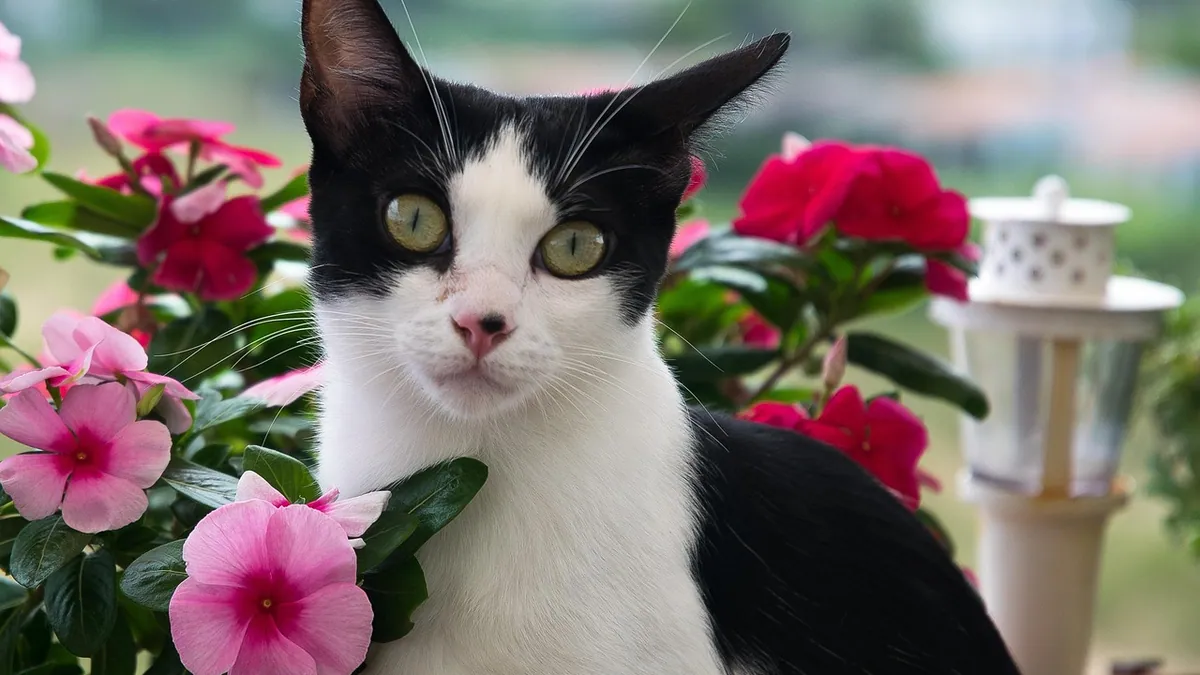
Yes, can cats eat zinnias? Zinnias are considered non-toxic to cats, so a nibble is not a poisoning emergency [1]. That said, "non-toxic" does not mean "good to eat," and many cats who chew on plants end up with a mild upset stomach. This article is educational and is not a substitute for veterinary diagnosis or treatment.
Quick Answer
- Zinnias (Zinnia species) are listed as non-toxic to cats by the ASPCA Animal Poison Control Center [1].
- Creeping zinnia (Sanvitalia species), a different plant with a similar name, is also listed as non-toxic to cats [2].
- The whole plant, including leaves and flowers, is covered by that non-toxic listing, so there is no known toxic part of a true zinnia [1].
- Eating plant material can still cause vomiting, drooling, or diarrhea from simple stomach irritation, even when the plant is not poisonous.
- If your cat eats a zinnia and seems fine, watch her for a few hours. If she vomits repeatedly, acts painful, or stops eating, call your veterinarian.
Are Zinnias Toxic to Cats?
No. Zinnias are not on the toxic plant list. The ASPCA Animal Poison Control Center classifies Zinnia species as non-toxic to cats, dogs, and horses [1]. Zinnias belong to the Asteraceae family, the same large plant family as daisies and sunflowers [1].
That listing matters because it covers the plant itself, not a single part of it. There is no known toxic component in zinnia stems, leaves, flowers, or roots [1]. So if your cat chews a leaf off a zinnia in the garden or knocks a bloom out of a vase, you are not dealing with a poison emergency.
Can cats eat zinnia leaves?
Yes, in the sense that zinnia leaves are not poisonous [1]. Your cat may bite, chew, or swallow pieces of a leaf without absorbing a toxin. The risk is mechanical and digestive, not toxic. A cat who eats a lot of leafy material may vomit it back up or pass it in stool, and large wads of plant fiber can sometimes cause stomach upset or, rarely, a blockage if enough is swallowed.
What about creeping zinnia?
Creeping zinnia is a common name for Sanvitalia species, a low-growing flowering plant often used in hanging baskets and borders. It is a different plant from true zinnia, but it carries the same safety rating. The ASPCA lists Sanvitalia species as non-toxic to cats, dogs, and horses [2]. So both the tall garden zinnia and the creeping type are considered safe around cats.
Zinnias in bouquets, gardens, and arrangements
The flower itself is not the concern. The concern is everything around it. Cut flowers often arrive with floral foam, wire, rubber bands, and plastic sleeves. A cat who chews on a bouquet may swallow a piece of foam or wire, which can injure the mouth or gut. Vase water can also grow bacteria and may contain flower food or preservatives. Keep arrangements where your cat cannot reach them, and dump vase water where she cannot drink it.
If you are sorting out which plants in your yard or home are safe, our guide to flowers that are toxic to cats covers the common ones to keep out of reach.
The Toxic Principle: Why Zinnias Are Not the Problem
A toxic principle is the chemical in a plant that harms the body. Zinnias do not have one that is known to poison cats [1]. That is why the ASPCA lists them as non-toxic [1].
So what causes the upset stomach? Plant cell walls are made of fiber that cats cannot digest well. Cats are obligate carnivores, meaning their digestive tract is built for meat. When a cat eats a pile of leaves or petals, that fiber can irritate the stomach lining and trigger vomiting or loose stool. The plant is not attacking the body. The body is reacting to indigestible material.
There is one more angle worth knowing. Pollen from ornamental plants, including plants in the Asteraceae family, can trigger allergic responses in people who are sensitive to it [3]. Cats can have skin and respiratory allergies too, though plant pollen allergy in cats is not well established in veterinary research. If your cat develops sneezing, itchy skin, or watery eyes after being around flowering plants, that is worth mentioning to your veterinarian.
Some plants cause harm through a completely different route. Ethylene glycol, the main ingredient in antifreeze, causes fatal poisoning in cats and is a common cause of pet poisoning deaths [4]. Grayanotoxins from plants in the Ericaceae family, such as rhododendrons, cause vomiting, drooling, and heart rhythm problems in animals that eat them [5]. Zinnias do not work this way. They do not contain grayanotoxins or any comparable toxin [1].
Signs Your Cat Ate a Zinnia
Most cats who nibble a zinnia show no signs at all. When signs do appear, they are usually mild and digestive.
Watch for:
- Vomiting, once or a few times
- Drooling or lip smacking
- Nausea, which can look like licking lips or refusing food
- Diarrhea or softer stool than usual
- Mild lethargy for a few hours
These signs come from stomach irritation, not from a toxin. They usually show up within a few hours of eating the plant and often settle on their own within a day. Vomiting and regurgitation are also common signs of plant poisoning in animals generally, so vomiting after eating any plant deserves attention [5].
Signs that are not typical of zinnia exposure include tremors, seizures, weakness, collapse, trouble breathing, or a racing or irregular heartbeat. If you see any of those, treat it as an emergency and go to a veterinary hospital right away.
What to Do Right Now
If your cat just ate a zinnia and seems normal, take a breath. Remove the plant or bouquet from her reach so she cannot keep eating. Offer fresh water. Then watch her for the next few hours.
If she is vomiting, drooling, or acting uncomfortable, call for advice. You have three good options:
- Your own veterinarian or the nearest emergency veterinary hospital
- ASPCA Animal Poison Control Center at (888) 426-4435
- Pet Poison Helpline at (855) 764-7661
Have this information ready: your cat's weight, how much plant you think she ate, which part (leaf, flower, stem), and when it happened.
Do not induce vomiting unless a veterinarian tells you to. Making a cat vomit at home can cause choking, aspiration of material into the lungs, or injury to the esophagus. It is only safe when a veterinarian directs it for your specific cat.
Do not give human medications, milk, oil, or home remedies. Cats metabolize drugs differently from people and even from dogs, and their sensitivity to many compounds is unique [6]. A medication that is safe for you can be harmful to your cat.
Veterinary Treatment for Plant Ingestion
For a confirmed zinnia nibble in a cat who looks well, treatment may be nothing more than monitoring at home. Your veterinarian may ask you to watch for vomiting, appetite, and energy level for 24 hours.
If your cat has vomiting or diarrhea, treatment is supportive. That can include:
- Fluids under the skin or into a vein if she is dehydrated
- Anti-nausea medication
- A bland diet for a day or two, then a gradual return to normal food
- Blood work if your veterinarian suspects dehydration or another cause
If your cat ate floral foam, wire, or a large amount of plant material, your veterinarian may take X-rays to check for a blockage. Surgery is sometimes needed if material is stuck in the gut. This is uncommon with zinnias alone but possible with bouquet hardware.
Any medication dose is calculated by your veterinarian based on your cat's weight and health. There is no home dose you should give on your own.
Outlook After Eating Zinnias
The outlook is excellent. Because zinnias are non-toxic, cats who eat them do not develop organ damage from the plant [1]. Most cats recover fully within a day with no treatment at all.
The exceptions are cats who swallow foreign objects from a bouquet, cats who eat so much plant fiber that they vomit repeatedly and become dehydrated, and cats with underlying health problems such as kidney disease or inflammatory bowel disease. Those cats may need more support. Your veterinarian can tell you what to expect for your cat's situation.
Prevention and Safer Alternatives
The simplest prevention is placement. Keep zinnias in beds your cat cannot access, or grow them in containers on a high shelf or a fenced patio. If you bring cut zinnias inside, put them in a room your cat does not use, or use a vase with a narrow neck and a heavy base so it cannot be tipped.
If your cat loves to chew plants, give her something safe and legal to chew. Cat grass (wheat, oat, or barley grass grown for pets) satisfies the urge without exposing her to bouquet hardware. Catnip is another option, and it has its own safety profile worth understanding. Our article on can cats eat catnip explains how nepetalactone works and how to use it safely.
When you shop for plants, check each one before it comes home. Our list of what flowers are toxic to cats is a good starting point for the common ones.
Limitations and When to Contact a Veterinarian
This article covers zinnias specifically. It cannot tell you what is wrong with your individual cat. Every case needs a veterinarian who can examine your cat, ask questions, and decide on testing or treatment.
Contact your veterinarian the same day if your cat:
- Vomits more than two or three times
- Refuses food for more than 12 hours
- Has diarrhea that lasts more than a day
- Seems painful in the belly when touched
- Is quieter or less interactive than usual
Go to an emergency veterinary hospital right away if your cat:
- Collapses, trembles, or has a seizure
- Breathes fast or with effort
- Has a racing or irregular heartbeat
- Vomits blood or has black, tarry stool
- Cannot stand or seems weak
- Has a swollen, painful belly that feels hard
Schedule a routine visit if your cat keeps eating plants, has repeated mild stomach upset, or if you are not sure what she ate. Your veterinarian can help you sort out the cause and build a plan.
Frequently Asked Questions
Are zinnias safe for cats to be around?
Yes. Zinnias are listed as non-toxic to cats, so having them in your home or yard is not a poisoning risk [1]. The bigger risks are the vase, the floral foam, and the wire that come with cut arrangements.
What happens if my cat eats a whole zinnia flower?
Most likely nothing serious. The flower is not toxic [1]. She may vomit once or have soft stool from the plant fiber, or she may be completely fine. If she vomits repeatedly or seems unwell, call your veterinarian.
Do zinnias cause allergies in cats?
Plant pollen from ornamental species can cause allergic responses in sensitive people, including flower growers [3]. Whether cats develop the same kind of pollen allergy is not well established in veterinary research. If your cat sneezes or itches around flowering plants, ask your veterinarian.
Is creeping zinnia safe for cats?
Yes. Creeping zinnia (Sanvitalia species) is listed as non-toxic to cats, dogs, and horses [2]. It is a different plant from true zinnia but carries the same safety rating.
Should I make my cat throw up after she eats a zinnia?
No, not on your own. Inducing vomiting at home can cause choking or lung injury, and it is only safe when a veterinarian directs it for your cat. Call your veterinarian or a pet poison hotline for guidance instead.
Related Articles
- Flowers That Are Toxic To Cats
- Can Cats Eat Eggs
- Flowers Toxic To Cats
- What Flowers Are Toxic To Cats
- Can Cats Eat Catnip? Nepetalactone and Safe Use Guide
- What Plants And Flowers Are Toxic To Cats
- Can Cats Eat Sunflower Seeds? Shells and Safety
- Can Cats Eat Tomatoes? Seeds, Leaves and Safe Amounts
- Can Cats Eat Rosemary and Basil? Safety and Risks
References
- Toxic and Non-toxic Plants: Zinnia. ASPCA Animal Poison Control Center.
- Toxic and Non-toxic Plants: Creeping Zinnia. ASPCA Animal Poison Control Center.
- Allergic responses to pollen of ornamental plants: high incidence in the general atopic population and especially among flower growers. The Journal of allergy and clinical immunology, 1998.
- Ethylene glycol poisoning in a free-roaming cat associated with suspected animal cruelty: a forensic veterinary case report in South Korea. Frontiers in veterinary science, 2026.
- Grayanotoxin poisoning in animals following the ingestion of Ericaceae plants. Veterinary journal (London, England : 1997), 2026.
- Predictive q-RASAR modeling of intrinsic toxicity of pharmaceuticals and bioactive compounds in cats. Journal of hazardous materials, 2026.