Are White Cats With Blue Eyes Deaf? The Genetics Explained
By Dr. Zubair Khalid, DVM, MS, PhD ·
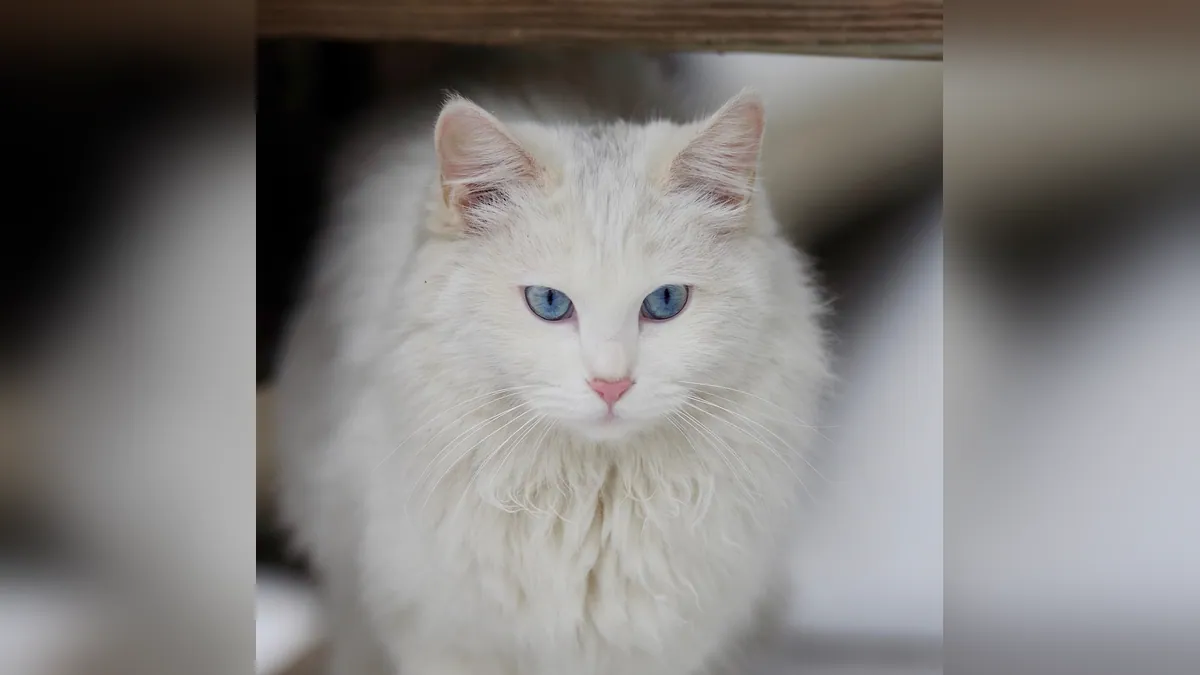
Not every white cat with blue eyes is deaf, but the odds are much higher than for other cats. Roughly 65 to 85 percent of all-white cats with two blue eyes are born deaf, and many of the rest have hearing loss in one ear [1]. This article explains the link between coat color, eye color, and deafness in white cats with blue eyes and what it means for your cat's daily life.
This article is educational and is not a substitute for veterinary diagnosis or treatment.
Quick Answer
- White coat color and blue eyes raise the risk of congenital (present at birth) deafness, but they do not guarantee it [2][1].
- About 65 to 85 percent of all-white cats with two blue eyes are born deaf, compared with 17 to 22 percent of white cats with non-blue eyes [1].
- If a white cat with one blue eye is deaf in one ear, the deaf ear is on the same side as the blue eye [1].
- Congenital deafness is usually permanent, but deaf cats can live full, safe lives indoors with a few adjustments.
- Any cat that loses hearing later in life needs a veterinary exam, because acquired deafness often has a treatable cause [2].
What Deafness in White Cats With Blue Eyes Actually Is
Congenital deafness means a cat is born unable to hear, or born with hearing in only one ear. In white cats with blue eyes, the deafness comes from changes that happen in the first week of life, not from an injury or an infection the cat caught later [2].
The inner ear and the pigment cells that color a cat's fur and eyes develop from some of the same early embryonic tissue. When pigment cells fail to reach the inner ear, the structures that turn sound into nerve signals do not form normally. That is why coat color, eye color, and hearing can be linked in the same cat.
This type of deafness is different from the hearing loss that develops with age or illness. A white kitten with blue eyes who is born deaf will not regain hearing. A cat who goes deaf at age 12 may have a treatable problem, such as earwax buildup, infection, or a growth in the ear canal [2].
Signs Owners Notice
Deafness can be easy to miss, especially in a young kitten or a cat who lives with other cats. A deaf cat may copy the other cats in the household and seem to respond to sound when it is really reacting to movement or vibration [2].
Signs of Deafness in a Kitten or Cat
- Does not turn toward loud noises, such as a hand clap or a dropped pan
- Sleeps through sounds that wake other cats
- Startles easily when you touch the cat or walk into view
- Meows very loudly or makes unusual vocal sounds
- Watches your face and hands closely, or follows other pets around
- Does not wake when called by name, even at feeding time
One-sided deafness is especially hard to spot. A cat deaf in one ear can still hear most sounds and may seem completely normal at home. Without special testing, one-sided deafness often goes undiagnosed [2].
If your cat suddenly seems unsteady, tilts the head, or stops responding to sound after a normal start in life, that points to an acquired problem, not congenital deafness. Head tilt and balance problems can also show up with other ear disease, and a veterinarian should examine your cat.
Causes and Risk Factors
The main risk factor for congenital deafness in cats is a white coat combined with blue eyes. The more blue in the iris, the higher the risk [1].
| Coat and Eye Color | Risk of Being Born Deaf |
|---|---|
| White coat, non-blue eyes | 17 to 22 percent [1] |
| White coat, one blue eye | About 40 percent [1] |
| White coat, two blue eyes | 65 to 85 percent [1] |
The gene behind white coat color is called KIT. In white cats, a piece of genetic material called an endogenous retrovirus can disrupt how KIT works, and this disruption is linked to problems with pigment cells, including the cells the inner ear needs for normal hearing [3]. The exact chain of events is still being worked out, and researchers continue to study how coat color genes affect hearing [3].
Blue eyes can also come from a separate trait. A genetic change near the PAX3 gene produces blue eyes with only small amounts of white on the coat, a pattern breeders call dominant blue eyes [4]. This trait appears in some breeds and breeding lines, and it is inherited in a dominant pattern [4]. Whether this specific blue-eye trait carries the same deafness risk as the classic white cat pattern is not well established in veterinary research.
Other causes of deafness have nothing to do with coat color. These include:
- Ear infections in the outer, middle, or inner ear
- Buildup of earwax or a blocked ear canal
- Damage to the tiny bones of the middle ear
- Inflammatory polyps, which are growths that can block the ear [2]
- Trauma, toxins, or certain drugs [2]
- Aging, which brings changes to the inner ear over time [5]
Age-related hearing loss is common in older cats. One study of cats aged 3 to 18 years found thickening of the basilar membrane and shrinkage of the stria vascularis in the inner ear of older cats, changes similar to those seen in older people and dogs [5].
How Deafness Is Diagnosed
There is no simple blood test for deafness in cats. Your veterinarian starts by watching how your cat responds to sound. This works best after kittens are 3 to 4 weeks old, when their reactions to sound become predictable [2].
In a clinic, a veterinarian may clap, jingle keys, or make other sharp noises while watching the cat's ears, head, and body for a response. A cat who is deaf in one ear can pass this kind of casual check, because the working ear still picks up sound [2].
If the exam is unclear, your veterinarian may refer you to a specialist for a test called the brainstem auditory evoked response, or BAER. This test measures electrical activity in the hearing pathway and can tell the difference between normal hearing, partial hearing, and complete deafness in each ear. Not every clinic offers it, so ask your veterinarian about referral options.
Your veterinarian will also check the ear canals for wax, infection, polyps, or other blockages. Finding and treating a blockage can restore hearing when the deafness is acquired [2].
Treatment Options
Congenital deafness in white cats with blue eyes cannot be cured. There is no medication or surgery that restores hearing that never developed. Care focuses on keeping your cat safe and helping the cat communicate with you.
For acquired deafness, treatment depends on the cause. Clearing a blocked ear canal, treating an infection, or removing a growth can bring hearing back [2]. If your cat has an ear polyp, surgery is often the fix, and you can read more about that in Ear Polyps in Cats: Signs, Diagnosis, Surgery, and Recurrence.
Your veterinarian will decide on any medications and calculate the dose from your cat's weight and health. Do not give your cat any ear drops or human medicines on your own, because some products can damage the ear or cause other harm.
Cochlear implants are used in research settings to study how deaf cats process sound, and they can restore some auditory activity in the brain [6]. They are not a routine treatment for pet cats, and your veterinarian can tell you whether any hearing device is realistic for your situation.
Living With a Deaf Cat: Outlook and Long-Term Management
A deaf cat can have a long, happy life. Deafness itself does not shorten a cat's lifespan or cause pain. The main risks are outdoor dangers, because a deaf cat cannot hear traffic, dogs, or other threats.
Safety Changes That Help
- Keep your deaf cat indoors, or use a secure outdoor enclosure
- Wake your cat gently by touching the floor nearby or using a soft vibration, not by grabbing
- Use hand signals, a flashlight, or a stomp on the floor to call your cat
- Keep food and water in the same spots so your cat can find them by routine
- Tell visitors and pet sitters that your cat cannot hear them approach
Many deaf cats learn quickly. They watch your hands, your face, and the daily rhythm of the house. Some cats become more attached to their owners and check in visually more often.
If your cat is deaf in one ear only, keep the working ear clean and watch for infections. A cat with one working ear may have trouble locating where a sound comes from, which can make your cat seem clumsy or slow to respond.
If your cat also has vision problems, the combination changes things. Some owners worry that white cats with blue eyes go blind, but blue-eyed white cats are not more prone to blindness than other cats [1]. If you notice cloudy eyes, bumping into furniture, or a change in how your cat moves around, that deserves a veterinary visit. You can read about one common eye sign in Cat Third Eyelid Showing Why.
Prevention
You cannot prevent congenital deafness in a kitten who already carries the white coat and blue eye traits. The trait is inherited, and the hearing loss happens before birth or in the first week of life [2].
If you are choosing a kitten, ask the breeder or shelter whether the kitten has been checked for hearing. A kitten from a white, blue-eyed line has a real chance of being deaf, and knowing this early helps you plan.
For acquired deafness, prevention looks different. Keep your cat's ears clean and dry, treat ear infections promptly, and keep up with routine veterinary exams. Older cats should have their ears checked at least once a year, since age-related changes in the inner ear are common [5].
If you are breeding cats, talk with a veterinarian about genetic testing and about the ethics of pairing two cats who both carry traits linked to deafness. The dominant blue eye trait is inherited, and breeding decisions affect the kittens [4].
Limitations and When to Contact a Veterinarian
This article covers the general pattern, but every cat is an individual. Only a veterinarian who examines your cat can tell you whether your cat can hear and what is causing any hearing loss.
Contact a veterinarian the same day if your cat has:
- A sudden head tilt, circling, or loss of balance
- Discharge, swelling, or a bad smell from the ear
- Pawing at one ear or shaking the head repeatedly
- A sudden change in hearing after a normal start in life
Go to an emergency clinic now if your cat:
- Collapses, has a seizure, or cannot stand
- Has a head injury or a suspected toxin exposure
- Is in obvious pain or distress
Call a routine visit if your cat:
- Does not respond to sound and you want a hearing assessment
- Is a white kitten with blue eyes and you want early guidance
- Has a history of ear infections or earwax problems
- Is an older cat who seems to be losing hearing gradually
Frequently Asked Questions
Are all white cats with blue eyes deaf?
No. The risk is high, but it is not a certainty. A large share of white cats with two blue eyes are born deaf, and others are deaf in one ear or hear normally [1].
Can a deaf cat live a normal life?
Yes. Deaf cats do well indoors with a few safety changes, such as staying inside and using hand signals instead of voice commands. Deafness does not cause pain and does not shorten a cat's life on its own.
How can I tell if my cat is deaf?
Watch how your cat reacts to sudden sounds when no other clues are present, such as a clap behind the cat while it is awake. A veterinarian can confirm the result with a hearing test, especially if one-sided deafness is possible [2].
Does a white cat with one blue eye have the same risk?
The risk is lower than with two blue eyes but still higher than with non-blue eyes. About 40 percent of white cats with one blue eye are born deaf, and if such a cat is deaf in one ear, the deaf ear is on the same side as the blue eye [1].
Can deafness in cats be cured?
Congenital deafness cannot be cured, because the hearing structures never formed normally. Some forms of acquired deafness can improve or resolve when the underlying cause, such as an infection or a blockage, is treated [2].
Related Articles
- Calico Cat: Fascinating Facts and Genetics Explained
- Why Is My Cat Being Sick White Foam
- Ear Polyps in Cats: Signs, Diagnosis, Surgery, and Recurrence
- Cat Third Eyelid Showing Why
- Can Cats See in the Dark? Feline Vision Explained
- Dry Heaving In Cats
- Congenital Deafness in Cats: Causes and Care
- How to Tell If Your Cat Is Deaf or Hard of Hearing
- Deafness in Older Cats: Causes and What to Expect
References
- Ask Elizabeth: White Cats and Blindness/Deafness. Cornell University College of Veterinary Medicine.
- Deafness in Cats - Cat Owners. Merck Veterinary Manual.
- Possibilities of skin coat color-dependent risks and risk factors of squamous cell carcinoma and deafness of domestic cats inferred via RNA-seq data. Genes to cells : devoted to molecular & cellular mechanisms, 2023.
- A PAX3 insertion in the Celestial breed and certain feline breeding lines with dominant blue eyes. Animal genetics, 2024.
- Tomodensitometric and histological age-related changes in the normal feline middle and inner ear. Anatomia, histologia, embryologia, 2023.
- Congenital Deafness Reduces, But Does Not Eliminate Auditory Responsiveness in Cat Extrastriate Visual Cortex. Neuroscience, 2018.