Congenital Deafness in Cats: Causes and Care
By Dr. Zubair Khalid, DVM, MS, PhD ·
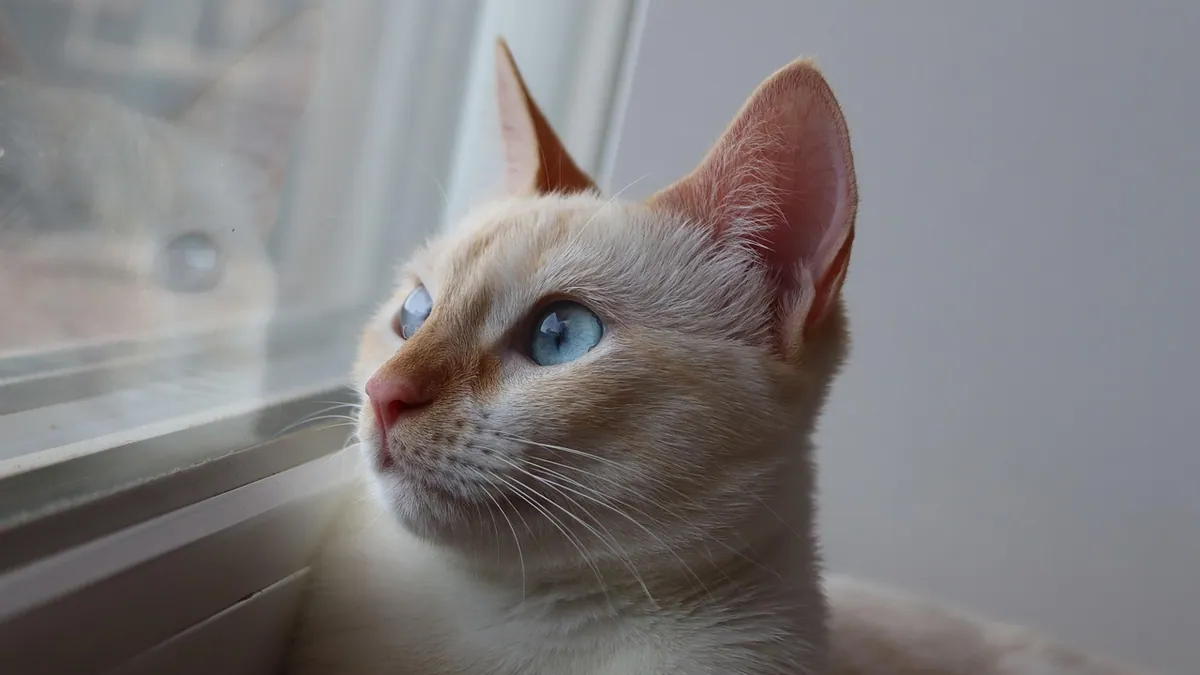
Congenital deafness in cats means a kitten is born unable to hear, usually because of an inherited trait tied to white coat color and blue eyes. It cannot be cured, but a deaf cat can live a full, happy life indoors with a few simple changes to the home. This article is educational and is not a substitute for veterinary diagnosis or treatment.
Quick Answer
- Congenital deafness is present at birth and is most often inherited, while acquired deafness develops later from infection, injury, toxins, or aging [1].
- White cats with blue eyes are at higher risk, but not every white cat with blue eyes is deaf [1].
- Deafness can affect one ear or both, and one-sided deafness is very hard to spot without special testing [1].
- Reliable hearing checks are best done after a kitten is 3 to 4 weeks old, when sound responses become predictable [1].
- A deaf cat needs an indoor-only life, clear visual cues, and a predictable routine to stay safe and enriched.
What Congenital Deafness in Cats Actually Means
Hearing starts in the cochlea, a tiny spiral organ inside the inner ear that turns sound waves into nerve signals the brain can read [2]. In a cat with congenital deafness, that pathway never worked properly from the start. The problem is present at birth, not something the cat lost later [1].
Congenital deafness can affect both ears (bilateral) or just one (unilateral). It can also come with balance problems if the inner ear's vestibular system is involved. A recent genetic report described a young cat with both deafness and vestibular signs, meaning the same inner ear defect affected hearing and balance [3].
This is different from acquired deafness, which happens after birth. Acquired cases can result from ear canal blockages, chronic outer ear infections, middle or inner ear infections, too much earwax, or damage to the tiny ear bones [1]. Inflammatory polyps, which are growths in the ear, can also cause deafness [1]. If you have ever dealt with these problems, our article on Ear Polyps in Cats: Signs, Diagnosis, Surgery, and Recurrence explains what they look like and how they are treated.
Signs Owners Notice: How to Tell if a Cat Is Deaf
What you may see at home
A deaf cat often sleeps through sounds that would wake other cats. You might call their name and get no ear twitch, no head turn, no reaction at all. Some deaf cats meow louder than usual because they cannot hear their own volume. Others stop responding to the vacuum, the doorbell, or the sound of a can opening.
One-sided deafness is much harder to catch. A cat deaf in only one ear may seem perfectly normal at home and only show a problem when a sound comes from the deaf side [1]. In a group of cats, a deaf cat can copy the others and go completely unnoticed [1].
Why kittens are tricky to test
Testing is more reliable after kittens are 3 to 4 weeks old, when their responses to sound become predictable [1]. Before that age, a kitten's reactions are inconsistent, so a home test can give you a false answer either way. If you suspect deafness in a very young kitten, wait until that window and then watch carefully.
Signs that point to the inner ear
If deafness comes with balance problems, you may see a head tilt, unsteady walking, or unusual eye movements. These signs suggest the inner ear is involved, not just the hearing pathway [3]. Balance signs deserve a veterinary visit, because they can also come from other causes.
Causes and Risk Factors
White cats, blue eyes, and inherited deafness
The best-known risk pattern is a white coat with blue eyes. Sometimes, but not always, cats with white fur and blue eyes are deaf, and in these cats the hearing loss comes from changes that happen in the first week of life [1]. The key word is sometimes. White coat color raises the odds, but it does not guarantee deafness, and many white cats with blue eyes hear normally.
Genetics beyond coat color
Not all congenital deafness is tied to coat color. Researchers identified a specific gene variant in a deaf cat with balance problems, a change in a gene called LHFPL5 [3]. In people, changes in this gene cause deafness that is passed down in a recessive pattern and is sometimes accompanied by balance problems [3]. This gene matters because the protein it makes helps anchor the structures that let inner ear hair cells respond to sound and keep the body balanced [3].
This finding does not mean every deaf cat has this variant. It shows that inherited deafness in cats has more than one possible cause, and much about feline deafness genetics is still not well established.
Problems before birth and infections
Congenital deafness can also be caused by damage before birth from a poisonous substance or a virus, not only by inherited traits [1]. In rare cases, infections after birth can harm hearing too. A 2026 report described five people with cat-scratch disease who developed sudden hearing loss in one ear, an association that had not been well recognized before [4]. That report involved people, not cats, so it does not prove the same thing happens in cats. It does remind us that infection and hearing loss can be linked, and that sudden hearing changes in any species deserve a veterinary exam.
Age-related hearing loss
Older cats commonly lose hearing as part of sensory decline, which is nearly universal in aging dogs and cats and often goes unrecognized [5]. This is acquired deafness, not congenital, but the care needs are similar. Sensory loss in senior cats can be mistaken for cognitive dysfunction or just "normal aging," when it actually affects quality of life, behavior, and the bond between cat and owner [5]. If your older cat seems to ignore you more, ask your veterinarian to check hearing as part of a senior exam.
How Deafness Is Diagnosed
Veterinarians diagnose congenital deafness mainly by carefully observing how a cat responds to sound [1]. There is no simple blood test for it. Your vet will ask about your cat's history, watch reactions to claps, squeaks, and other noises, and examine the ears for wax, infection, polyps, or other blockages that could explain the hearing loss [1].
Because one-sided deafness is so hard to detect, a cat with normal responses may still have hearing loss in one ear [1]. Specialized testing exists for these cases, but it is not available in every clinic. If your vet suspects a structural problem, imaging or referral may be recommended.
Your veterinarian will also want to rule out acquired causes, since many of them are treatable. Removing a blockage or healing damaged tissue often restores hearing [1]. That is why a full ear exam matters even when the history sounds like a birth defect. If your cat has discharge, odor, or head shaking, our guide to Cat Ear Infection covers what those signs usually mean.
| What you notice | Likely category | What it may mean |
|---|---|---|
| Kitten born white with blue eyes, no response to sound by 4 weeks | Congenital | Inherited hearing loss is possible [1] |
| Sudden hearing loss in an adult cat with ear discharge or odor | Acquired | Infection, wax, or blockage may be the cause [1] |
| Gradual hearing loss in a senior cat | Acquired | Age-related sensory decline is common [5] |
| Deafness plus head tilt or unsteady walking | Congenital or acquired | Inner ear involvement is possible [3] |
Treatment Options
There is no treatment that restores hearing in true congenital deafness. The inner ear structures did not form or function normally, and no medication or surgery reverses that.
For acquired deafness, treatment depends on the cause. If a blockage from chronic outer ear infection, excess earwax, or damaged ear bones is the problem, clearing it or healing the tissue often brings hearing back [1]. Middle and inner ear infections need veterinary treatment, and inflammatory polyps may need to be removed [1]. If your cat is being treated for an ear problem, our article on Ear Infection Treatment For Cats explains the general approach. Your veterinarian calculates any medication dose from your cat's weight and health, so never use leftover ear drops or human products without asking.
For cats with balance problems from inner ear disease, treatment focuses on the underlying cause and on keeping the cat comfortable and safe while the body adjusts.
Living With a Deaf Cat: Recovery, Outlook, and Long-Term Management
A deaf cat does not recover hearing, but most adapt well. The outlook is good when the cat lives indoors and the home is set up for a cat that cannot hear danger coming.
Safety first
Keep your deaf cat indoors. Traffic, dogs, and other outdoor hazards give sound warnings that your cat cannot hear. Screen windows and balconies, and supervise time in any enclosed outdoor area.
Approach your cat from the front or from a spot where they can see you. A deaf cat cannot hear you coming, and a sudden touch can startle them into a swat or a bite. Stomp on the floor or tap a surface to send vibrations, or flick a light switch to get attention.
Communication that works
Use hand signals, a flashlight, or a laser pointer to build a simple cue system. Many deaf cats learn to come to a specific light pattern or a waving hand. Keep cues consistent so your cat can predict what happens next.
Enrichment and routine
Deaf cats still need play, climbing, scratching, and hunting-style games. Puzzle feeders, wand toys, and window perches work well because they do not depend on sound. Keep food, water, litter, and resting spots in fixed locations so your cat can move through the home with confidence.
Some deaf cats vocalize loudly because they cannot judge their own volume. This is normal and not a sign of distress. If the meowing changes suddenly or comes with other signs, have your vet take a look.
Senior cats with hearing loss
If your cat is older and losing hearing along with vision, the two losses together need extra planning. Sensory decline in aging cats affects behavior and the human-animal bond, and it is often mistaken for cognitive dysfunction [5]. Talk with your veterinarian about screening and about practical changes at home, such as night lights, ramps, and keeping furniture in place [5].
Prevention
You cannot prevent inherited congenital deafness in a cat that already carries the trait. What you can do is avoid breeding cats known to be deaf, since the condition can be passed down [1].
For acquired deafness, prevention is more realistic. Treat ear infections early, keep up with routine ear checks, and see your vet when you notice discharge, odor, head shaking, or scratching at the ears. Chronic outer ear infection and excess earwax are common causes of hearing loss that can often be reversed when treated promptly [1]. If your cat has recurring ear problems, ask your veterinarian whether polyps or another underlying issue could be involved, and read more in our guide to Ear Infections In Cats Symptoms.
Limitations and When to Contact a Veterinarian
No article can tell you whether your specific cat is deaf or why. That answer needs an in-person exam, and individual cases always need a veterinarian.
Call your veterinarian the same day if your cat has sudden hearing loss, a new head tilt, discharge or a bad smell from the ear, or a swollen or painful ear. These signs can point to infection or another treatable cause, and early treatment gives the best chance of restoring hearing [1].
Go to an emergency clinic now if your cat has severe balance problems, cannot stand or walk, has a seizure, or shows sudden weakness or collapse. Also seek emergency care if your cat is in pain, is bleeding from the ear, or has a known head injury.
Schedule a routine visit if you suspect your kitten is deaf, if your older cat seems to be ignoring sounds more often, or if you want help setting up a safe home for a deaf cat. A veterinarian can confirm what you are seeing and rule out treatable causes first [1].
Frequently Asked Questions
Are all white cats with blue eyes deaf?
No. White coat color and blue eyes raise the risk, but the trait does not always cause hearing loss [1]. Many white cats with blue eyes hear normally, and deafness can also occur in cats with other coat colors.
Can a deaf cat live a normal life?
Yes. Deaf cats adapt well when they live indoors with a predictable routine and clear visual cues. They play, bond with their owners, and learn hand signals just like hearing cats learn spoken cues.
Can my cat's hearing come back?
It depends on the cause. Hearing loss from a blockage, wax, or damaged tissue that can be treated often improves once the problem is fixed [1]. True congenital deafness does not come back, because the inner ear never developed normal hearing function.
Is deafness in cats painful?
Deafness itself is not painful. Pain usually comes from an underlying ear problem such as infection, a polyp, or trauma, and those conditions need veterinary care [1]. If your cat seems uncomfortable around the ears, treat that as a medical sign, not a behavior problem.
Should I let my deaf cat go outside?
No. An indoor-only life is the safest choice for a deaf cat, since outdoor dangers come with sound warnings your cat cannot hear. If you want outdoor time, use a secure enclosure or a harness and leash with constant supervision.
Related Articles
- Ear Polyps in Cats: Signs, Diagnosis, Surgery, and Recurrence
- Cat Ear Infection
- Ear Infections In Cats Symptoms
- Cat Hair Loss on Ears: Causes and What to Do
- Ear Infection Treatment For Cats
- Cat Ear Hematoma: Causes and Treatment
- Deafness in Older Cats: Causes and What to Expect
- How to Tell If Your Cat Is Deaf or Hard of Hearing
- Signs Your Cat Is Going Deaf: Symptoms to Watch For
References
- Deafness in Cats - Cat Owners. Merck Veterinary Manual.
- Spontaneous Calcium Signalling in the Developing Mammalian Cochlea. Journal of the Association for Research in Otolaryngology : JARO, 2026.
- LHFPL5 splice site variant in a cat with deafness and vestibular dysfunction. Animal genetics, 2025.
- Cat-Scratch Disease Associated with Acute Hearing Loss, Israel. Emerging infectious diseases, 2026.
- Sensory Decline: Real-World Tactics for Managing Vision and Hearing Loss. The Veterinary clinics of North America. Small animal practice, 2026.