Snow Blindness in Cats: Sun Glare Eye Damage Explained
By Dr. Zubair Khalid, DVM, MS, PhD ·
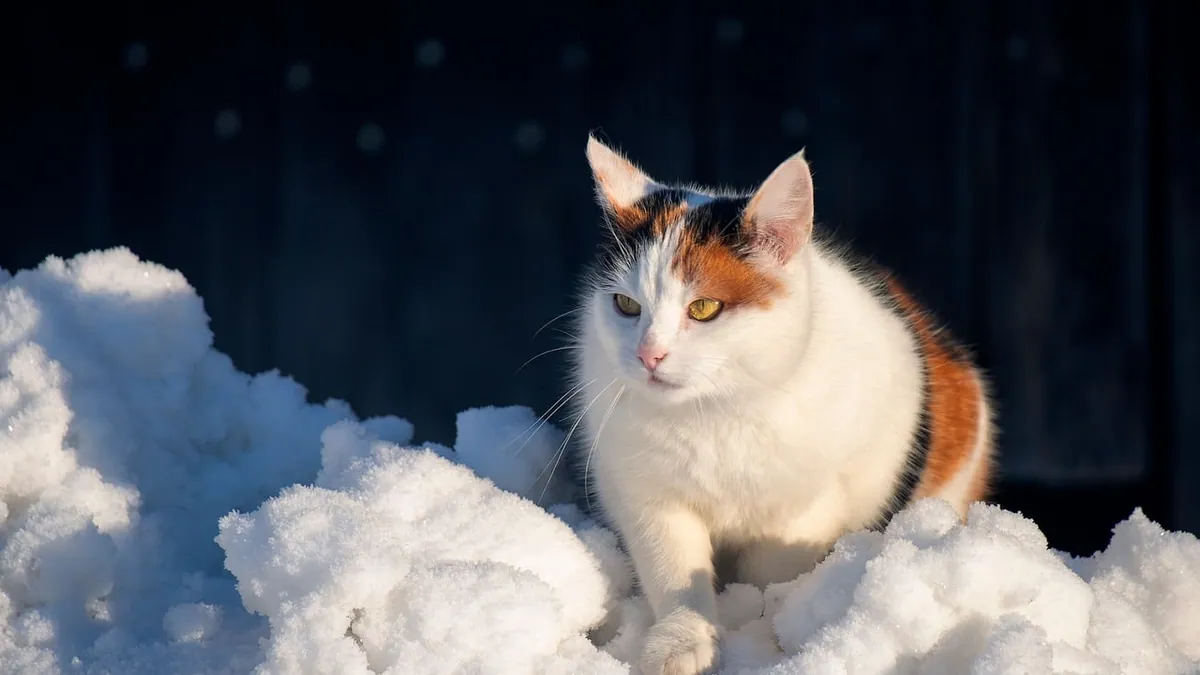
Snow blindness in cats is a painful irritation of the clear surface of the eye caused by intense ultraviolet (UV) light reflected off snow, water, or bright ground. It is the same basic injury as photokeratitis in people, and it is uncommon in cats because most cats avoid glaring light and stay indoors. When it does happen, the signs show up hours after exposure, not during it.
This article is educational and is not a substitute for veterinary diagnosis or treatment.
Quick Answer
- Snow blindness in cats means the cornea and conjunctiva were burned by UV light, usually from sun bouncing off snow, and pain starts a few hours later.
- The most common signs are squinting, holding the eye shut, heavy tearing, and rubbing at the face.
- Most mild cases improve over one to several days as the surface cells heal, but you cannot tell mild from serious at home.
- Keep your cat indoors in dim light and stop all outdoor snow or sun exposure until a veterinarian examines the eyes.
- Any blood, cloudiness, a swollen eye, or signs that last more than a day need same-day veterinary care.
What Snow Blindness Looks Like in Cats
The medical term for this injury is photokeratitis, which means inflammation of the cornea caused by light. In an animal model, UV exposure to the eye inflamed the ocular tissues and caused pain, and the pain behavior increased after a delay of about two to three days before returning toward normal by about seven days [1]. That delayed timing matches what owners notice: the cat seemed fine outside, then started squinting hours later.
Normal vs. abnormal squinting
Cats squint for many small reasons. A cat may squint briefly when waking up, when a light is turned on, or when something irritates a whisker. Normal squinting is brief, both eyes look the same, and the cat goes back to eating, playing, and grooming.
Abnormal squinting is different. The eye stays partly or fully closed, the cat avoids bright rooms, and the behavior keeps going. You may see the third eyelid slide across the eye, a sign of discomfort. The cat may turn its head away from windows or lamps.
Common cat snow blindness symptoms
Watch for these signs, especially after your cat spent time outdoors in snow, on a sunny balcony, or near a reflective surface:
- Squinting or holding one or both eyes shut
- Heavy tearing or watery discharge
- Pawing at the face or rubbing the eye on furniture
- Redness of the white of the eye
- Sensitivity to light, with the cat hiding under beds or in closets
- Reluctance to move, eat, or be touched near the head
Squinting and eye discharge are also part of a recognized pattern of eye irritation and toxicity in cats, which is why these signs always deserve a closer look [2]. A cat squinting after snow is not automatically a snow blindness case, but the timing and setting make it a reasonable suspicion.
Main Causes of Sudden Squinting and Tearing
Snow glare is one possible cause. Several others are more common and more dangerous. The table below helps you sort them, but only a veterinarian can confirm the diagnosis.
| Cause | Typical clues | How urgent |
|---|---|---|
| UV photokeratitis (snow blindness) | Recent bright snow, sun, or water glare, both eyes often affected, signs start hours later | See a vet within 24 hours if signs are mild, same day if severe |
| Foreign body or scratch (corneal ulcer) | One eye, sudden severe squinting, pawing, possible cloudiness | Same day, emergency if the eye is swollen or the cat is in severe pain |
| Uveitis (internal eye inflammation) | Squinting with a cloudy or bloody eye, change in eye color, pain on touch | Emergency, because uveitis can threaten vision |
| Conjunctivitis or infection | Red, puffy lids, discharge that is thick or colored | Routine visit within a day or two |
| Trauma | Known bump, fall, or fight, swelling, bleeding, unequal pupils | Emergency |
| Medication reaction | Started a new eye drop or ointment recently, squinting plus redness and swelling | Stop the medication and call your vet right away |
One documented case shows how serious eye signs can be in a young cat. An 11-week-old kitten developed sudden squinting on one side and bleeding inside the eye with no visible corneal damage, and the cause was most likely trauma within its enclosure [3]. The lesson for owners is simple: squinting plus a change inside the eye is not a wait-and-see problem.
Eye pain in cats is real and measurable. In a study of cats having eye surgery, researchers tracked behaviors such as a lowered head position before and after pain treatment, which confirms that cats show eye pain through posture and movement, not just crying or meowing [4]. If your cat is quiet, hunched, or hiding after snow exposure, that can be pain.
Red Flags That Make It an Emergency
Some eye signs mean you should stop reading and call an emergency veterinary clinic now.
- The eye looks swollen, bulging, or larger than the other eye
- You see blood inside the eye or a red, filled-looking pupil area
- The cornea looks cloudy, blue, or white
- The cat is crying, yowling, or cannot be comforted
- The cat will not eat or drink and is hiding
- Only one eye is affected and the signs came on within minutes
- There is a visible wound, puncture, or object in the eye
- The cat is a brachycephalic breed (flat-faced, such as a Persian) with any new eye sign
Brachycephalic cats deserve extra caution. In the eye surgery pain study, most enrolled cats were brachycephalic breeds, and breed was included as a factor in the analysis [4]. Flat-faced cats have shallower eye sockets and more exposed eye surfaces, so irritation can progress faster.
If your cat has bloodshot eyes along with squinting, that combination points toward uveitis, glaucoma, or trauma, and you can read more about those patterns in this guide to bloodshot eyes in cats. If the eye was injured by a claw, branch, or chemical, see cat eye injury first aid.
Safe Things You Can Do at Home While You Wait
Your main job is comfort and protection until a veterinarian sees your cat. Do these things:
- Bring the cat indoors and close the curtains or blinds. Keep the room dim.
- Turn off bright overhead lights and avoid flashlights near the face.
- Do not touch, rub, or press on the eye.
- Do not use human eye drops, saline, or leftover pet medications unless your veterinarian tells you to.
- Prevent rubbing by keeping the cat calm. A soft cone or recovery collar can help if your cat keeps pawing at the face.
- Offer water and soft food in the dim room so the cat does not have to move far.
- Note the time signs started and which eyes are affected. This history helps your vet.
Never put anything in the eye that was not prescribed for this cat for this problem. Some eye medications can harm a cornea that has a scratch or an ulcer, and a veterinarian needs to check the surface first.
What Your Veterinarian Will Check and Test
Your veterinarian will start with a full eye exam in a dim room. Expect these steps:
- Fluorescein stain. A yellow dye shows scratches and ulcers on the cornea. This is the key test for light damage and for foreign bodies.
- Schirmer tear test. A small paper strip measures tear production.
- Intraocular pressure. A device touches the eye briefly to check for glaucoma or uveitis.
- Slit lamp or magnified exam. This looks at the cornea, the front chamber, and the lens.
- Full physical exam. Your vet checks for other causes of squinting, including infection, dental disease, and high blood pressure.
If the surface looks abnormal in an unusual way, your vet may recommend more testing. In one reported case, a 10-month-old cat had severe eye discomfort that did not improve with antibiotic drops, and evaluation found an extensive corneal ulcer with a hard white plaque plus a band of abnormal tissue in the cornea [5]. That case shows why a vet looks beyond the surface when standard treatment is not working.
Your veterinarian may also ask about any new medications. A study of 140 cats treated with a topical antiviral eye medication found that 6 cats (4.3%) developed a local toxic reaction that included persistent squinting, eye discharge, red conjunctiva, and swelling [2]. If your cat started a new eye drop recently, bring the bottle to the visit.
In some corneal cases, veterinarians use additional treatments such as argon cold plasma as an adjunct to standard care. In a clinical study, this was well tolerated, and the two direct adverse reactions seen were small punctate opacities (1.3%) and squinting (0.7%) [6]. This is not a first-line home treatment. It is a decision your veterinarian makes based on the specific eye problem.
How Snow Blindness in Cats Is Treated
Treatment depends on what the exam finds. For simple UV irritation with no ulcer, care is mostly soothing. Your veterinarian may prescribe a lubricating gel, a pain medication, or an anti-inflammatory drop. The dose and choice are set by your veterinarian based on your cat's weight and health, so never guess at a dose yourself.
If there is an ulcer, treatment changes. Antibiotic drops, pain control, and sometimes surgery are used. A corneal ulcer with a plaque may need a superficial keratectomy, which is surgical removal of the damaged surface layer, as in the reported band keratopathy case [5].
If the problem is inside the eye, such as uveitis, treatment targets the underlying cause. Uveitis can be linked to trauma, infection, or other disease, and it can threaten vision. This is one reason a sudden change in eye appearance should never be watched at home for days.
For light-related skin and eye sensitivity from plant, chemical, or liver-related photosensitization, treatment focuses on soothing signs and strict shade. Cats with photosensitivity should be kept indoors or allowed out only during darkness while the problem continues [7]. That advice applies well to snow glare too: remove the light source and the eyes can begin to heal.
Preventing Snow Glare Eye Problems
Prevention is mostly about limiting exposure.
- Keep cats indoors during bright snowy days, especially between late morning and mid afternoon.
- If your cat goes out in winter, choose early morning or dusk when the sun is low.
- Close blinds on sunny days in rooms where your cat naps.
- Do not let your cat sit on a sunny windowsill or balcony for long stretches in snow-reflected light.
- Check your cat's eyes after any outdoor winter time, especially light-colored cats and flat-faced breeds.
- Treat any new squinting as a reason to call your vet, not a reason to wait.
If your cat has a known eye condition, ask your veterinarian how much light exposure is safe. Some cats need lifelong monitoring, and some need regular eye checks. You can learn more about normal feline eye function and care in this overview of cat eyes and common eye problems.
Limitations and When to Contact a Veterinarian
Snow blindness in cats is uncommon, and many cases of squinting after snow turn out to be scratches, foreign bodies, or infections instead. You cannot tell these apart at home. That is the main limitation of any at-home assessment.
Call your veterinarian the same day if your cat has squinting, tearing, or light sensitivity that started after bright sun or snow exposure, even if the signs seem mild. Call immediately, day or night, if you see blood in the eye, a cloudy cornea, a swollen or bulging eye, severe pain, or a sudden change in behavior. Schedule a routine visit if signs are very mild but have lasted more than 24 hours, or if they keep coming back.
Every cat is different, and only a veterinarian who examines your cat can diagnose the problem and set the right treatment. If you are unsure whether the situation is urgent, call the clinic and describe what you see. It is always reasonable to ask.
Frequently Asked Questions
Can cats really get snow blindness?
Yes, but it is rare. Cats can develop photokeratitis when intense UV light reflects off snow, water, or bright surfaces into their eyes. Most cases are mild because cats usually avoid glaring light and spend most of their time indoors.
How long does snow blindness last in cats?
Mild UV irritation often improves over one to several days as the surface cells heal. In an animal model, pain behavior peaked about two to three days after UV exposure and returned toward normal by about seven days [1]. If signs last longer than that, or get worse, your cat needs another exam.
Is squinting after snow always an emergency?
No, but it always deserves a call. Mild squinting with clear eyes can be watched for a few hours in a dim room. Squinting with blood, cloudiness, swelling, or severe pain is an emergency and needs immediate care.
Can I use human eye drops on my cat?
No. Do not put human eye drops, saline, or old prescriptions in your cat's eye. Some products can worsen a corneal ulcer or cause a toxic reaction. Only use medication your veterinarian prescribes for this cat for this specific problem.
Will my cat's vision come back after snow blindness?
In most simple cases, yes, because the cornea heals well when the surface is the only part injured. If the damage reaches deeper or involves the inside of the eye, the outcome depends on the specific injury and how fast treatment starts. Your veterinarian can give you a realistic outlook after the exam.
Related Articles
- Why Is My Cat suddenly going blind? Hypertensive Retinal Detachment and Uveitis
- Cat Eye Injury: Signs, First Aid, and When to See the Vet
- Cat Eyes: Understanding Feline Vision, Common Eye Problems & Care Tips
- Can Cats See in the Dark? Feline Vision Explained
- Why Is My Cat having bloodshot eyes? Uveitis Glaucoma and Trauma Guide
- Cat Eye Discharge: Causes and When to See a Vet
- Cat Vision Loss and Blindness: Signs and Causes
- Sudden Blindness in Cats: Why Dilated Pupils Matter
- Cat Eye Pupils and Vision: What Owners Should Know
References
- Behavioral and neurophysiological correlates of nociception in an animal model of photokeratitis. Neuroscience, 2010.
- Frequency and Characterization of Local Ocular Toxicity in Cats Treated With Topical Ophthalmic Cidofovir for Presumptive Feline Herpesvirus-1 Infection. Veterinary ophthalmology, 2026.
- Secondary acute anterior uveitis with hyphema in a purpose-bred kitten. Journal of the American Association for Laboratory Animal Science : JAALAS, 2008.
- Keeping an eye on pain: Characterization of pain behaviours in cats undergoing ophthalmic surgery. Veterinary journal (London, England : 1997), 2026.
- Presumed calcific band keratopathy in a 10-month-old domestic shorthair cat. Veterinary ophthalmology, 2025.
- Feasibility and Safety of Argon Cold Plasma Use as an Adjunctive Treatment for Corneal Disease in Dogs, Cats and Small Mammals: A Prospective Clinical Study. Veterinary ophthalmology, 2026.
- Photosensitization in Cats - Cat Owners. Merck Veterinary Manual.