Is It Normal for Puppies to Be Cross-Eyed? Eye Development
By Dr. Zubair Khalid, DVM, MS, PhD ·
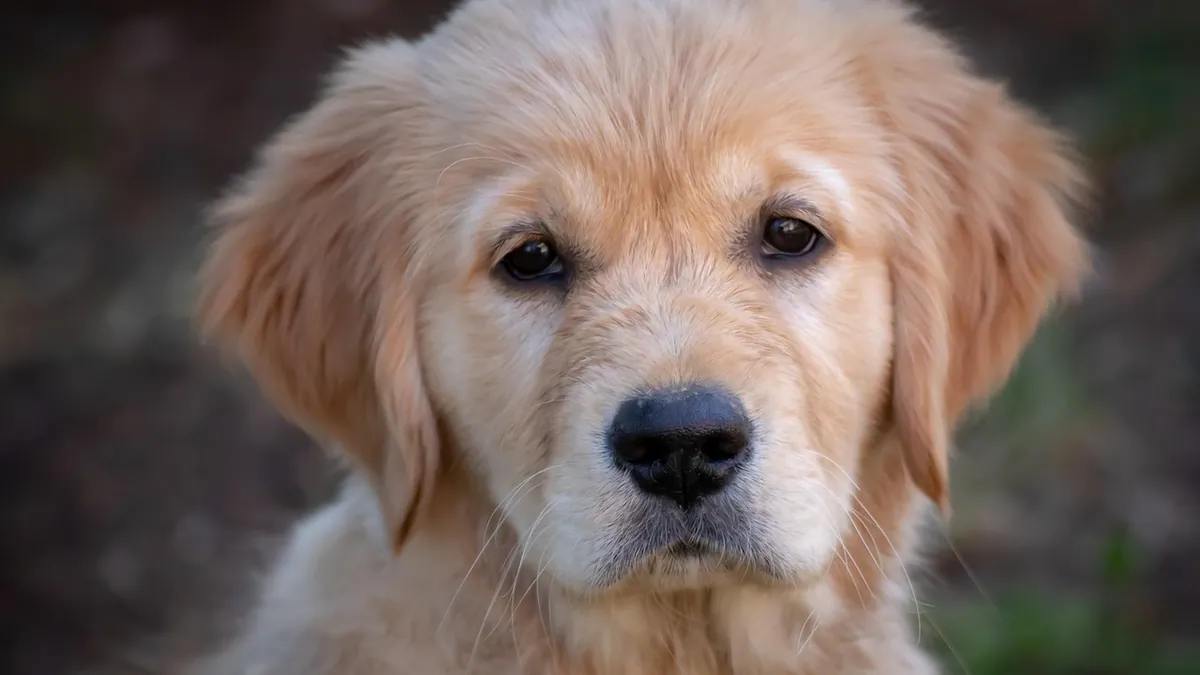
Is it normal for puppies to be cross eyed? Sometimes yes. Many puppies look a little cross eyed in their first weeks and months because their vision and eye muscles are still maturing, and the look often fades on its own. But if the crossing is constant, gets worse, or shows up with other eye signs, it can be a real problem that needs a veterinarian.
This article is educational and is not a substitute for veterinary diagnosis or treatment.
Quick Answer
- A young puppy whose eyes drift inward now and then, especially when tired or focusing, is often going through normal eye development.
- Constant crossing, one eye that stays turned, or a new crossing in an older puppy or adult dog is not normal and should be checked.
- True misalignment of the eyes is called strabismus, and it can be inherited, caused by injury, or linked to other eye and muscle problems [1][2].
- Take clear photos and short videos of the eye position, because the crossing may come and go during a vet visit.
- Call your veterinarian if the eye looks cloudy, red, swollen, or if your puppy squints, paws at the eye, or seems to see poorly.
What Puppy Eye Development Looks Like
Puppies are not born with fully working eyes. Their eyes open around two weeks of age, and vision keeps improving after that. The eye itself has several parts that all have to work together, including the cornea, iris, pupil, and retina [3]. The muscles that move the eyeball and the nerves that control them also need time to coordinate.
During this early period, the eyes may not point in perfect unison. A puppy may look slightly cross eyed when it is sleepy, excited, or staring hard at a toy. This is usually a short phase, not a permanent condition.
Is it normal for puppies to be a little cross eyed?
A little crossing in a very young puppy can be normal, especially if it comes and goes and both eyes still track movement together. The key word is "a little." If one eye is clearly turned inward or outward most of the time, that is different.
How to tell if my dog is cross eyed
Watch your dog from the front in good light. Look at where the colored part (the iris) sits in each eye. In a straight-eyed dog, both irises sit in about the same spot. In a cross eyed dog, one or both irises pull toward the nose. A simple test is to hold a treat or toy in front of your dog and move it slowly side to side. Both eyes should follow smoothly and stay roughly parallel.
Take a video. Eye alignment can change when your dog is excited or nervous, and a video helps your veterinarian see what you see at home.
Causes of Crossed Eyes in Dogs
Misalignment of the eyes is called strabismus. It can be present from birth (congenital) or develop later (acquired). Some forms are inherited, and some are caused by injury, inflammation, or nerve problems [1][2].
| Cause | Typical clues | How urgent |
|---|---|---|
| Normal puppy development | Young puppy, crossing comes and goes, both eyes track together | Routine visit if it persists past a few months |
| Inherited or breed-related strabismus | Present from a young age, stable, no pain, no redness | Routine visit |
| Eye or eyelid birth defects | Cloudy cornea, small or missing eyelid tissue, poor vision | See a vet soon, these can threaten sight [4] |
| Muscle inflammation (extraocular muscle myositis) | One eye turns inward, eye may look sunken, develops over weeks | See a vet soon, this can progress [1] |
| Injury or bulging eye (proptosis) | Eye pushed forward, turned outward, swelling, pain | Emergency |
| Nerve or brain problem | Sudden crossing with head tilt, circling, wobbling, or seizures | Emergency [5] |
Some puppies are born with multiple eye problems at once. In one reported case, a puppy had eyelid defects along with other congenital eye anomalies, and the damage was severe enough that both eyes eventually had to be removed [4]. That is an extreme example, but it shows why early evaluation matters.
Inflammation of the muscles that move the eye can also cause a turn. In one dog, chronic muscle inflammation led to a fibrosing esotropia, where the eye pulled inward and stayed there, and surgery was needed to release the tightened muscles [1]. This is not common, but it is a reason a new turn in an older puppy deserves a look.
Red Flags That Mean Emergency
Some eye signs mean you should stop reading and call a veterinarian right away.
- The eye is bulging out of the socket or cannot be seen normally.
- The eye is suddenly turned, and your dog also has a head tilt, trouble walking, or a seizure.
- The eye is swollen shut, bleeding, or has a deep wound.
- Your dog is crying, pawing at the face, or pressing the head against walls.
- The eye looks cloudy, blue, or white, which can signal serious internal eye disease.
- Your dog went from seeing normally to bumping into things within hours.
A sudden eye turn with neurologic signs can point to a problem in the brain, not just the eye. In one reported dog, abnormal eye movements and a medial strabismus were linked to inflammation in the brain, and the dog did not survive despite treatment [5]. That is a rare case, but it shows why sudden changes with other symptoms are urgent.
What You Can Do at Home While You Wait
You cannot fix strabismus at home, but you can protect your puppy and gather useful information.
- Keep a log. Note when the crossing started, whether it is constant or intermittent, and whether it is one eye or both.
- Take photos and videos in good light, from the front and in published veterinary research.
- Watch for squinting, redness, discharge, or cloudiness. If you see redness, read Why Are My Dog's Eyes Red? for context on what those signs can mean.
- Keep the eye area clean with a soft, damp cloth if there is mild discharge. For more on that, see Dog Eye Discharge: Normal or Infection?.
- Do not put human eye drops or ointments in your dog's eyes unless your veterinarian tells you to.
- Prevent trauma. Block stairs and sharp corners if your puppy seems to see poorly, and keep it away from rough play with bigger dogs.
- Keep up with vaccines and wellness visits, because some eye problems are found during routine exams.
If your puppy has a lot of eye goop along with the crossing, Eye Goop In Dogs explains what different types of discharge can mean.
What Your Veterinarian Will Check
Your veterinarian will start with a full history. Tell them when you first noticed the crossing, whether it changes, and whether your puppy has had any injury or illness.
Next comes a physical and eye exam. The vet will look at the eyelids, cornea, iris, and pupil, and check how the eyes move together [3]. They may use a light to check the pupil response and a bright light or lens to look inside the eye.
Tests your vet may recommend
- A Schirmer tear test to measure tear production.
- Fluorescein stain to check for scratches or ulcers on the cornea.
- A pressure check (tonometry) to look for glaucoma.
- A forced duction test, where the vet gently moves the eye to see if a muscle is tight or stuck. This test helped confirm a diagnosis in one reported case of fibrosing esotropia [1].
- Blood work if an underlying illness is suspected.
- Imaging such as MRI if a brain or nerve problem is possible [1][5].
- A referral to a veterinary ophthalmologist for complex cases.
Treatment depends on the cause. Some puppies need no treatment and simply outgrow the look. Others may need medication for inflammation, surgery to correct a muscle problem, or management of an underlying disease [1][2]. In one report, a third eyelid flap was used to help correct a lateral strabismus after an eye had bulged forward, and it worked as a less invasive option in those dogs [2].
Your veterinarian will set any medication dose based on your dog's weight and health. Do not use leftover medicines from a previous pet.
Prevention and Monitoring
You cannot prevent every cause of strabismus, but you can lower the risk and catch problems early.
- Choose a breeder who screens breeding dogs for eye disease. Some eye conditions run in families [6].
- Ask about the eye health of the puppy's parents and littermates.
- Keep routine wellness visits, especially in the first year.
- Spay or neuter timing and general health decisions are separate topics, but if you have questions about sex development in dogs, see Can Dogs Be Intersex? Signs, Diagnosis, and Care.
- Watch for changes as your puppy grows. A turn that was mild at 8 weeks and is worse at 16 weeks is worth a recheck.
- Protect the eyes during car rides and rough play.
Some breeds are seen more often for eye problems in general. In a survey of veterinarians practicing ophthalmology, the most frequently reported breeds included Toy Poodles, Shiba Inus, Shih Tzus, Chihuahuas, Miniature Dachshunds, and French Bulldogs [6]. That does not mean those breeds are prone to strabismus specifically, but it does mean eye checks are a good habit for them.
Limitations and When to Contact a Veterinarian
This article cannot tell you what is causing your puppy's eye position. Only a veterinarian who examines your dog can do that. Individual cases need a veterinarian, and the timing matters.
Call now (emergency) if the eye is bulging, bleeding, swollen shut, or if your dog has a sudden eye turn with wobbling, head tilt, collapse, or seizures.
Call the same day if the eye is red, cloudy, painful, or if your dog is squinting or pawing at the face.
Schedule a routine visit if the crossing is mild, painless, and has been stable, but mention it at your next appointment. If it has lasted more than a few months or is getting worse, book a dedicated eye exam.
Frequently Asked Questions
Will my puppy grow out of being cross eyed?
Many puppies do grow out of mild, intermittent crossing as their vision and eye muscles mature. If the crossing is constant, involves only one eye, or is still present after several months, it is less likely to resolve on its own and should be checked.
Can a cross eyed dog still see well?
Often yes, especially with mild or inherited strabismus that has been stable since puppyhood. Vision problems are more likely when the crossing is caused by injury, inflammation, or a birth defect that also affects the cornea or retina.
Is strabismus painful for dogs?
Strabismus itself is usually not painful. Pain is more likely when the cause is inflammation, injury, or increased pressure inside the eye, and those cases need prompt care.
Does being cross eyed run in certain breeds?
Some forms of strabismus are inherited, and breed predispositions exist for many eye conditions. Your veterinarian can tell you whether your breed has known risks and whether screening is recommended.
Can I fix my dog's crossed eyes at home?
No. There is no home treatment that straightens a dog's eyes. Some cases need no treatment, some need medication, and some need surgery, and only a veterinarian can decide which applies to your dog.
Related Articles
- Why Are My Dog's Eyes Red?
- Eye Goop In Dogs
- Can Dogs Be Intersex? Signs, Diagnosis, and Care
- Dog Eye Discharge: Normal or Infection?
- Dog Eye Discharge: What's Normal and When to Call the Vet
- Dog Training Tips For Puppies
- Do Puppies' Eyes Change Color? What to Expect
- When Do Puppies Open Their Eyes? Timeline and Care
- When Do Puppies Open Their Eyes and Ears?
References
- Surgical management of unilateral restrictive strabismus in an 8-month-old dog. New Zealand veterinary journal, 2024.
- Case Report: Third eyelid flap for correction of proptosis-induced lateral strabismus in two dogs. Frontiers in veterinary science, 2025.
- Eye Structure and Function in Dogs - Dog Owners. Merck Veterinary Manual.
- Bilateral Eyelid Agenesis With Multiple Congenital Ocular Anomalies in an Australian Labradoodle Puppy: Case Report and Surgical Management. Veterinary ophthalmology, 2026.
- Monocular ictal nystagmus in a dog: potentially a newly recognized focal seizure phenotype. Journal of veterinary internal medicine, 2026.
- Common Ophthalmic Conditions in Popular Dog Breeds in Japan: Insights From a Survey of 105 Veterinarians Practicing Ophthalmology. Veterinary ophthalmology, 2026.