Why Does My Dog Cross Her Paws or Legs?
By Dr. Zubair Khalid, DVM, MS, PhD ·
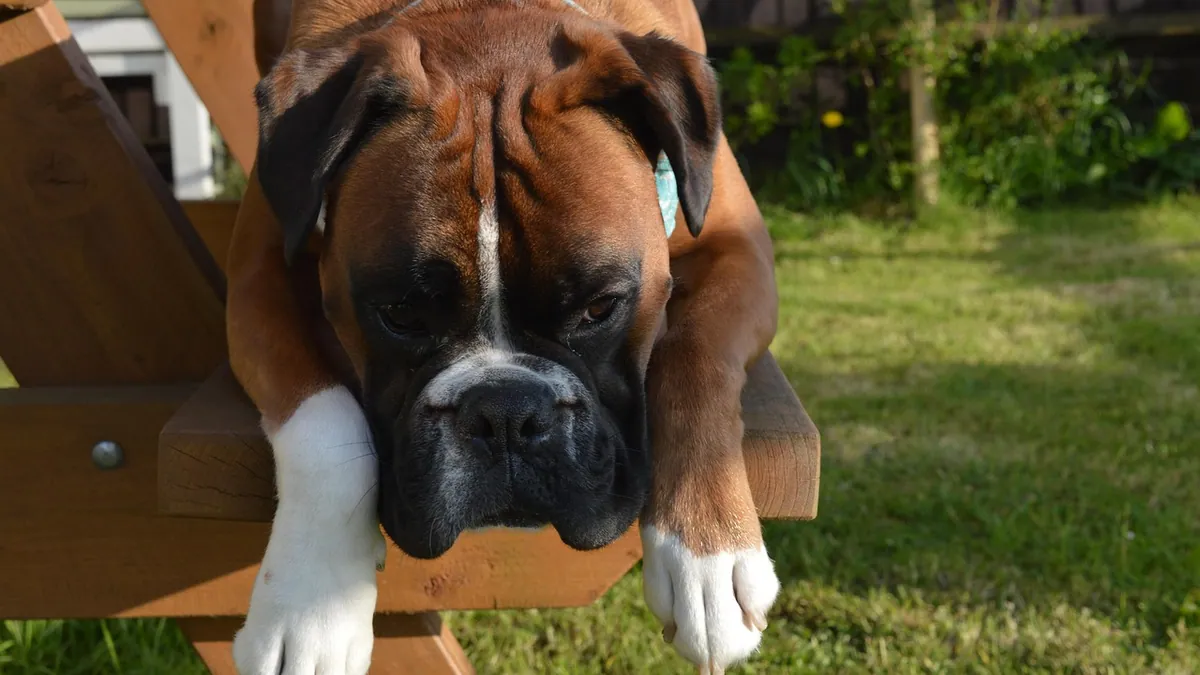
A dog who crosses her paws while lying down is usually just comfortable. A dog who crosses her legs or paws while walking, or whose paws knuckle over, may have a neurologic or orthopedic problem that needs veterinary care. This guide helps you tell the difference, so you know when "why does my dog cross her paws" is a harmless quirk and when it is a warning sign.
This article is educational and is not a substitute for veterinary diagnosis or treatment.
Quick Answer
- Paw crossing while resting or sleeping is common and usually harmless, especially in dogs with long or fluffy coats.
- Paw crossing during walking, standing, or while placing a foot is different and deserves a veterinary exam.
- Knuckling (the top of the paw touching the ground instead of the pads) is a red flag for a neurologic problem.
- A wobbly, drifting, or unsteady gait is also a red flag, even if your dog seems happy.
- If you see either sign, keep your dog safe at home and call your veterinarian promptly. Do not wait weeks to see if it resolves.
What Paw Crossing Looks Like and What Is Normal
Paw crossing shows up in two very different situations.
The first is a relaxed dog. She is lying on her side or her belly, one front paw draped over the other, or her back legs tucked and crossed at the ankles. She may shift, stretch, and readjust. When she stands up, she walks normally. This is a posture choice, not a symptom. Dogs with long hair, thick leg furnishings, or a narrow body shape cross their legs more visibly, and some dogs simply seem to prefer it.
The second situation involves movement. You notice a paw crossing as she walks, or a back leg swinging inward and clipping the other leg. She may stand with her feet too close together or cross one foot over the other when she shifts her weight. She may also cross in front of you when walking, which is usually a separate behavior. That kind of cutting across your path is often herding instinct, excitement, or a dog who wants to stay close to you, not a sign of disease.
The line between the two is function. A relaxed crosser walks, turns, and climbs stairs normally. A dog with a real problem looks off in motion, even briefly.
Why Does My Dog Cross Her Legs or Paws? The Main Causes
There are several broad categories of causes. Some are harmless. Some need a same-day call. The table below gives you a starting point, and the sections after it explain each one.
| Cause | Typical clues | How urgent |
|---|---|---|
| Relaxed posture or habit | Crossing only at rest, normal walking, no pain | Not urgent |
| Long coat or body shape | Hair hides the legs, crossing looks dramatic, gait is normal | Not urgent |
| Pain or lameness in one limb | Shifting weight off one leg, stiffness after rest, reluctance to jump | See a vet soon |
| Orthopedic disease (elbow, shoulder, hip, knee) | Subtle front limb lameness, shortened stride, head bob | See a vet soon |
| Neurologic disease (spinal cord, nerves, brain) | Knuckling, wobbling, dragging toes, scuffed nails | Urgent, same day |
| Injury or trauma | Sudden onset after a fall, jump, or accident | Emergency if severe |
| Age-related weakness or arthritis | Slow to rise, hind end sway, worse on slick floors | See a vet soon |
Relaxed Posture and Simple Habit
This is the most common answer. A dog at rest has no reason to hold her limbs in a functional stance, so she crosses them for comfort or warmth. If she rises easily, trots across the yard, and shows no stiffness, there is nothing to treat.
Long Coats and Body Shape
Dogs with heavy feathering on the legs can look like they are crossing their paws when the hair is simply falling that way. A narrow-chested dog may also stand with feet close together, which reads as crossing from a distance. Look at the actual paw pads and the gait, not the silhouette.
Pain and Lameness in One Limb
A dog with a sore limb often shifts weight to the opposite side, which can make the sore leg drift inward and appear to cross. Front limb lameness in dogs can come from many sources, including orthopedic, neurologic, infectious, inflammatory, vascular, and neoplastic disorders, and these can produce overlapping signs [1]. That overlap is exactly why a hands-on exam matters. If your dog is favoring a leg, these guides can help you describe what you are seeing: Why Is My Dog Limping On Her Front Leg and Why Is My Dog Limping On Both Front Legs.
Orthopedic Problems
Elbow, shoulder, and hip disease can change how a dog places a foot. A dog with elbow discomfort may rotate the limb or cross it slightly as she tries to avoid the painful end range of motion. Limb position genuinely changes how joints line up. In a cadaver study of healthy elbows, researchers used computed tomography to measure radio-ulnar incongruity at different flexion angles and different pronation and supination angles, and the positioning of the limb affected those measurements [2]. If limb angle changes what imaging shows in normal joints, it makes sense that a dog in pain will alter her limb position to feel better.
Neurologic Problems
This is the category that worries veterinarians most. When the nervous system is not sending clean signals to a limb, the paw can cross, drag, or flip over. Knuckling is the classic sign. The dog places the top of the paw on the floor instead of the pads. She may also scuff her nails, trip on nothing, or wobble when she turns. These signs point to the spinal cord, the nerves, or the brain, and they need prompt evaluation.
Injury and Trauma
A sudden crossing pattern that appears after a jump, a slip on stairs, or a fall is different from a lifelong quirk. If your dog yelps, cannot bear weight, or seems painful when you touch a limb, treat it as urgent.
Age-Related Changes
Older dogs lose muscle mass and nerve function. They may cross their back legs when standing, sway in the hind end, or struggle on smooth floors. This can be arthritis, a neurologic condition, or both. It is worth an exam because many older dogs can be made more comfortable.
Red Flags That Mean Emergency or Same-Day Care
Some signs should not wait. Call your veterinarian right away, or go to an emergency clinic, if you see any of the following.
- Knuckling, meaning the top of the paw rests on the ground
- A paw that drags or a nail that scuffs audibly on pavement
- Sudden weakness in one or more legs
- A wobbly, drunken, or wide-based gait
- Crossing that started suddenly, especially after activity or trauma
- Inability to stand, or falling over
- Crying, panting, or refusing to move
- Loss of bladder or bowel control along with leg weakness
- A limb that is cold, swollen, or clearly painful to touch
Sudden loss of the ability to walk, especially with back leg involvement and loss of bladder control, is an emergency. So is any sign that appears after a traumatic event.
What You Can Safely Do at Home While You Wait
You cannot diagnose this at home, but you can protect your dog and gather useful information.
- Restrict activity. Use a leash for bathroom trips and skip walks, stairs, and jumping on furniture until your dog is seen.
- Block slick floors with rugs or yoga mats. Surface compliance changes how dogs control their paws. In a study of healthy dogs walking and trotting on mats of increasing thickness, several center of pressure measures decreased as the surface got more compliant, and the effects were more consistent during trot [3]. Soft, grippy surfaces can help a dog feel steadier, but they do not fix the underlying problem.
- Video the gait. Record your dog walking toward you and away from you on a flat surface. Slow-motion video on a phone is very helpful for your veterinarian.
- Note the timeline. When did it start? Was it sudden or gradual? Is it worse after rest, after exercise, or at the end of the day?
- Check the nails and paw pads. Look for torn nails, cuts, foreign objects, or mats of hair between the pads.
- Do not give human pain medications. Many are toxic to dogs, and the dose depends on your dog's weight and health. Your veterinarian calculates any medication dose for your pet.
- Do not massage or stretch a limb that seems painful. You can make an injury worse.
If your dog is licking or chewing at a paw along with the crossing, that adds another clue. See Dog Licking Paws Cause for what that behavior can mean.
What Your Veterinarian Will Check and Test
Your veterinarian will start with a full history and a hands-on examination. Expect questions about when the crossing started, whether it happens at rest or in motion, and whether your dog has slowed down on stairs or jumps.
The physical exam usually includes:
- Gait assessment. Your dog will walk and trot on a non-slip surface while the veterinarian watches from the front, side, and behind.
- Orthopedic exam. The veterinarian will flex and extend each joint, check for swelling, and look for pain at the elbow, shoulder, hip, and knee. Front limb lameness is a diagnostic challenge because so many conditions produce similar signs, so a structured exam helps localize the problem [1].
- Neurologic exam. This includes checking paw placement, proprioception (knowing where the foot is in space), reflexes, and spinal pain.
- Limb measurements. Your veterinarian may measure limb circumference to track muscle loss over time. In sound dogs, circumferential measurement of the thoracic limb was most reliable at a set point below the elbow, with the elbow either extended or near a weight-bearing angle [4]. Consistent measurement technique matters if your dog is being monitored over weeks.
- Imaging. X-rays are common first-line tests. Advanced imaging such as CT, MRI, or arthroscopy may be recommended for complex or unresolved cases [1].
Treatment depends entirely on the cause. A relaxed posture needs no treatment. Arthritis, a pinched nerve, a disc problem, and an elbow condition all have different plans. Your veterinarian will set the specific approach for your dog.
Prevention and Monitoring
You cannot prevent a harmless habit, and you should not try. What you can do is protect the joints and nervous system your dog already has.
- Keep your dog lean. Extra weight loads the joints and makes neurologic weakness harder to manage.
- Use non-slip surfaces in the house, especially on stairs and near food bowls.
- Trim nails regularly. Long nails change how the paw contacts the ground.
- Keep hair between the paw pads trimmed so your dog is not walking on mats of fur.
- Ask about joint-friendly exercise if your dog is older or has a known orthopedic condition.
- Track changes with photos and videos. A monthly video of your dog walking on the same path is a simple way to spot slow decline.
If your dog has a diagnosed neurologic or orthopedic condition, follow the recheck schedule your veterinarian sets. Many of these conditions are easier to manage when caught early.
Limitations and When to Contact a Veterinarian
Paw crossing is a sign, not a diagnosis. The same visible behavior can come from a comfortable nap position or from a spinal cord problem, and only an examination can tell them apart. Individual cases need a veterinarian who can examine your dog in person.
Contact your veterinarian the same day if you notice new knuckling, a dragging paw, sudden weakness, a wobbly gait, or crossing that appeared out of nowhere. Go to an emergency clinic immediately if your dog cannot stand, has lost bladder or bowel control, is crying or panting in pain, or if the signs started after a fall or accident. Schedule a routine visit if the crossing is mild, has been present for a while, and your dog is otherwise acting normal, but do not put it off for months. Early evaluation gives you more treatment options.
Frequently Asked Questions
Is it normal for a dog to cross her paws while sleeping?
Yes, this is very common and usually just a comfortable position. If she stands and walks normally afterward, there is nothing to worry about. Watch for changes in how she moves, not how she rests.
Why does my dog cross her back legs when walking?
Crossing back legs during walking is more concerning than crossing them at rest. It can point to a neurologic problem, hip or knee disease, or hind end weakness. Have your veterinarian examine her, especially if the crossing is new or getting worse.
Why does my dog cross her front paws?
Front paw crossing at rest is usually a relaxed habit. Front paw crossing during walking, or a front paw that flips onto its top surface, suggests a neurologic or orthopedic issue. A video of her walking toward and away from you will help your veterinarian.
Why does my dog cross in front of me when walking?
This is usually a behavior, not a medical sign. Herding breeds, excited dogs, and dogs who want to stay close often cut across your path. If she also stumbles, drifts, or drags a paw, mention it to your veterinarian.
Can paw crossing be a sign of pain?
Yes, sometimes. A dog in pain may shift weight off a sore limb, which can make the other leg drift inward and look crossed. Other clues include stiffness after rest, reluctance to jump, and a shortened stride. If you see these together, book an exam.
Related Articles
- Why Is My Dog Limping On Her Front Leg
- Why Is My Dog Limping On Both Front Legs
- Why Is My Dog Limping On Front Left Leg
- Why Is My Dog Limping On The Front Leg
- Dog Licking Paws Cause
- Why Is My Dog Limping On Front Leg
- Why Does My Dog Keep Nibbling His Legs and Paws?
- Why Does My Dog Keep Kicking His Back Leg?
- Why Is My Dog Walking Sideways or Not Straight?
References
- Diagnosing Thoracic Limb Lameness in Dogs. The Veterinary clinics of North America. Small animal practice, 2026.
- Computed Tomography Assessment of Healthy Elbow Joint Congruity in Dogs Being Affected by Pronation and Supination Angulation: A Cadaveric Study. Animals : an open access journal from MDPI, 2025.
- Effects of Soft Ground on Paw Center of Pressure Metrics in Dogs During Walk and Trot. Animals : an open access journal from MDPI, 2026.
- Inter- and intra-observer reliability of thoracic limb circumference measurement methods in sound dogs. Frontiers in veterinary science, 2023.