Why Is My Cat Knuckling? Causes of Paw Folding in Cats
By Dr. Zubair Khalid, DVM, MS, PhD ·
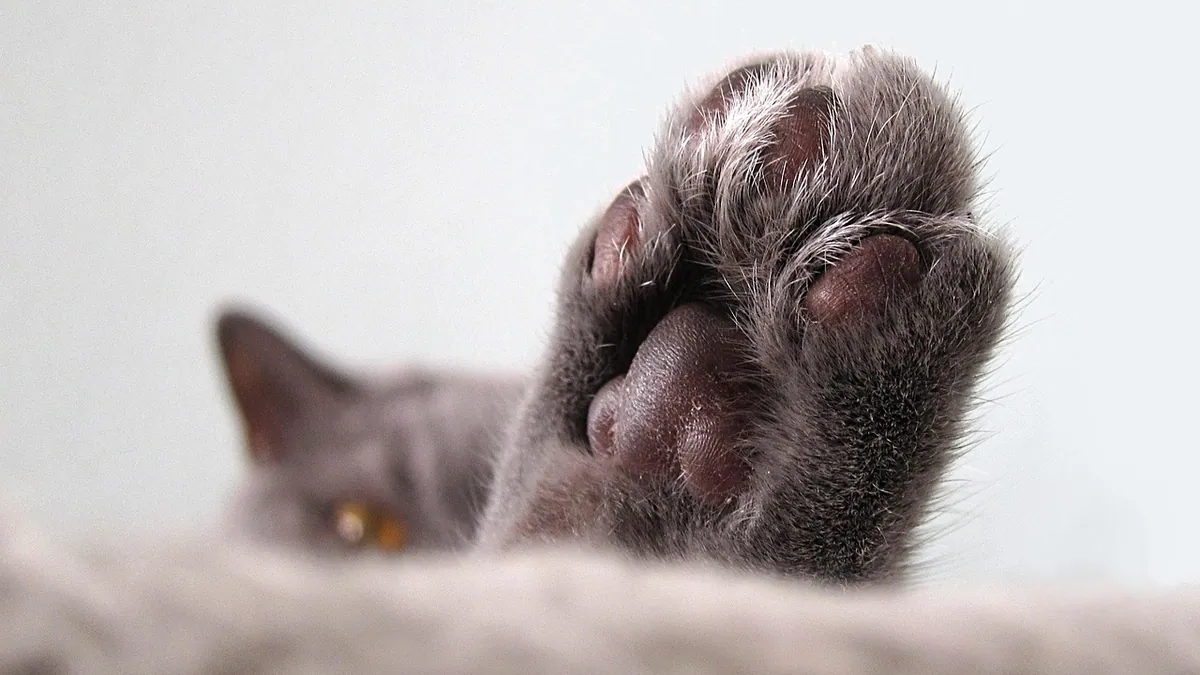
Paw knuckling in cats happens when the paw folds under and the cat walks on the top of the foot instead of the pads. It is a neurologic sign, not a paw problem, and it usually points to nerve damage, spinal disease, or a muscle or joint issue higher up the limb. Most causes need a veterinarian to diagnose, and some are emergencies.
This article is educational and is not a substitute for veterinary diagnosis or treatment.
Quick Answer
- Knuckling means the cat is not fully aware of where the paw is in space, so it flips under during steps.
- The most common reasons are nerve injury, spinal cord disease, and problems in the muscles or joints of the leg.
- A single knuckling limb that came on suddenly is an emergency, especially if the cat is dragging the foot or cannot bear weight.
- Do not massage, stretch, or apply heat to the leg unless your veterinarian tells you to, because the wrong handling can worsen nerve or muscle damage.
- Keep your cat indoors and confined to a small, padded space until a veterinarian examines the leg.
What Paw Knuckling in Cats Actually Looks Like
Knuckling is easy to miss at first. You may notice a scuffed toenail, a sore or raw spot on the top of the paw, or a faint dragging sound on hard floors. The cat may place the paw correctly at a standstill but fold it under during walking, or the foot may flip when the cat turns or climbs.
Some cats only knuckle on one limb. Others knuckle on both hind legs or on a front leg and a hind leg. The pattern matters to your veterinarian because it helps narrow down whether the problem is in a single nerve, the spinal cord, or the muscles of one limb.
Normal cats place each paw precisely, even on narrow surfaces. Cats walking along a narrow path adjust their limbs and muscle activity to keep their balance and place their paws accurately [1]. When that precision fails, the paw folds under instead.
What Causes Knuckling in Cats?
Knuckling is a symptom, not a diagnosis. The underlying problem can sit in the nerve, the spinal cord, the muscle, or the joint. Here are the main categories.
Nerve Injury or Neuropathy
Nerves carry the signal that tells a cat where its paw is and how to lift it. When a nerve is stretched, crushed, or damaged, the paw drops and folds. This can follow a fall, a bite wound, a tail pull, or a fracture. It can also develop slowly with diseases that affect nerves throughout the body.
Diabetes mellitus can cause peripheral neuropathy in cats. In one study, diabetic cats showed reduced sensation in the pelvic limbs compared with healthy cats, which fits with the loss of sensory function that can accompany nerve disease [2]. A cat with this kind of sensory loss may not feel the paw turning under.
Spinal Cord Disease
The spinal cord is the highway between the brain and the limbs. Pressure on the cord from a slipped disc, a fracture, an infection, or a tumor can interrupt the signals that control paw placement. Cats with spinal disease often knuckle on one or both hind legs and may also have a wobbly walk, a low tail carriage, or trouble jumping.
Muscle and Joint Problems
Sometimes the limb cannot extend normally because of a problem in the muscle or joint itself. Brachialis muscle contracture is a condition in which the muscle becomes fibrotic and limits elbow extension. In reported cases, cats had limited elbow extension and a firm, nonpainful mass on the outer front of the lower humerus, and surgery restored full elbow motion in the cases caused by fibrotic muscle contracture [3]. A soft tissue sarcoma was the cause in one of those cases, which shows why a biopsy matters [3].
Muscle tumors are rare but real. One cat with progressive hind limb lameness had an intramuscular osteochondroma in the semimembranosus muscle, a mass that was removed and did not recur over three years of follow-up [4].
Cancer can also infiltrate nerves and muscles. A cat with three months of hind limb ataxia and knuckling of the left forelimb was found to have T-cell lymphoma affecting the heart, skeletal muscles, and peripheral nerves [5]. This is uncommon, but it shows that knuckling can be the first visible sign of serious systemic disease.
A Simple Way to Compare Causes
| Cause | Typical clues | How urgent |
|---|---|---|
| Nerve injury or neuropathy | One limb, dragging, scuffed nails, reduced sensation, may follow trauma or diabetes | Same day to urgent |
| Spinal cord disease | Hind limb knuckling, wobbly walk, trouble jumping, pain along the back | Emergency if sudden, urgent if gradual |
| Muscle contracture or tumor | Firm mass on the limb, limited joint motion, progressive lameness | Urgent, needs imaging and biopsy |
| Cancer affecting nerves or muscles | Weight loss, muscle wasting, knuckling plus other body signs | Urgent to emergency |
| Joint disease or old injury | Stiffness, swelling, pain when the joint is moved | Routine to urgent depending on pain |
Red Flags That Make Knuckling an Emergency
Call an emergency clinic right away if any of these appear.
- The knuckling started suddenly, within hours.
- Your cat is dragging a limb and the top of the paw is raw, bleeding, or swollen.
- Your cat cannot stand, walk, or use the litter box.
- Your cat cries out, pants, or shows severe pain when touched.
- Your cat has lost bladder or bowel control.
- Your cat's breathing is labored or the gums look pale or blue.
- The knuckling followed a fall, a car accident, or a bite wound.
Sudden loss of limb function can mean spinal cord compression or a major nerve injury. Those are time-sensitive. The longer the nerve or cord stays compressed, the less likely full function returns.
Safe Things You Can Do at Home While You Wait
Home care cannot fix knuckling. Your job is to prevent further damage and get your cat seen.
- Confine your cat to a small, padded area, such as a large crate or a bathroom with soft bedding.
- Remove furniture and objects your cat could snag the paw on.
- Check the top of the paw for cuts, scabs, or swelling, and take a photo to show your veterinarian.
- Keep the foot clean and dry. Do not wrap it tightly on your own.
- Do not massage, stretch, or apply heat to the leg unless your veterinarian directs it. Heat, massage, and tendon stretching are done only as directed to keep muscles, tendons, and joints healthy while a nerve regenerates [6].
- If your cat drags the leg, a veterinarian may recommend a light bandage or a sling to protect the paw from damage [6].
- Do not give human pain medications. Many are toxic to cats, and the dose depends on your cat's weight and health, so your veterinarian calculates it.
If your cat is limping but not knuckling, our guide to Why Is My Cat Limping? covers the milder end of the same problem. If the limping is mostly stiffness in an older cat, see Cat Limping: Arthritis or Something Else? How to Tell.
What Your Veterinarian Will Check and Test
Your veterinarian will start with a full physical and neurologic exam. They will watch your cat walk, place the paw in a flipped position to see if the cat corrects it, test reflexes, and check pain sensation in each limb. They will also feel along the spine and the muscles of the affected leg for masses, swelling, or areas of wasting.
From there, testing depends on what they find.
- Blood work, including a glucose check, to look for diabetes and other systemic disease.
- X-rays of the limb and spine to look for fractures, arthritis, or disc disease.
- Ultrasound of a muscle mass, which in reported cases showed abnormal muscle texture [3].
- Advanced imaging such as CT or MRI for spinal cord and nerve problems.
- A biopsy or fine needle sample if a mass is found, because the difference between scar tissue and cancer changes the treatment and the outlook [3].
Treatment depends on the cause. Nerve injuries may need rest, protection of the paw, and time for the nerve to regrow [6]. Muscle contractures and tumors are often treated with surgery, and in reported cases of fibrotic muscle contracture, surgery restored full elbow motion and resolved the lameness [3]. Spinal disease may need medication, strict rest, or surgery.
Prevention and Monitoring
You cannot prevent every cause of knuckling, but you can lower the risk and catch problems early.
- Keep your cat indoors to reduce falls, car accidents, and bite wounds.
- Manage diabetes closely if your cat has it, because nerve problems are a known complication [2].
- Watch older cats for subtle changes in jumping, climbing, and paw placement.
- Check your cat's paws and nails monthly for scuffs, uneven wear, or raw spots on top of the foot.
- After any fall or trauma, watch for a day or two for a dragging paw, even if your cat seemed fine at first.
- If your cat has a chronic condition that affects nerves or muscles, ask your veterinarian how often rechecks should happen.
If your cat is limping on one paw without knuckling, our article on Cat Limping Paw walks through the common causes of single-paw lameness.
Limitations and When to Contact a Veterinarian
This article cannot tell you what is wrong with your cat. Knuckling has many causes, and the treatment and outlook differ a lot depending on which one your cat has. Only a veterinarian who examines your cat can sort that out.
Contact a veterinarian the same day if your cat has new knuckling, a dragging paw, or a paw that looks sore on top. Go to an emergency clinic now if the knuckling came on suddenly, if your cat cannot walk or urinate, if there is severe pain, or if the problem followed a fall or accident. Schedule a routine visit if you have noticed a mild, slowly worsening change in how your cat places a paw, especially in an older cat or a cat with diabetes.
Frequently Asked Questions
Can knuckling in cats heal on its own?
Sometimes a mild nerve injury improves with rest and time, because nerves can regrow. But you cannot tell from the outside whether the cause is a nerve bruise, a spinal disc, or a tumor, and the wrong wait can cost your cat function. Have a veterinarian examine the leg before you assume it will resolve.
Is knuckling in kittens different from knuckling in adult cats?
Kittens can knuckle for the same reasons adults do, including nerve injury and spinal problems. They also have developing nervous systems, so a veterinarian will want to know whether the sign has been present since birth or appeared later. Either way, a kitten with a folding paw needs an exam, not home treatment.
Does knuckling always mean the cat is in pain?
No. Some cats with nerve damage do not feel the paw turning under, and diabetic cats in one study showed reduced sensation in the limbs [2]. Other cats have obvious pain from a fracture, a disc, or a mass. Lack of pain does not make the problem less serious.
Can I just bandage the paw so it stops dragging?
A light bandage can protect the foot from dragging, but it should be placed as directed by your veterinarian, not tightly and not on your own [6]. A bandage that is too tight can cut off circulation, and it does nothing to treat the underlying nerve or spinal problem.
Will my cat need surgery for knuckling?
Only some causes need surgery. Fibrotic muscle contracture and muscle tumors are often treated surgically, and reported cases regained normal limb use after removal [3][4]. Nerve and spinal conditions may be managed with medication, rest, or surgery depending on the diagnosis. Your veterinarian will decide based on the exam and test results.
Related Articles
- Cat Limping Paw
- Why Is My Cat Limping?
- Cat Choking Causes
- Cat Limping: Arthritis or Something Else? How to Tell
- Why Was My Cat Choking
- Why Is My Cat Sneezing?
- Swollen Paw or Leg in Cats: Causes and What to Do
- Cat Paw Abscess: Causes, Signs, and Treatment
- Why Is My Cat's Paw Losing Fur? Causes and Care
References
- Accurate stepping on a narrow path: mechanics, EMG, and motor cortex activity in the cat. Journal of neurophysiology, 2015.
- Sensory profile of cats with potential pain-related diabetic neuropathy. The Veterinary record, 2025.
- Brachialis muscle contracture as a cause of lameness in cats: A study of four cases. Australian veterinary journal, 2026.
- Lameness caused by intramuscular osteochondroma in semimembranosus muscle in a male cat. JFMS open reports, 2026.
- A Case of Feline T-cell Lymphoma with Tropism for Striated Muscle and Peripheral Nerve. Journal of comparative pathology, 2019.
- Leg Paralysis in Cats - Cat Owners. Merck Veterinary Manual.