Why Does My Dog Zig Zag When Walking?
By Dr. Zubair Khalid, DVM, MS, PhD ·
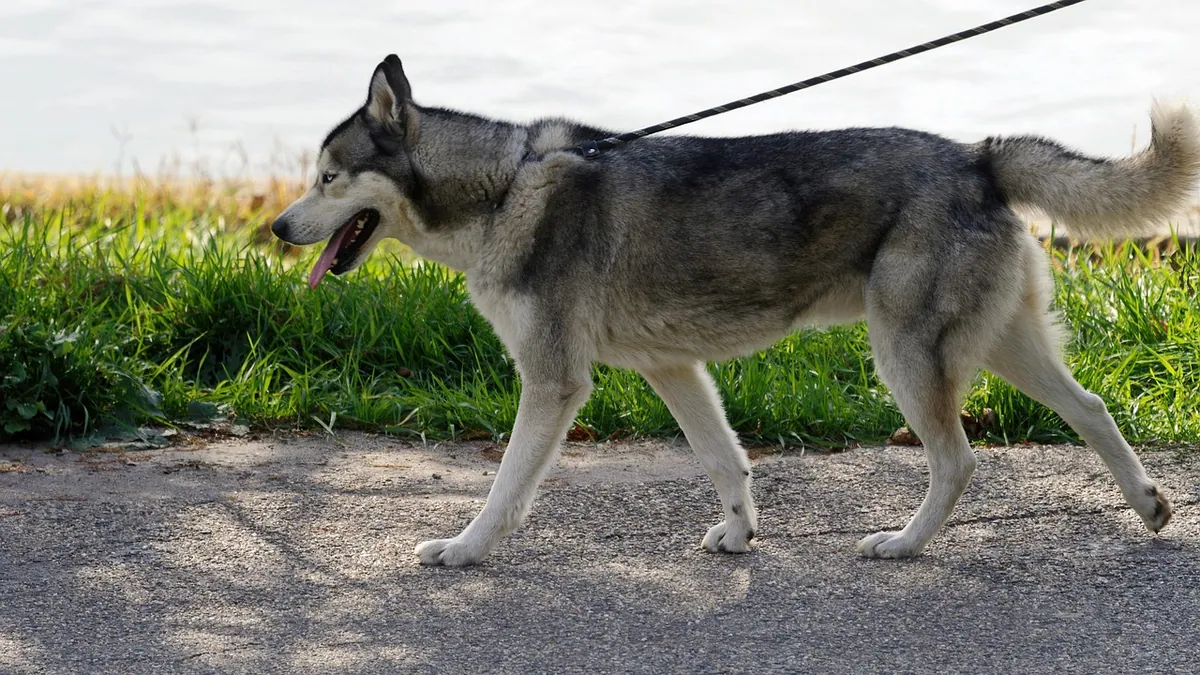
Most dogs zig zag when walking because they are excited, sniffing, or checking in with you, and the pattern is loose and easy to interrupt. A dog that drifts, leans, or stumbles to one side is showing something different, and that pattern points to a balance or nerve problem. This article is educational and is not a substitute for veterinary diagnosis or treatment.
Quick Answer
- A happy zig zag looks like weaving, circling, or crossing in front of you with a normal head position and steady feet.
- A concerning zig zag looks like drifting to one side, a head tilt, wide stumbling steps, or a body that sways when your dog stands still.
- Record a short video of the walk, because many dogs look normal again by the time they reach the clinic.
- Stop the walk and carry your dog if the zig zag came on suddenly, if your dog is vomiting, or if the eyes are flicking side to side.
- Call your veterinarian the same day for any new wobble, and go to an emergency clinic now if your dog cannot stand or walk.
What Dog Walking Zig Zag Actually Looks Like
Owners use the same words for two very different things. One is a behavior. The other is a symptom.
The normal, playful version
A healthy dog weaving in front of you usually has a level head, steady eyes, and feet that land where your dog intends. Your dog may swing wide to sniff a mailbox, cut back across your path, or loop around behind you. When you stop and call, your dog turns cleanly and comes. On stairs, a playful dog may bounce up at an angle or take two steps at a time, but each paw still lands on a step.
This kind of zig zag often gets stronger on familiar routes, at the start of a walk, or when your dog is tracking a scent. It is also common in puppies who have not learned to walk politely on a leash.
The version that needs a closer look
A dog with a balance problem moves as if the floor is tilted. The body may lean or drift to one side. The head may tilt, and the eyes may flick back and forth. The paws may cross or land too wide. Your dog may hug the wall on stairs or stop halfway up and refuse to move.
The difference is control. A playful dog chooses the path. A dog with a balance problem is trying to correct for a body that feels wrong.
Why Does My Dog Zig Zag When Walking? The Main Causes
| Cause | Typical clues | How urgent |
|---|---|---|
| Normal sniffing, exploring, or leash pulling | Level head, steady eyes, responds to your voice, no change at home | Not urgent |
| Excitement or greeting behavior | Zig zags at the start of walks or toward people and dogs, settles quickly | Not urgent |
| Pain in the neck, back, hips, or paws | Stiff gait, slow to rise, yelps when lifted, one leg favored | See your vet soon |
| Ear infection or middle ear disease | Head shake, ear odor or discharge, scratching at the ear, head tilt | See your vet soon |
| Vestibular (balance) disease | Head tilt, eye flicking, circling, vomiting, sudden onset | Same day |
| Inherited balance and hearing disorder | Wobbliness plus deafness, often in a young dog of a known breed | See your vet soon |
| Paroxysmal dyskinesia (episodic movement disorder) | Short episodes of limb stiffening, tremors, or swaying, normal between episodes | See your vet soon |
| Brain or spinal disease | Worsening over days, weakness, behavior change, seizures | Emergency or same day |
Vestibular disease and the inner ear
The vestibular system is the balance center of the body. When it is disturbed, dogs drift, tilt, and stumble. A recent case report described a 15-year-old dog with repeated balance episodes lasting 30 minutes to several hours, with ataxia, head tilt, and nystagmus (eye flicking), and testing showed hearing loss in both ears [1]. That report is a reminder that balance signs can come and go, and that hearing function is worth checking in dogs with repeated episodes [1].
Ear disease is a common and treatable source of these signs. In one study of 380 dogs that had brain imaging for neurologic signs, 60 dogs (15.7%) had some form of otitis, and in 15 of those dogs (3.9%) the ear disease was the main cause of the signs [2]. Middle ear problems are seen often in flat-faced breeds because of their anatomy [2]. That means a good ear exam belongs near the top of the list when a dog starts walking oddly.
Movement disorders that come in episodes
Some dogs have short spells of abnormal movement instead of a constant wobble. A study of 62 Dachshunds with paroxysmal dyskinesia found episodes with shifting limb stiffness (88.7%), single limb or neck stiffness (45.2%), tremors (40.3%), head tremors (35.5%), and truncal sway (32.3%) [3]. Ataxia appeared in 24.2% and head sway in 19.4% of the dogs [3]. Drooling, vomiting, and lip smacking were also common during episodes [3]. The median age when signs first appeared was 3.2 years, with a range of 1 to 11 years [3].
If your dog has brief spells that look like a stagger or a sway and then acts completely normal, that pattern fits this group of conditions better than a constant balance problem. Your veterinarian can help sort out which one you are seeing.
Inherited balance and hearing problems
Some breeds carry a genetic form of deafness with balance dysfunction. A mutation in the MYO7A gene is tied to bilateral deafness with vestibular dysfunction in the Doberman pinscher, and DNA testing lets breeders manage the condition [4]. If your dog has been unsteady since puppyhood and does not respond to sound, mention both findings to your veterinarian.
Pain and orthopedic problems
A dog with sore hips, a sore back, or a torn knee may walk at an angle to keep weight off the painful side. This often looks like a mild zig zag on stairs or on slick floors. Watch for stiffness after rest, reluctance to jump, or a change in how your dog sits. These signs deserve a routine visit, not an emergency trip.
Why Does My Dog Zig Zag in Front of Me?
This is the most common version owners ask about, and it is usually social behavior. Dogs weave in front of their owners to stay close, to slow the walk down, or to check where you are going. Herding breeds may also try to steer you. If your dog's head is level, the eyes are steady, and your dog responds to a treat or a name, this is not a medical sign.
The picture changes if your dog crosses in front of you and then leans or bumps into your legs. Leaning and bumping can be a balance problem, especially if it happens on every walk and is getting worse. A dog that used to walk straight and now cuts across your path on a tilt needs an exam.
Why Does My Dog Zig Zag Up the Stairs?
Stairs demand more balance than flat ground, so mild problems show up there first. A playful dog may take stairs at an angle for fun or to rush. A dog with a balance problem often hugs one side, pauses mid-flight, or looks down before each step.
If your dog has started zig zagging up the stairs and also seems stiff in the rear legs, pain is a strong possibility. If the zig zag comes with a head tilt or eye flicking, treat it as a balance problem and call your veterinarian. Until then, block the stairs or carry your dog to prevent a fall.
Red Flags That Make It an Emergency
Go to an emergency clinic now if you see any of these:
- Your dog cannot stand or cannot walk without falling.
- The eyes flick rapidly side to side or up and down and will not stop.
- Your dog is vomiting repeatedly and cannot keep water down.
- Your dog is confused, pressing the head into walls, or having a seizure.
- One side of the face droops, or your dog cannot blink on one side.
- The wobble started after a fall, a car accident, or a possible toxin exposure.
- Your dog is panting hard, pale, or collapsing.
Call your veterinarian the same day if the zig zag is new, if there is a head tilt, if your dog is circling in one direction, or if your dog seems deaf in one or both ears.
Safe Things You Can Do at Home While You Wait
Keep your dog safe and gather information. Do not start any medication on your own.
- Shorten walks to a few minutes and use a harness instead of a neck collar.
- Carry your dog up and down stairs, or block the stairs with a gate.
- Put rugs or yoga mats on slick floors so the paws have grip.
- Keep your dog away from pools, decks, and open stairwells.
- Video the zig zag from the side and from the front, and note the time of day it happens.
- Write down when the signs started, how long each episode lasts, and whether your dog is normal between episodes.
- Offer water in a low bowl so your dog does not have to reach down far.
- Do not give human motion sickness drugs, sedatives, or leftover pet medications. Your veterinarian will calculate any dose from your dog's weight and health.
If your dog is also scooting or licking the rear end, that can point to a separate problem, and you can read about it in Why Is My Dog Scooting?. If your dog has become fearful of walks or of the leash itself, that is a different pattern, and Why Is My Dog Suddenly Scared of the Leash? explains what to watch for. A honking cough along with a wobbly walk is another reason to call your vet, and Why Does My Dog Have A Honking Cough covers that sign.
What Your Veterinarian Will Check and Test
Your veterinarian will start with a full physical and neurologic exam. Expect these steps.
History and video review
Bring your video. The timing of episodes, whether they happen at rest or during activity, and whether your dog is normal in between all help narrow the list.
Ear and hearing exam
The vet will look deep into both ear canals and check the eardrums. Because ear disease was the main cause of neurologic signs in some dogs in one imaging study [2], this exam matters even when the ears look clean from the outside. If your dog has repeated balance episodes, hearing testing may be suggested, since hearing loss was part of the pattern in a reported case of recurrent balance episodes in a dog [1].
Eye and balance testing
Your veterinarian will watch the eyes for nystagmus and check how the eyes move with the head. A penlight test that removes visual input can help tell peripheral (inner ear) problems from central (brain) problems, because nystagmus from peripheral disease tends to change when visual input is removed [5]. This kind of bedside test helps your vet decide which imaging or referrals are needed [5].
Bloodwork and imaging
Blood tests check for infection, organ problems, and thyroid disease. If the exam points to the brain or to a deep ear problem, your veterinarian may recommend advanced imaging such as MRI. In the 380-dog imaging study, MRI was used to find ear disease that was not obvious on the surface exam [2].
Treatment depends on the cause
Treatment might include ear cleaning and ear medication, anti-nausea drugs, fluids, or a change in diet for dogs with episodic movement disorders [3]. Some dogs with balance problems improve with supportive care, but relapses can happen over months to years [1]. Your veterinarian will set the plan based on your dog's exam and test results.
Prevention and Monitoring
You cannot prevent every cause of a wobbly walk, but you can lower some risks and catch problems early.
- Keep ears dry and clean, and ask your vet to check the ears at every wellness visit, especially in flat-faced breeds [2].
- Treat ear infections fully instead of stopping medication when the head shake stops.
- Keep nails trimmed and add rugs on slick floors to reduce slips.
- Use a harness for dogs with neck or back pain.
- Weigh your dog at home or at the clinic and track the number, since extra weight stresses joints.
- If you have a breed with a known inherited balance and hearing disorder, ask your veterinarian about genetic testing before breeding [4].
- Keep a simple log of any episodes, including date, length, and what your dog was doing.
Limitations and When to Contact a Veterinarian
This article cannot tell you which cause fits your dog. Only an exam, and sometimes testing, can do that. Use these timing rules.
Emergency now: inability to stand or walk, continuous eye flicking, repeated vomiting, collapse, a seizure, a drooping face, or a sudden wobble after trauma or toxin exposure.
Same day: a new head tilt, circling in one direction, a first episode of staggering, or a walk that has clearly changed since yesterday.
Routine visit: a mild zig zag that has been present for weeks without a head tilt, or a wobble that only shows up on stairs and comes with stiffness or slowness to rise.
Call your veterinarian if you are unsure which group your dog fits. It is always reasonable to ask for a same-day phone triage.
Frequently Asked Questions
Is zig zag walking in dogs always a sign of a brain problem?
No. Most zig zag walking in dogs is normal exploring, sniffing, or greeting behavior. Brain and balance problems come with extra signs such as a head tilt, eye flicking, vomiting, or a body that leans to one side.
Can a dog zig zag because of an ear infection?
Yes. Ear disease is a real cause of balance signs, and in one imaging study it was the main reason for neurologic signs in a small group of dogs. A deep ear exam is a standard part of the workup for a wobbly walk.
Why does my dog only zig zag sometimes?
Episodic patterns point to conditions that come and go, such as movement disorders or repeated balance episodes. In a study of Dachshunds with an episodic movement disorder, spells included limb stiffness, tremors, and swaying, with normal behavior in between. Your vet can help tell these apart from seizures.
Should I stop walking my dog if the zig zag is new?
Yes, keep walks short and safe until your dog has been seen. Use a harness, avoid stairs and slick floors, and carry your dog if the wobble is obvious. A fall on stairs can turn a treatable problem into a serious injury.
Will my dog get better on its own?
Some dogs improve with supportive care, but relapses are possible, and one reported dog had repeated episodes over several years. Others need specific treatment, such as ear medication or a diet change. Because the causes differ so much, your dog needs an exam before you can know what to expect.
Related Articles
- Why Is My Dog Scooting?
- Why Is My Dog Suddenly Scared of the Leash?
- Why Does My Dog Have A Honking Cough
- Why Is My Dog Coughing Honking
- Why Is My Dog Coughing And Honking
- Why Is My Dog Pacing and Whining?
- Why Is My Dog Walking Sideways or Not Straight?
- Why Won't My Dog Go Outside? Causes and What to Do
- How to Get Your Dog to Focus on You During Walks
References
- Case Report: Recurrent vestibular episodes in a dog resembling Meniere's disease. Frontiers in veterinary science, 2026.
- Prevalence of incidental and causative otitis in 380 client-owned dogs undergoing brain magnetic resonance imaging for signs of vestibular and non-vestibular disease. Journal of veterinary internal medicine, 2026.
- Phenotypic features of paroxysmal dyskinesia in Dachshund dogs: 62 cases (2017-2025). Journal of veterinary internal medicine, 2026.
- A missense mutation in MYO7A is associated with bilateral deafness and vestibular dysfunction in the Doberman pinscher breed. Canadian journal of veterinary research = Revue canadienne de recherche veterinaire, 2019.
- Utility of a Modified Penlight-Cover Test for Neurolocalization of Lesions Based on Visual Suppression of Nystagmus in Dogs and Cats With Vestibular Disease. Journal of veterinary internal medicine, 2025.