Dog Won't Open His Mouth: Causes and What to Do
By Dr. Zubair Khalid, DVM, MS, PhD ·
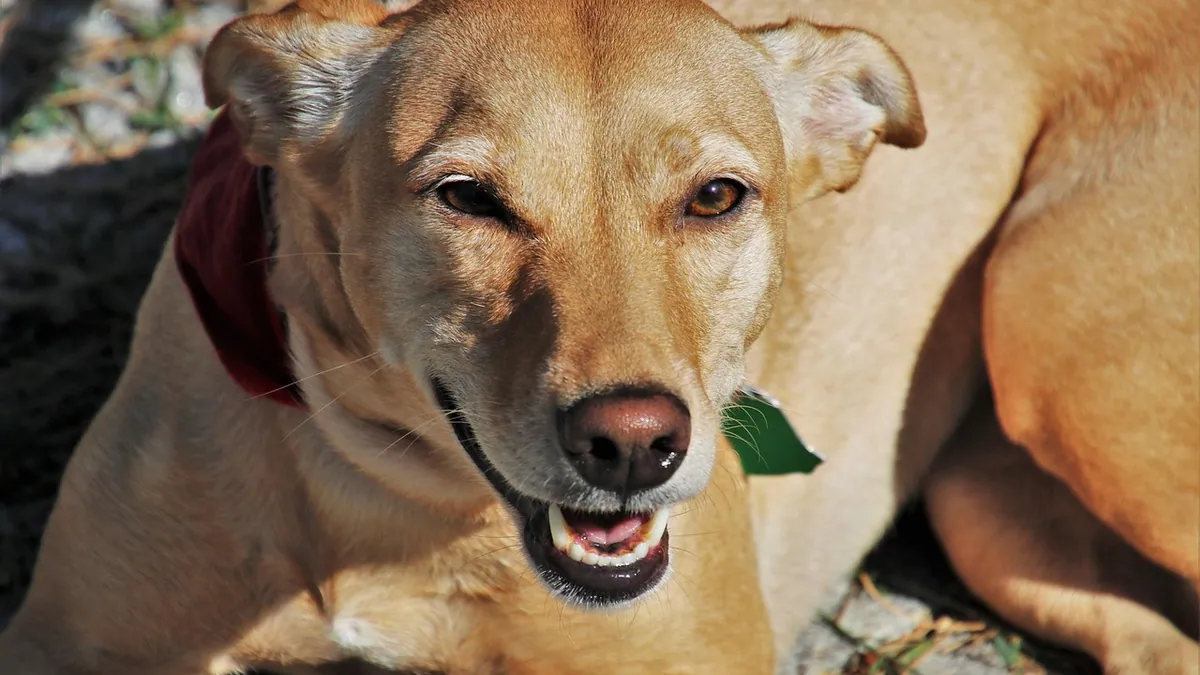
A dog not opening his mouth is usually showing you that something hurts, that the jaw muscles or nerves are not working normally, or that the joint itself is stuck. You may notice he wants to eat but cannot, or he turns his head away when you reach toward his face. This article is educational and is not a substitute for veterinary diagnosis or treatment.
Quick Answer
- A mouth that will not open is often a sign of dental or gum pain, jaw muscle inflammation, nerve disease, or a mechanical block in the jaw joint [1][2][3].
- Do not force the mouth open. You can cause serious damage to teeth, the jaw joint, and the muscles, and you may get bitten.
- Look for clues from the outside: drooling, swelling on the side of the face, bad breath, dropping food, or a jaw that hangs open instead of closed [4].
- Sudden inability to close the mouth (dropped jaw) is different from a mouth that will not open, and both need prompt veterinary evaluation [4].
- Trouble eating or drinking for more than 24 hours is urgent because dehydration and malnutrition can develop quickly [1].
What This Looks Like and What Is Normal
A healthy dog opens his mouth wide to yawn, pant, chew, and pick up toys. The muscles of the jaw, the teeth, the tongue, and the throat all work together for eating and swallowing, and when any part of that system is compromised, a dog can lose weight and become dehydrated [1].
A dog with a mouth problem may show it in subtle ways at first. He might chew on one side, drop food, drool more than usual, or refuse hard treats while still eating soft food. Some dogs will still eat but cry out when they yawn.
Some dogs resist having their mouth opened simply because they dislike handling. That is different from a dog who physically cannot open his mouth. If the jaw feels stiff, if you meet resistance, or if your dog pulls away in pain, treat it as a medical sign, not a behavior problem.
Why a Dog Won't Open His Mouth: Main Causes
There are many reasons a dog refuses to open his mouth, and they range from minor to serious. The table below groups the most common ones.
| Cause | Typical clues | How urgent |
|---|---|---|
| Gum disease and dental pain | Bad breath, tartar, drooling, chewing on one side, dropping food [1] | See a vet within a day or two |
| Oral inflammation or sores | Red or ulcerated gums, bleeding, reluctance to eat [1] | Same day if he will not eat |
| Masticatory muscle myositis | Swelling or wasting of the chewing muscles, pain or resistance when opening the mouth, sometimes eye changes [5] | Same day |
| Trigeminal neuropathy (dropped jaw) | Sudden inability to close the mouth, drooling, trouble eating and drinking, usually not painful [4] | Same day |
| Temporomandibular joint dysplasia or locking | Open-mouth locking episodes, pain when chewing, jaw shifts to one side [3] | Same day |
| Mechanical impingement in the jaw joint | Slowly progressive restriction of opening, apparent jaw pain [2] | Same day to urgent |
| Foreign body (such as a porcupine quill) | Draining tract or swelling near the cheekbone, trismus, history of porcupine contact [6] | Same day |
| Trauma to the head or jaw | History of injury, swelling, asymmetry, reluctance to open [7] | Emergency |
| Cancer or other masses | Slow onset, firm swelling, weight loss, sometimes bad breath [1] | Same day to urgent |
| Kidney disease | Mouth sores and inflammation along with other signs of illness [1] | Same day |
Dental and Gum Problems
Gum disease is the most common oral problem in dogs [1]. Painful teeth and inflamed gums can make a dog stop opening his mouth wide because it hurts. If your dog also has bad breath, see Dog Has Bad Breath Causes: Veterinary Guide to Canine Halitosis.
Jaw Muscle Disease
Masticatory muscle myositis affects the muscles used for chewing. In one reported case, a dog had a five-month history of eye deviation when the mouth was opened, and imaging showed an inflamed masseter muscle pressing into the eye socket [5]. This condition can cause pain, swelling, or muscle wasting.
Nerve Problems and Dropped Jaw
Idiopathic trigeminal neuropathy, sometimes called dropped jaw syndrome, affects the trigeminal nerve that controls the muscles used to close the jaw [4]. Dogs with this condition suddenly cannot close their mouth. It usually is not painful, and most dogs recover within a few weeks with supportive care, but other diseases can cause similar signs, so prompt evaluation matters [4].
Joint and Mechanical Problems
Some dogs have a physical block that stops the mouth from opening. In two cocker spaniels, the coronoid process of the jaw was catching on the cheekbone and trapping the temporalis muscle, causing slowly progressive restriction and jaw pain [2]. In a Basset Hound with temporomandibular joint dysplasia, the jaw locked in an open position and caused pain during chewing [3]. Surgery resolved the problem in both reports [2][3].
Foreign Bodies and Trauma
A porcupine quill that migrated into the jaw joint caused trismus (the medical term for being unable to open the mouth) and a draining tract near the cheekbone weeks after the encounter [6]. Head trauma can also lead to trismus, as in a cat whose jaw could not open two months after injury [7]. Dogs with a history of chewing sharp plant material, fiberglass insulation, or certain houseplants can develop oral inflammation and sores [1].
Red Flags That Make It an Emergency
Get emergency care now if you see any of these:
- Your dog cannot close his mouth at all, or his jaw hangs open [4].
- He cannot swallow, and saliva or water runs out of his mouth.
- His face is swelling rapidly, or he is having trouble breathing.
- There is heavy bleeding from the mouth.
- You suspect head trauma or a broken jaw.
- He has been unable to eat or drink for more than 24 hours [1].
- He is weak, wobbly, or collapsing.
A dog who cannot eat or drink is at risk of dehydration and malnutrition, which can worsen quickly [1]. Do not wait to see if it improves on its own.
Safe Things You Can Do at Home While Waiting
You cannot safely force a painful or locked jaw open, and trying can make things worse. Here is what you can do instead.
Keep Your Hands Safe
Approach your dog calmly and from the side. Do not pry the mouth open with your fingers, a spoon, or any tool. A dog in pain may bite even if he never has before.
Check From the Outside Only
Look at the face for swelling, asymmetry, or a wound. Gently feel along the cheeks and under the jaw without opening the mouth. Note any heat, firmness, or tenderness. If your dog pulls away, stop.
Offer Soft Food and Water
If he can still swallow, offer small amounts of soft food and fresh water. Do not offer hard treats, bones, or chews. If he cannot swallow or the food falls out, stop and call your veterinarian.
Keep a Simple Log
Write down when the problem started, whether it was sudden or gradual, what he can and cannot eat, and any drooling, bad breath, or swelling. This history helps your veterinarian narrow down the cause.
Watch for Related Signs
If your dog is also refusing food, see Why Is My Dog Not Eating? or My Dog Won't Eat: When to Worry. If he is drinking but not eating, Dog Not Eating but Drinking Water: What to Do covers that pattern.
What the Veterinarian Will Check and Test
Your veterinarian will start with a full physical examination, and a complete oral examination should be part of every physical exam because oral disease is treated best when found early [1].
Hands-On Examination
The vet will look at the face for swelling or asymmetry, feel the chewing muscles, and check how far the mouth opens. They will also check the eyes, since jaw muscle disease can affect the eye position when the mouth opens [5].
Oral Examination Under Sedation
If your dog will not let anyone look in his mouth, sedation or anesthesia may be needed for a safe, complete look. This is common and protects both your dog and the veterinary team.
Imaging
X-rays or computed tomography (CT) can show problems inside the jaw joint, including bone impingement, joint dysplasia, or foreign bodies [2][6][3]. CT was used to find a quill fragment in the jaw joint of one dog [6] and to confirm muscle impingement in another [2].
Blood and Tissue Tests
Blood work can check for kidney disease, which can cause mouth inflammation and sores [1]. If muscle disease is suspected, the vet may recommend muscle biopsy or antibody testing, as was done in a dog with masticatory muscle myositis [5].
Treatment Depends on the Cause
Treatment might include pain control, antibiotics, dental cleaning, soft food support, or surgery. Surgery to remove part of the coronoid process and cheekbone resolved the problem in two dogs with jaw impingement [2], and a partial coronoidectomy let a Basset Hound eat soft food within hours and stopped the locking episodes for at least a year [3]. Any medication dose is calculated by your veterinarian based on your dog's weight and health.
Prevention and Monitoring
You cannot prevent every jaw problem, but you can lower the risk of some.
- Brush your dog's teeth or use vet-approved dental care, and schedule regular dental checks. Gum disease is the most common oral problem in dogs [1].
- Keep your dog away from sharp plant material, fiberglass insulation, and houseplants like Dieffenbachia that can cause mouth sores [1].
- Supervise your dog around porcupines and other wildlife, and check for quills after any encounter [6].
- Watch for early signs like dropping food, chewing on one side, drooling, or bad breath, and mention them at your next visit.
- If your dog has a known jaw condition, follow your vet's monitoring plan and report any new locking episodes right away [3].
Limitations and When to Contact a Veterinarian
This article cannot tell you what is wrong with your individual dog. Only a veterinarian who examines your dog can do that, and individual cases always need a veterinarian's assessment.
Call your veterinarian the same day if your dog is drooling more than usual, chewing on one side, refusing hard food but eating soft food, or showing any facial swelling. Book a routine visit soon if you notice bad breath, tartar, or a gradual change in chewing habits.
Go to an emergency clinic now if your dog cannot close his mouth, cannot swallow, is bleeding from the mouth, has rapid facial swelling, has trouble breathing, or has not eaten or drunk for more than 24 hours [1][4].
Frequently Asked Questions
Should I try to open my dog's mouth myself?
No. Forcing the mouth open can damage teeth, the jaw joint, and muscles, and it puts you at risk of a bite. Look from the outside, note what you see, and let a veterinarian examine the mouth safely.
Is a dog not opening his mouth always painful?
No. Dropped jaw from trigeminal neuropathy is generally not considered painful, even though it looks alarming [4]. Other causes, such as muscle inflammation or joint disease, often are painful [2][5].
Can a dog recover from a jaw that will not open?
Often yes, depending on the cause. Most dogs with trigeminal neuropathy recover within a few weeks with supportive care [4], and dogs with mechanical jaw problems improved after surgery [2][3].
What if my dog can open his mouth but will not eat?
That points more toward pain, nausea, or another illness than a locked jaw. Offer soft food and water, and contact your vet if he skips more than one meal or seems unwell.
Can dental disease really stop a dog from opening his mouth?
Yes. Gum disease is the most common oral problem in dogs, and oral pain can make a dog avoid opening wide [1]. Regular dental care and exams help catch it early.
Related Articles
- Why Is My Dog Not Eating?
- Dog Not Eating but Drinking Water: What to Do
- My Dog Won't Eat: When to Worry
- Dog Has Bad Breath Causes: Veterinary Guide to Canine Halitosis
- Dog Keeps Licking Paw And Limping But Nothing There
- Dog Not Drinking Water: Causes and How to Encourage Hydration
- Why Is My Dog Opening and Closing His Mouth Repeatedly?
- Why Is My Dog Breathing With Its Mouth Open?
- Dog Can't Keep Food Down: Causes and What to Do
References
- Disorders of the Mouth in Dogs - Dog Owners. Merck Veterinary Manual.
- Traumatic focal myositis of the temporalis muscle due to presumptive impingement between the zygomatic arch and coronoid process in two cocker spaniels with restricted mouth opening. The Journal of small animal practice, 2026.
- Radial Mandibular Coronoidectomy in a Basset Hound as a Treatment for Temporomandibular Joint Dysplasia. Veterinary medicine and science, 2025.
- Idiopathic trigeminal neuropathy in dogs (dropped jaw). Cornell University College of Veterinary Medicine.
- Dynamic exophthalmos and lateral strabismus in a dog caused by masticatory muscle myositis. Veterinary ophthalmology, 2015.
- Porcupine Quill Migration Into the Temporomandibular Joint Causing Trismus in a Dog. Journal of veterinary dentistry, 2026.
- Rostral mandibulectomy for the management of trismus in a cat. JFMS open reports, 2022.