Signs of a Torn ACL in Dogs and What to Do Next
By Dr. Zubair Khalid, DVM, MS, PhD ·
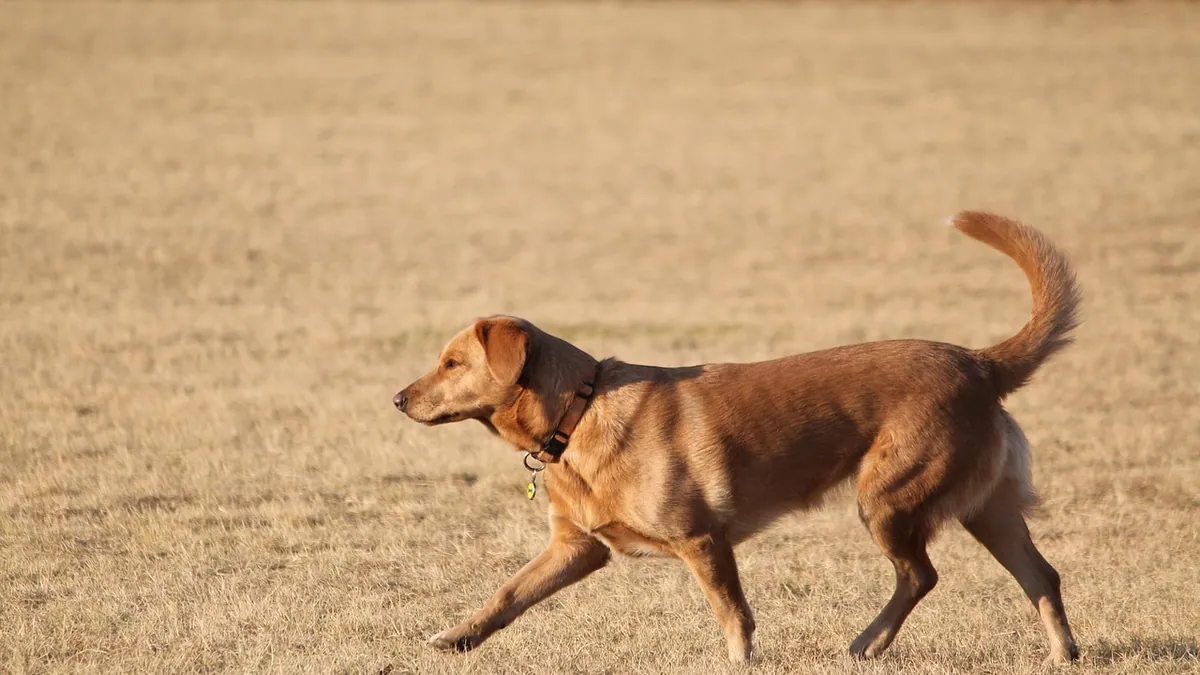
If you are wondering how to tell if my dog tore his ACL, the most common clues are a sudden hind leg lameness, a "toe-touching" stance, and stiffness that worsens after rest. Dogs with a torn cranial cruciate ligament often hold the affected leg up or barely bear weight, and the lameness rarely disappears on its own. This article is educational and is not a substitute for veterinary diagnosis or treatment.
Quick Answer
- A torn cruciate ligament causes sudden hind limb lameness, often after running, jumping, or a minor slip.
- The affected leg may be held up or only lightly touched to the ground, and the knee may look swollen.
- Most dogs need surgery to stabilize the knee, though some small dogs can be managed with strict rest and physical therapy.
- Diagnosis usually involves a hands-on exam, X-rays, and sometimes advanced imaging like CT or arthroscopy [1].
- Call your vet promptly. Delaying evaluation can lead to meniscal tears and worsening arthritis [2].
What Is a Torn ACL in Dogs?
The term "ACL" comes from human medicine. In dogs, the equivalent structure is the cranial cruciate ligament, or CrCL. It sits inside the knee joint (the stifle) and connects the femur to the tibia. It keeps the tibia from sliding forward and limits rotation.
When this ligament tears, the knee becomes unstable. That instability causes pain, lameness, and eventually arthritis. Veterinarians often use the broader term cranial cruciate ligament disease, or CCLD, because the ligament usually degenerates over time before it fully ruptures [1].
A partial tear can progress to a complete tear. Some dogs also tear the ligament in the other leg later. One study found that dogs with CCLD had altered muscle function in both hind limbs, even the one that appeared normal [3]. That means the "good" leg is often working harder and may be at risk too.
Signs of a Dog Torn ACL
Owners often describe a specific moment. The dog was running in the yard, jumped off the couch, or slipped on the floor. Then he came up three-legged. Other times, there is no clear event. The dog just starts limping more each day.
How to Tell If My Dog Tore His ACL: Common Signs
- Sudden hind leg lameness, often severe at first
- Holding the leg up or only touching the toes to the ground
- A popping or clicking sound when walking
- Stiffness that is worse after rest or first thing in the morning
- Swelling around the knee
- Reluctance to jump, climb stairs, or get in the car
- Sitting with the affected leg out to the side
- Shifting weight to the other hind leg
The lameness may improve slightly over a few days, which tricks owners into thinking the dog is healing. In most cases, the knee is still unstable. A dog with a partial tear may limp only after hard exercise, then seem fine at rest.
If your dog is limping after sleeping and seems stiff in the morning, that pattern can overlap with arthritis. This article on why your dog limps after sleep explains how to sort out the difference.
Signs That Point to Something Else
Not every hind leg limp is a cruciate tear. A torn ligament can look similar to a muscle strain, a broken bone, or a nerve problem. If your dog yelped and cannot bear weight at all, see this guide on whether limping is an emergency.
If the limp came on gradually and your dog is older, arthritis may be the main issue. This article on dog limping: arthritis or a torn ligament walks through the differences.
How Do Dogs Tear Their ACL?
Most cruciate tears in dogs are not caused by one dramatic injury. The ligament usually weakens over months or years. Then a normal activity, like running, turning, or jumping, pushes it over the edge.
Risk factors include:
- Breed. Labrador Retrievers, Golden Retrievers, Rottweilers, and other large breeds are commonly affected.
- Age. Most tears happen in middle-aged to older dogs, though young athletic dogs can tear a ligament too.
- Weight. Extra body weight puts more stress on the knee.
- Body shape. Dogs with straight, steep hind legs may have more strain on the ligament.
- Previous injury. A dog that tears one ligament has a higher chance of tearing the other.
- Sex and neuter status. Some studies suggest altered hormone levels may play a role, though this is still debated.
Body size affects how the disease looks on X-rays. A study of 298 stifles found that small and large breed dogs can both develop cruciate disease, but the severity of arthritis and other radiographic changes differed by size [4]. Small dogs are not immune.
How Veterinarians Diagnose a Torn ACL
Diagnosis starts with a physical exam. Your vet will watch your dog walk and trot. They will feel the knee for swelling and check for a "cranial drawer" sign or "tibial thrust." These are signs that the tibia is sliding forward because the ligament is not holding it.
Many dogs are tense during the exam, which makes the drawer test hard to feel. Sedation or a light anesthetic may be needed to get a clear answer.
X-rays are the next step. They show joint effusion (extra fluid), arthritis, and bone changes. X-rays cannot show the ligament itself, but they help rule out other problems and plan surgery. A study of dogs with cruciate disease found that radiographic signs can vary, and some dogs with equivocal drawer tests still had confirmed disease at surgery [4].
Advanced imaging can help in tricky cases. CT gives detailed pictures of the joint [1]. Ultrasound is another option. A recent study using three-dimensional ultrasound was able to identify the femoral and tibial attachments of the cruciate ligament in all examined cadaver stifles, which suggests this tool may become more useful for live dogs in the future [5].
Arthroscopy is the most direct way to see the ligament. It is often done at the same time as surgery.
Treatment Options for a Torn ACL
There is no single best treatment for every dog. The choice depends on your dog's size, age, activity level, and other health problems.
Surgery
Surgery is the standard recommendation for most dogs, especially medium and large breeds. The goal is to stabilize the knee so it does not slide forward with every step. Without stabilization, arthritis gets worse and the meniscus (the cushion between the bones) can tear.
Common surgical options include:
- Tibial Plateau Leveling Osteotomy (TPLO). The surgeon cuts and rotates the tibia to change the angle of the joint.
- Tibial Tuberosity Advancement (TTA). The surgeon moves the tibial tuberosity forward to reduce shear force.
- Lateral fabellar suture stabilization. A strong suture is placed outside the joint to mimic the ligament.
- Arthroscopy combined with TPLO. This lets the surgeon see inside the joint and treat meniscal tears at the same time [1].
Some surgeons combine techniques, such as TPLO with a lateral fabellar suture, to improve stability [1].
Medical Management
Some dogs can be managed without surgery. This is most common in small dogs (under about 15 kg) and dogs with partial tears. It involves:
- Strict rest and activity restriction
- Anti-inflammatory pain medication prescribed by your vet
- Physical therapy and controlled exercise
- Weight management
- Joint supplements, though evidence for these is mixed
Medical management does not fix the instability. It manages symptoms. Many dogs still need surgery later if the lameness returns.
Meniscal Tears
The meniscus is a common casualty of a torn cruciate ligament. A study of 229 stifles found that dogs with an abnormal patellar height index had about three times the odds of a medial meniscal tear compared to dogs with a normal index [2]. Meniscal tears cause extra pain and may need to be treated during surgery.
What to Expect During Recovery
Recovery takes time and patience. The first two weeks are the most restrictive. Your dog will need confinement, leash walks only, and no jumping or stairs.
| Time After Surgery | What to Expect |
|---|---|
| Weeks 1 to 2 | Strict rest, short leash walks for bathroom breaks, incision check |
| Weeks 3 to 4 | Slightly longer walks, start physical therapy exercises |
| Weeks 5 to 8 | Gradual increase in activity, recheck with your vet |
| Weeks 9 to 12 | Most dogs return to near-normal activity |
| Months 4 to 6 | Full return to off-leash activity for many dogs |
A study of 134 dogs that had a specific knee surgery called cranial closing wedge ostectomy found that 90% had no owner concerns or exam abnormalities at a routine follow-up visit about 8 weeks after surgery [6]. That is encouraging, but it does not mean every dog recovers that smoothly. Some dogs need more time.
Physical therapy matters. A rehabilitation plan may include controlled leash walks, range-of-motion exercises, and underwater treadmill sessions. Your vet will adjust the plan based on your dog's progress.
Long-Term Outlook and Management
Even with surgery, most dogs develop some arthritis in the affected knee. The goal is to slow it down and keep your dog comfortable.
Long-term management may include:
- Keeping your dog at a healthy weight
- Regular low-impact exercise, such as swimming or leash walks
- Joint supplements or prescription diets for joint health
- Periodic rechecks with your vet
- Pain medication as needed
Dogs that tear one cruciate ligament have a higher risk of tearing the other. Watch for lameness in the opposite leg. Early treatment gives the best chance of a good outcome.
Prevention
You cannot prevent every cruciate tear. Some dogs have anatomy and genetics that work against them. But you can lower the risk.
- Keep your dog lean. Ask your vet for a body condition score.
- Build hind leg strength with controlled exercise.
- Avoid repeated high-impact activities on slippery surfaces.
- Use ramps or steps for dogs that jump in and out of cars.
- Treat other joint problems early.
If your dog has a mild limp after a walk, rest may be enough. This guide on dog limping after a walk helps you decide when to call the vet.
Limitations and When to Contact a Veterinarian
This article gives general information. Your dog's case needs a veterinarian who can examine the knee, review imaging, and recommend treatment.
Contact your vet the same day if:
- Your dog suddenly cannot bear weight on a hind leg
- The leg is swollen, hot, or painful to touch
- Your dog yelps when moving or being picked up
- The lameness has lasted more than 24 to 48 hours
Go to an emergency clinic now if:
- Your dog is dragging the leg and cannot feel it
- There is an open wound near the joint
- Your dog seems disoriented, pale, or is breathing hard
- The leg looks deformed or bent at an odd angle
Schedule a routine visit if:
- Your dog has a mild, intermittent limp
- Stiffness after rest is getting worse
- Your dog is reluctant to jump or climb stairs
- You notice muscle loss in one hind leg
If you are unsure whether the problem is a sprain or a break, this article on sprain versus break can help you sort out the signs.
Frequently Asked Questions
Can a dog's torn ACL heal on its own?
No, a completely torn cruciate ligament does not heal on its own. The ligament has poor blood supply and the knee joint keeps moving, which prevents healing. Some partial tears may scar down and become less painful, but the knee remains unstable and arthritis continues to progress.
Is surgery always required for a torn ACL in dogs?
Surgery is recommended for most dogs, especially medium and large breeds. Small dogs under about 15 kg may do well with strict rest, pain medication, and physical therapy. Your vet will consider your dog's size, age, activity level, and other health conditions before making a recommendation.
How long does it take for a dog to recover from ACL surgery?
Most dogs need about 8 to 12 weeks of restricted activity before returning to normal exercise. Full recovery can take 4 to 6 months. The exact timeline depends on the surgery type, your dog's age, and how well you follow the rehabilitation plan.
Can I prevent my dog from tearing the other ACL?
You cannot guarantee it, but you can lower the risk. Keep your dog at a healthy weight, build hind leg strength with controlled exercise, and avoid slippery floors and repeated high-impact jumping. Ask your vet about a rehabilitation program after the first surgery.
What happens if I do not treat my dog's torn ACL?
Without treatment, the knee stays unstable. Arthritis gets worse, the meniscus may tear, and your dog may become permanently lame. Some dogs adapt and seem comfortable for a while, but most need pain management and may still need surgery later.
Related Articles
- Dog Limping: How to Tell If It's Arthritis or a Torn Ligament
- Dog Limping: How to Tell If It's a Sprain or a Break
- Dog Limping: How to Tell If It's an Emergency
- Why Is My Dog Limping after sleep? Arthritis, CCL Tear & Joint Pain
- Dog Limping After a Walk: When to Rest and When to See the Vet
- How to Tell If Your Dog Has Heat Stroke and What to Do Immediately
- Cruciate Ligament Tear in Dogs: Symptoms and Treatment
- Dog Paw or Leg Injury: How to Tell If It's Sprained or Broken
- Dog Sprained or Broken Leg: What to Do Right Now
References
- Canine Cranial Cruciate Ligament Disease (CCLD): A Concise Review of the Recent Literature. Animals : an open access journal from MDPI, 2025.
- Abnormal modified Insall-Salvati index values are associated with increased odds of medial meniscal tears in dogs with cranial cruciate ligament tears. Journal of the American Veterinary Medical Association, 2026.
- Bilaterally altered hindlimb muscle function as assessed by acoustic myography in dogs with unilateral cranial cruciate ligament disease. Veterinary journal (London, England : 1997), 2026.
- Radiographic characteristics of cranial cruciate ligament disease in small- and large-breed dogs. Australian veterinary journal, 2026.
- Three-dimensional ultrasonographic assessment of the cranial cruciate ligament in medium- to large-sized canine cadavers: A feasibility study. Veterinary journal (London, England : 1997), 2026.
- The Utility of Routine Radiographic Follow-Up for Dogs with Cranial Cruciate Ligament Disease Undergoing Uncomplicated Cranial Closing Wedge Ostectomy. Veterinary and comparative orthopaedics and traumatology : V.C.O.T, 2026.