Cat Losing Its Meow: Why a Cat Goes Silent
By Dr. Zubair Khalid, DVM, MS, PhD ·
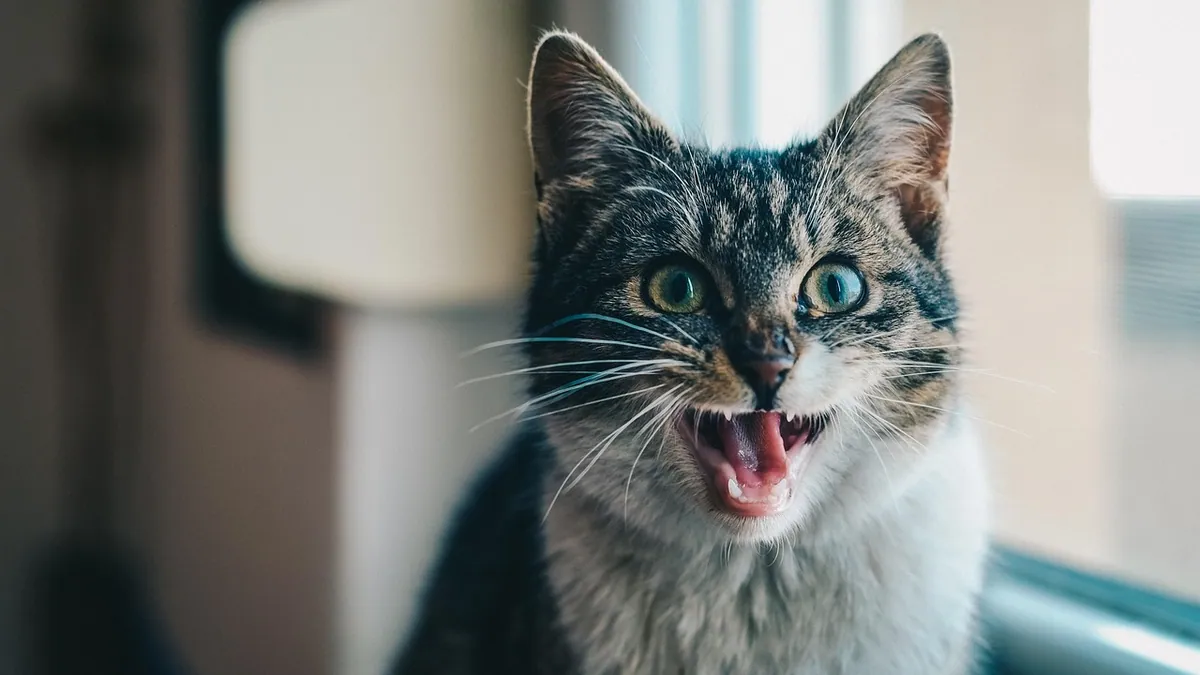
A cat losing its meow is usually a sign that something is affecting the voice box, the nerves that control it, or the cat's overall health. Some causes are mild and pass in a few days, while others, like growths or nerve damage, need prompt veterinary care. Paying attention to how long the change has lasted and what other signs you see will help your veterinarian find the answer faster.
This article is educational and is not a substitute for veterinary diagnosis or treatment.
Quick Answer
- A sudden or gradual change in meow often points to inflammation of the larynx (laryngitis), an upper respiratory infection, or a growth in the throat.
- A softer, higher-pitched, or hoarse meow can also come from nerve problems, including those linked to an overactive thyroid [1].
- Any cat who is struggling to breathe, breathing with an open mouth, or making loud raspy sounds needs emergency care right away [2].
- Mild voice changes in a cat who is eating, drinking, and acting normal can often wait for a routine visit within a day or two.
- Never give human cold medicines, cough drops, or pain relievers to a cat, since many are toxic to cats.
What a Voice Change Looks Like and What Is Normal
A cat's meow is a communication tool aimed at people, not at other cats. Adult cats do not meow at each other, but they keep meowing at humans throughout their lives because it works [3]. That means you probably know your cat's normal voice well, and you will notice quickly when it changes.
A cat voice change can sound like many things. The meow may be softer, raspier, higher-pitched, or completely gone. Some owners describe a cat hoarse meow that cracks in the middle. Others say their cat stopped meowing entirely, or that the mouth opens but almost no sound comes out.
Normal meowing varies a lot between cats. Some breeds, like the Siamese, meow and yowl far more than others [3]. A quiet cat who has always been quiet is not necessarily sick. The concern is a change from your cat's usual pattern.
It also helps to know that meowing is normal communication, not a problem by itself. If your cat is meowing more than usual instead of less, that is a different issue, and you can read more about it in Cat Excessive Meowing: What Is Your Cat Trying to Say?.
Main Causes of a Cat Losing Its Meow
The voice box sits at the top of the windpipe, and the nerves and muscles around it have to work together for sound to come out. Problems anywhere in that system can change or silence the meow.
Laryngitis and Upper Respiratory Infection
Laryngitis is inflammation of the larynx, the voice box. It is one of the most common reasons for a hoarse or lost meow. Viral upper respiratory infections, the same ones that cause sneezing and runny eyes, often inflame the throat along with the nose. The meow may sound rough for a few days and then return as the infection clears.
Growths in the Throat and Larynx
Masses in the mouth or throat can change the voice. One report described a 15-year-old cat with a four-week history of dysphonia (a changed voice) and reluctance to chew hard food. Examination found a mass on the caudal soft palate, and testing confirmed a histiocytic sarcoma [4]. Another report described a 12-year-old cat with progressive dysphonia, trouble breathing, and severe upper airway blockage from a mass on the epiglottis [5].
Cancer elsewhere in the body can also spread to the larynx. A 16-year-old cat with a three-month history of voice change was found to have laryngeal metastasis from an adenocarcinoma that started near the ear canal. Endoscopy showed swelling around the arytenoid cartilages without an obvious mass on x-rays [6]. This is why a voice change that does not resolve deserves a closer look.
Nerve Problems
The nerves that control the larynx and tongue can be affected by other diseases. A 14-year-old cat with hyperthyroidism developed a meow that was softer and higher pitched, along with a dropped jaw, tongue protrusion, and trouble eating. The signs came from multiple cranial nerve deficits, and they improved quickly after treatment for the thyroid disease [1]. This case shows that a voice change can be the first clue to a problem somewhere else in the body.
Laryngeal Paralysis
Laryngeal paralysis means the cartilage flaps in the voice box do not open and close properly. In cats, this is uncommon but can be life threatening because it blocks the upper airway. In a report of eight cats treated for laryngeal paralysis, all of them arrived with severe trouble breathing and inspiratory stridor (a loud raspy sound on breathing in) and needed emergency surgery [2]. A voice change may show up before or alongside the breathing problems.
Other Causes
Less common causes include trauma to the neck or throat, foreign objects stuck in the mouth or throat, and reactions to smoke, fumes, or other irritants. A cat who has been meowing for hours, such as a female in heat, can also go hoarse from overuse.
| Cause | Typical clues | How urgent |
|---|---|---|
| Laryngitis or upper respiratory infection | Hoarse meow, sneezing, runny nose or eyes, mild cough | Routine visit within 1 to 2 days if breathing is normal |
| Growth in the mouth, throat, or larynx | Slow voice change over weeks, drooling, trouble chewing, bad breath, visible mass | Same-day visit |
| Nerve problems (including those linked to hyperthyroidism) | Soft or high-pitched meow, dropped jaw, tongue sticking out, trouble eating, weakness [1] | Same-day visit |
| Laryngeal paralysis | Loud raspy breathing, open-mouth breathing, distress, blue gums | Emergency now [2] |
| Cancer spread to the larynx | Voice change for weeks or months, noisy breathing, no obvious mass on exam [6] | Same-day visit |
| Trauma, foreign object, or irritant exposure | Sudden onset after an incident, pawing at the mouth, gagging, drooling | Emergency now |
Red Flags That Mean an Emergency
Breathing problems are the main emergency with voice changes. Get your cat to a veterinarian immediately if you see any of these:
- Open-mouth breathing or panting
- Loud, raspy, or whistling sounds when breathing in [2]
- Visible effort to breathe, with the belly or sides moving hard
- Blue, gray, or pale gums
- Collapse, extreme weakness, or unresponsiveness
- Drooling heavily with a dropped jaw or a tongue that will not go back in [1]
- A sudden voice change after a fall, a fight, or possible exposure to smoke or chemicals
Upper airway obstruction can worsen fast. Cats with laryngeal paralysis in one report all needed emergency surgery because they did not respond to medical stabilization [2]. Do not wait to see if it improves on its own.
Safe Things You Can Do at Home While You Wait
There is no home treatment that fixes a lost meow, but you can keep your cat comfortable and avoid making things worse.
- Keep your cat indoors and calm. Rest helps inflammation settle.
- Offer soft, room-temperature food and fresh water. A sore throat can make hard kibble painful to chew [4].
- Run a humidifier or let your cat sit in a steamy bathroom for a few minutes. This can soothe irritated airways.
- Keep the air clean. Avoid smoke, strong cleaners, scented candles, and aerosol sprays.
- Watch breathing closely. Count the breaths per minute while your cat rests and note any noise or effort.
- Write down when the voice change started and any other signs, such as sneezing, drooling, or appetite changes. This helps your veterinarian.
Do not give your cat any human medication, including cold remedies, antihistamines, or pain relievers. Many common human drugs are toxic to cats, and a sick cat can worsen quickly.
If your cat is also hiding more than usual, that can be a sign of pain or illness. See Why Is My Cat Hiding? for more on what hiding can mean.
What Your Veterinarian Will Check and Test
Your veterinarian will start with a full history and a physical exam. Expect questions about when the voice changed, how fast it happened, and whether your cat is eating, drinking, and breathing normally.
The exam usually includes:
- Listening to the heart and lungs
- Feeling the neck and throat for lumps, swelling, or pain
- Checking the mouth and, when possible, the back of the throat
- Checking the pupils, facial symmetry, jaw tone, and tongue movement to look for nerve deficits [1]
- Taking the temperature and checking gum color
Depending on what is found, your veterinarian may recommend:
- Blood work, including a thyroid level. Hyperthyroidism can cause nerve signs that change the voice [1].
- Imaging of the head, neck, and chest. CT can find masses that are hard to see on a regular exam [4].
- Endoscopy of the larynx under light anesthesia. This lets the veterinarian watch the vocal folds move and look for swelling or masses [2][6].
- Biopsy of any mass. Testing the tissue is the only way to know what a growth is [4][5].
Treatment depends on the cause. Infections are managed with supportive care and sometimes medication. Thyroid disease is treated with medication or surgery, and nerve signs can improve quickly once the thyroid is controlled [1]. Masses may need surgery, chemotherapy, or other treatment based on the biopsy results [4]. Laryngeal paralysis may require surgery to open the airway [2].
Prevention and Monitoring
You cannot prevent every cause of a voice change, but you can lower some risks and catch problems early.
- Keep vaccinations current and limit contact with sick cats, since upper respiratory infections spread easily.
- Schedule regular wellness exams, especially for cats over 10 years old. Older cats are more likely to develop thyroid disease, nerve problems, and tumors [1].
- Keep your cat away from smoke, strong fumes, and small objects that could lodge in the throat.
- Track your cat's normal voice and habits. A recording on your phone can help your veterinarian hear the change.
- If your cat has a chronic condition like hyperthyroidism, keep every follow-up visit. Nerve signs in one case improved within 13 days of starting treatment [1].
A cat who is losing weight, losing hair, or acting different may have more than one problem going on. Why Is My Cat Losing Hair? covers some of the common reasons for coat changes. If your cat has become unusually clingy along with the voice change, Why Is My Cat Suddenly Clingy? explains what that behavior can mean.
Limitations and When to Contact a Veterinarian
This article cannot tell you what is wrong with your cat. Only a veterinarian who examines your cat can do that, and individual cases need a veterinarian's judgment.
Call your veterinarian the same day if your cat has a voice change that has lasted more than a few days, is drooling, has trouble chewing, has bad breath with a changed voice, or has any new lump you can feel in the neck or jaw.
Go to an emergency clinic now if your cat is breathing with an open mouth, making loud raspy sounds when breathing in, breathing with visible effort, has blue or pale gums, has collapsed, or has a dropped jaw with a tongue that will not retract [1][2].
If your cat seems fine except for a slightly hoarse meow after a bout of heavy meowing, a routine visit within a day or two is reasonable. When in doubt, call. It is always safer to have your cat checked than to wait.
Frequently Asked Questions
Will my cat's meow come back?
In many cases, yes. If the cause is laryngitis or an upper respiratory infection, the voice often returns as the inflammation settles. If the cause is a growth, nerve problem, or paralysis, the voice may return with treatment or may stay changed, depending on the diagnosis and how much damage occurred.
Can stress or overuse make a cat lose its meow?
Yes. A cat who has been meowing or yowling for a long time, such as a female in heat or a cat who has been vocalizing at a closed door, can go hoarse. This type of voice change usually improves with rest and quiet. If it lasts more than a few days, have your cat examined.
Is a hoarse meow always a sign of something serious?
No. Mild hoarseness after a cold or a long bout of meowing is common and often harmless. The concern is a voice change that lasts, gets worse, or comes with breathing trouble, drooling, or trouble eating. Those signs point to a problem that needs veterinary care.
Can dental problems change a cat's meow?
Dental disease can cause mouth pain that makes a cat reluctant to chew and may change how the voice sounds. A mass in the mouth or throat can do the same thing [4]. Any cat with a changed voice plus trouble eating should be examined, including a look at the teeth and the back of the throat.
Should I wait to see if the meow returns on its own?
If your cat is breathing normally, eating, and acting like itself, a day or two of watching is reasonable. Do not wait if you see breathing changes, drooling, a dropped jaw, weakness, or a voice change that keeps getting worse. Call your veterinarian for advice if you are unsure.
Related Articles
- Cat Excessive Meowing: What Is Your Cat Trying to Say?
- Why Is My Cat Suddenly Clingy?
- Why Is My Cat Losing Hair?
- Why Is My Cat Hiding?
- Why Is My Cat Suddenly Hiding and Acting Weird?
- Why Was My Cat Choking
- Cat Losing Its Voice: Causes and When to Worry
- Cat Not Meowing Anymore: Causes and When to Worry
- Why Is My Cat Quiet? Causes of Sudden Quietness in Cats
References
- Multiple cranial nerve motor deficits, resembling polyneuritis cranialis, in a cat with hyperthyroidism. Australian veterinary journal, 2022.
- Transoral Endoscopic-Assisted Partial Arytenoidectomy as a Treatment for Laryngeal Paralysis in Eight Cats. Animals : an open access journal from MDPI, 2026.
- Meowing and Yowling. ASPCA Animal Poison Control Center.
- Oral histiocytic sarcoma in a cat. JFMS open reports, 2020.
- Solitary extramedullary plasmacytoma in the larynx of a domestic cat. Topics in companion animal medicine, 2026.
- A cat with suspected laryngeal metastasis with mucosal irregularity resulting from apocrine/salivary gland adenocarcinoma in the head. The Journal of veterinary medical science, 2017.