What Do Guinea Pigs See? Vision and Color Explained
By Dr. Zubair Khalid, DVM, MS, PhD ·
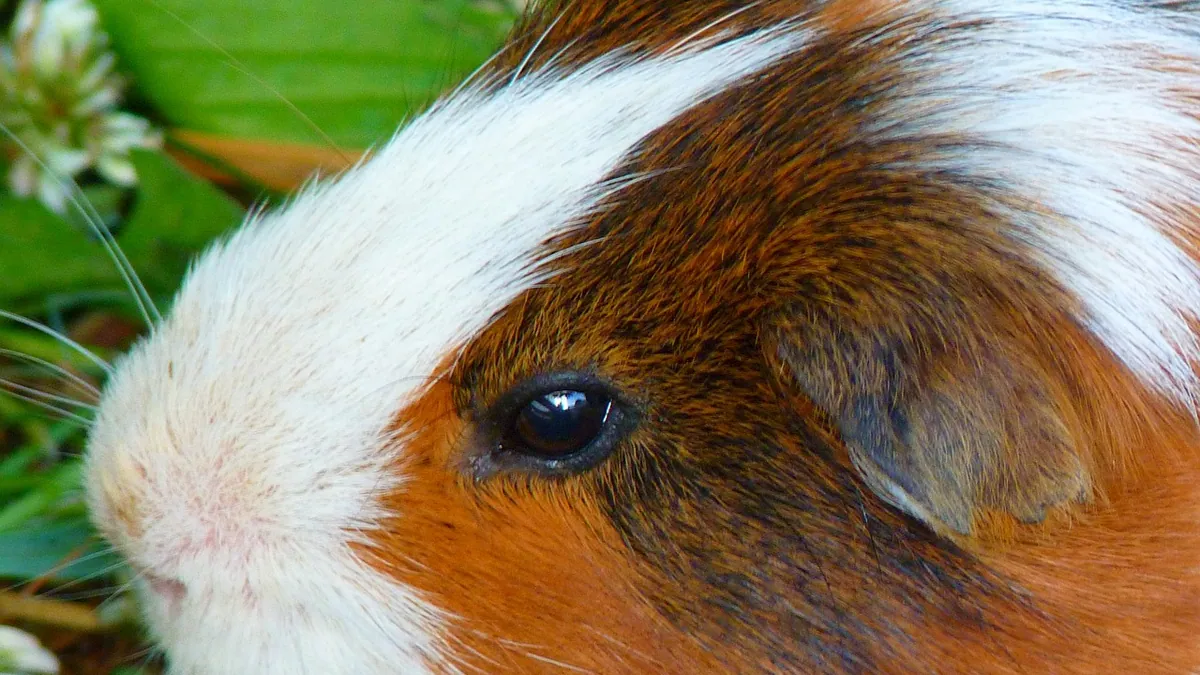
Guinea pigs see a wide panoramic view of their surroundings, but their eyesight is blurry compared with human vision. They rely more on hearing, smell, and touch than on sharp detail, and they see a limited range of colors. Understanding what do guinea pigs see helps you handle them gently, set up their cage safely, and notice eye problems early.
This article is educational and is not a substitute for veterinary diagnosis or treatment.
Quick Answer
- Guinea pigs have eyes set on the sides of the head, which gives them a broad field of view but leaves a blind spot directly in front of the nose and directly behind them.
- Their vision is not sharp. They detect motion and shapes well but see fine detail poorly.
- They can see some color, but not the full range humans see.
- Sudden movement overhead or a hand coming from behind can startle them because it enters a blind spot.
- Eye changes such as cloudiness, discharge, or a squinting guinea pig need a veterinary visit, not home treatment.
How Guinea Pigs See the World
Guinea pigs are prey animals. Their eyes sit high and wide on the head, which lets them watch for danger from many directions while they eat or rest. This wide placement is the main reason their vision works the way it does.
Their eyes are also small and built for detecting movement more than fine detail. Research on guinea pig eyes shows they have low hyperopia, meaning they are slightly farsighted, along with a small amount of positive spherical aberration [1]. In plain terms, their eyes do not focus as sharply as a human eye, and close objects may appear soft or blurry.
Guinea pigs are also used as models in vision research because their eyes develop in ways similar to human eyes. Studies on their refractive development show that their eyes respond to light conditions during growth, which is one reason lighting in the cage area matters [2][3].
What Colors Can Guinea Pigs See?
Guinea pigs are not colorblind, but their color world is narrower than yours. Their retinas contain cone cells, the light-sensitive cells that handle color vision, and research shows they have different cone types in different parts of the retina [3].
In practical terms, guinea pigs see blues and greens reasonably well. Reds and some warm colors are harder for them to distinguish. This matters when you choose cage accessories, because a red toy or a red treat bowl may not stand out to your guinea pig the way it stands out to you.
Color perception also affects how they respond to light. A study on lighting found that exposure to white LEDs with a high correlated color temperature of about 5000 K caused significant myopic shifts in guinea pigs over eight weeks, along with changes in the sclera [2]. Another study found that blue light slowed the shift from hyperopia to emmetropia, while green light led to myopic shifts [3]. These findings come from controlled research settings, so do not panic about your home lighting. Still, they suggest that steady, natural-looking light is a reasonable choice for a pet guinea pig's living area.
Blind Spots and Motion Detection
The trade-off for a wide field of view is a blind spot. Guinea pigs cannot see directly in front of their nose or directly behind their body. A hand that approaches in published veterinary research or from behind may not be seen until it is very close, which is why guinea pigs often flinch or bolt when picked up without warning.
They are very good at catching motion, though. A quick movement at the edge of their vision can send them running for cover. This is normal prey-animal behavior, not a sign that your guinea pig dislikes you.
If you want to understand more about how your guinea pig uses body language and sound alongside vision, see Guinea Pig Behavior: Understanding Sounds and Actions.
Step-by-Step: Using Vision Knowledge to Handle Your Guinea Pig
Guinea pigs startle easily when they cannot see what is coming. A few simple habits make handling calmer for both of you.
- Announce yourself before you touch. Speak softly as you approach the cage. Your guinea pig will hear you and turn toward the sound.
- Approach from the side or front, not in published veterinary research. Lower your hand slowly into the cage at eye level so your guinea pig can see it.
- Let your guinea pig sniff your hand first. This uses smell and touch to confirm who you are.
- Support the whole body when you lift. Use one hand under the chest and one under the hindquarters. A guinea pig that feels unsupported may struggle.
- Keep the trip short and close to your body. Guinea pigs see poorly at a distance, so a firm, close hold feels safer than holding them out in the air.
- Put them back gently. Lower them into the cage facing a familiar spot, such as the hideout or food bowl.
If your guinea pig is new to you, repeat these steps daily for short periods. Most guinea pigs learn the routine and stop flinching.
Cage Setup Checklist for Guinea Pig Vision
| Setup item | Why it matters for vision | What to do |
|---|---|---|
| Hideout | Gives a safe place when something startles them | Provide at least one hideout per guinea pig |
| Cage location | Sudden movement outside the cage can cause panic | Place the cage against a wall, away from foot traffic |
| Lighting | Their eyes respond to light conditions during growth [2][3] | Use steady, moderate light and avoid harsh glare |
| Ramps and levels | Poor depth perception can lead to falls | Add side rails or keep levels low |
| Food bowl | Color contrast helps them find food | Choose bowls that stand out from the bedding |
| Water bottle | They need to locate it by sight and smell | Keep the bottle in the same spot every day |
| Bedding | Bright or busy patterns can be visually confusing | Use plain, light-colored bedding |
A predictable cage layout helps a guinea pig with limited vision move around with confidence. Move items only when you need to, and put them back in the same place.
Signs Something Is Wrong With Your Guinea Pig's Eyes
Guinea pigs hide illness well. Eye changes are often one of the earlier signs that something is off. Check your guinea pig's eyes during your regular handling routine.
Watch for these signs:
- Cloudy, blue, or white haze in the eye
- Redness around the eye or eyelid
- Discharge that is yellow, green, or thick
- Squinting, blinking often, or holding one eye closed
- Swelling around the eye
- A head tilt or circling, which can point to a problem behind the eye
- Rubbing the eye against the cage or with a paw
- A visible change in pupil size or shape
Some of these signs overlap with problems in other species. For a comparison of how discharge color can signal different issues, see Dog Eye Discharge: Clear vs. Colored, What It Means. The same general rule applies to guinea pigs: clear, watery discharge after a dusty bedding change may settle, but colored or thick discharge needs a veterinarian.
Guinea pigs also develop eye problems linked to their teeth. The roots of the upper teeth sit close to the eye area, so dental disease can cause eye swelling or discharge. A veterinarian needs to examine both the eye and the mouth.
For a broader look at how guinea pigs show illness, see Guinea Pig Health: Recognizing and Responding to Common Illnesses.
Common Mistakes Owners Make
Reaching in in published veterinary research. This puts your hand right in the blind spot above the head. Your guinea pig may panic and bolt. Approach from the side instead.
Assuming a still guinea pig sees you clearly. A guinea pig that freezes may be reacting to a shape it cannot identify. Talk to it so it can use hearing to fill in the gaps.
Using red or dark-colored accessories. Reds are hard for guinea pigs to distinguish. Choose light, contrasting colors for bowls, hideouts, and bedding.
Ignoring one squinting eye. A guinea pig that squints in one eye may have a scratch, an ulcer, or an infection. These need prompt veterinary care.
Putting the cage in a busy hallway. Constant motion at the edge of their vision keeps guinea pigs on edge. A quiet corner against a wall is better.
Assuming poor vision means poor quality of life. Guinea pigs adapt well. They use smell, hearing, and touch to get around. A consistent cage layout helps them feel secure.
Supplies and Setup Details That Matter for Eye Health
Good cage setup supports eye health in ways owners often overlook.
Bedding choice. Dusty bedding can irritate eyes. Shake out bedding before adding it, or choose a low-dust option. If your guinea pig sneezes or has watery eyes after a bedding change, switch products.
Hay storage. Hay is essential for guinea pig digestion, but loose dust from hay can bother eyes. Keep hay in a rack instead of loose on the floor when possible.
Nail trims. Long nails can scratch the eye when a guinea pig scratches its face. Keep nails trimmed, and ask your veterinarian to show you how if you are unsure.
Safe cage mates. Guinea pigs housed together may squabble. An eye injury from a cage mate needs a veterinary exam, because scratches can become infected quickly.
Lighting routine. A steady day and night light cycle supports normal behavior. Avoid leaving bright lights on all night, and avoid placing the cage in direct sun.
Cleaning routine. Spot-clean soiled bedding daily and do a full cage clean weekly. Ammonia buildup from urine can irritate eyes and airways.
Limitations and When to Contact a Veterinarian
No article can diagnose your guinea pig's eye problem. Individual cases need a veterinarian who can examine the eye with proper equipment and check for underlying dental or systemic disease.
Contact an emergency veterinary hospital right away if your guinea pig has:
- A bulging eye or an eye that looks like it may come out of the socket
- Sudden bleeding from the eye
- A puncture wound or a visible foreign object in the eye
- Severe swelling that closes the eye
- Sudden blindness, such as bumping into walls or refusing to move
- A head tilt with circling or loss of balance
Contact your veterinarian the same day if you see:
- Yellow or green discharge
- Squinting that lasts more than a few hours
- Cloudiness that appeared suddenly
- One eye that looks different from the other
- Your guinea pig stops eating or drinking
Schedule a routine visit if you notice:
- A slow change in the appearance of the eye
- Watery eyes that come and go
- Your guinea pig scratching at its face more than usual
- Any new lump or swelling near the eye
Guinea pigs can decline quickly when they stop eating. If eye trouble is keeping your guinea pig from eating, treat it as urgent.
Frequently Asked Questions
Can guinea pigs see in the dark?
Guinea pigs have some ability to see in low light, but they are not night vision specialists like cats. Their eyes are built for detecting motion in daylight and dusk. At night, they rely more on hearing, smell, and their whiskers to move around the cage.
Do guinea pigs recognize their owners?
Guinea pigs often learn to recognize the person who feeds and handles them, but they do this mainly by sound and smell. They may turn toward your voice or come to the cage edge when you approach. Their blurry vision means they may not recognize your face from across the room.
Why does my guinea pig run away when I try to pick it up?
Your guinea pig is reacting to a hand entering its blind spot or approaching too fast. This is normal prey-animal behavior. Speak softly, approach from the side, and let your guinea pig sniff your hand before you lift it.
Are guinea pigs colorblind?
No, guinea pigs are not fully colorblind. They have cone cells in their retinas that support some color vision, with better sensitivity to blues and greens than to reds [3]. Their color world is simply narrower than a human's.
Can a guinea pig go blind and still be happy?
Yes, many guinea pigs adapt well to reduced vision because they already depend heavily on hearing, smell, and touch. Keep the cage layout consistent, avoid moving furniture around, and announce yourself before handling. A veterinarian should still examine any sudden vision loss to rule out treatable causes.
Related Articles
- Guinea Pig Behavior: Understanding Sounds and Actions
- Guinea Pig Health: Recognizing and Responding to Common Illnesses
- Guinea Pig Vision and Night Vision: What They See
- Do Guinea Pigs Have Good Eyesight? Vision Explained
- Do Guinea Pigs Sleep With Their Eyes Open?
References
- Optical Aberrations of Guinea Pig Eyes. Investigative ophthalmology & visual science, 2020.
- High correlated color temperature white light-emitting diodes disrupt refractive development in guinea pigs. Heliyon, 2024.
- Monochromatic light effects on refractive error, cone cell density and retinoic acid signaling in dorsal and ventral retina in guinea pigs. Experimental eye research, 2024.