Show vs. Pet Quality: How to Evaluate a Rabbit or Guinea Pig
By Dr. Zubair Khalid, DVM, MS, PhD ·

Show quality describes a rabbit or guinea pig that closely matches the written breed standard for conformation, coat, color, and condition, while pet quality describes a healthy animal with one or more cosmetic faults that make it unlikely to earn points in a show ring. Neither label tells you whether the animal will be a good companion, because both terms describe how closely an animal resembles an idealized written standard, not how healthy, gentle, or long-lived it will be.
If you are comparing show vs. pet quality in small mammals, the practical answer is this. Choose the animal that is healthy, well socialized, and suited to your household, and pay for show quality only if you genuinely intend to exhibit or breed under a mentor. This article covers show quality vs pet quality small mammals interpretation in plain language, explains how rabbits and guinea pigs are actually evaluated, separates myth from reality, and gives you a practical rabbit care checklist and guinea pig care guide for the day you bring your animal home.
What Show Quality vs Pet Quality Small Mammals Actually Means
The phrase confuses new owners because breeders use the labels loosely. Here is the plain version of show quality vs pet quality small mammals explained.
A written breed standard exists for every recognized rabbit breed and every recognized cavy (guinea pig) breed. Judges do not score animals against each other in a vacuum. They score each animal against the ideal described in that standard. The standard describes things you can see and feel, such as body shape, head and ear placement, bone density, coat texture and density, color and pattern, eye color, and overall condition. An animal that matches the standard closely is show quality. An animal with one or more faults is pet quality.
Most well-planned litters produce a spread. A typical litter from two good parents might contain one or two animals with genuine show potential, several solid pet-quality animals with minor faults, and occasionally an animal with a disqualifying fault. That spread is normal. It happens because many of the traits judges reward are controlled by many genes at once, so even excellent parents produce offspring at different points on the curve.
A third label you will encounter is breeder quality. This usually describes an animal without disqualifying faults that also does not quite compete at the top of the show spectrum, but that carries useful traits a breeding program wants to preserve, such as exceptional mothering ability, strong type in a hard-to-improve area, or valuable genetics behind the face. Breeders often retain breeder-quality animals for their own programs rather than sell them.
The important distinction for a pet owner is that these labels rank animals against a written appearance standard. They do not rank animals by health, longevity, friendliness, or suitability as a first pet. A pet-quality Holland Lop from a careful breeder who health-tests, socializes, and stands behind her animals is a far better purchase than a "show quality" animal from someone breeding for volume without welfare in mind. Farstad's review of ethics in animal breeding makes the underlying principle explicit. Ethical breeding uses healthy animals that are true to their species in both behavior and physical appearance, and the health and welfare of the individual animal belong inside the breeding goal itself, not outside it [1].
The Biology Behind the Judging
Why do small-animal standards look the way they do, and why do breeders talk about "type" so much?
Breed standards for rabbits and cavies describe functional anatomy pushed in particular directions. A Compact or Commercial body type reflects meat and fur history. A Cylindrical body type in the Belgian Hare reflects an athletic, hare-like silhouette. In guinea pigs, the American cavy standard favors a long, smooth body, while the Abyssinian standard is built entirely around the placement and number of rosettes, the swirls from which the coat radiates. Every breed is a written snapshot of a selection goal that humans maintained over many generations.
Two biological realities shape what you can and cannot judge on any given day.
Age changes everything. Rabbits and cavies grow at different rates, and body type matures unevenly. A young rabbit that looks leggy and out of proportion at eight weeks can fill into excellent type at six months, and an early developer can be passed by later-running littermates. Experienced breeders evaluate young animals with this in mind, which is one reason a breeder's eye, developed over many litters, matters more than a single glance at a baby.
Condition is temporary, structure is not. Coat condition, flesh condition, and grooming reflect daily care and can change in weeks. Bone structure, bite alignment, and the architecture of the skeleton are fixed. A good evaluator separates the two, judging structure while accounting for temporary condition. That distinction also matters medically, which is why a veterinary examination remains valuable even for an animal destined for the show table.
The genetic dimension is where owners should slow down. Traits that judges reward are polygenic, meaning many genes contribute, and selecting hard for one extreme shape can drag unwanted traits along with it. Farstad notes that welfare considerations were often not prioritized during the development of new companion-animal breeds, and that breeding practices are now a growing part of the animal welfare debate [1]. In rabbits and cavies, this shows up in breeds selected for extremely compact bodies, very short faces, long coats that demand intensive management, or extreme size at either end. None of this means those breeds cannot be healthy. It means a buyer should evaluate the individual animal and the breeder's health practices, not assume that a label guarantees anything.
How Rabbits Are Evaluated Against the Standard
When a judge handles a rabbit, the evaluation moves through a predictable sequence. Understanding it converts show quality vs pet quality small mammals interpretation from jargon into something you can watch for yourself at a show or at a breeder's rabbitry.
Type and Balance
Type is the overall shape and proportion of the animal. The judge sets the rabbit in a natural pose on the table and assesses how the body fills the shape called for by the breed. Key questions include whether the hindquarters are correctly developed for the breed, whether the midsection is smooth and well filled, whether the shoulders blend evenly, and whether the head and ears sit in proportion to the body. Head shape and ear carriage carry different weights by breed. A Holland Lop is judged substantially on a massive, well-rounded head and short, thick, drop ears. A Rex is judged largely on its coat. A Flemish Giant is judged on sheer size and bone.
Coat
Coat evaluation covers texture, density, and resilience. Judges physically run their hands over the animal, blow into the coat to assess undercoat, and watch how the fur returns to position. Some breeds are judged primarily on coat quality, so a superb-coated animal with average type can beat a superb-typed animal with a poor coat in those breeds.
Color and Markings
Each recognized variety, meaning each color or pattern within a breed, has defined requirements. Judges check for the correct color in specific zones of the hair shaft, correct eye color, and correct pattern placement. Color faults move an animal down the class placings. Broken-pattern animals with pattern that falls outside defined limits, for example, are scored accordingly.
Condition and Disqualifications
Condition covers flesh, cleanliness, and general health on the day. Judges also check for disqualifications, which remove the animal from competition entirely regardless of type. Typical disqualifications across breeds include malocclusion, where the incisors fail to meet correctly, adult weight outside the breed's upper or lower limit, missing or extra toenails, a visible defect such as a torn ear or a broken tail, eyes with visible abnormalities, evidence of disease or parasites, and in some breeds sex-related disqualifications such as cryptorchidism in males.
When you visit a breeder, you can apply this framework yourself. Check the bite line meets evenly, count the toenails, look at eye clarity, run your hands down the spine to feel body condition, examine the vent area for cleanliness, and watch how the animal moves. You are not judging the animal against a national standard. You are checking whether the structural basics are sound.
How Guinea Pigs Are Evaluated Against the Standard
Cavy judging shares the structure of rabbit judging but emphasizes different features. The American cavy standards treat the animal as a compact, cobby package with a short, broad head, Roman nose profile, and heavy bone. From there, each breed diverges.
American and Satine-type smooth coats. Judges assess coat density, texture, and length, plus overall body shape. The coat should be short, smooth, and dense with a springy feel.
Abyssinians. The breed lives or dies on its rosettes. Judges look for the correct number and placement of ridges and rosettes, symmetry across the body, and harsh coat texture. Poorly placed or missing rosettes drop the animal's placings quickly.
Peruvians, Silkies, Texels, and other long or coated breeds. Coat length, density, and texture dominate. Presenting these animals well requires substantial daily grooming, a real commitment owners should understand before falling in love with a long-coated baby.
Color varieties. As with rabbits, each variety has defined color and pattern requirements, and judges score deviations accordingly.
Common cavy disqualifications include toe or nail defects, evidence of illness, rosettes appearing in breeds where the coat should be smooth, and, in several varieties, incorrect eye color. Weaning age and condition also matter because a cavy shown too young or too thin will place poorly and, more importantly, may be underdeveloped.
Guinea pigs have a biological fact every buyer must know regardless of quality labels. They cannot manufacture their own vitamin C and must receive it through the diet, a point the Merck Veterinary Manual emphasizes in its exotic and laboratory animal resources. Any evaluation of a cavy, show quality or pet quality, should include a question about how the breeder supplies vitamin C and how the animal's gums, joints, and coat look, because deficiency shows up in all of them.
Side-by-Side Comparison
| Feature | Show Quality | Breeder Quality | Pet Quality |
|---|---|---|---|
| Definition | Matches the written breed standard closely across type, coat, and color | No disqualifying faults, carries traits a breeding program wants, falls short of top show type | Healthy animal with cosmetic faults or faults that exclude it from showing |
| Conformation | Correct body shape, head, and ear placement for the breed | Sound structure with minor type deviations | May include minor structural deviations that do not affect health |
| Coat | Breed-correct texture, density, and color | Good coat with minor deviations | May include color or texture faults |
| Disqualifications | None | None | Possible, such as wrong color, nail defects, or out-of-range adult weight |
| Health | Should be excellent, verified by exam | Should be excellent, verified by exam | Should be excellent, verified by exam |
| Temperament | Not part of the label | Not part of the label | Not part of the label |
| Typical buyer | Exhibitors and breeding programs | Breeders building a program, sometimes dedicated pet owners | Families, first-time owners, therapy and education animals |
| Right choice if you do not show | Usually unnecessary | Rarely necessary | Usually the right choice |
What Pet Quality Does NOT Mean
The single most harmful misunderstanding in this topic is that pet quality means lesser health or lesser worth. It does not. Pet quality refers to conformity to a written appearance standard, nothing more.
A pet-quality rabbit with a white toenail where the standard demands pigmentation can live just as long, breed just as soundly, and make just as fine a companion as its show-quality sibling. Faults that disqualify an animal from the show table are overwhelmingly cosmetic. A wrongly placed rosette, a slightly long ear, a color that drifts a shade, or an adult weight half a pound over the limit changes nothing about the animal's capacity to be a cherished pet.
There are genuine overlaps to watch for, and honest breeders discuss them openly. Malocclusion is both a disqualification and a medical problem that requires lifelong dental management. Certain extreme conformations carry welfare implications. White-haired, blue-eyed animals in some species face elevated risks. The point is that health concerns are evaluated by a veterinarian examining the individual, not by reading a quality label on a sales listing.
Temperament deserves the same skepticism toward labels. Show animals are handled constantly from a young age for table training, so many are remarkably relaxed with people, but that reflects socialization, not genetics alone. Pet-quality animals from breeders who handle their litters daily are typically confident and easy. Temperament is built by the breeder's daily practice and by your first weeks at home.
Common Myths About Show vs. Pet Quality
Myth one: show quality means healthier. The label measures appearance against a standard. Health comes from the breeder's screening practices, the parents' history, and the animal's own veterinary examination. Judge the health evidence directly.
Myth two: pet quality animals come from worse breeders. The best breeders in a breed produce mostly pet-quality animals in every litter, because the top of the distribution is narrow by definition. A breeder whose every animal is supposedly show quality is either not breeding enough to know or not being straight with you.
Myth three: pet quality animals are cheaper because something is wrong with them. Price reflects the market for show prospects. Cosmetic faults do not raise the cost of feeding, housing, or veterinary care. Some breeders price all pets the same regardless of which littermate is the show prospect, which is a healthy sign.
Myth four: a pet-quality baby might grow up show quality. Sometimes true, often not, and no honest breeder will promise it. If you are buying a show prospect, buy an older animal whose type has settled, or buy from a breeder with a strong track record of their young animals maturing well, and understand the risk.
Myth five: only show-quality animals should ever be bred. This one deserves nuance rather than a flat answer. Breeding decisions belong inside a thoughtful program with defined goals. Farstad's review stresses that breeding goals must include preservation of genetic resources within the breed alongside the health and welfare of the individual animal [1]. A pet-quality animal with outstanding maternal behavior and sound health can be a more valuable contributor to a line than a pretty animal with poor fertility. What ethics argue against is casual breeding of pet-quality animals by owners without mentors, health knowledge, or homes lined up. Overbreeding relative to demand creates welfare problems, including abandonment, a pattern Farstad documents across companion species [1]. If you want to breed, apprentice under an experienced breeder in your breed first.
Practical Implications for Owners and Keepers
Before You Choose: Questions for the Breeder
Bring these to any breeder, whatever the quality label on the animal.
- Which faults make this animal pet quality in your assessment, and can you show me on the animal itself?
- How old was this animal at weaning, and how has it been socialized?
- What did the parents die of, or how old are they now?
- Have you had dental problems, genetic issues, or reproductive failures in this line, and what did you do about them?
- What diet is the animal on now, and how should I transition it?
- What is your return policy if a health problem appears within the first weeks?
- May my veterinarian or a mentor in the breed examine the animal before purchase?
A breeder who answers these comfortably, shows you the parents or siblings, and lets you handle the animals is demonstrating the practices that actually predict a good outcome.
Rabbit Care Checklist for the First Weeks
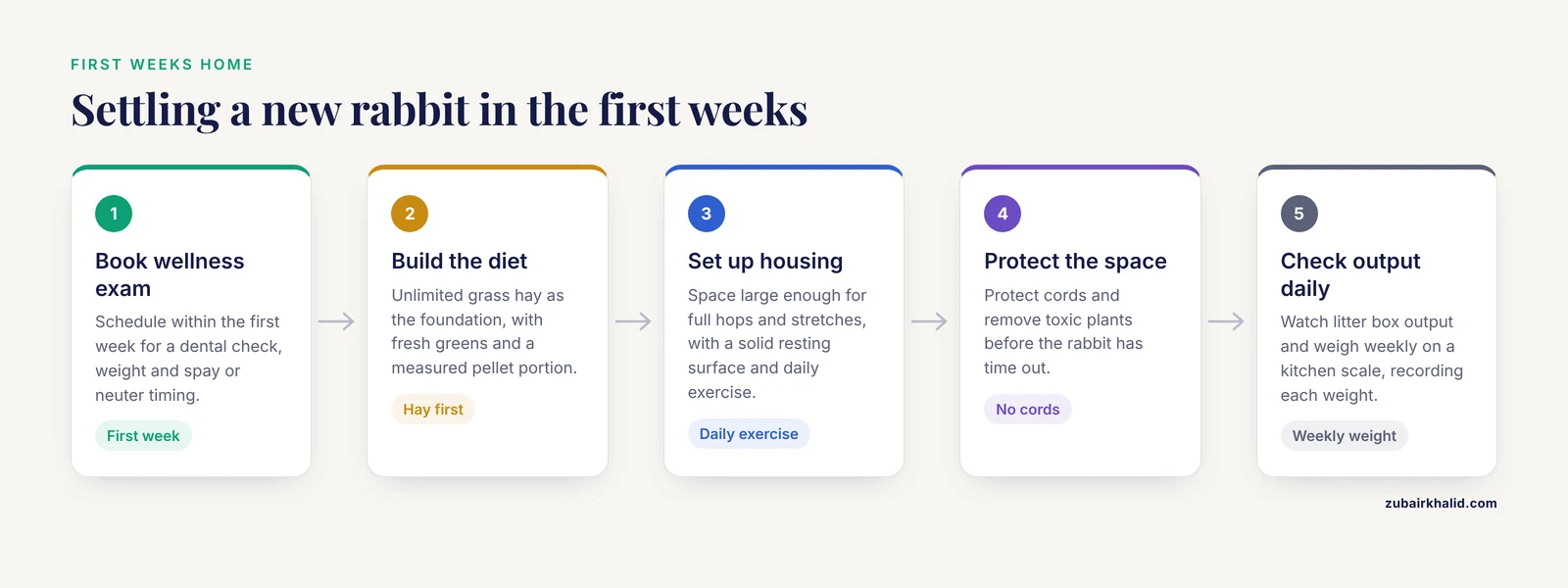
Once home, the priorities are identical for show and pet animals. Resources from the House Rabbit Society and the Rabbit Welfare Association and Fund align on these fundamentals, and your veterinarian should confirm the details for your rabbit's breed and age.
- Schedule a wellness examination within the first week, including a dental check, weight, and a discussion of spay or neuter timing with your veterinarian.
- Provide unlimited grass hay as the foundation of the diet, with appropriate fresh greens and a measured portion of pellets.
- Set up housing large enough for full hops and stretches, with a solid resting surface and daily time out for exercise.
- Rabbit-proof the space, protecting cords and removing toxic plants.
- Monitor litter box output daily. Changes in fecal output are one of the earliest warnings of trouble in rabbits and justify a prompt call to your veterinarian.
- Weigh your rabbit weekly on a kitchen scale and record it.
- Groom according to coat type, more frequently during molts.
Guinea Pig Care Guide for the First Weeks
The same framework applies to cavies, with a few species-specific additions that the Merck Veterinary Manual and VCA Animal Hospitals' small mammal resources highlight for new owners.
- Book a wellness examination in the first week, with dental and weight checks and a discussion of vitamin C provision.
- Supply daily vitamin C through fresh vegetables and, if your veterinarian advises, a supplement. Do not rely on vitamin C added to water, which degrades.
- Provide unlimited grass hay, appropriate fresh vegetables, and a measured pellet portion.
- House guinea pigs in compatible pairs or groups where possible, in a roomy, solid-bottomed enclosure, and introduce new companions gradually under guidance.
- Check nails, teeth, coat, and weight routinely, and weigh weekly.
- Keep the environment draft-free and temperature-stable, since cavies tolerate heat poorly.
For a show animal, add conditioning work to the same foundation. Coat condition, muscle tone, and table training are built on top of excellent daily care, never instead of it. A show animal in poor flesh or with a neglected coat will lose to a well-conditioned pet-quality sibling with sounder basics, and experienced judges can see the difference instantly.
The Ethics Angle Buyers Should Understand
Demand for a breed's most fashionable look drives breeding decisions, and not all of those decisions serve the animals. Farstad's review notes that in companion animals, breeding for curiosity or cuteness can become a goal in itself, and that breeding practices affecting companion animals are increasingly part of the welfare debate [1]. For rabbits and cavies, the practical translation for buyers is direct.
Buy from breeders whose priority is healthy animals true to their species in behavior and physical appearance, which is Farstad's definition of ethical breeding [1]. Ask what the breeder is selecting for and why. Be cautious with trends that push a breed toward extreme features without a functional or welfare justification. Also note that Farstad observes health requirements for breeding animals vary widely between countries [1], so in the United States the burden of verifying a breeding animal's health rests largely on the buyer, which makes your pre-purchase veterinary examination the single most valuable money you will spend.
Limitations and When to Contact a Veterinarian
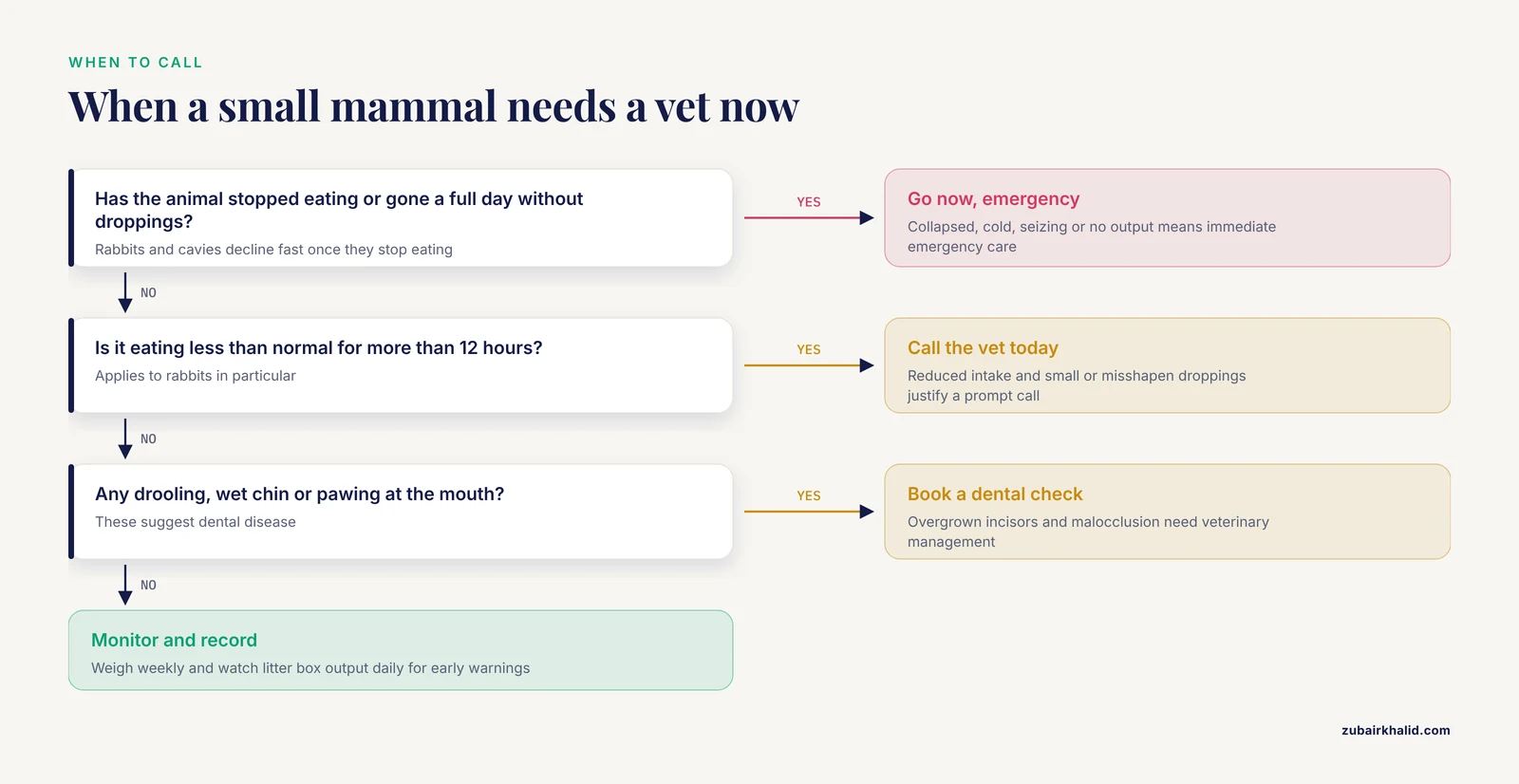
Every animal is an individual, and no article, standard, or breeder's assessment can substitute for a veterinarian examining your specific rabbit or guinea pig. Have a small-mammal-savvy veterinarian examine any animal before purchase or shortly after arrival, and establish that relationship before an emergency.
Contact a veterinarian promptly if you see any of the following.
- Not eating, or eating dramatically less than normal, for more than 12 hours in a rabbit.
- No fecal output, or very small, misshapen, or matted droppings.
- Drooling, wet chin, or pawing at the mouth, which suggest dental disease.
- Discharge from the eyes or nose, sneezing, or labored breathing.
- Diarrhea or very soft stools, especially in guinea pigs.
- Weight loss confirmed on the scale, or a rabbit or cavy that feels bony along the spine.
- Limping, reluctance to move, or a hunched, painful posture.
- Overgrown incisors or nails, or sores on the feet.
- Any lump, wound, or bleeding.
- In guinea pigs, signs consistent with inadequate vitamin C, such as reluctance to move, rough coat, or painful joints.
Seek emergency care immediately for a rabbit or guinea pig that is collapsed, cold to the touch, seizing, or has gone a full day without eating or producing droppings. Small mammals decline fast once they stop eating, and waiting overnight often turns a treatable problem into a critical one.
This article is educational and is not a substitute for veterinary diagnosis or treatment.
Frequently Asked Questions
What does show quality vs pet quality small mammals mean?
It means the animal is being ranked against a written breed standard for appearance, health and temperament aside. Show quality matches the standard closely. Pet quality has cosmetic faults or disqualifications that would prevent it from winning, while remaining a perfectly healthy pet.
Can a pet quality rabbit or guinea pig live a normal, healthy life?
Yes. The faults that make an animal pet quality are almost always cosmetic and have no bearing on lifespan or wellbeing. Malocclusion is an exception, because it is both a disqualification and a genuine medical condition requiring lifelong dental care.
Is show quality worth the higher price if I never plan to show?
Usually no. The premium buys proximity to a written appearance standard, which brings no health, temperament, or longevity advantage for a companion home. Spend the difference on a veterinary examination, quality housing, and hay instead.
Can I show my pet quality rabbit or guinea pig?
In many cases, yes, in a limited way. Many shows include non-registered or pet classes, and some organizations let unregistered animals compete for fun rather than points. Contact a local rabbit or cavy club and ask what entry categories exist in your area.
Do show animals make better pets than pet quality animals?
Not inherently. Handling and socialization by the breeder predict pet temperament far better than conformation. A well-socialized pet-quality animal from a hands-on breeder often makes a calmer companion than a stressed show animal from a busy exhibitor's grow-out cage.
What is breeder quality, and should I buy one?
Breeder quality describes an animal without disqualifications that falls short of top show type but carries traits a breeding program values, such as strong maternal behavior or hard-to-find genetics. It is the right purchase only if you intend to breed under an experienced mentor in the breed.
How do I find a reputable rabbit or guinea pig breeder?
Start with a local or national breed club, ask for references from people who bought animals within the last two years, and visit in person. Look for clean housing, animals that are confident being handled, honest answers about faults, a written health and return policy, and a breeder who asks you serious questions in return.
What should I check when evaluating a rabbit or guinea pig in person?
Check that the incisor teeth meet evenly, count the toenails, look for clear eyes and a clean nose, feel along the spine and hips for body condition, examine the vent area for cleanliness, check the coat for parasites or bare patches, and watch the animal move and behave. Then have your veterinarian confirm everything before or shortly after you commit.
Further Reading
- Beyond Tumour Size: Integrating Tumour Biology and Technical Quality to Select the Extent of Resection in Early-Stage NSCLC.
- Quality Improvement: Evaluation of Team Communication Openness in Specialty and Emergency Veterinarians Who Regularly Use Communication Tools.
- Impact of primary tumor SUVmax on PET accuracy in mediastinal lymph node staging of non-small cell lung cancer (NSCLC).
- Phantom-based comparison of image quality in two digital PET/CT systems with different axial fields of view.
- Beyond tumor burden: PET/CT-derived psoas muscle quality and survival outcomes in metastatic NSCLC patients treated with nivolumab.