Why Do Rabbits Sleep With Their Eyes Open?
By Dr. Zubair Khalid, DVM, MS, PhD ·
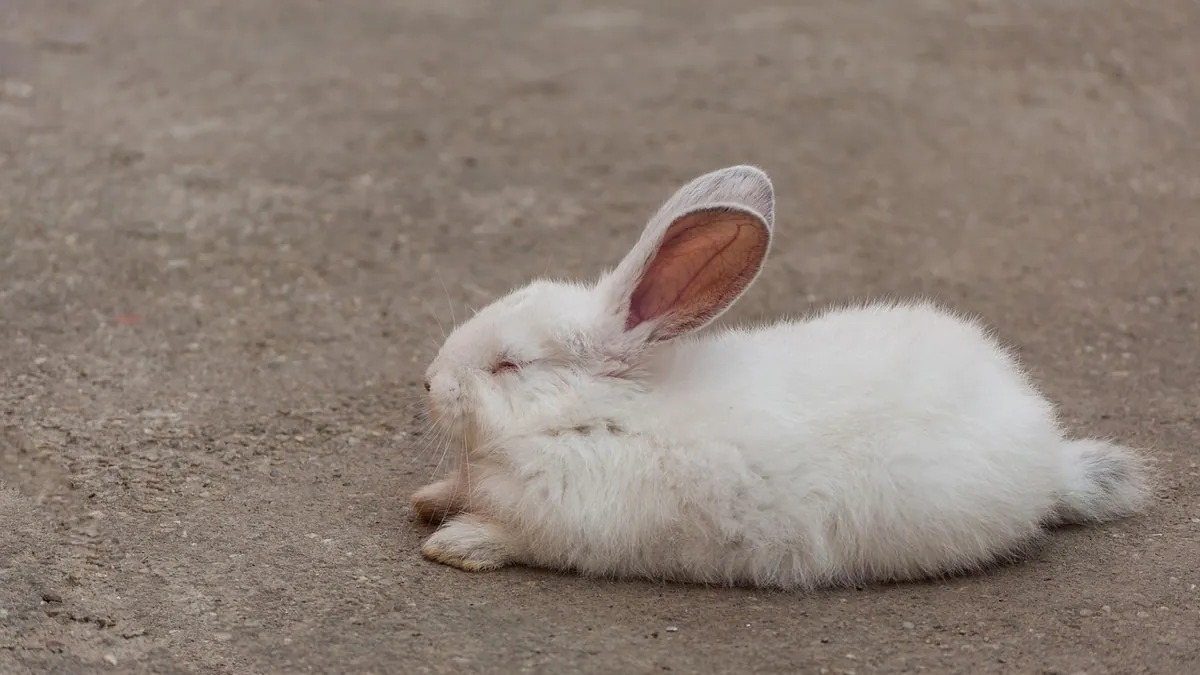
Rabbits commonly sleep with their eyes open, and this is normal for the species. Their eyelids do not always close fully during rest, and their wild ancestry keeps them ready to react to danger. So if you have ever wondered, do rabbits sleep with their eyes open, the short answer is yes, and it usually means nothing is wrong.
This article is educational and is not a substitute for veterinary diagnosis or treatment.
Quick Answer
- Open-eyed sleep is normal in rabbits. Many rabbits rest with their eyes partly or fully open because they are prey animals that stay alert.
- Rabbits sleep in short bouts, not one long block. They are crepuscular, meaning they are most active at dawn and dusk, and they nap throughout the day and night.
- A third eyelid (nictitating membrane) helps protect the eye while your rabbit rests. You may see a pale membrane slide across the eye during sleep.
- Open eyes plus a relaxed body, soft breathing, and a loaf or flop position usually mean your rabbit is fine.
- Open eyes plus squinting, discharge, head tilt, or unresponsiveness can signal a health problem, so call your veterinarian.
Why Do Rabbits Sleep With Their Eyes Open?
Rabbits are prey animals. In the wild, closing both eyes for long stretches would leave them vulnerable to predators. Their bodies are built to rest lightly and wake fast.
The anatomy behind open-eyed rest
Rabbits have upper and lower eyelids, plus a third eyelid called the nictitating membrane. This thin membrane can sweep across the eye to keep it moist and protected. During rest, the third eyelid may partially cover the eye, which can look like a cloudy or half-closed eye. That is normal.
Rabbits also have eyes set on the sides of their head. This gives them a wide field of vision, almost all the way around. That wide view helps them detect movement while they rest.
Sleep patterns in rabbits
Rabbits do not sleep like people do. They take many short naps across a 24-hour period. They are most active at dawn and dusk, and they rest more during the middle of the day and the middle of the night.
Research on other prey species shows that sleep is polyphasic, meaning it is broken into many short periods instead of one long stretch [1]. Rabbits follow a similar pattern. This is one reason you may catch your rabbit resting with eyes open at odd hours.
The alert-rest state
Rabbits can enter a state of rest where their body is still but their senses stay partly switched on. Their ears may stay up or swivel toward sounds. Their eyes may stay open. This is sometimes called vigilance or alert rest.
A study on rabbit behavior found that vigilance is a distinct behavior that can be measured during rest periods [2]. So when your rabbit sits still with open eyes, it may be resting while staying watchful.
Is It Normal for Rabbits to Sleep With Their Eyes Open?
Yes, it is normal for rabbits to sleep with their eyes open. Most healthy rabbits do this at least some of the time. The behavior becomes a concern only when it comes with other signs of illness or distress.
Normal open-eyed sleep looks like this
- Your rabbit is in a relaxed position, such as a loaf, a flop, or stretched out on its side.
- Breathing is slow and steady.
- The nose may twitch gently or stay still.
- Ears are relaxed or slightly turned.
- Your rabbit wakes quickly and normally when you make a sound or offer food.
- The eyes look clear, with no redness, cloudiness, or discharge.
When open eyes are not sleep
Sometimes a rabbit with open eyes is not sleeping at all. It may be frozen in fear, in pain, or too stressed to rest. A rabbit that is truly sleeping will usually relax its body. A rabbit that is scared will often crouch low, keep its ears flat, and stay rigid.
If your rabbit seems unable to close its eyes or rest properly, that is a reason to check with your veterinarian.
How Long Do Rabbits Sleep With Their Eyes Open?
There is no fixed number. Rabbits sleep in short bouts, and the eyes may stay open for the whole bout or only part of it. A nap might last a few minutes to an hour or so.
Because rabbits are crepuscular, they often sleep more during the day and night and are active at dawn and dusk. Owners who watch their rabbits closely often notice open-eyed rest during the day.
If your rabbit seems to sleep far more than usual, or far less, that change matters more than the eye position itself. A sudden shift in sleep or activity can be an early sign of illness.
Medical Causes to Rule Out
Open-eyed sleep is normal, but some health problems can look similar. These are the main ones to consider.
Eye problems
- Conjunctivitis, which causes redness, swelling, and discharge.
- Corneal ulcers, which cause squinting, tearing, and pain.
- Entropion, where the eyelid rolls inward and irritates the eye.
- Dry eye, which can make the eye look dull or cloudy.
- Abscesses or dental disease that push on the eye area.
Rabbits with eye pain may keep the eye partly closed, not fully open. They may also paw at the face or avoid bright light.
Dental disease
Rabbit teeth grow continuously. Overgrown molars and tooth root problems are common and can cause pain that radiates near the eyes and face. A rabbit with dental pain may sit with eyes partly closed, drool, or stop eating.
Pain or illness anywhere in the body
A rabbit in pain often sits hunched with eyes partly closed. It may grind its teeth, stop eating, or produce fewer droppings. These are serious signs in rabbits because their digestive system can shut down quickly.
Neurological problems
Rarely, a rabbit may have trouble closing its eyes because of nerve or muscle problems. This can happen with head tilt, ear infections, or other neurological conditions. A rabbit that cannot blink normally needs veterinary care.
Medications and sedation
Some medications change how alert or sleepy a rabbit looks. A study of trazodone in rabbits measured resting and vigilance behaviors after a single oral dose [2]. Another study found that gabapentin reduced vigilance and increased play behavior in rabbits [3]. These are prescription drugs, and a veterinarian calculates the dose from your rabbit's weight and health. Never give your rabbit any medication without veterinary guidance.
When Open-Eyed Rest Becomes a Problem
Open-eyed sleep is a problem when it comes with any of these:
- Your rabbit stops eating or drinking.
- Droppings get smaller, fewer, or stop.
- The eyes look red, cloudy, swollen, or have discharge.
- Your rabbit squints, paws at its face, or keeps one eye closed.
- Breathing is fast, noisy, or labored.
- Your rabbit sits hunched and grinds its teeth.
- Your rabbit seems weak, wobbly, or unable to move normally.
- Your rabbit does not respond to you or to food.
- Your rabbit sleeps much more or much less than usual.
Any of these signs means you should contact a veterinarian. Rabbits hide illness well, so small changes can be meaningful.
What to Do Step by Step
If your rabbit sleeps with its eyes open but seems healthy, you do not need to treat anything. You can still make its environment better for rest and watch for changes.
Step 1: Set up a safe, quiet rest area
Give your rabbit a hide box or a covered area where it can rest without feeling exposed. A cardboard box with two doors works well. Place it away from loud traffic, dogs, and busy footpaths.
Step 2: Keep a consistent routine
Rabbits do well with predictable feeding and activity times. Research in rabbits shows that feeding time can affect daily rhythms in the body [4]. Keeping meals and play at similar times each day supports normal rest patterns.
Step 3: Provide enrichment
Boredom and stress can change sleep. Offer safe chew toys, tunnels, and daily supervised time outside the enclosure. Rotate toys so your rabbit stays interested.
Step 4: Respect your rabbit's schedule
Do not force play when your rabbit is resting. Rabbits are most active at dawn and dusk. Schedule handling and play during those windows when possible.
Step 5: Check the eyes daily
Look at both eyes each day. They should be clear, bright, and free of discharge. Gently check that your rabbit can blink and close its eyes. If one eye stays open more than the other, note it and call your veterinarian.
Step 6: Track eating, drinking, and droppings
These are the best early warning signs in rabbits. A rabbit that eats and poops normally is usually doing well. A rabbit that stops is in trouble.
Step 7: Keep up routine veterinary care
Rabbits need regular checkups, including dental exams. Dental problems are a common cause of eye and face pain in rabbits.
If you also live with dogs, sleep changes in other species can be confusing. Our guide on why dogs sleep so much explains normal canine rest, and how long dogs sleep covers typical sleep durations. For rabbits facing surgery or sedation, see anesthesia and analgesia in rabbits and rodents.
What Not to Do
- Do not punish your rabbit for resting with open eyes. It is normal behavior, not defiance.
- Do not wake your rabbit suddenly or repeatedly. That causes stress and can make rest worse.
- Do not assume open eyes always mean sleep. Check the body posture and breathing.
- Do not give human eye drops or any medication without veterinary advice. Some drops are harmful to rabbits.
- Do not ignore eye discharge, squinting, or a cloudy eye. These need a veterinarian.
- Do not believe the myth that rabbits only sleep with eyes closed. Most rabbits rest with eyes open at least sometimes.
- Do not assume a rabbit that sits still is fine. A hunched, quiet rabbit may be in pain.
When to Involve a Veterinarian or Behavior Professional
Call your veterinarian if your rabbit has eye redness, discharge, squinting, or a change in sleep or activity that lasts more than a day. Call right away if your rabbit stops eating, stops producing droppings, breathes hard, or seems weak.
A certified behavior professional can help if your rabbit is stressed, fearful, or unable to relax in its environment. Behavior problems and health problems often overlap in rabbits, so start with a veterinarian to rule out medical causes.
Limitations and When to Contact a Veterinarian
This article covers general information. Your rabbit's individual case needs a veterinarian who can examine it in person.
Contact your veterinarian the same day if you see:
- Eye discharge, redness, swelling, or cloudiness.
- Squinting or one eye held closed.
- Drooling, dropping food, or refusing to eat.
- A sudden drop in droppings or no droppings.
- Head tilt, circling, or loss of balance.
- Grinding teeth or a hunched posture.
Go to an emergency clinic now if your rabbit:
- Cannot breathe normally or breathes with its mouth open.
- Collapses or cannot stand.
- Has a seizure or sudden paralysis.
- Has heavy bleeding or a major injury.
- Stops eating and passes no droppings for 12 hours or more.
Rabbits decline quickly. When in doubt, call. It is better to check early than to wait.
Frequently Asked Questions
Do rabbits sleep with their eyes open every time?
No, not every time. Many rabbits close their eyes during deep rest, but they also nap with eyes open or partly open. The mix is normal.
Can a rabbit sleep with one eye open?
Yes. Some rabbits rest with one eye open and one closed, or with the third eyelid partly covering one eye. If one eye stays open while the other closes, watch for pain or injury.
Does a rabbit's third eyelid mean it is sick?
Not always. The third eyelid can show during normal rest. It is more concerning when it stays visible while your rabbit is awake, or when it comes with discharge or redness.
Why does my rabbit freeze with its eyes open?
Freezing with open eyes usually means fear or stress, not sleep. A scared rabbit crouches low with ears back and stays rigid. Give it space and a hiding spot, and remove the source of stress.
Should I worry if my rabbit sleeps more than usual?
Yes, a clear change in sleep amount is worth a call to your veterinarian. Rabbits hide illness, and increased sleep or inactivity can be an early sign of pain or disease.
Related Articles
- Anesthesia and Analgesia in Rabbits and Rodents
- Anesthesia for Laboratory Rabbits: Protocols and Monitoring
- Do Rabbits Get Ear Infections
- How Long Do Rabbits Sleep? Daily Rest Patterns Explained
- Why Is My Rabbit Laying Down So Much? Rest or Illness
References
- Day-night variations in sleep and locomotor activity in lambs during the first 72 hours after birth and following the onset of rumination. PloS one, 2026.
- Pharmacokinetics and behavioural effects of a single oral dose of trazodone in rabbits. Veterinary anaesthesia and analgesia, 2025.
- Single oral dose of gabapentin reduces vigilance and increases play behavior without changing mobility in New Zealand white rabbits (Oryctolagus cuniculus). Journal of the American Veterinary Medical Association, 2025.
- Night-restricted feeding preserves the ovarian circadian rhythm of IL-17 and promotes follicular development in prepubertal and pubertal rabbits. Journal of ovarian research, 2026.