My Rabbit Won't Eat Hay: What to Do
By Dr. Zubair Khalid, DVM, MS, PhD ·
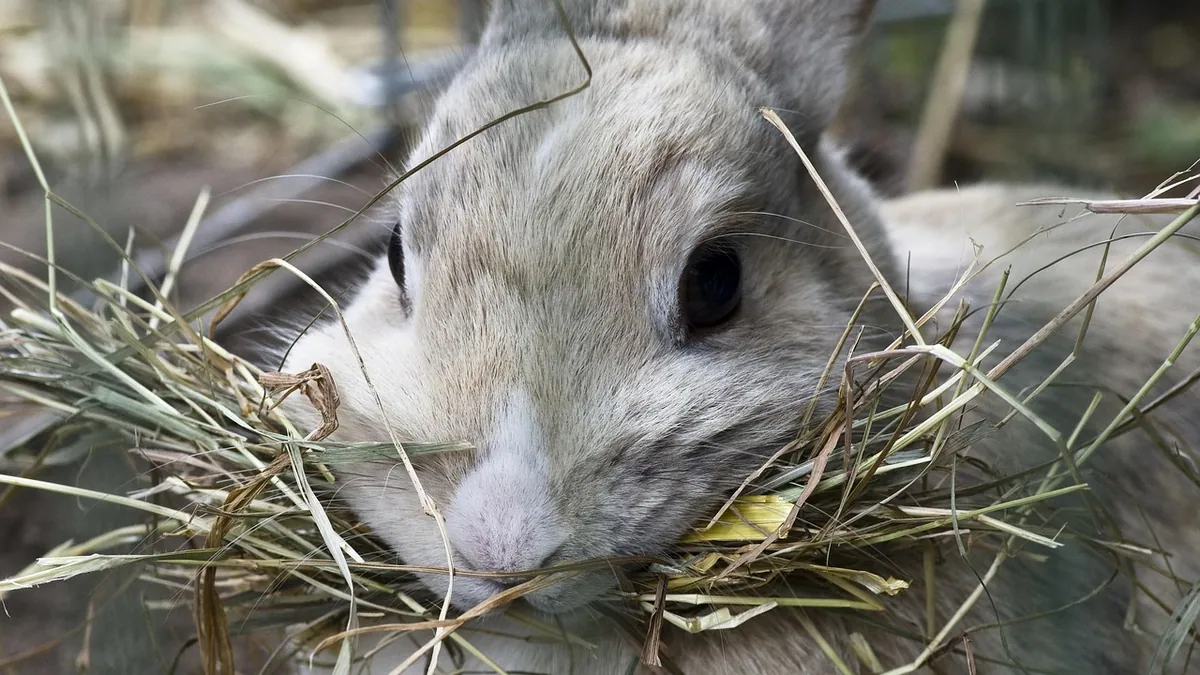
If your rabbit won't eat hay, treat it as a medical warning, not a picky-eating phase. Hay makes up most of a healthy rabbit diet, and a rabbit that stops eating hay can quickly develop serious digestive problems. A veterinary visit is the safest next step, especially if your rabbit has also slowed down on pellets, greens, or water.
This article is educational and is not a substitute for veterinary diagnosis or treatment.
Quick Answer
- Hay should make up about 85 to 90% of your rabbit's diet, so refusing hay is a big deal [1].
- Dental pain is one of the most common reasons a rabbit stops eating hay, and dental disease is the most common non-infectious disease of pet rabbits [2].
- A rabbit that stops eating can develop gastrointestinal (GI) stasis, where gut movement slows and harmful bacteria build up [3].
- Offer fresh, dry, sweet-smelling grass hay such as timothy, oat, orchard grass, or meadow grass, and replace stale hay often [1].
- Call your veterinarian promptly if hay refusal lasts more than 12 to 24 hours or comes with fewer droppings, pain, or lethargy [3].
What Hay Refusal Means for Your Rabbit
Rabbits are herbivores with a specialized digestive system built to process large amounts of plant fiber all day long [1]. Their guts move food constantly, and that motion depends on a steady supply of long-stem fiber. Grass hay provides that fiber.
A healthy adult rabbit diet is roughly 85 to 90% grass hay, with a smaller amount of pellets that contain 15 to 20% crude fiber [1]. When hay disappears from the bowl, the whole system loses its main fuel source.
The risk is not just poor nutrition. A rabbit with too little dietary fiber can stop eating altogether and develop GI stasis. In GI stasis, food movement through the digestive tract slows, unhealthy bacteria overgrow, and those bacteria release toxins and gas. The rabbit becomes bloated and painful, which makes eating even less likely [3]. This is a cycle that can become life-threatening within a day or two.
Rabbits also eat soft droppings called cecotropes, usually early in the morning. Cecotropes supply protein, vitamins, and other nutrients [1]. A hay-refusing rabbit may produce fewer normal droppings and fewer cecotropes, which adds to the problem.
If your rabbit is refusing food in general, the same urgency applies. Our guide on why a dog won't eat and when to worry explains how appetite changes signal illness in pets, and the principle holds for rabbits too.
Signs Owners Notice When a Rabbit Stops Eating Hay
You may not catch the first skipped meal. Rabbits are prey animals and often hide discomfort until they feel quite unwell. Watch for these changes:
- Hay left untouched or barely nibbled for a full day
- Smaller, fewer, or misshapen droppings
- Drooling, wet chin, or matted fur under the chin
- Teeth grinding, which can signal pain
- Hunched posture, pressing the belly to the floor, or reluctance to move
- Weight loss you can feel along the spine and hips
- Reduced interest in pellets, greens, or water
- Chewing on cage bars, cardboard, or inappropriate objects
Some of these signs point to dental disease. Others point to GI stasis or another digestive disorder. Digestive disease is a major health concern in rabbits and includes both noninfectious problems and infections [3]. Any rabbit showing digestive upset, such as diarrhea or fewer droppings, needs veterinary care promptly [3].
Why Is My Rabbit Not Eating Hay? Causes and Risk Factors
Several problems can turn a hay-loving rabbit into a hay refuser. Sometimes more than one is at play.
Dental Pain
Dental disease is the most common non-infectious disease of domestic rabbits, with prevalence reaching up to 40% in studied populations, and diet is the main cause [2]. Rabbit teeth grow continuously. When they do not wear down evenly, sharp points and overgrowth develop, and chewing hay becomes painful.
A study of dental severity found that age and head shape (cephalic index) were significantly associated with how severe a rabbit's dental disease became. Gender and breed did not significantly affect the score. Interestingly, the frequency of access to hay, fresh grass, or grazing did not significantly change severity scores, which suggests that some form of grass belongs in the diet but the exact form supplied may not change how fast dental disease progresses [4].
Poor-Quality or Stale Hay
Hay that is dusty, moldy, damp, or old loses its appeal. Rabbits are selective eaters and may reject hay that smells off or has gone musty. Fresh grass hays such as timothy, oat, orchard grass, or meadow grass work well for adult rabbits [1].
GI Stasis and Digestive Upset
Rabbits with too little dietary fiber or another underlying problem, such as dental disease, may stop eating and develop GI stasis [3]. Once the gut slows, bloating and pain make the rabbit even less willing to eat [3]. This is why hay refusal and GI stasis often appear together.
Contaminated Feed
Mycotoxins in feed can suppress appetite. One study found that deoxynivalenol (DON) exposure significantly reduced daily food intake and weight gain in rabbits, caused intestinal cell death and barrier injuries, reduced the diversity of cecal bacteria, and disrupted normal metabolism [5]. If you recently opened a new bag of hay or pellets and your rabbit suddenly refuses food, consider whether the batch smells musty or off.
Boredom and Hair Chewing
Rabbits swallow hair during grooming, and it normally passes in the droppings. Hair chewing increases with low-fiber diets or boredom. More hay, cardboard boxes, and safe chew toys often reduce boredom and hair chewing [3].
Other Medical Causes
GI disorders are a common reason rabbits end up in emergency care, and GI stasis is frequently caused by other primary conditions, including problems within the digestive tract itself [6]. Less common but serious problems, such as a perforated colon with infection, have been reported in rabbits and can present with appetite loss and abdominal pain [7]. A veterinarian can sort out what is driving the refusal.
How Veterinarians Diagnose the Problem
Your veterinarian will start with a full history. Bring notes on what your rabbit eats, how much hay it normally finishes, when the refusal started, and whether droppings have changed.
The physical exam focuses on the mouth, belly, and body condition. The vet will check the teeth with an otoscope or similar instrument, feel the abdomen for gas or masses, and weigh your rabbit to compare against previous visits.
Depending on findings, your vet may recommend:
- Skull and body radiographs (X-rays) to look at tooth roots and the digestive tract
- Blood work to check organ function and hydration
- Fecal testing
- Ultrasound if the abdomen is painful or a mass is suspected
Imaging can reveal serious problems. In one reported case, a two-year-old domestic rabbit with appetite loss and lethargy had free gas in the abdomen, small intestinal distention, and a dilated descending colon on radiographs. Surgery found a perforation of the descending colon with an abscess, and the rabbit was euthanized during surgery because of the severity of the lesions [7]. That case is uncommon, but it shows why appetite loss deserves a real workup.
Treatment Options for a Rabbit That Refuses Hay
Treatment depends on the cause. Your veterinarian will build a plan around your rabbit's specific problems, weight, and overall health.
| Problem | Typical Veterinary Approach |
|---|---|
| Dental overgrowth or sharp points | Tooth trimming or filing, pain control, diet review |
| GI stasis | Fluids, pain relief, gut motility support, assisted feeding |
| Dehydration | Subcutaneous or intravenous fluids |
| Bloat or suspected obstruction | Imaging, hospitalization, possible surgery |
| Poor-quality hay | Switch to fresh grass hay and clean the feeder |
| Boredom or hair chewing | More hay, chew toys, cardboard boxes, exercise time [3] |
Never give your rabbit human pain medications or any drug without veterinary guidance. Some common human drugs are toxic to rabbits. Your veterinarian calculates any medication dose from your rabbit's weight and health status.
While your rabbit is under treatment, keep offering hay. Even small amounts of chewing help. Your vet may also recommend syringe feeding a recovery diet if your rabbit is not eating enough on its own.
If you are managing a pet that has eaten something dangerous, our article on what to do if a dog eats chocolate covers the same "call for help fast" mindset that applies to any poisoning concern.
Recovery, Outlook, and Long-Term Management
Rabbits that get prompt care for dental pain or early GI stasis often recover well. The longer a rabbit goes without eating, the harder the recovery tends to be.
Expect follow-up visits. Dental disease is often a lifelong management issue, not a one-time fix. Your vet may want to check the teeth every few months.
Long-term care usually includes:
- Unlimited grass hay every day [1]
- A measured amount of plain pellets with 15 to 20% crude fiber [1]
- Fresh water at all times [1]
- Regular brushing to reduce swallowed hair [3]
- Weight monitoring at home
- Safe chew toys and time out of the cage [3]
- A low-stress environment [3]
Rabbits need vitamins A, D, and E in the diet. B vitamins and vitamin K are usually made by normal gut bacteria, so supplements of those are generally unnecessary [1]. Good-quality commercial pellets stored in cool, dry, airtight conditions, without added dried fruit or nuts, usually cover nutrient needs [1]. Skip the mixed feeds with treats, because rabbits will pick out the sweets and ignore the pellets [1].
Prevention: Getting Your Rabbit Eating Hay Again and Keeping It That Way
Prevention comes down to fiber, freshness, and early attention.
Offer unlimited grass hay daily. Timothy, oat, orchard grass, and meadow grass hays are all good choices for adult rabbits [1]. Replace hay that is dusty, damp, or smells stale. A hay rack keeps hay off the floor and makes it more appealing.
Keep pellets plain and measured. Pellets with dried fruit or nuts encourage selective eating [1].
Brush your rabbit regularly. This reduces the amount of loose hair your rabbit swallows while grooming [3].
Watch droppings every day. Fewer or smaller droppings are an early warning that gut movement has slowed [3].
Add enrichment. Cardboard boxes and safe chew toys reduce boredom and hair chewing [3].
If your rabbit has never eaten much hay, start with small changes. Mix a pinch of a new hay variety into the old one. Try a different cut or brand. Offer hay in a clean rack in a quiet spot. Some rabbits prefer hay from a fresh bag over hay that has sat open for weeks.
For a full picture of what to feed and what to avoid, see our guide to rabbit diet, hay, greens, and foods to avoid.
Limitations and When to Contact a Veterinarian
This article cannot tell you what is wrong with your specific rabbit. Only a veterinarian who examines your rabbit can do that.
Call your veterinarian the same day if your rabbit:
- Has not eaten hay for 12 to 24 hours
- Has fewer or smaller droppings
- Is drooling or has a wet chin
- Is grinding its teeth
- Seems less active than usual
Go to an emergency clinic now if your rabbit:
- Is lying flat and will not move
- Has a hard, bloated belly
- Is breathing fast or open-mouthed
- Has not produced droppings for many hours
- Collapses or seems unresponsive
Schedule a routine visit if your rabbit:
- Eats hay poorly but still eats pellets and greens
- Has gradually lost weight
- Has chronic dental issues that need monitoring
Digestive disease is a major health concern in rabbits, and a rabbit that stops eating or shows digestive upset needs veterinary care promptly [3]. When in doubt, call. Rabbits can decline faster than many owners expect.
Frequently Asked Questions
How long can a rabbit go without eating hay?
Not long. Rabbits have a fast metabolism and a digestive system that depends on constant fiber intake [1]. A rabbit that refuses hay for a full day should see a veterinarian. Waiting two or three days raises the risk of GI stasis and makes treatment harder [3].
Can I just switch hay brands to fix this?
Sometimes a fresh bag of a different grass hay helps, but a sudden refusal often has a medical cause. Dental disease is common in pet rabbits, and pain while chewing is a frequent reason for hay refusal [2]. If a hay swap does not fix things within a day, call your vet.
Is my rabbit being picky or is it sick?
Rabbits are selective eaters by nature, so some pickiness is normal [1]. The difference is what else changes. A picky rabbit still eats pellets and greens and acts normal. A sick rabbit slows down on everything, produces fewer droppings, and may sit hunched or grind its teeth [3].
What hay is best for an adult rabbit?
Timothy hay and other lower-calcium grass hays, such as oat, orchard grass, or meadow grass, are good choices for adult rabbits [1]. Alfalfa is higher in calcium and is generally reserved for young or growing rabbits. Freshness matters as much as type, so buy hay that smells sweet and is free of dust and mold.
Can dental problems really stop a rabbit from eating hay?
Yes. Dental disease is the most common non-infectious disease of domestic rabbits, and diet is the main cause [2]. Chewing long-stem hay wears teeth down, but when teeth overgrow or develop sharp points, hay becomes painful to chew. A rabbit with dental pain often drops hay first and keeps eating softer foods longer [4].
Related Articles
- Rabbit Diet: Hay, Greens, and Foods to Avoid
- My Rabbit Stopped Eating: Causes and What to Do
- Rabbit Only Eating Pellets and Not Hay: Why It Matters
- Rabbit Not Pooping: Causes, GI Stasis, and What to Do
- Hay for Rabbits: Selection, Storage, and Feeding-System Design
- Rabbit Food and Hay: A Nutritional Guide for Optimal Health
References
- Diet for Rabbits - All Other Pets. Merck Veterinary Manual.
- Dental and skeletal findings of 140 wild rabbits (Oryctolagus cuniculus) in Finland 2010-2015. Acta veterinaria Scandinavica, 2026.
- Digestive Disorders of Rabbits - All Other Pets. Merck Veterinary Manual.
- Association of Age, Cephalic Index, and Feeding Method with Dental Severity in Rabbits. Journal of veterinary dentistry, 2026.
- Multi-omics analysis explore the mechanism of deoxynivalenol inhibiting rabbit appetite through microbial-gut-brain axis. Ecotoxicology and environmental safety, 2025.
- Rabbit Gastroenterology. The veterinary clinics of North America. Exotic animal practice, 2025.
- Pneumoperitoneum Secondary to Colonic Perforation in a Domestic Rabbit. Animals : an open access journal from MDPI, 2026.