How to Help a Rabbit Gain or Lose Weight Safely
By Dr. Zubair Khalid, DVM, MS, PhD ·
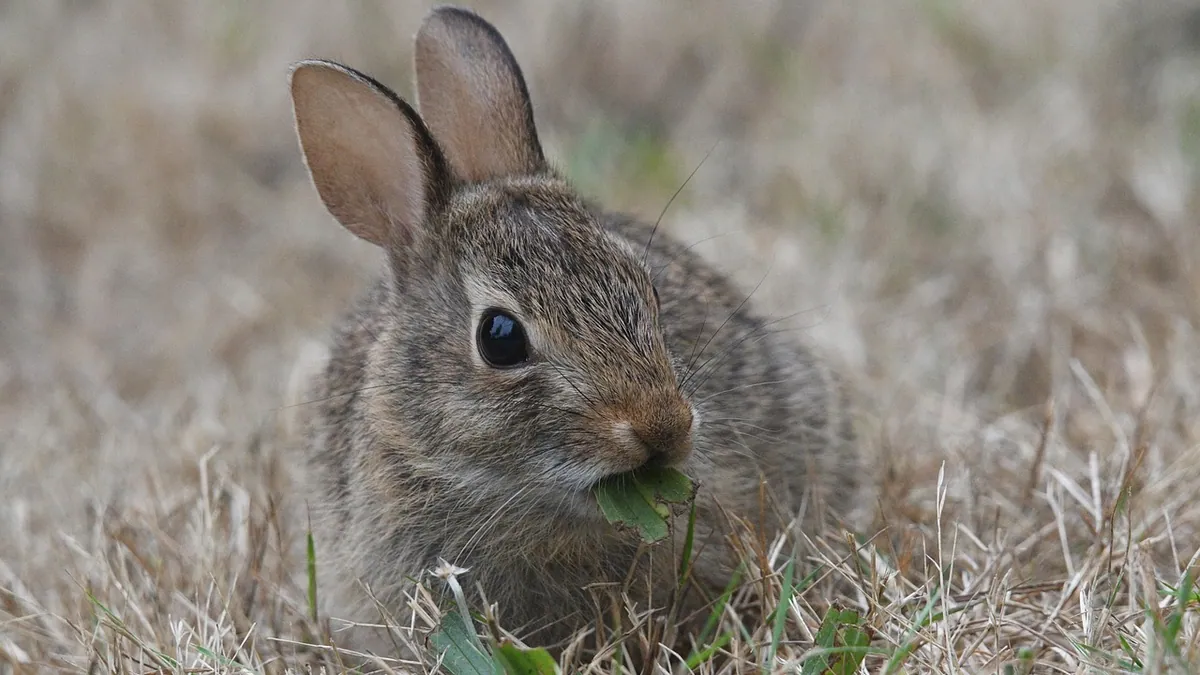
If your rabbit needs to gain weight, the fix is usually more good-quality hay, a measured increase in plain timothy pellets, and a veterinary check for hidden causes like dental disease. If your rabbit needs to lose weight, the fix is the opposite: fewer pellets and treats, unlimited hay, and more exercise. This article is educational and is not a substitute for veterinary diagnosis or treatment.
Quick Answer
- Weigh your rabbit on a kitchen scale every 1 to 2 weeks and score its body condition by feeling the spine and ribs, since a number on a scale means little without knowing the rabbit's frame.
- A healthy adult diet is roughly 85 to 90% grass hay, with a small measured amount of pellets and about 1 cup of fresh vegetables per 2 pounds of body weight per day [1].
- To gain weight, increase pellets slowly toward about 1/4 cup per 5 pounds of body weight per day and add safe vegetables, but never free-feed pellets [1].
- To lose weight, cut pellets and sugary treats first, keep hay unlimited, and add exercise time. Never starve a rabbit or withhold food.
- Any unexplained weight change, especially weight loss with normal eating, needs a veterinary exam to rule out dental disease, parasites, or other illness.
What "Weight Problem" Means in a Rabbit
Rabbits are herbivores with a fast metabolism and a specialized digestive tract [1]. They eat constantly through the day and night, and their gut depends on a steady flow of fiber. That means weight problems in rabbits are rarely about willpower or portion size alone. They usually point to diet balance, dental pain, parasites, or another medical issue.
Rabbits also produce two kinds of droppings. Most are small, dry pellets. They also make soft droppings called cecotropes, usually early in the morning, which they eat directly from the body. Cecotropes supply important protein, vitamins, and other nutrients [1]. If you see cecotropes left uneaten in the litter box, that can be an early sign something is off.
Weight itself is not the whole story. A rabbit can be heavy but not fat, or thin but not sick. Body condition, which is how much fat sits over the spine and ribs, matters more than the scale number alone.
Signs Owners Notice
Signs of a rabbit that is too thin
- You can feel the spine, hip bones, and ribs easily, with little padding over them.
- The rabbit looks narrow in published veterinary research instead of having a rounded back.
- It eats well but still seems to lose weight.
- Droppings get smaller, or you find uneaten cecotropes.
- The coat looks dull or rough.
Signs of a rabbit that is overweight
- You cannot feel the spine or ribs under a layer of fat.
- The belly is round and low, and the rabbit looks wide in published veterinary research.
- The rabbit is reluctant to move, sits more, and tires quickly.
- It cannot reach its rear end to eat cecotropes, so you find soft droppings stuck to the fur.
- Skin folds or a dewlap (the fold under the chin) get larger.
Signs that mean something else is wrong
- Drooling, dropping food, or chewing on one side only.
- Not eating, or eating much less than usual.
- Diarrhea, or droppings that are soft, watery, or misshapen.
- Teeth grinding, hunched posture, or hiding.
- Sudden weight loss over days, not weeks.
Causes and Risk Factors
Why a rabbit may not be gaining weight
The most common reason a rabbit does not gain weight despite eating is dental disease. Rabbit teeth grow continuously, and sharp points or overgrowth can make chewing painful. The rabbit may still eat, but less, or it may drop food. Over time, that shows up as weight loss or failure to gain.
Parasites are another cause. Internal parasites can steal nutrients and cause poor growth, which is why parasite control is part of standard rabbit care in managed settings [2]. A veterinarian can test for this.
Diet imbalance matters too. A rabbit fed mostly pellets and few vegetables may eat enough calories but still lack the fiber it needs. Low-fiber diets raise the risk of serious digestive illness, especially in young rabbits [1]. A rabbit with gut discomfort often eats less and loses condition.
Other causes include chronic pain, kidney or liver problems, cancer, and stress from a recent change such as a new home or a new cage mate.
Why a rabbit may be overweight
Overweight rabbits are usually overfed pellets and treats and under-exercised. Pellets are calorie-dense compared with hay. A rabbit that fills up on pellets eats less hay, and hay is the food that keeps the gut moving and the teeth worn down [1].
Treats are a common hidden source of calories. Commercial pellets with added dried fruit or nuts are a problem because rabbits eat the tasty bits and leave the pellets, so they get an unbalanced diet [1].
Some rabbits gain weight after spaying or neutering, or as they age and move less. Breed also affects body condition scoring, so two rabbits of the same weight can score differently [3].
How Body Condition and Weight Are Assessed
Your veterinarian will start with a hands-on exam. They feel the spine, ribs, and hips to score body condition. One common tool is a five-point scale called the Rabbit Size-O-Meter [3]. In a study of 205 rabbits, agreement between different people using this scale was poor overall, though agreement among veterinary professionals was moderate [3]. The lesson for owners is simple: body condition scoring is useful but subjective, so it helps to have the same person score your rabbit each time, and to combine scoring with a scale weight.
Your vet will also check the teeth with an otoscope, feel the abdomen, and look at the droppings. Blood work and a fecal exam may be recommended to look for parasites or organ problems. If dental disease is suspected, imaging of the skull may be needed.
At home, use a digital kitchen scale that reads in grams or ounces. Weigh your rabbit at the same time of day, ideally before the main meal. Write the number down. A trend over several weeks tells you more than a single reading.
How to Help a Rabbit Gain Weight
If your rabbit is thin or not gaining, the goal is more calories from balanced sources, plus treatment of any underlying cause. Do not simply pour on pellets.
Step 1: Rule out medical causes first
Book a veterinary exam before you change the diet much. If dental disease or parasites are present, no amount of extra food will fix the problem. Your veterinarian will calculate any medication dose from your rabbit's weight and health status.
Step 2: Keep hay unlimited
Hay should stay available at all times. A healthy rabbit diet is about 85 to 90% grass hay [1]. Hay supports digestion and lowers the risk of intestinal disease [1]. Even when you want weight gain, hay stays the base of the diet.
Step 3: Increase pellets in small steps
For a typical adult rabbit, timothy-based pellets are given at about 1/4 cup per 5 pounds of body weight per day [1]. If your rabbit is thin, your veterinarian may suggest going somewhat above that. Increase slowly over 1 to 2 weeks and watch the droppings. Any change in stool consistency means you went too fast.
Choose plain pellets with no added fruit, nuts, or seeds [1]. Store them in a cool, dry, airtight container [1].
Step 4: Add safe vegetables
Fresh vegetables are usually given at about 1 cup per 2 pounds of body weight per day [1]. For weight gain, keep that amount steady and choose leafy greens and other rabbit-safe vegetables. Introduce any new vegetable one at a time so you can spot a reaction.
Step 5: Use treats wisely
Treats should be small and rare. A thin rabbit does not need sugary commercial treats. A small piece of a safe vegetable works as a reward without adding empty calories.
Step 6: Track progress
Weigh weekly and record the number. A steady gain of a small amount per week is better than a sudden jump. If your rabbit is not gaining after 2 to 3 weeks of a careful diet increase, go back to the veterinarian.
For more on building a balanced plate, see Suitable Diet For A Rabbit and How Much Food Should A Rabbit Eat.
How to Help a Rabbit Lose Weight
Weight loss in rabbits is slower and gentler than in dogs. You cannot put a rabbit on a crash diet. Rabbits that stop eating can develop serious gut problems within hours.
Step 1: Cut pellets, not hay
Reduce the pellet portion gradually. Keep hay unlimited so the rabbit always has fiber to eat [1]. Never remove all food to force weight loss.
Step 2: Cut treats and high-calorie extras
Stop dried fruit, nuts, seeds, and sugary treats. These are the easiest calories to remove without harming nutrition.
Step 3: Keep vegetables measured
Keep vegetables at the standard amount, about 1 cup per 2 pounds of body weight per day [1]. Vegetables add water and fiber without many calories.
Step 4: Increase activity
Give your rabbit more floor time in a safe, rabbit-proofed space. Add tunnels, boxes, and low ramps to encourage movement. Exercise burns calories and supports gut motility.
Step 5: Monitor slowly
Aim for gradual loss over weeks to months, not days. Weigh weekly. If your rabbit loses weight quickly or stops eating, contact your veterinarian right away.
If you want to compare how weight management works in another species, see Dog Weight Management: How to Help Your Dog Lose Weight Safely.
Diet Ratios at a Glance
| Goal | Grass hay | Pellets | Vegetables | Treats |
|---|---|---|---|---|
| Healthy adult | Unlimited, about 85 to 90% of diet [1] | About 1/4 cup per 5 lb body weight daily [1] | About 1 cup per 2 lb body weight daily [1] | Rare, small |
| Weight gain | Unlimited | Slightly above standard, increased slowly with vet guidance | Standard amount, choose leafy greens | Rare, small |
| Weight loss | Unlimited | Gradually reduced | Standard amount | Removed |
Recovery, Outlook, and Long-Term Management
If the cause is diet alone, most rabbits respond within a few weeks of consistent feeding changes. If dental disease or parasites are the cause, expect improvement after treatment plus a diet plan. Dental disease often needs ongoing management because rabbit teeth keep growing.
Long-term, the routine matters more than any single meal. Unlimited hay, measured pellets, measured vegetables, fresh water, and daily exercise keep most rabbits at a healthy weight. Weigh your rabbit every 1 to 2 weeks and write it down. Bring the log to veterinary visits. Trends catch problems early.
For rabbits that tend to gain weight, keep pellets measured for life. For rabbits that tend to lose weight, keep a slightly higher pellet portion only if your veterinarian agrees, and recheck body condition at each visit.
Prevention
- Feed unlimited grass hay every day [1].
- Measure pellets instead of free-feeding them [1].
- Give about 1 cup of fresh vegetables per 2 pounds of body weight daily [1].
- Skip pellets with added dried fruit or nuts [1].
- Keep pellets in a cool, dry, airtight container [1].
- Provide daily exercise and a rabbit-proofed space.
- Weigh your rabbit regularly and record the numbers.
- Schedule dental checks, since teeth grow continuously and problems are common.
- Ask your veterinarian about parasite screening, especially for a rabbit that is not growing well [2].
For a deeper look at nutrient needs, see What Do Rabbits Need In Their Diet and Rabbit Feeding And Nutrition.
Limitations and When to Contact a Veterinarian
No article can replace an exam of your individual rabbit. Body condition scoring is subjective, and even trained professionals show only moderate agreement with each other on the same rabbit [3]. That is why a hands-on veterinary assessment matters.
Contact your veterinarian the same day if your rabbit:
- Stops eating or eats very little for more than 12 hours.
- Has diarrhea or very soft droppings.
- Drools, drops food, or chews oddly.
- Shows sudden weight loss.
- Sits hunched, grinds its teeth, or hides.
Seek emergency care now if your rabbit:
- Has not eaten or passed droppings for many hours.
- Breathes with effort or has a blue tinge to the gums.
- Collapses, has a seizure, or cannot stand.
- Has a bloated, hard abdomen.
Schedule a routine visit if your rabbit:
- Is not gaining weight after 2 to 3 weeks of a careful diet increase.
- Is slowly losing weight with a normal appetite.
- Has trouble reaching its rear end or has soiled fur.
- Has not had a dental check in the past year.
Frequently Asked Questions
How long does it take for a thin rabbit to gain weight?
Most rabbits show steady improvement over several weeks once the diet is balanced and any medical cause is treated. Rapid weight gain is not the goal. Slow, steady gain with normal droppings is safer for the digestive system.
Can I just feed more pellets to help my rabbit gain weight?
You can increase pellets somewhat, but hay must stay the base of the diet. Pellets are calorie-dense, and a rabbit that fills up on them eats less hay, which raises the risk of digestive problems. Increase pellets slowly and keep hay unlimited.
Why is my rabbit not gaining weight even though it eats well?
A rabbit that eats well but stays thin often has a hidden medical problem, most commonly dental disease or parasites. Painful teeth can make chewing inefficient even when the rabbit keeps trying to eat. A veterinary exam with a dental check and fecal testing is the next step.
Is it safe to put my rabbit on a diet?
Yes, but only a gentle one. Reduce pellets and treats gradually, keep hay unlimited, and never withhold all food. Rabbits that stop eating can become seriously ill within hours, so any diet change should be slow and supervised.
How often should I weigh my rabbit?
Weigh your rabbit every 1 to 2 weeks on a digital kitchen scale, at the same time of day. Record each number so you can see a trend. Bring your log to veterinary visits, since a pattern over time is more useful than one reading.
Related Articles
- Suitable Diet For A Rabbit
- How Much Food Should A Rabbit Eat
- What Do Rabbits Need In Their Diet
- Rabbit Feeding And Nutrition
- Diet Of A Rabbit
- My Rabbit Stopped Eating: Causes and What to Do
- My Rabbit Won't Eat Hay: What to Do
- Rabbit Food and Hay: A Nutritional Guide for Optimal Health
References
- Diet for Rabbits - All Other Pets. Merck Veterinary Manual.
- Synbiotics are Better Than Probiotics and Prebiotics for Use as Nutrition in Growing Rabbits. Veterinary medicine and science, 2026.
- Reliability of body condition scoring using the Rabbit Size-O-Meter in companion rabbits (Oryctolagus cuniculus). The Veterinary record, 2025.