Pot Belly Pigs: Care Guide for Owners
By Dr. Zubair Khalid, DVM, MS, PhD ·
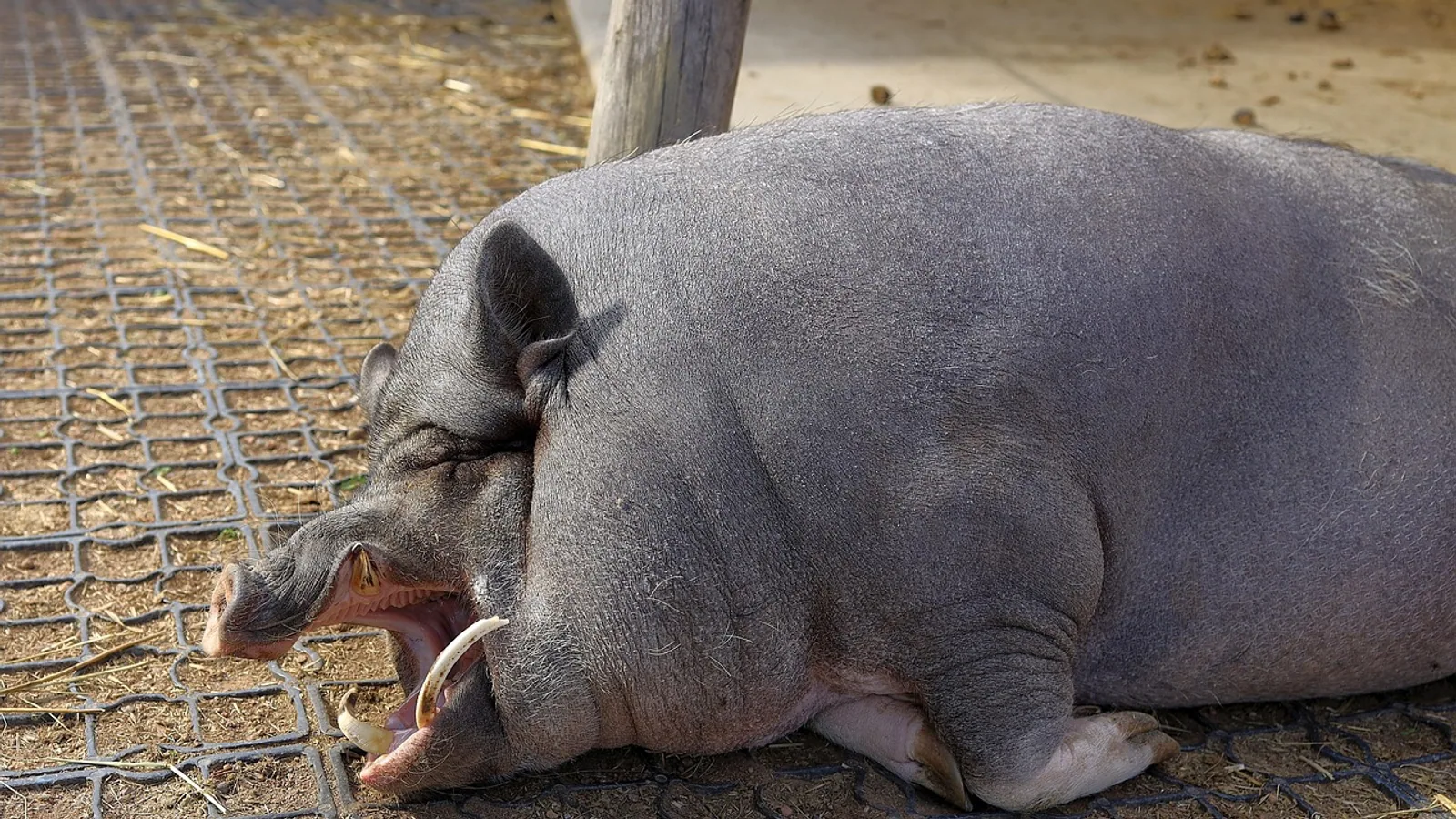
Pot belly pigs are intelligent, social, long-lived companion animals that fail as pets most often for one reason: they are fed too much. The single most important care decision you will make is how much you feed, measured against your pig's actual body weight, using a fixed amount of a commercial mini-pig pellet rather than free-choice food. Potbellied pig husbandry and nutrition reviews have been clear for decades that failure to feed and house the pet pig appropriately produces the most common health and behavior problems, and that the obese, intractable pet pig leads a poor-quality life and is frequently given away [1]. Everything else in this guide, from hoof trimming to vaccination, sits on top of that foundation.
A pot bellied piglet is not a miniature dog. It is a pig, with pig metabolism, pig skin, pig hooves, pig tusks, and pig drug sensitivities. Owners who plan for a 30 to 70 kg adult animal and feed for that target from the first week do well. Owners who believe the "teacup" label and feed a piglet like a toy breed end up with an obese, lame, diabetic animal within a few years.
This article is educational and is not a substitute for veterinary diagnosis or treatment.
At a Glance: The Pot Belly Pig Care Checklist
| Item | What to do | Frequency |
|---|---|---|
| Feeding | Measured commercial mini-pig pellet, fed as a percentage of body weight, never ad libitum | Twice daily, measured |
| Body condition | Weigh your pig and score its body condition | Monthly, or weekly if dieting |
| Hoof trimming | Trim and shape all four feet | Every 6 to 12 months |
| Tusk trimming | Trim under sedation by a veterinarian | As needed, often yearly or when tusks curl toward the face |
| Deworming | Fecal check, then deworm per your veterinarian's protocol | At least yearly, more often if indicated |
| Vaccination | Core pig vaccines as directed by your veterinarian | Per vaccine schedule |
| Skin and hoof support | Confirm zinc and biotin are adequate in the diet | Ongoing |
| Environment | Shade, wallow or cooling, secure fencing, indoor sleeping area | Daily |
| Anesthesia planning | Tell every veterinarian this is a pot belly pig before any sedation | Every procedure |
Why Obesity Is the Number One Welfare Problem in Pet Pigs
Obesity in pot belly pigs is not a cosmetic issue. It shortens life, destroys joints, and drives metabolic disease. The veterinary literature on miniature pig nutrition makes the mechanism clear. When miniature pigs are fed an obesogenic diet, whole-body insulin sensitivity falls by more than 50%, and the brain's response to insulin changes in ways that are consistent with metabolic disease [2]. Obese miniature pigs fed an obesogenic diet also show measurable changes in brain metabolism and autonomic function, including altered heart rate variability, which tells us that excess fat is not inert tissue sitting quietly under the skin [3].
Fat deposition itself is measurable and medically meaningful. In growth-restricted miniature piglets that experienced rapid catch-up growth, researchers found a 16% higher backfat thickness at 9 months of age compared with controls, along with greater adiposity overall [4]. A different study on growth-restricted miniature pigs found that these animals carried more subcutaneous fat at 10 months old than normal-weight pigs and had consistently higher fasting triglycerides from 5 to 10 months of age [5]. The lesson for owners is simple. Rapid weight gain early in life programs the animal for a fat adulthood, so the goal from day one is steady, controlled growth rather than maximum size.
Pigs are also genetically diverse in how they handle fat and metabolism. Genome-wide work comparing lean, obese, and miniature pig breeds found that differentially methylated genes between breeds cluster heavily in development and metabolism pathways, meaning breed-level differences in fat handling are partly epigenetic [6]. Potbelly pigs are not Yucatan or Ossabaw minipigs, but the general principle holds. Pigs vary in how efficiently they lay down fat, and some individuals gain on surprisingly small amounts of food.
Diet composition matters too. When miniature pigs were fed obesogenic diets enriched with different fat sources, the group fed lard had higher blood-brain barrier permeability than the groups fed fish oil or sunflower oil, and only the fish oil group showed altered heart rate variability [3]. Separately, replacing saturated fat with n-3 or n-6 polyunsaturated fats in an obesogenic diet changed brain metabolism and connectivity in obese minipigs [3]. You do not need to design a research diet. You need to understand that fat type and total calories both influence how sick an obese pig becomes.
Obesity also has downstream systemic effects. Young Ossabaw pigs fed a Western-style diet for 10 weeks developed elevated fasting blood glucose and early retinal changes including disrupted retinal architecture, thickened microvessel basement membranes, pericyte loss, and reduced capillary density [7]. The retina is one of the most sensitive tissues to metabolic injury. If a pig is obese long enough, its eyes and kidneys and joints all pay a price.
What Obesity Looks Like in a Pet Pig
An obese pot belly pig has fat rolls behind the shoulders and over the hips, a belly that drags near the ground, and a neck that merges into the shoulders with no visible dip. The animal pants easily, lies down often, and resists walking. Hooves grow faster and wear less because the pig moves less. Skin folds trap moisture and dirt. The owner often reports the pig is "lazy," when in fact it is painful and metabolic.
A pig in good condition has a visible waistline when viewed from above, a slight tuck behind the rib cage, and a belly that does not touch the ground. You should be able to feel ribs under a thin layer of fat, not see them sharply.
Feeding Pot Belly Pigs by Body Weight, Not by Bowl
The correct way to feed a pot belly pig is to measure a fixed amount of a commercial mini-pig pellet each day and divide it across two meals. The amount is calculated as a percentage of your pig's current body weight, then adjusted based on body condition and activity.
A practical starting framework looks like this:
| Pig status | Daily pellet allowance (percent of body weight) |
|---|---|
| Growing potbellied piglet, appropriate growth | 1.5% to 2.0% |
| Adult at ideal weight, maintenance | 1.0% to 1.5% |
| Adult overweight, weight loss program | 0.75% to 1.0% |
| Adult obese, under veterinary direction | Below 0.75%, monitored |
Percentages are a starting point, not a prescription. Your veterinarian adjusts them after examining the pig.
Worked Example
A 45 kg adult pot belly pig on a maintenance allowance at 1.25% of body weight receives about 560 g of pellets per day, split into two meals of roughly 280 g each. A 60 kg pig at 1.0% receives about 600 g per day. A growing pot belly piglet that weighs 8 kg and is on a 2.0% growth allowance receives about 160 g per day, split into smaller meals. These are illustrative calculations for a measured commercial mini-pig pellet. They are not a substitute for a diet plan from your veterinarian.
Why Ad Libitum Feeding Fails
Free-choice feeding is the fastest route to an obese pet pig. When twenty miniature pigs with morbid obesity were studied on an obesogenic diet, adding low-calorie sweeteners to the diet increased subcutaneous abdominal fat by about 20% without causing weight gain, and reduced insulin clearance by about 40% [8]. Fat can accumulate in a pig that is not even gaining scale weight. If you feed a pot belly pig from a full bowl, you will not see this fat accumulation until the animal is already metabolically compromised.
Ad libitum feeding also removes your ability to detect appetite change, which is one of the earliest signs of illness. A pig that eats a measured meal and leaves some behind is telling you something. A pig with a bottomless bowl is silent.
Selecting a Commercial Mini-Pig Pellet
Choose a pellet formulated specifically for miniature pigs or potbellied pigs, not a generic hog grower and not a dog food. Selection criteria that matter:
- Formulated for maintenance of adult miniature pigs, with a stated feeding guide you can measure against.
- Contains zinc in a form the pig can absorb, because zinc supports skin and hoof integrity.
- Contains biotin, which supports hoof horn quality and skin health.
- Pelleted rather than meal, so pigs cannot selectively sort and waste the nutrients.
- A crude protein and energy level appropriate for maintenance, not for rapid growth.
If you cannot find a purpose-made mini-pig pellet locally, work with your veterinarian to select an appropriate alternative and to set an exact daily gram amount. Do not default to a hog finishing feed, which is designed for rapid weight gain and slaughter condition.
Treats, Hay, and Vegetables
Treats are part of the daily pellet allowance, not extra. Every carrot, apple slice, or commercial treat subtracts from the measured pellet amount. Owners who feed a full pellet ration plus a stream of treats create the exact obesity problem this guide is warning against.
Forage and safe vegetables can add bulk and chewing time. Offer them in measured amounts as part of the daily total, not as free access. A pig that fills up on low-calorie vegetables and then eats a full pellet ration is still overfed.
Fresh water must be available at all times. Water is not food and is never restricted.
Feeding Potbellied Piglets
Potbellied piglets should be fed a measured growth ration split into three or four small meals per day until they are eating reliably. Handle them daily so they learn to be touched, lifted, and restrained. This pays off for the rest of their lives, because every hoof trim, tusk check, and veterinary examination depends on the pig tolerating handling.
Do not feed a pot bellied piglet for maximum size. The research on catch-up growth is unambiguous. Rapid early growth in growth-restricted piglets led to greater fat deposition and impaired lipid metabolism as young adults [5], and catch-up growth from parenteral nutrition in early life led to greater adiposity at 9 months [4]. Slow, steady growth is protective.
Weight by Age: Realistic Adult Ranges, and Why "Teacup" Is a Myth
There is no such thing as a teacup pot belly pig. The "teacup," "micro," and "mini" labels applied to potbellied piglets are marketing terms designed to sell young animals that will grow into full-sized adults. A pig sold as a teacup piglet is simply a pot belly piglet, and it will become a pot belly pig.
| Age | Realistic weight range (kg) | What owners should expect |
|---|---|---|
| Birth | 0.4 to 0.9 | Small piglets, weigh at birth if possible |
| 1 month | 3 to 6 | Rapid early growth, still nursing or on milk replacer |
| 3 months | 8 to 15 | Measured pellet ration, twice daily |
| 6 months | 15 to 25 | Growth rate begins to slow |
| 1 year | 22 to 40 | Near adult size, adjust ration to body condition |
| 2 years | 30 to 55 | Adult maintenance |
| 3 years and older | 30 to 70 | Full adult range, individual variation is large |
The adult range of roughly 30 to 70 kg reflects real variation among pot belly pigs and their crosses. A pig at the low end is not a teacup and a pig at the high end is not a giant. Both are normal. Adult weight at 3 or more years is what the animal is, and the feeding plan should be built around that weight, not around the weight the breeder promised.
Owners should weigh their pigs monthly. A livestock scale, a large dog scale, or a platform scale with a pig standing on it works. If you cannot weigh the pig, use a weight tape around the heart girth and follow the conversion chart on the tape, then track the trend. Trends matter more than any single number.
Housing, Environment, and Daily Care
Pot belly pigs need shade, cooling, secure fencing, and a dry sleeping area. Pigs cannot sweat effectively. They cool themselves by wallowing in mud or water and by seeking shade. In hot weather, provide a wallow or a shallow pool of clean water and make sure the pig can reach shade at all times. In cold weather, provide deep bedding and a draft-free shelter, because piglets and thin-coated adults chill quickly.
Fencing must be sturdy and low enough to see over but high enough that the pig cannot easily push through. Pigs are strong and will test fences. Wire, welded panels, or livestock fencing with a bottom rail works better than light garden fencing. A pig that can see through a fence is less likely to lean on it.
An ambulatory practice has an advantage here. A veterinarian who comes to your property can observe your housing and feeding practices directly and get a more complete picture of the patient than an exam room visit allows [9]. If a mobile large-animal or exotic practice serves your area, consider it for at least the first wellness visit.
Handling and Restraint
Train your pig to accept a harness, to stand still for foot handling, and to enter a crate or trailer. Pigs that are handled daily from piglet age are far easier to treat. Pigs that are handled only when something is wrong become dangerous and stressed patients.
Never lift an adult pot belly pig by the legs or by a single limb. Support the body. For piglets, support the chest and abdomen.
Hoof Care: Every 6 to 12 Months
Hoof trimming is a scheduled procedure, not an emergency task. Plan on trimming a pot belly pig's hooves every 6 to 12 months. Pigs on soft ground, concrete, or bedding wear their hooves unevenly and benefit from more frequent trims. Pigs on abrasive surfaces may need them less often. Your veterinarian or a trained farrier assesses the hooves at each trim and adjusts the interval.
The hoof wall grows continuously. Without trimming, the toes curl, the heels overgrow, and the pig develops lameness. Lameness reduces activity, activity loss promotes weight gain, and weight gain accelerates hoof overgrowth. The cycle is self-reinforcing and is one reason obesity and hoof disease travel together.
Step by Step: Preparing for a Hoof Trim
- Weigh your pig and record the weight.
- Withhold food for the period your veterinarian specifies, but never withhold water.
- Confirm the pig has a current medication and sedation history, and tell the veterinarian this is a pot belly pig.
- Set up a clean, non-slip surface with good lighting.
- Have an assistant and a pig board or hurdle available if the pig is fractious.
- Trim, shape, and balance all four feet.
- Recheck gait as the pig stands and walks after recovery.
Zinc and Biotin for Hoof and Skin Health
Zinc and biotin are the two micronutrients most closely tied to hoof horn and skin integrity in pigs. Zinc supports keratinization and wound healing in the skin, and biotin supports hoof horn strength. A diet that meets the pig's zinc and biotin requirements supports hoof and skin health from the inside, which reduces cracking, splitting, and secondary infection between trims. Confirm with your veterinarian that your chosen pellet meets these needs, and do not add unmeasured supplements on top of a complete pellet without guidance. Excess zinc is not harmless.
Tusk Care: Trimming Under Sedation
Both male and female pot belly pigs have tusks. Tusks grow continuously. In some pigs they stay within safe limits. In others they curl inward and threaten the cheeks, lips, or eyes. Tusk trimming must be done under sedation by a veterinarian using proper equipment. Tusk trimming is not a task for owners to attempt at home.
Sedation is required for two reasons. The tusk is living tissue with a nerve supply near the base, and the procedure is painful and stressful if done on a fully conscious pig. Sedation also protects the veterinarian and the pig from sudden head movement during cutting.
Anesthesia Safety: Malignant Hyperthermia and Atropine Sensitivity
Every pot belly pig owner and every veterinarian who treats the pig must know two breed-specific anesthesia risks.
Malignant hyperthermia is a life-threatening hypermetabolic reaction to certain anesthetic agents and stressors. Pot belly pigs are among the breeds in which this risk is recognized. A pig that develops malignant hyperthermia during or after anesthesia can spike a dangerously high body temperature, develop muscle rigidity, and go into metabolic crisis. Before any sedation or anesthesia, tell the veterinarian that the patient is a pot belly pig and ask directly whether a malignant hyperthermia protocol is in place.
Atropine sensitivity is the second risk. Pot belly pigs may respond abnormally to atropine, which is a common premedication and emergency drug in other species. Some pot belly pigs develop prolonged effects or paradoxical responses. Your veterinarian should select anesthetic and emergency drugs with this sensitivity in mind and should monitor the pig closely during recovery.
These two risks are the reason tusk trimming and any other procedure requiring sedation belongs with a veterinarian who is prepared for them, not in a barn with a rope and a saw.
Vaccination and Deworming Basics
Vaccination
Pot belly pigs should receive core pig vaccines according to a schedule your veterinarian sets. The specific vaccines and timing depend on your region, your pig's exposure risk, and whether other pigs live nearby or visit. Discuss the schedule at your first wellness visit and follow it. Keep a written record of every vaccine, with the date and product name.
Deworming
Deworm pot belly pigs on a schedule your veterinarian recommends, based on a fecal examination. A fecal float or fecal flotation identifies which parasites your pig actually carries so you treat the right thing. Many owners deworm blindly every few months. A better approach is to check, treat if needed, and recheck. At a minimum, plan a yearly fecal examination and use the result to decide the deworming plan.
Do not give a pig a dewormer formulated for another species without veterinary direction. Some products are safe, some are not, and dosing depends on accurate weight.
Other Preventive Care
- Annual or twice-yearly wellness examination, with body condition scoring.
- Fecal examination with the frequency your veterinarian recommends.
- Hoof trim every 6 to 12 months.
- Tusk trim as needed.
- Skin check at every visit, especially behind the ears, in skin folds, and on the legs.
- Dental and oral check, because tusk and mouth problems are common.
Common Health Problems in Pot Belly Pigs
Obesity and Metabolic Disease
This is the number one problem. Obese pigs show reduced whole-body insulin sensitivity, altered brain glucose metabolism, and increased abdominal fat even without scale weight gain [2][8]. The management is a measured ration, exercise, monthly weighing, and a diet plan from your veterinarian.
Lameness and Hoof Overgrowth
Lameness follows obesity and long hoof intervals. Overgrown hooves change the pig's stance, strain joints, and lead to soft tissue injury. Trim the hooves every 6 to 12 months and keep the pig lean.
Skin Problems
Pigs get dry, scaly skin, sunburn, and skin fold dermatitis. Zinc and biotin in the diet support skin health. Regular handling lets you find problems early, before they become infected.
Eye and Retinal Changes
Metabolic disease affects the eye. Young pigs fed a Western-style diet developed retinal architectural disruption, microvascular basement membrane thickening, pericyte loss, and reduced capillary density within 10 weeks [7]. Any pig with chronic obesity should have periodic eye checks.
Dental and Tusk Problems
Tusks that curl inward cause wounds to the face. Check tusks at every handling and schedule trimming under sedation when needed.
Gastrointestinal and Dietary Upset
Pigs have sensitive digestion. Sudden diet changes, rich treats, and spoiled food cause diarrhea. Change foods gradually over 7 to 10 days and keep treats within the measured daily ration.
When a Pot Belly Pig Is an Emergency
Pot belly pigs have specific emergency concerns that general small-animal practitioners may not know [10]. Owners should recognize the signs that mean immediate veterinary contact.
- Unable to stand, or refusing to rise for more than a few hours.
- Labored breathing, open-mouth breathing, or a temperature above the normal range.
- Vomiting repeatedly, or refusal to eat for more than 24 hours.
- Sudden bloating or abdominal distension.
- Bleeding, deep wounds, or a suspected fracture.
- Straining to urinate or defecate.
- Collapse, seizures, or abnormal behavior.
- Any suspected poisoning.
- Heat stress in hot weather, with panting, drooling, or collapse.
Because not every veterinarian treats pot belly pigs, owners should identify their emergency clinic before an emergency happens and confirm the clinic will accept a pig [10]. Call ahead. Do not arrive at an emergency hospital with a critical pig and no plan.
Common Owner Mistakes
- Feeding free-choice pellets or unlimited treats. This is the single most common error and the direct cause of most pet pig obesity.
- Believing the teacup label. Pot belly pigs grow to 30 to 70 kg. Plan for an adult pig.
- Skipping hoof trims. Every 6 to 12 months is the minimum. Overgrown hooves cause lameness and worsen with every extra month.
- Attempting tusk trimming at home. Tusks require sedation and proper tools. Home trimming risks injury to the pig and the owner.
- Not telling the veterinarian it is a pot belly pig before sedation. Malignant hyperthermia and atropine sensitivity change the anesthetic plan.
- Using dog or hog feed. Mini-pig pellets are formulated for miniature pig maintenance.
- Guessing the weight. Weigh your pig. Dosing, feeding, and deworming all depend on accurate body weight.
- Ignoring a limp. Lameness in an obese pig is usually hoof disease plus joint strain, and it never improves on its own.
Troubleshooting Common Problems
My pig is losing weight too fast. Slow the rate of loss and recheck body condition. Rapid weight loss in a pig can indicate illness, so have the pig examined.
My pig will not let me handle its feet. Start training with daily short sessions, reward with part of the daily pellet ration, and use a pig board for safety. If the pig remains dangerous, sedation for the trim is appropriate.
My pig has dry, cracked skin. Confirm the diet meets zinc and biotin needs, check for external parasites, and have your veterinarian examine the skin. Do not apply human skin products without veterinary guidance.
My pig is panting in mild weather. Obesity, heat stress, and heart or lung disease can all cause this. Get the pig examined.
My pig stopped eating for one meal. Watch closely for 12 to 24 hours and check the temperature and gum color. If the pig refuses a second meal or looks unwell, call your veterinarian.
My pig has diarrhea after a new food. Change foods gradually over 7 to 10 days. If diarrhea persists beyond 24 hours or the pig seems painful or depressed, call your veterinarian.
My pig is biting or charging. Behavior problems in pot belly pigs are often rooted in pain, boredom, hunger from an inadequate diet, or lack of handling. Have the pig examined and review the diet with your veterinarian.
Welfare and Safety Points
Every decision in pot belly pig care comes back to welfare. The obese pet pig leads a poor-quality life and is frequently rehomed or worse [1]. Preventing that outcome is easy if owners have correct information from the start [1].
- Feed a measured ration, not free access.
- Weigh the pig monthly and adjust.
- Trim hooves every 6 to 12 months.
- Trim tusks under sedation.
- Provide shade and cooling in hot weather and dry bedding in cold weather.
- Handle the pig daily from piglet age.
- Keep a written health record with weights, hoof trims, tusk trims, vaccines, and deworming dates.
- Identify an emergency clinic before you need one [10].
A pig that is handled daily, kept lean, and brought to the veterinarian on schedule lives a long, comfortable life. A pig that is overfed and underhandled becomes a veterinary and behavioral emergency.
Limitations and When to Contact a Veterinarian
This article is educational and is not a substitute for veterinary diagnosis or treatment. Contact a veterinarian immediately if your pig cannot stand, is breathing hard, has a temperature outside the normal range, refuses to eat for more than 24 hours, has diarrhea that lasts more than a day, is straining to urinate or defecate, has a wound that will not stop bleeding, or shows any sudden change in behavior. Contact a veterinarian soon, within a few days, if your pig is limping, has overgrown hooves, has tusks curling toward the face, has skin lesions, or has gained or lost weight unexpectedly. Contact a veterinarian before any sedation to discuss malignant hyperthermia and atropine sensitivity, and confirm that the treating veterinarian is comfortable anesthetizing a pot belly pig. If you have any uncertainty about your pig's feeding amount, body condition, or hoof or tusk status, that is a veterinary conversation, because small errors in pigs compound quickly.
Frequently Asked Questions
How much should I feed my pot belly pig?
Feed a measured commercial mini-pig pellet as a percentage of your pig's body weight, generally 1.0% to 1.5% per day for an adult at ideal weight, split into two meals. Growing piglets need a slightly higher percentage. Never feed free-choice.
How often do pot belly pigs need their hooves trimmed?
Every 6 to 12 months. Pigs on soft ground or bedding need trims on the more frequent end of that range. Lameness or visible curling means the trim is overdue.
Can I trim my pig's tusks at home?
No. Tusk trimming should be done under sedation by a veterinarian, in part because pot belly pigs carry a risk of malignant hyperthermia and atropine sensitivity that changes how anesthesia is managed.
What is the adult size of a pot belly pig?
Most adult pot belly pigs weigh roughly 30 to 70 kg, reached by 3 years of age. There is real variation within that range, and teacup or micro labels are marketing terms rather than a real size class.
Do pot belly pigs need vaccines?
Yes. Pot belly pigs should receive core pig vaccines on a schedule your veterinarian sets based on your region and your pig's exposure risk. Keep a written record of every vaccine and date.
How often should I deworm my pot belly pig?
Base it on a yearly fecal examination at minimum, with the frequency and product chosen by your veterinarian. Do not deworm blindly or use a product formulated for another species without direction.
Why is my pot belly pig so fat even though I do not feed much?
Fat accumulation can happen without scale weight gain, especially when the diet is energy-dense or treats are unmeasured. Weigh the pig monthly, measure the ration in grams, and have your veterinarian assess body condition and design a weight loss plan.
What health problems are most common in pot belly pigs?
Obesity and its metabolic consequences top the list, followed by lameness from hoof overgrowth, skin problems, tusk problems, and dental disease. Routine weighing, hoof trims every 6 to 12 months, and annual examinations catch most of these early.
Related Articles
- Fire Belly Toad Care Guide
- Newborn Piglet Care During the First 48 Hours
- Rabbit Care Guide for New Owners
- Complete Horse Care Guide for New Owners
- Donkey Care Guide for New Owners
- Dog Skin Rash on Belly: Causes and Home Care
- How Dogs Know Owner Love: Science Explained
- Rat Tail Anatomy and Health: What Owners Should Know
Sources
- Potbellied pig husbandry and nutrition.
- Inward Glucose Transfer Accounts for Insulin-Dependent Increase in Brain Glucose Metabolism Associated with Diet-Induced Obesity.
- Contrasted central effects of n-3 versus n-6 diets on brain functions in diet-induced obesity in minipigs.
- Intrauterine Growth-Restricted Female Yucatan Miniature Pig Neonates Fed Parenteral Nutrition Exhibit Early Catch-Up Growth Leading to Obesity and Ectopic Fat Deposition in Adulthood.
- Intrauterine growth-restricted Yucatan miniature pigs experience early catch-up growth, leading to greater adiposity and impaired lipid metabolism as young adults.
- Genome-wide analysis of DNA methylation in obese, lean, and miniature pig breeds.
- Young Ossabaw Pigs Fed a Western Diet Exhibit Early Signs of Diabetic Retinopathy.
- Low-calorie sweeteners augment tissue-specific insulin sensitivity in a large animal model of obesity.
- Exotic Companion Mammal Ambulatory Practice, Including Potbellied Pigs and Llamas.
- Emergency care for potbellied pigs.