How Long Do Hamsters Sleep? Normal Patterns by Species
By Dr. Zubair Khalid, DVM, MS, PhD ·
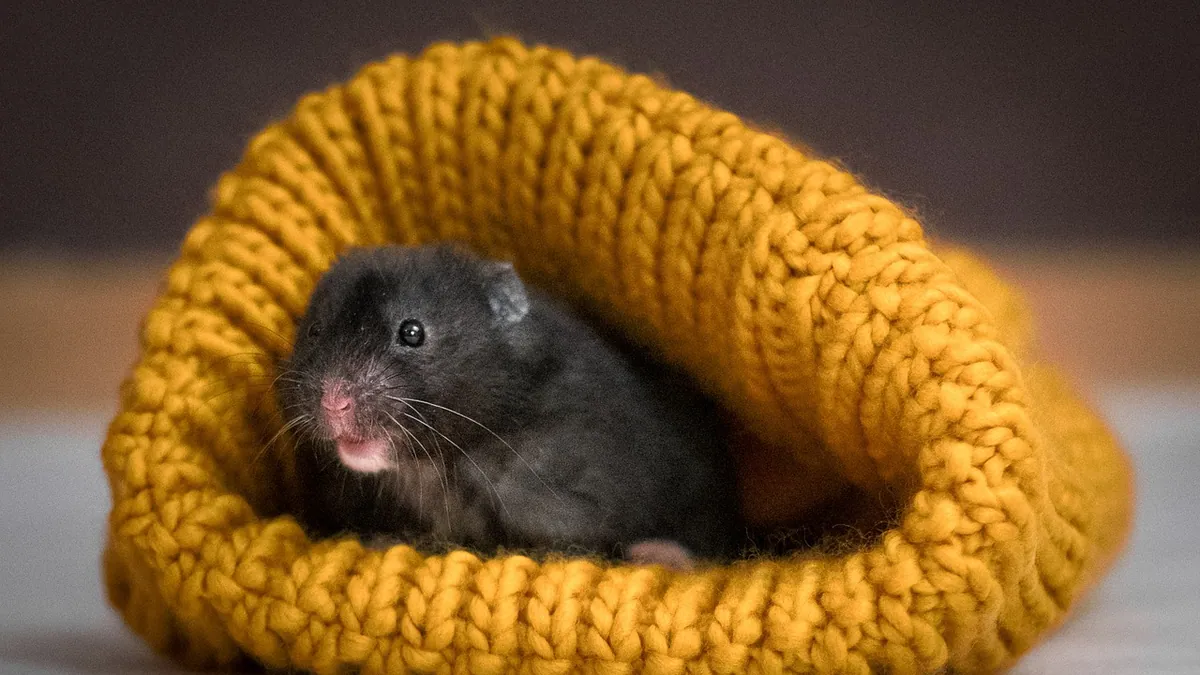
Most pet hamsters sleep about 12 to 14 hours total across each 24 hour day, and the bulk of that sleep happens during daylight hours. So if your hamster is snoozing all day and racing on its wheel at 10 p.m., that is normal hamster behavior, not laziness. How long hamsters sleep can shift with species, age, temperature, and season, but the pattern is almost always the same: quiet by day, busy by night.
This article is educational and is not a substitute for veterinary diagnosis or treatment.
Quick Answer
- Expect roughly 12 to 14 hours of sleep per day in a healthy adult hamster, split into many short naps instead of one long stretch.
- Most hamsters are crepuscular or nocturnal, meaning they wake near dusk and dawn and stay active through the night.
- A hamster sleeping all day is usually fine. Daytime is their night.
- Dwarf hamsters (Djungarian and Roborovski) follow the same general pattern, though their activity can break into shorter bursts across the day and night [1].
- A hamster that is hard to wake, cold to the touch, or limp is not just sleeping. That needs a veterinarian right away.
Normal Sleep Patterns by Species
Syrian Hamsters
Syrian hamsters are the big ones, with a head and body length of about 170 to 180 mm and a weight range of 110 to 140 g, and females tend to be larger than males [2]. They are the classic "sleep all day, party all night" pet. Most Syrian hamsters wake in the evening and stay busy in bursts through the night, then settle back into sleep before you leave for work.
Dwarf Hamsters
Dwarf hamsters include the Djungarian (Phodopus sungorus) and Roborovski (Phodopus roborovskii) hamsters, and they are now very common as pets [2]. Their sleep is similar in total hours but often more fragmented. Research on desert hamsters (Phodopus roborovskii) found their daily activity followed three overlapping rhythms with periodicities of 24 hours, 12 hours, and 6 hours, which means their active and rest periods cycle in shorter waves than a simple day versus night split [1]. In practice, your dwarf hamster may pop out for a snack at odd hours, then vanish back into its burrow.
What Time Do Hamsters Go to Sleep?
Most hamsters go to sleep shortly after sunrise and wake in the late afternoon or early evening. Light is the main driver. Seasonal changes in day length alter the timing and strength of hamster activity rhythms, and shorter day lengths expand the duration of nighttime activity [3]. That is why your hamster may seem to sleep more in winter and be more active in summer.
How to Tell Normal Sleep From a Problem
Step 1: Watch the Timing
Check when your hamster is active. If it is up and running between roughly 8 p.m. and 6 a.m., its clock is working. A hamster that is active only in daylight, or that never seems to wake, is worth a closer look.
Step 2: Try a Gentle Wake Test
Offer a favorite treat near the nest opening in the evening. A healthy hamster will usually stir, sniff, and come out. If your hamster will not respond to food, that is a red flag.
Step 3: Check Body Temperature and Firmness
A sleeping hamster is warm and relaxed but still feels like a living animal. A hamster in torpor or hibernation is cold and much less responsive. Some hamster species, including the Mongolian hamster, can enter torpor and even deep hibernation with body temperature dropping as low as 10°C during normal sleep periods [4]. Pet Syrian and dwarf hamsters rarely do this, but a cold, unresponsive hamster should be treated as an emergency.
Step 4: Look at the Whole Picture
Sleep alone rarely tells the story. Check appetite, droppings, breathing, and weight. A hamster that sleeps more and eats less is not just tired.
Sleep Schedule Comparison Table
| Species | Typical daily sleep | Main active window | Notes |
|---|---|---|---|
| Syrian hamster | About 12 to 14 hours | Evening through night | Largest pet hamster, 110 to 140 g [2] |
| Djungarian dwarf | About 12 to 14 hours | Dusk, dawn, and night | Activity can come in short bursts [3] |
| Roborovski dwarf | About 12 to 14 hours | Night, with daytime bursts | Activity follows 24, 12, and 6 hour rhythms [1] |
| Pregnant or pseudopregnant female | Less sleep than usual | Variable | Pregnancy-like estradiol levels decrease total sleep time and sleep efficiency in Syrian hamsters [5] |
That last row matters. If your female hamster was recently with a male, or if she is showing a pseudopregnancy, she may sleep noticeably less for a stretch. That is a hormonal effect, not a health problem on its own [5].
Signs That Something Is Wrong
Normal sleep and lethargy look different once you know what to check.
Normal sleep looks like this:
- Curled or stretched out in a nest, warm to the touch
- Wakes within a few seconds of a treat or a gentle nudge
- Grooms, eats, and drinks when awake
- Firm, well-formed droppings in the cage
Lethargy or illness looks like this:
- Does not wake for food, even a favorite treat
- Feels cold, limp, or unusually still
- Breathing that is fast, noisy, or labored
- Wet or dirty fur around the tail (possible diarrhea)
- Weight loss you can feel along the spine
- Not eating or drinking for more than 12 to 24 hours
- Sitting hunched in a corner with eyes half closed during its normal active hours
Torpor looks like this:
- Very cold body, almost like a marble
- Barely responds to touch
- Breathing so slow it is hard to see
Torpor is a controlled drop in body temperature and metabolism, and it can look frighteningly like death to an owner [4]. Do not assume your hamster is hibernating just because it is winter. Warm it slowly and call a veterinarian.
Common Mistakes Owners Make
Mistake 1: Waking a sleeping hamster every day to play. This disrupts the sleep your hamster needs. Play with it in the evening when it is naturally awake.
Mistake 2: Assuming daytime sleep means illness. It usually does not. Daytime sleep is the default setting for this species.
Mistake 3: Keeping the cage in a bright, noisy room. Hamsters are light sensitive, and light timing drives their rhythms [3]. A quiet, dim corner helps.
Mistake 4: Leaving a light on at night. Even dim light at night can change how a hamster perceives day length and shift its internal timing [6]. Keep the room dark after sunset.
Mistake 5: Confusing torpor with death. A cold, still hamster may still be alive. Warm it gradually and get veterinary help.
Mistake 6: Skipping the cage setup. A hamster with no burrow, no wheel, and no dark hide has nowhere to sleep properly. Setup and sleep quality are linked.
Setup Details That Affect Sleep and Health
A few cage choices make a real difference in how well your hamster rests.
Bedding depth. Hamsters burrow to sleep. Give at least 6 inches of safe paper-based bedding so your hamster can build a proper nest.
A dark hide. A solid hide box or a nest made of bedding gives your hamster a place to sleep without light hitting its eyes.
Wheel access. A hamster that cannot burn energy at night may sleep poorly and pace. Choose a solid-surface wheel sized to your species.
Food placement. Syrian hamsters have broad muzzles that often prevent them from eating out of feed hoppers, so pelleted food should be placed on the cage floor [2]. A hamster that cannot easily reach food may sleep more and eat less.
Water bottle type. Glass water tubes are not safe for Syrian hamsters because they can bite through glass. Use a stainless steel sipper tube positioned close to the floor [2].
Diet quality. Feed a complete, balanced pelleted diet made for hamsters. Avoid generic seed mixes, because hamsters pick out the seeds they like and ignore the pellets, which leads to nutritional gaps [2].
Temperature stability. Big swings between hot days and cold nights affect small rodent activity [1]. Keep the cage away from windows, vents, and radiators.
Cleaning routine. Hamsters are naturally coprophagic, meaning they eat some of their own droppings to recover nutrients [2]. Do not panic if you see this. Just keep the cage clean and watch for changes in droppings that suggest illness.
For a full routine, see Hamster Care Tips: Daily, Weekly, and Monthly Routines. If you are thinking long term, Hamster Lifespan: What to Expect and How to Maximize It covers what normal aging looks like.
Is It Normal for Hamsters to Sleep So Much?
Yes, in almost every case. Hamsters pack a full night of activity into the hours you are asleep. Their total sleep is not much different from a dog's, but the timing is flipped. If you want a comparison, How Long Do Dogs Sleep explains how another common pet divides its rest.
The one time to worry is when sleep changes suddenly. A hamster that has always been up at 9 p.m. and now will not wake at all is telling you something. Trust that change.
Limitations and When to Contact a Veterinarian
This article cannot diagnose your hamster. Every hamster is an individual, and only a veterinarian who examines yours can tell normal sleep from illness.
Contact a veterinarian the same day if your hamster:
- Will not wake for food or handling
- Has not eaten or drunk in 12 to 24 hours
- Has diarrhea, wet fur around the tail, or no droppings
- Is breathing fast, noisy, or with an open mouth
- Feels cold and limp
Go to an emergency clinic now if your hamster:
- Is unresponsive and cold to the touch
- Is having trouble breathing or gasping
- Has a swollen abdomen or is straining to pass stool
- Has been injured, dropped, or attacked by another pet
Schedule a routine visit if your hamster:
- Is gradually sleeping more over days to weeks
- Is losing weight or feeling bony
- Has a change in droppings, appetite, or coat quality
- Has a lump, a wound, or overgrown teeth
Call ahead and confirm the clinic treats hamsters. Not every practice sees small mammals. If you suspect poisoning from a plant, a household product, or another animal's medication, call your veterinarian or a pet poison control hotline immediately and bring the packaging with you.
Frequently Asked Questions
Do hamsters sleep at night?
Most hamsters are awake at night and asleep during the day, so no, they generally do not sleep through the night. You may catch short naps here and there, but the main sleep block happens while the sun is up. If your hamster is suddenly sleeping all night and awake all day, that is a change worth mentioning to your veterinarian.
How long do dwarf hamsters sleep?
Dwarf hamsters sleep a similar total amount to Syrians, but their rest is more broken up. Their activity rhythms cycle in shorter waves, so they may nap, wake, snack, and nap again across a 24 hour period. This can make it look like they sleep less, when really they just sleep in smaller pieces.
What time do hamsters go to sleep?
Most hamsters settle down shortly after sunrise and wake in the late afternoon or early evening. Light controls this timing, and shorter days push more activity into the night hours. Keeping the room dark at night and bright by day helps keep the schedule steady.
Is it normal for hamsters to sleep all day?
Yes, sleeping through the day is normal for a healthy hamster. The key question is whether your hamster wakes and acts normally during its active hours. If it is eating, drinking, grooming, and running at night, daytime sleep is not a problem.
Can a hamster sleep too much?
A hamster can sleep more than usual when it is sick, cold, or in torpor, so a sudden increase in sleep matters. Watch for other signs like not eating, weight loss, or a cold body. If you see those along with extra sleep, call your veterinarian.
Related Articles
- Hamster Lifespan: What to Expect and How to Maximize It
- Hamster Care Tips: Daily, Weekly, and Monthly Routines
- Is It Normal for Hamsters to Sleep All Day?
- Why Is My Hamster Always Sleeping or Not Sleeping?
- Do Hamsters Hibernate? Torpor, Length, and Dangers
References
- Weather entrainment and multispectral diel activity rhythm of desert hamsters. Behavioural processes, 2013.
- Hamsters - Exotic and Laboratory Animals. Merck Veterinary Manual.
- Photoperiodic influences on ultradian rhythms of male Siberian hamsters. PloS one, 2012.
- Unusual Pattern of Cerebral Electrical Activity in the Mongolian Hamster (Allocricetulus curtatus) During Heterothermia. Doklady biological sciences : proceedings of the Academy of Sciences of the USSR, Biological sciences sections, 2025.
- Elevated estradiol during a hormone simulated pseudopregnancy decreases sleep and increases hypothalamic activation in female Syrian hamsters. Journal of neuroendocrinology, 2023.
- Dim light at night alters photoperiodic perception in male Syrian hamsters (Mesocricetus auratus). Photochemical & photobiological sciences : Official journal of the European Photochemistry Association and the European Society for Photobiology, 2025.