Why Is My Guinea Pig Coughing? Normal vs a Problem
By Dr. Zubair Khalid, DVM, MS, PhD ·
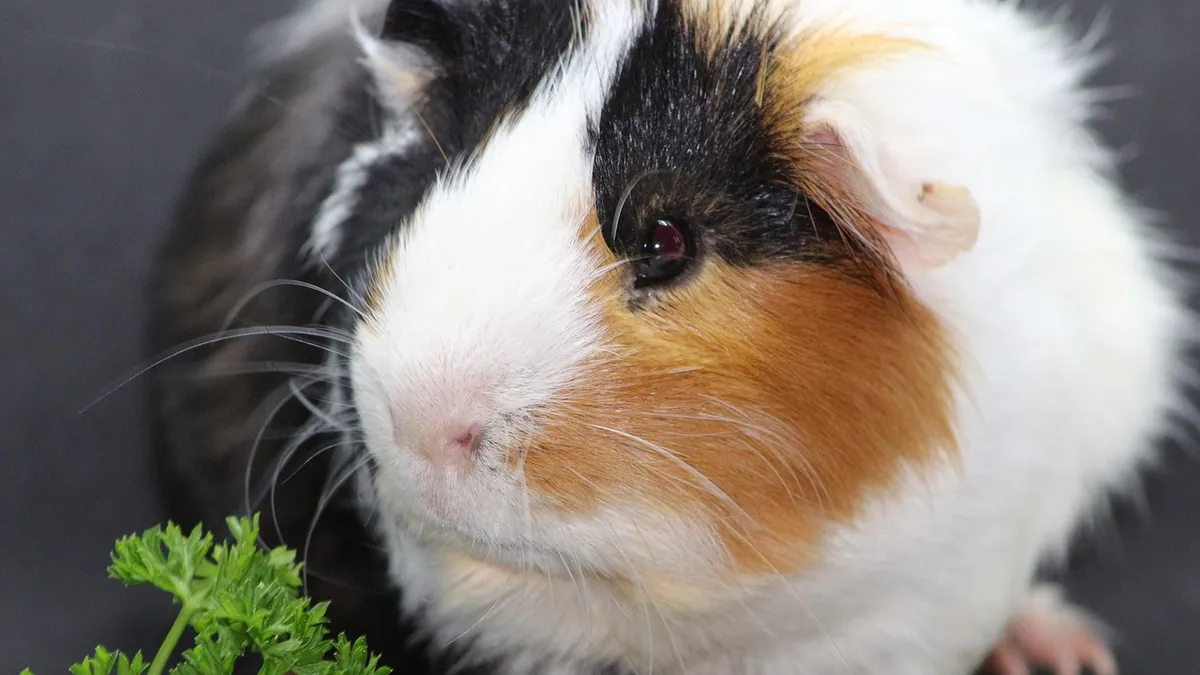
Guinea pigs do cough, and an occasional cough is usually harmless. It often happens after eating too fast, after inhaling a bit of dust from bedding or hay, or when something briefly tickles the airway. A cough that keeps coming back, or that comes with noisy breathing, discharge, or a guinea pig that has stopped eating, is a different story and needs a veterinarian.
This article is educational and is not a substitute for veterinary diagnosis or treatment.
Quick Answer
- A single cough now and then, especially around feeding or fresh bedding, is common and usually not a problem.
- Coughing that repeats through the day, or that comes with wheezing, a runny nose, or crusty eyes, points to a respiratory infection.
- A guinea pig that is coughing and also breathing hard, sitting hunched, or refusing food needs to be seen the same day.
- Guinea pigs hide illness well, so any drop in eating, drinking, or droppings is a serious sign on its own.
- Never give a guinea pig human cough medicine, antibiotics, or any other medication. Doses for guinea pigs are calculated by a veterinarian based on weight and health.
What a Guinea Pig Cough Looks Like and What Is Normal
A guinea pig cough is a short, sharp puff of air, often just one or two sounds. You may hear a quick "chuff" or a soft honk. Some guinea pigs stretch their neck slightly or make a small head movement with it. It passes in a second or two, and then the guinea pig goes right back to eating hay or running around.
So is it normal for guinea pigs to cough? Yes, occasionally. A one-off cough can follow a mouthful of hay eaten too quickly, a bit of dust kicked up from bedding, or a piece of food that went down the wrong way. If your guinea pig coughs once, acts completely normal afterward, and does not do it again that day, there is usually nothing to worry about.
Do guinea pigs cough when they are sick? They can, but coughing is often not the first sign you notice. Guinea pigs are prey animals, so they hide breathing problems until they are fairly advanced. By the time a guinea pig is coughing often, the problem may have been building for a while.
The line between normal and a problem comes down to pattern. Ask yourself:
- How often is it happening? Once a day is very different from several times an hour.
- Is anything else different? Breathing rate, appetite, energy, and droppings matter as much as the cough itself.
- Is it getting worse? A cough that is more frequent today than yesterday is a warning.
Why Does My Guinea Pig Cough? The Main Causes
Coughing in guinea pigs has a handful of common causes. Some are minor. Some are serious. The clues below can help you sort out what you may be seeing, but only a veterinarian can confirm a diagnosis.
| Cause | Typical clues | How urgent |
|---|---|---|
| Dust, bedding, or eating too fast | One or two coughs, then completely normal behavior, happens around feeding or cage cleaning | Not urgent, watch at home |
| Respiratory infection (bacteria or virus) | Repeated coughing, sneezing, nasal or eye discharge, noisy breathing, reduced appetite | Urgent, see a vet promptly |
| Pneumonia | Labored breathing, hunched posture, little or no eating, weakness | Emergency |
| Dental disease | Drooling, weight loss, trouble chewing, nose or eye discharge, coughing when eating | Urgent, see a vet promptly |
| Otitis (middle or inner ear infection) | Head tilt, circling, loss of balance, sometimes coughing or other respiratory signs | Urgent, see a vet promptly |
| Enlarged lymph nodes or abscesses | Swelling in the neck, sometimes on one side only, possible spread to ears, sinuses, or eyes | Urgent, see a vet promptly |
| Heart or other internal disease | Coughing with exercise intolerance, weakness, or a swollen belly | Urgent, see a vet promptly |
Respiratory infections
Infectious disease is more common in guinea pigs kept in groups than in guinea pigs housed alone [1]. Bacteria and viruses spread between guinea pigs through sneezing, coughing, bites, and skin or mouth wounds [2]. A guinea pig with a respiratory infection often has more than one sign. You may see a runny nose, crusty eyes, sneezing, or a guinea pig that sounds congested while breathing. Coughing may be part of the picture.
Pneumonia is the form owners should fear most. In one study of young guinea pigs on farms, pneumonia was found in 73.7% of the animals examined, and crowding and larger group sizes raised the odds of disease [3]. Pet guinea pigs are not farm guinea pigs, but the lesson holds. Dense housing and poor air quality make respiratory disease more likely.
Dental disease
Dental problems are common in guinea pigs because their teeth grow continuously [1]. When the upper and lower teeth do not line up (malocclusion), teeth overgrow, develop sharp edges, and cause pain while chewing [1]. Causes include genetics, not enough hay to chew, and vitamin C deficiency [1]. Dental disease can lead to drooling, weight loss, mouth bleeding, tooth root abscesses, and discharge from the nose or eyes [1]. A guinea pig with dental pain may cough or gag while trying to eat, and the runny nose can look like a respiratory infection.
Ear infections
Otitis, an infection of the middle or inner ear, is easy to miss. In a study of guinea pigs with CT-confirmed otitis, 61% had vague signs, 33% had respiratory signs, and 25% had dental disease [4]. Only 39% had the classic vestibular signs like a head tilt [4]. Guinea pigs with vestibular signs had about 22 times higher odds of having otitis, and those with respiratory signs had about 9.5 times higher odds [4]. In other words, a cough or breathing change in a guinea pig with a head tilt or balance problem strongly points toward the ear.
Lymph node infection and abscesses
Lymph nodes help fight infection, and in guinea pigs they often swell in the neck when infected with bacteria [2]. Infected nodes can fill with pus and form abscesses, sometimes on only one side [2]. The infection can spread to the ears, sinuses, or eyes [2]. A guinea pig with a neck lump and a cough needs veterinary care.
Coughing as a reflex
Coughing is a protective reflex, and guinea pigs are used in research on cough because their airway reflexes work much like ours. In guinea pig studies, coughing can be triggered by acid, by chemical irritants, and by airway hypersensitivity, where the airway reacts to smaller triggers than normal [5][6]. This helps explain why a bit of dust or a slightly irritated airway can set off a cough. It also explains why a guinea pig with an ongoing airway problem may cough more easily than a healthy one.
If you also have a dog at home with a cough, the causes are different, but the questions are similar. You can compare notes in Why Is My Dog Coughing And Gagging Randomly and Dog Coughing: When Should You Worry?.
Red Flags That Make Coughing an Emergency
Some signs mean you should stop watching and go to a veterinarian now.
- Open-mouth breathing. Guinea pigs should never breathe through their mouth. This is an emergency.
- Heavy, labored, or rapid breathing, especially with the sides of the body pulling in and out.
- Sitting hunched in a corner, puffed up, with eyes half closed.
- Not eating or drinking at all, or no droppings for several hours.
- Blue or pale color to the lips, gums, or tongue.
- A guinea pig that is limp, cold, or unresponsive.
- Sudden collapse, seizures, or a head tilt that appeared today.
Any of these, alone or with a cough, means urgent care. Do not wait until morning.
Safe Things You Can Do at Home While Waiting
You cannot treat a respiratory infection at home. What you can do is keep your guinea pig stable and comfortable until you reach the vet.
- Keep the cage quiet and warm. Move it away from drafts, air conditioning vents, and loud activity.
- Check the bedding. Switch to dust-free paper bedding if you use dusty shavings, and shake hay out outdoors before giving it.
- Offer favorite foods. Fresh hay, a small piece of bell pepper for vitamin C, and clean water. Do not force food or water into the mouth.
- Keep the guinea pig with its companion if they are bonded, unless the vet says otherwise. Guinea pigs are social and stress is worse alone.
- Do not give any medication. No human cough syrup, no leftover antibiotics, no honey, no essential oils. Guinea pigs can react badly to many common drugs, and the dose depends on weight and health, so a veterinarian must calculate it.
- Write down what you see. Note how often the cough happens, what the breathing looks like, and when the guinea pig last ate and passed droppings. This helps the vet a lot.
If your guinea pig is struggling to breathe, skip the home care and go straight to the clinic.
What the Veterinarian Will Check and Test
Your vet will start with a full physical exam. That includes listening to the heart and lungs, checking the eyes, nose, ears, and mouth, feeling the neck for swollen lymph nodes, and weighing your guinea pig. Weight is one of the most useful numbers in guinea pig medicine because small losses show up early.
Depending on what the exam shows, your vet may recommend:
- Dental exam. Checking the back teeth often requires sedation or anesthesia, since guinea pig molars are hard to see.
- Imaging. X-rays or CT can look at the lungs, heart, teeth, and ears. CT is how otitis is confirmed in guinea pigs [4].
- Blood work. This checks organ function, infection, and overall health.
- Culture and sensitivity. A swab of discharge can identify which bacteria are involved and which antibiotic will work.
- Lymph node or mass sampling. If there is a lump, the vet may take a sample to see what it is [2].
Treatment depends on the cause. Bacterial infections are treated with antibiotics chosen for guinea pigs. Dental disease may need tooth trimming or filing. Ear infections may be treated with medication or, in some cases, surgery [4]. Supportive care like fluids, syringe feeding, and oxygen may be needed for a guinea pig that is not eating or breathing well.
Prevention and Monitoring
Good husbandry prevents a lot of coughing and respiratory disease.
- Feed unlimited grass hay. Hay keeps teeth worn down and supports normal digestion. Not enough hay is a known cause of dental disease [1].
- Give vitamin C every day. Guinea pigs cannot make their own, and deficiency contributes to dental problems [1].
- Keep the cage clean and dry. Ammonia from soiled bedding irritates airways.
- Avoid overcrowding. Larger groups and higher animal density raised the odds of pneumonia in young guinea pigs [3].
- Quarantine new guinea pigs. Infections spread between guinea pigs through sneezing, coughing, and direct contact [2].
- Weigh weekly. A kitchen scale catches weight loss before you can see it.
- Watch breathing at rest. Count breaths for 15 seconds and multiply by four. Learn your guinea pig's normal so you notice changes.
If you have other pets, coughing can mean different things in different species. For dogs, see Why Is My Dog Suddenly Coughing And Gagging and Why Is My Dog Coughing And Gagging And Wheezing. The same rule applies to all of them. A cough plus trouble breathing is always worth a call.
Limitations and When to Contact a Veterinarian
This article cannot tell you what is wrong with your specific guinea pig. Only a veterinarian who examines your pet can do that. Individual cases need a veterinarian, and guinea pigs can go downhill fast.
Contact a veterinarian the same day if your guinea pig:
- Coughs more than a few times a day, or the coughing is getting worse.
- Has any nasal or eye discharge, sneezing, or noisy breathing.
- Is eating less than usual or losing weight.
- Has drooling, trouble chewing, or a head tilt.
- Has a lump in the neck or anywhere else.
Go to an emergency clinic right away if your guinea pig:
- Breathes through the mouth.
- Breathes with obvious effort, or the belly moves hard with each breath.
- Stops eating and drinking completely.
- Has no droppings for several hours.
- Collapses, has a seizure, or cannot stand.
Schedule a routine visit if your guinea pig coughs only once in a while but you want peace of mind, or if you have noticed any slow change in appetite, weight, or activity over the past few weeks.
Frequently Asked Questions
Is it normal for guinea pigs to cough?
An occasional cough is normal, especially around eating or dusty bedding. A cough that repeats, or that comes with any change in breathing, appetite, or energy, is not normal and should be checked. When in doubt, a phone call to your vet costs nothing.
Do guinea pigs cough when they have a cold?
Guinea pigs do not get human colds, but they do get respiratory infections caused by bacteria and viruses. These can cause coughing, sneezing, and discharge from the nose or eyes. A guinea pig with these signs needs veterinary treatment, because respiratory infections can progress to pneumonia.
How do guinea pigs cough?
A guinea pig cough is a short, sharp puff of air, sometimes sounding like a soft honk or a quick "chuff." It usually lasts a second or two. If the sound is wet, repeated, or comes with a whistling noise while breathing, that is more concerning.
Is it OK for guinea pigs to cough after eating?
Yes, a single cough after eating is common and usually harmless. It often means a piece of hay or food went down the wrong way or was eaten too fast. If your guinea pig coughs with most meals, or coughs and then has trouble chewing, dental disease may be the reason.
Can I give my guinea pig cough medicine?
No. Never give a guinea pig human cough medicine or any other medication without veterinary guidance. Guinea pigs can react badly to many drugs, and the correct dose depends on weight and health. A veterinarian must calculate any dose and choose a drug that is safe for guinea pigs.
Related Articles
- Why Is My Guinea Pig Sneezing? Normal or Illness
- Why Is My Guinea Pig Wheezing? Breathing Warning Signs
- Why Is My Guinea Pig Breathing Fast? When to Worry
- Guinea Pig Cytomegalovirus
- Guinea Pig Adenovirus
References
- Common Health Problems of Guinea Pigs - All Other Pets. Merck Veterinary Manual.
- General Medical Conditions of Guinea Pigs - All Other Pets. Merck Veterinary Manual.
- Prevalence, spatial distribution, and risk factors associated with pneumonic lesions in weaning guinea pigs from Pasto, Colombia. Tropical animal health and production, 2026.
- Otitis in pet guinea pigs: Causes, clinical signs, treatment and outcomes. The Veterinary record, 2026.
- PAR2 Participates in the Development of Cough Hypersensitivity in Guinea Pigs by Regulating TRPA1 Through PKC. Biomolecules, 2025.
- Evidence for acid-sensing ion channel 3 (ASIC3) involvement in cough resulting from aspiration of gastric fluid. The Journal of physiology, 2026.