Can Hamsters Eat Bread? Types and Safe Limits
By Dr. Zubair Khalid, DVM, MS, PhD ·
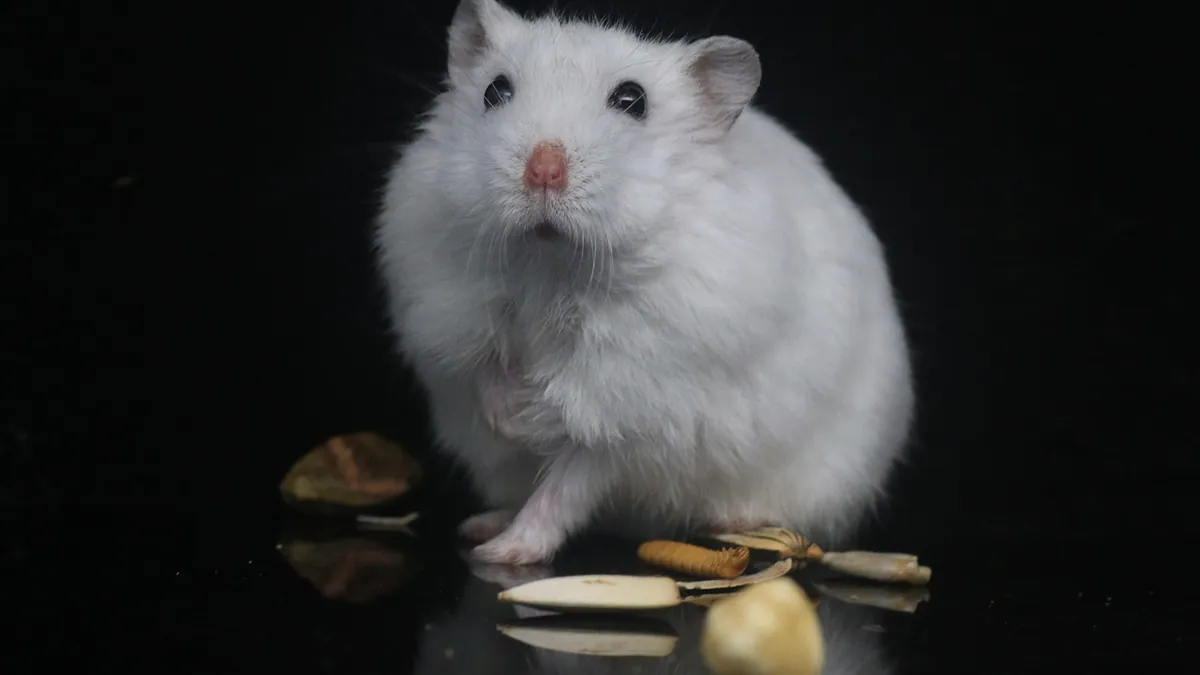
Plain bread is not toxic to hamsters, but it is a low-value filler food that should stay a tiny, occasional nibble at most. A hamster's daily diet needs to be a complete, balanced pelleted food, not baked goods made for people. This article is educational and is not a substitute for veterinary diagnosis or treatment.
Quick Answer
- Plain, unseasoned bread is not poisonous, but it adds mostly empty calories and can crowd out the balanced food your hamster actually needs.
- Garlic bread, onion bread, and breads with xylitol, raisins, chocolate, or heavy sugar and salt are unsafe and should never be offered.
- If you give plain bread at all, keep it to a piece about the size of a pea, no more than once or twice a week.
- Bread is not a treat your hamster needs. Seeds, plain vegetables, and small bits of fruit are better choices.
- If your hamster eats a large amount of plain bread, watch for not eating, small or no droppings, bloating, hunching, or diarrhea and call your veterinarian if these appear.
Can Hamsters Eat Bread? The Direct Verdict
Plain bread is safe in the sense that it is not toxic, but safe and good are two different things. Hamsters kept in captivity should be fed a complete, balanced, pelleted diet specifically made for hamsters, and generic seed mixes should be avoided because hamsters selectively pick out seeds and ignore pellets [1]. Bread does not fit into that picture as a staple. It is a filler food with little nutritional value for a small rodent.
Wild Syrian hamsters are omnivorous, eating many kinds of green vegetation, seeds, fruit, and meat [1]. That natural variety is built around fiber, seeds, and fresh plant material, not refined flour. A piece of white bread gives your hamster a quick hit of starch and simple carbohydrate with almost none of the fiber, vitamins, or minerals its body uses every day.
So the honest answer is this. Your hamster can nibble a small piece of plain bread without being poisoned. It should not become part of the regular diet, and it should never replace pellets, hay-like fiber sources, or fresh food.
What Is Actually in Bread for a Hamster?
Bread is mostly flour, water, yeast, and salt. After baking, what is left is starch, a little protein, and a small amount of fiber, depending on the flour used. For a hamster weighing roughly 110 to 140 grams, that is a lot of carbohydrate packed into a tiny bite [1].
Whole grain breads do contain more fiber and some micronutrients than white bread. Research in hamsters has looked at whole grain breads and found effects on cholesterol metabolism when breads made up a large share of a high-fat diet [2]. That work used specially prepared, freeze-dried breads as a major part of the diet in a laboratory setting. It does not mean a crumb of your sandwich bread helps your pet. The amounts and the context are completely different from a treat.
There is no established nutritional requirement that bread meets for a hamster. Your veterinarian sets the diet plan for your individual pet, and for most hamsters that plan is a quality pelleted food plus limited extras.
Can Syrian Hamsters Eat Bread?
Yes, a Syrian hamster can eat a small piece of plain bread, and the same limits apply as for any hamster. Syrians are the largest common pet hamster, with a head and body length of about 170 to 180 mm and a weight of 110 to 140 grams, and females are larger than males [1]. That size means a pea-sized piece is still a meaningful amount of starch for them.
Syrians are also prone to weight gain when calories pile up. Research on striped hamsters fed a high-fat diet for 12 weeks showed that some animals gained weight and developed obesity while others stayed stable or lost weight, and gut bacteria appeared to play a role in those differences [3]. The lesson for owners is simple. Individual hamsters respond differently to extra calories, and some will put on weight faster than others. If your Syrian is already heavy, skip the bread entirely.
Dwarf hamsters are smaller still, so the same piece of bread is proportionally larger for them. Keep portions tiny no matter the species.
Can Hamsters Eat Banana Bread?
Banana bread is not a good choice. It usually contains sugar, oil or butter, eggs, and sometimes nuts, chocolate chips, or spices. The sugar and fat load is the main problem, and some recipes include raisins or chocolate, which are unsafe for hamsters.
Even a homemade loaf with less sugar is still a sweet baked good. A hamster's digestive system is set up for fiber-rich plant material, seeds, and a balanced pellet, not for sweet quick breads. If you are looking for a fruit treat, a small piece of plain banana is a better option than banana bread, and it should still be a rare, tiny portion.
If you want a broader picture of how different species handle fruit and other foods, see What Guinea Pigs Can and Cannot Eat. The principles of species-specific feeding carry over well.
Can Hamsters Eat Garlic Bread?
No. Garlic bread should never be given to a hamster. Garlic and onion are in the same plant family, and both can damage red blood cells in small mammals. Garlic bread also brings butter, oil, salt, and herbs, none of which belong in a hamster's diet.
There is no safe amount of garlic bread to offer. Even a small piece delivers a concentrated dose of seasoning relative to the hamster's body size. If your hamster eats garlic bread, treat it as a possible poisoning and contact your veterinarian or an animal poison control service right away. Do not wait for signs to appear.
The same rule applies to onion bread, everything bagels with onion and garlic, and any bread topped with herbs, cheese, or seasoned butter.
Bread Types at a Glance
| Form | Safe? | Notes |
|---|---|---|
| Plain white bread | Small nibble only | Not toxic, but low nutritional value |
| Plain whole wheat bread | Small nibble only | More fiber, still a filler food |
| Toast | Small nibble only | Toasting does not change safety |
| Banana bread | No | Sugar, fat, and possible raisins or chocolate |
| Garlic bread | No | Garlic, onion, butter, salt |
| Bread with seeds and nuts | Usually no | Nuts are high fat, some seeds are unsafe |
| Bread with xylitol | No | Xylitol is toxic to small mammals |
| Moldy bread | No | Mold can cause serious illness |
Risks of Feeding Bread to Hamsters
The biggest risk is not acute poisoning from plain bread. It is the slow problem of a diet that is out of balance. If bread fills your hamster up, it eats less of the pelleted food that provides complete nutrition [1]. Over time that can lead to deficiencies and weight problems.
Choking is a real concern with any dry, crumbly food. Bread can clump in the cheek pouches, where hamsters store food. A large piece can become stuck, and a hamster with a blocked pouch may paw at its face, drool, or stop eating. If you see this, contact your veterinarian.
Digestive upset is possible when a hamster eats more bread than its gut is used to. Watch for diarrhea, bloating, hunching, or a drop in droppings. Remember that hamsters cannot vomit, so you will never see vomiting as a sign of a problem. Drooling, not eating, small or no droppings, bloating, hunching, lethargy, and diarrhea are the signs to watch.
Additives are the other major risk. Xylitol, an artificial sweetener used in some baked goods, is toxic to small mammals. Salt, garlic, onion, raisins, chocolate, and macadamia nuts are all unsafe. Moldy bread can carry mycotoxins that cause serious illness.
Diet composition matters for gut health too. A high-carbohydrate diet in hamsters has been linked to a distinct gut microbiome with lower diversity and prolonged carriage of a dangerous gut bacterium after antibiotic treatment [4]. That is a laboratory finding, not a direct warning about a single bread crumb, but it supports keeping starchy human foods out of the regular diet.
How to Offer Bread Safely
If you decide to offer plain bread, follow these steps.
- Choose plain white or plain whole wheat bread with no seeds, nuts, sugar coating, or seasoning.
- Tear off a piece about the size of a pea. Smaller is better.
- Offer it once or twice a week at most, not daily.
- Place it in a clean food dish instead of scattering it in bedding.
- Remove any uneaten bread within a few hours so it does not spoil.
- Never give bread as a meal replacement. Pellets come first.
Avoid these preparations entirely.
- Garlic bread, onion bread, and herbed breads
- Sweet breads, cakes, muffins, and pastries
- Breads with raisins, chocolate, or nuts
- Breads containing xylitol or other sugar alcohols
- Buttered, toasted with toppings, or fried bread
- Moldy or stale bread
If you are managing a hamster with a health condition, check with your veterinarian before adding any new food. For more on medications and treatments, see Hamster Medicine: Safe Use and Common Treatments.
What If Your Hamster Ate Too Much Bread?
If your hamster ate a large amount of plain bread, do not panic. Remove the rest of the bread, make sure fresh water is available, and offer its normal pelleted food. Watch closely for the next 24 to 48 hours for drooling, not eating, small or no droppings, bloating, hunching, lethargy, or diarrhea. Call your veterinarian if any of these appear.
If your hamster ate garlic bread, onion bread, bread with xylitol, moldy bread, or bread with chocolate or raisins, treat it as an emergency. Contact your veterinarian or an animal poison control service immediately. Do not try to make your hamster vomit. Hamsters and other rodents cannot vomit, and forcing it can cause serious harm.
Bring the packaging or a photo of the ingredient list with you if you go to the clinic. That helps your veterinarian decide on treatment. Your veterinarian calculates any dose of medication from your pet's weight and health, so never give human or leftover pet medications on your own.
Safer Treat Alternatives
Bread is not a treat your hamster needs. Better options include small pieces of plain vegetables such as broccoli, cucumber, or carrot, tiny bits of apple or banana, and a single plain seed or nut fragment as an occasional extra. Keep all treats to a small fraction of the daily diet so the pelleted food still does the heavy lifting [1].
Fresh water should always be available. A balanced pelleted diet made for hamsters remains the foundation, and generic seed mixes should be avoided because hamsters pick out the seeds and leave the pellets behind [1].
For a full picture of housing, diet, and preventive care, see the Hamster Care Guide: Habitat, Diet, and Health. If you also keep birds, the same species-specific thinking applies, and you can compare approaches in What Pet Birds Can and Cannot Eat: A Safe Diet Guide.
Limitations and When to Contact a Veterinarian
This article covers general guidance only. Every hamster is an individual, and your veterinarian needs to assess your pet directly.
Contact your veterinarian the same day if your hamster shows drooling, pawing at the mouth, a swollen cheek pouch, not eating, small or no droppings, bloating, hunching, lethargy, or diarrhea after eating bread.
Go to an emergency clinic now if your hamster ate garlic bread, onion bread, bread containing xylitol, moldy bread, or bread with chocolate or raisins, or if it is struggling to breathe, collapsed, or having seizures.
Schedule a routine visit if your hamster has gained weight, has a dull coat, or you are unsure whether its diet is complete. Your veterinarian can weigh your pet, check its teeth and cheek pouches, and set a feeding plan that fits its age and health.
Frequently Asked Questions
Do hamsters eat bread in the wild?
No, wild hamsters do not eat bread. Wild Syrian hamsters eat green vegetation, seeds, fruit, and meat [1]. Bread is a human food that only enters a hamster's diet when an owner offers it.
Is toasted bread safer than fresh bread for hamsters?
No, toasting does not make bread safer. It removes some moisture but leaves the same starch, salt, and additives. The safety rules are identical for fresh and toasted bread.
Can bread cause a blockage in a hamster's cheek pouch?
It can contribute to one. Bread is dry and crumbly, and it can clump when packed into a cheek pouch. A hamster with a blocked pouch may drool, paw at its face, or stop eating, and it needs veterinary care.
How often can I give my hamster bread?
At most once or twice a week, and only a pea-sized piece of plain bread. Many owners do better by skipping bread entirely and using plain vegetables or a single seed as the occasional treat.
Is whole wheat bread better than white bread for hamsters?
Whole wheat has more fiber, but it is still a starchy filler food for a hamster. Neither type should be a regular part of the diet, and both should stay a rare, tiny nibble.
Related Articles
- Hamster Medicine: Safe Use and Common Treatments
- Hamster Care Guide: Habitat, Diet, and Health
- Syrian Hamster Care Guide
- Can Hamsters Eat Fruit? Safe Fruits, Portions, and Risks
- Can Hamsters Eat Seeds? Which Seeds Are Safe
- Can Hamsters Eat Carrots? How Much Is Safe
References
- Hamsters - Exotic and Laboratory Animals. Merck Veterinary Manual.
- Supplementation of hydroxypropyl methylcellulose into yeast leavened all-whole grain barley bread potentiates cholesterol-lowering effect. Journal of agricultural and food chemistry, 2011.
- Individual differences in response to a chronic high-fat diet in striped hamsters (Cricetulus barabensis). Comparative biochemistry and physiology. Part A, Molecular & integrative physiology, 2025.
- A High-Carbohydrate Diet Prolongs Dysbiosis and Clostridioides difficile Carriage and Increases Delayed Mortality in a Hamster Model of Infection. Microbiology spectrum, 2022.