Stud Tail in Dogs: Treatment and Home Remedies
By Dr. Zubair Khalid, DVM, MS, PhD ·
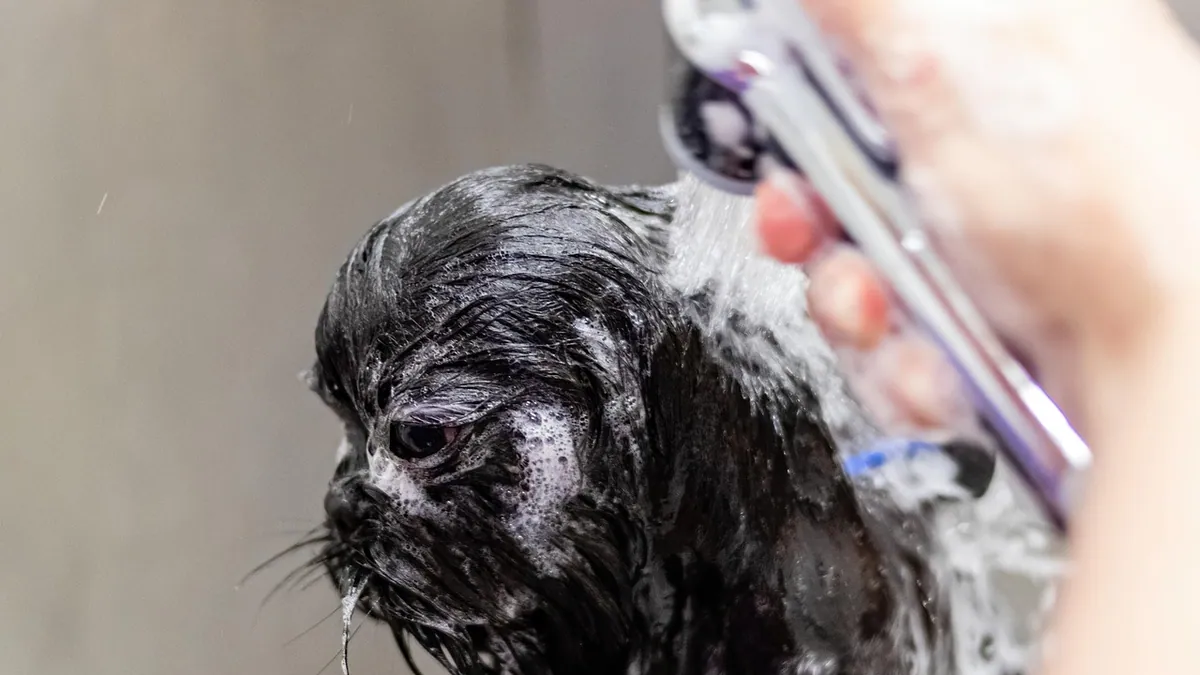
Stud tail in dogs treatment usually starts at home with gentle cleansing and a medicated shampoo, then adds veterinary care if the skin is infected or inflamed. Most mild cases improve within a few weeks once you keep the tail base clean and dry, though some dogs need ongoing management. This article is educational and is not a substitute for veterinary diagnosis or treatment.
Quick Answer
- Stud tail is a buildup of oil and dark waxy debris on the top of the tail near the base, and it can happen in any dog, including neutered dogs.
- Start with a gentle cleansing shampoo, rinse well, then apply a medicated shampoo your veterinarian recommends, because medicated shampoos work best on a clean coat [1].
- Do not scrub hard or pick at the crusts. Irritation makes the skin more likely to get infected.
- Neutering may reduce the problem in intact males because hormones drive oil production, but it does not always clear it.
- See a veterinarian if the area is red, swollen, painful, oozing, or has a bad smell, since those signs point to infection that needs prescription treatment.
What Is Stud Tail in Dogs?
Stud tail is a skin condition that affects the top surface of the tail, close to where the tail meets the body. The medical term is supracaudal gland dermatitis or supracaudal gland infection. Every dog has a supracaudal gland (also called the violet gland) on the upper tail base. It produces oils that mark territory and contribute to coat scent.
In stud tail, that gland becomes overactive or blocked. Oil, wax, and dead skin cells collect on the hair and skin. The area looks greasy, dark, and sometimes bald. The name comes from the fact that intact male dogs were once the most common patients, but the condition is not limited to them.
The tail base is a hard spot to keep clean. It sits right where the tail bends, so debris and oil collect there. Dogs also cannot easily groom that spot, which lets the problem build up over time.
Signs Owners Notice
The first thing most owners see is a greasy, waxy patch on the top of the tail. It may look like brown or black specks stuck to the skin and hair. The hair there can thin out or fall out, which is one reason stud tail gets confused with other causes of dog hair loss on tail.
Other common signs include:
- A greasy feel when you pet the tail base
- A musty or rancid odor
- Dark crusts or comedones (blackheads) on the skin
- Redness or swelling in more advanced cases
- Licking, chewing, or scooting behavior aimed at the tail
- Pain when the area is touched
If your dog chews at the spot enough, a raw, moist sore can form. That is a hot spot, and it needs different care than stud tail alone. You can read more about that in dog hot spot on tail.
Causes and Risk Factors
Stud tail happens when the supracaudal gland produces more oil than the skin can shed. Several things raise the risk.
Hormones. Intact male dogs have higher androgen levels, and androgens stimulate oil gland activity. This is why stud tail is more common in unneutered males.
Breed and coat type. Dogs with dense or oily coats tend to trap more debris at the tail base.
Skin disease. Any condition that disrupts normal skin turnover can contribute. Sebaceous adenitis is a separate disease that destroys oil glands, and it can cause scaling and hair loss along the back and tail. It is an inherited condition in some breeds, and research in Standard Poodles found that inbreeding and genetic bottlenecks increased its incidence over time [2]. Sebaceous adenitis is not the same as stud tail, but the two can look similar to an owner.
Weight and anatomy. Dogs that are overweight or have a tightly curled tail may have less airflow and more friction at the tail base.
Poor grooming. If the area is never cleaned, oils and dead skin accumulate.
Neutered dogs. Stud tail can still occur in neutered dogs. Hormones are one factor, not the only one. Skin bacteria, yeast, allergies, and grooming habits all play a role.
How It Is Diagnosed
Your veterinarian will start with a physical exam and a close look at the tail base. They will check for redness, swelling, discharge, and hair loss. They will also ask about diet, grooming, itching, and how long the problem has been present.
Diagnosis often includes simple in-clinic tests:
- Skin cytology. A sample of the surface is examined under a microscope to look for bacteria and yeast.
- Skin scraping. This checks for mites, which can cause similar scaling.
- Tape prep or impression smear. These look for infection and inflammatory cells.
- Fungal culture. Used if ringworm is suspected.
- Skin biopsy. Rarely needed, but it can confirm sebaceous adenitis or another underlying disease when the tail does not respond to basic treatment.
Successful treatment depends on finding the underlying cause, so these tests matter [1]. Treating the surface alone often fails if an infection or a gland disease is driving the problem.
Stud Tail in Dogs Treatment Options
Treatment depends on how severe the problem is and whether infection is present. Mild cases can be managed at home. Moderate to severe cases need veterinary care.
Home Care and Medicated Shampoos
Shampoo is the backbone of stud tail in dogs treatment at home. The key rule is to cleanse first, then medicate. Medicated shampoos often do not lather well and do not work well unless the coat is already clean, so wash your dog with a cleansing shampoo and rinse thoroughly before applying the medicated product [1].
A typical routine looks like this:
- Wet the tail area and the surrounding coat.
- Wash with a gentle cleansing shampoo to remove oil and debris.
- Rinse completely.
- Apply the medicated shampoo your veterinarian recommends.
- Leave it on for the contact time on the label, usually 5 to 10 minutes.
- Rinse very well. Leftover shampoo residue irritates skin.
- Dry the area gently. Moisture trapped at the tail base feeds yeast and bacteria.
How often you bathe depends on your dog's skin and the product. Many veterinarians start with two to three baths per week, then taper to once weekly or every other week as the tail improves. Follow your veterinarian's schedule, because over-bathing can dry and irritate the skin.
Shampoo ingredients your veterinarian may choose include:
- Benzoyl peroxide. Helps break down oil and has antibacterial action.
- Chlorhexidine. Targets bacteria.
- Ketoconazole or miconazole. Targets yeast.
- Sulfur and salicylic acid. Help loosen scale and oil.
- Oatmeal or gentle hypoallergenic formulas. Used when the skin is irritated.
Do not use human shampoos, dish soap, or harsh degreasers on your dog unless your veterinarian tells you to. They strip the skin barrier and can make oil production worse.
Other Topical Treatments
Your veterinarian may add a topical product between baths. Options include medicated wipes, sprays, gels, or ointments. Use these sparingly so your dog does not lick off too much, and follow your veterinarian's instructions closely [1].
For very dry, scaly skin, an emollient balm can help. One study of dogs with nasal hyperkeratosis found that a topical emollient applied twice daily reduced a global dermatological score by about 45% at 30 days and about 55% at 60 days [3]. That study was about the nose, not the tail, but it shows that consistent topical emollient use can improve dry, crusty skin over weeks.
Prescription Medications
If cytology shows a bacterial infection, your veterinarian will prescribe an antibiotic. Yeast infections are treated with antifungal medication. These may be oral, topical, or both.
For dogs with severe inflammation or an immune-related gland disease, veterinarians sometimes use immune-modulating drugs. One case report described an 8-year-old male Rottweiler with sebaceous adenitis that improved with a combination of oclacitinib and low-dose prednisolone [4]. This is a specific case, not a standard protocol for every dog. Your veterinarian will decide whether these drugs are appropriate and will calculate the dose from your dog's weight and health.
Oral vitamin A has been studied as an add-on treatment for sebaceous adenitis. In one review of 40 cases, 24 dogs received oral vitamin A at doses ranging from 380 to 2667 IU/kg per day, with a mean of 1037 IU/kg per day, for at least one month [5]. Twelve owners reported at least 25% improvement in itching, scaling, hair loss, and coat quality [5]. Vitamin A at high doses can be toxic, so never give it without veterinary guidance.
Does Neutering Help?
Neutering can help if your dog is an intact male and hormones are driving the oil production. Removing the main source of androgens often reduces gland activity. That said, neutering is not a guaranteed cure. Some neutered dogs still develop stud tail, and some intact dogs improve with grooming alone.
If your dog is already neutered, the condition can still occur. In that case, focus on hygiene, infection control, and identifying other triggers.
Does Stud Tail Go Away?
Mild cases often improve within a few weeks of consistent bathing and hygiene. More stubborn cases can take one to three months, and some dogs need long-term maintenance. If an underlying disease like sebaceous adenitis is present, the condition is managed instead of cured. Treatment response varies by breed and by the therapy used, and time to reach maintenance differs between treatment approaches [6].
Recovery, Outlook, and Long-Term Management
Most dogs do well with a simple routine. The goal is to keep the tail base clean, control infection, and reduce oil buildup.
| Situation | Typical Approach | What to Expect |
|---|---|---|
| Mild stud tail, no infection | Cleansing plus medicated shampoo 2 to 3 times weekly | Improvement in 2 to 4 weeks |
| Stud tail with bacterial or yeast infection | Shampoo plus prescription antibiotic or antifungal | Improvement in 1 to 3 weeks after starting medication |
| Intact male with hormone-driven oil | Neutering plus grooming routine | Often improves, but not always cured |
| Suspected sebaceous adenitis | Biopsy, immune-modulating or vitamin A therapy, medicated baths | Managed long term, response varies [6][5] |
| Recurrent stud tail | Ongoing maintenance baths and regular vet checks | Control, not always elimination |
Long-term care usually means:
- Bathing on a schedule your veterinarian sets
- Checking the tail base weekly for grease, odor, or redness
- Keeping your dog at a healthy weight
- Treating allergies or other skin disease promptly
- Avoiding harsh products that damage the skin barrier
If your dog develops a raw, weeping sore from licking, treat it like a hot spot and ask your veterinarian how to proceed. Home remedies for hot spots can help mild cases, but infected or spreading sores need prescription care. You can read general guidance in how to treat a dog hot spot home remedies and can you treat dog hot spots at home.
Prevention
You cannot prevent every case, but you can lower the odds.
- Groom the tail base regularly, especially in oily or double-coated breeds.
- Bathe with a veterinarian-approved shampoo when the coat looks greasy.
- Dry the tail area well after swimming or bathing.
- Keep your dog at a healthy weight.
- Ask your veterinarian about neutering if your intact male dog has repeated flare-ups.
- Treat underlying skin disease early instead of waiting for it to spread.
Limitations and When to Contact a Veterinarian
Home care works for mild, uncomplicated stud tail. It does not replace a diagnosis. Individual cases need a veterinarian, because the same signs can come from infection, mites, allergies, or gland disease.
Contact your veterinarian the same day if you see:
- Rapid swelling, heat, or spreading redness at the tail base
- Pus, bloody discharge, or a foul smell
- A raw, open sore
- Your dog crying or snapping when the tail is touched
- Fever, lethargy, or loss of appetite
Seek emergency care now if your dog has severe pain, a large open wound, or signs of a systemic infection such as collapse, vomiting, or difficulty breathing.
Call for a routine visit if:
- The tail has not improved after 2 to 3 weeks of consistent bathing
- Hair loss is spreading up the back
- The problem keeps coming back after treatment
- You are unsure which shampoo or product to use
Frequently Asked Questions
Can I treat stud tail at home without a vet?
Yes, mild cases often respond to cleansing and medicated shampoo at home. You still need a veterinarian to confirm the diagnosis and to prescribe medication if infection is present. If the tail is red, swollen, painful, or smelly, home care alone is not enough.
What is the best shampoo for stud tail in dogs?
There is no single best shampoo for every dog. Your veterinarian will pick one based on whether bacteria, yeast, or plain oil buildup is the main problem. The most important step is to wash with a cleansing shampoo first, rinse, then apply the medicated shampoo so it can actually work [1].
Does neutering cure stud tail?
Neutering helps some intact male dogs because it lowers hormone-driven oil production. It does not cure every case, and neutered dogs can still develop stud tail. Think of neutering as one part of a plan that also includes grooming and infection control.
How long does stud tail take to clear up?
Mild cases often improve in 2 to 4 weeks with regular bathing. Cases with infection may need 1 to 3 weeks of medication before you see clear improvement. Stubborn or immune-related cases can take months and may need lifelong management.
Can stud tail come back after treatment?
Yes, it can come back, especially in dogs with oily coats or underlying skin disease. Most dogs need some form of ongoing maintenance, such as periodic medicated baths and weekly checks of the tail base. If it keeps returning, ask your veterinarian to look for a deeper cause.
Related Articles
- Dog Hair Loss on Tail: Causes and Treatment
- Dog Hot Spot on Tail: Causes and Treatment
- How To Treat A Dog Hot Spot Home Remedies
- Can You Treat Dog Hot Spots At Home
- Heat Stroke In Dogs Treatment At Home
- How Do You Treat A Dog's Hot Spot At Home
- Stud Tail Treatment: Home Care and When to See a Vet
- Stud Tail Infection in Dogs: Signs and Treatment
- Stud Tail in Dogs: Causes in Males and Females
References
- Treatment of Skin Disorders in Dogs - Dog Owners. Merck Veterinary Manual.
- The effect of genetic bottlenecks and inbreeding on the incidence of two major autoimmune diseases in standard poodles, sebaceous adenitis and Addison's disease. Canine genetics and epidemiology, 2015.
- Evaluation of the Interest in and Tolerance of a Topical Emollient in the Management of Canine Nasal Hyperkeratosis: An Open-Label, Prospective, Uncontrolled Pilot Study. Veterinary sciences, 2025.
- Successful treatment of sebaceous adenitis with oclacitinib and low-dose prednisolone in a dog. Veterinary dermatology, 2024.
- Oral vitamin A as an adjunct treatment for canine sebaceous adenitis. Veterinary dermatology, 2011.
- Therapeutic Outcomes and Owner Assessment in Canine Sebaceous Adenitis Across Breeds: A Multicentre Retrospective Analysis and Owner Survey. Veterinary dermatology, 2026.