Happy Tail in Dogs: Causes and Treatment Steps
By Dr. Zubair Khalid, DVM, MS, PhD ·
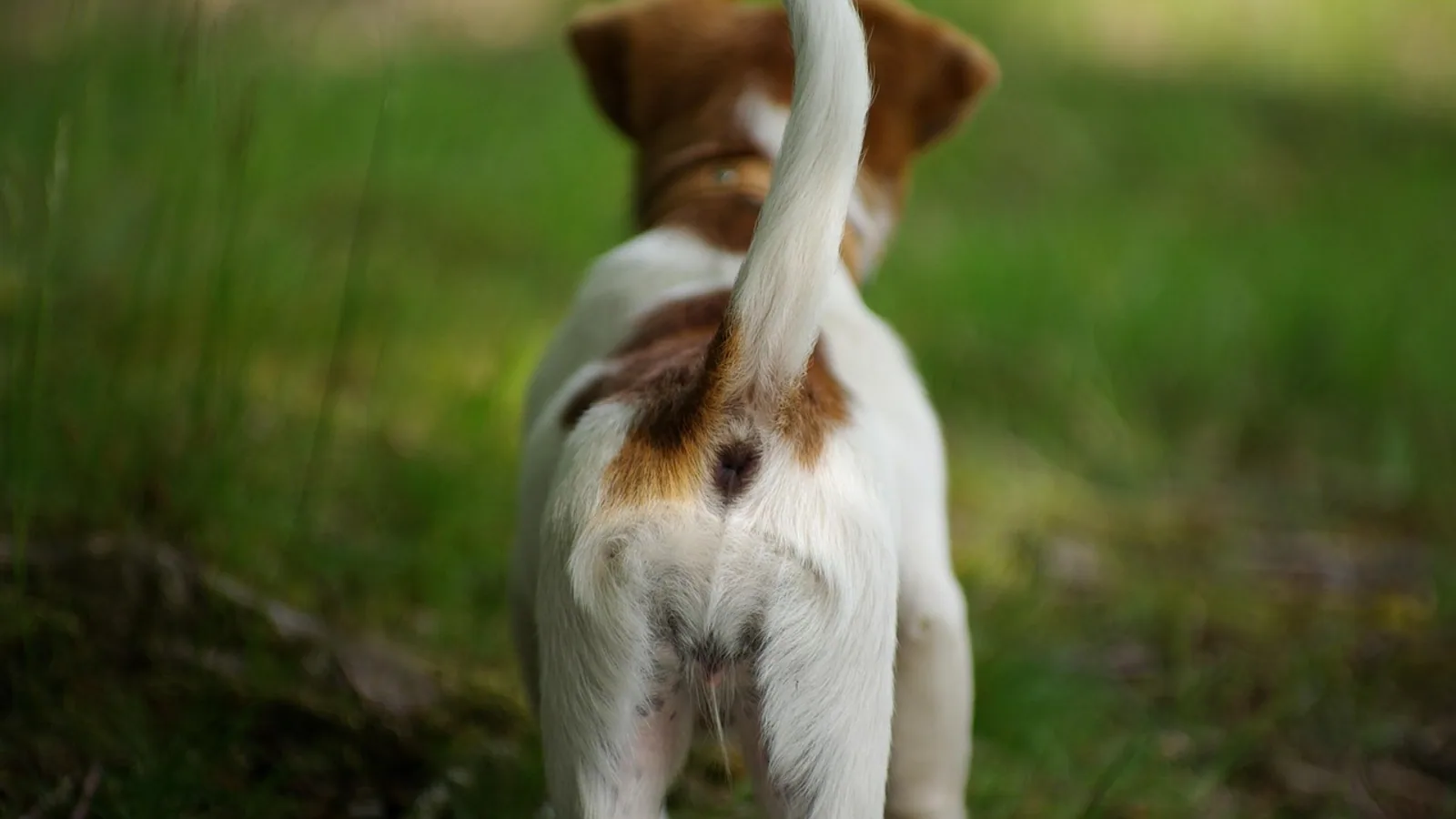
Happy tail is a wound at the tip of a dog's tail caused by repeated, forceful wagging against a hard surface. The most likely cause is a dog that wags hard inside a crate, kennel run, or narrow hallway where the tail strikes a wall, wire panel, or door frame over and over. The first thing to check is the very tip of the tail, not the middle. Part the hair at the last inch and look for a raw, bleeding, or scabbed spot. If the tip is split open, bleeding, or covered in a dark crust, that is happy tail until proven otherwise.
This article is educational and is not a substitute for veterinary diagnosis or treatment.
Happy tail is common in large, active, friendly breeds. Labrador Retrievers and Greyhounds are classic patients because they combine a long, thin tail with a strong, fast wag and a tendency to greet people and other dogs with enthusiasm. Any dog with a long tail can develop it. Dogs kept in kennels, boarding facilities, shelters, and crates are at higher risk because the tail has a hard surface to hit and less room to swing freely.
The condition is frustrating for owners because it heals slowly and reopens easily. A tail tip that bleeds for weeks, stains walls and furniture, and never seems to close is the typical story. Understanding why the tail tip behaves this way is the key to managing it well.
What Happy Tail Actually Is
Happy tail is a traumatic abrasion and laceration of the skin at the distal tail. The tail is not a solid bone. It is a chain of small coccygeal vertebrae wrapped in muscle, connective tissue, and skin. The skin near the tip is thin, tightly attached, and has little padding. When the tail whips against a hard edge, the skin splits against the bone underneath.
The wound is usually a small cut or scrape at the very end, sometimes on one side, sometimes across the tip. In severe cases the tip is degloved, meaning the skin is torn away from the underlying tissue. Because the tail is a high-motion structure, the wound is constantly stretched, bumped, and reopened.
Many owners mistake happy tail for an allergy, a hot spot, or a bite. The location is the giveaway. Skin allergies and infections tend to affect the base of the tail, the back, or the flanks. Happy tail lives at the tip, and it lines up with a hard surface the tail can reach.
Why the Tail Tip Heals So Slowly
The tail tip has poor blood supply compared with the rest of the body. Blood vessels taper as they travel down the tail, and the last segment has the least perfusion. Tissue with poor blood flow receives fewer oxygen and nutrients, fewer immune cells, and fewer repair signals. That is why a small cut on a tail tip can take weeks to close while a similar cut on the flank would heal in days.
Poor blood supply also means the wound re-bleeds easily. The tail is in constant motion during normal behavior. Every wag, every turn, every greeting reopens the fragile clot. A dog that is happy and social wags more, which is the cruel irony of the name.
The thin skin and the exposed bone underneath add another problem. There is very little soft tissue to cushion the wound. Any impact goes straight to the surface of the vertebra. That mechanical stress keeps the edges of the wound from sealing.
The Mechanism: Repetitive Trauma Against Hard Surfaces
The core mechanism is repetitive blunt trauma. A dog wags its tail in a wide arc. In an open room, the tail swings through air. In a crate, kennel run, or narrow space, the arc is interrupted by a wall, a wire panel, a door, or a food bowl. The tail tip strikes the surface at speed, over and over.
Each single strike may be minor. The damage accumulates. The skin abrades, then splits, then bleeds. The dog feels the sting, wags harder because it is excited, and the cycle repeats. This is why happy tail is so strongly linked to confinement. A crate or kennel gives the tail a hard target within reach and limits the dog's ability to move away from it.
The problem is worse in dogs with long, thin, bony tails. A thick, well-padded tail absorbs impact. A thin tail with a prominent tip delivers the full force to a small area of skin. Breeds with this conformation are overrepresented.
Enthusiasm matters too. A dog that greets every visitor with a full-body wag, that spins at the door, that bounces in the crate at feeding time, generates more strikes per day. The behavior that makes the dog lovable is the behavior that drives the injury.
Which Dogs Are Most at Risk
Large, active breeds with long tails top the list. Labrador Retrievers, Golden Retrievers, Greyhounds, Whippets, Doberman Pinschers, Great Danes, and many hounds are common patients. The pattern is a long tail, a strong wag, and a social personality.
Dogs in boarding kennels, animal shelters, and training facilities are at high risk because of the hard surfaces and the stress of confinement. Stress and excitement both increase wagging. A dog that is anxious in a kennel may wag against the wall for hours.
Dogs with pre-existing tail problems are also vulnerable. A dog with a previously injured tail tip, a thin hair coat on the tail, or a tail that was docked short may have altered conformation that concentrates force on the tip.
The Differential: What Else Causes Tail-Tip Wounds
Happy tail is the most common cause of a bleeding tail tip in a wagging dog, but it is not the only one. A veterinarian will consider other causes when the history does not fit.
Direct trauma from a door, a bite, or a fall can split the tail. A single event usually produces a single wound, while happy tail produces a wound that keeps reopening.
Foreign bodies such as foxtails or splinters can lodge in the tail and cause a draining tract. These wounds often have a small opening with discharge and do not heal until the foreign material is removed.
Skin infections and allergies can affect the tail, but they usually involve a wider area and often the base of the tail. A dog with a raw tip and a normal base is more likely to have happy tail.
Neurologic and muscular conditions can change tail position and movement, which can lead to secondary trauma. Limber tail syndrome, also called acute coccygeal myopathy, causes a flaccid tail that hangs down and lacks muscle tone. It is seen mostly in working and hunting dogs, especially Pointers and Retrievers, and is associated with prolonged cage transport, vigorous exercise, and cold exposure [1]. A German Shepherd Dog developed a flaccid tail and staggering gait after immersion in freezing water, and recovered with anti-inflammatory medication, warm fomentation, and rest [2]. Limber tail is not happy tail, but a dog with a limp tail may drag the tip and create a wound.
Conditions affecting the nerves and spinal cord that supply the tail can also change tail function. Lesions of the sacrococcygeal nerve roots cause cauda equina syndrome, which can produce pain and altered sensation in the tail, along with hind limb weakness and incontinence [3]. Occult tethered cord syndrome in dogs commonly presents with pain or abnormal sensation in the lumbosacral region, tail, or pelvic limbs, and can include gait abnormalities and incontinence [4]. These are uncommon causes of tail problems, but they matter when a dog has neurologic signs along with a tail wound.
Brachycephalic screw-tail breeds have their own tail anatomy. Bulldogs, French Bulldogs, and Boston Terriers carry a truncating mutation in the DISHEVELLED 2 gene that is strongly associated with the screw tail and with vertebral malformations [5]. These breeds also have a high prevalence of congenital thoracic vertebral abnormalities [6], and lumbosacral meningoceles with tethered cord syndrome occur with a predilection for the lumbosacral area in screw-tail breeds [7]. A screw-tail dog with a tail wound needs a different evaluation than a Labrador with a bleeding tip.
Step-by-Step Diagnosis at Home
You can gather useful information before you call your veterinarian. Work through this sequence.
- Restrain gently and look at the tip. Use a treat or a second person to keep the dog still. A dog that is wagging will not hold still for a tail exam.
- Part the hair at the last inch. Look for a raw surface, a split, a scab, dried blood, or missing skin. Note whether the wound is on one side or across the tip.
- Check the base and the middle of the tail. If the problem is only at the tip, happy tail is more likely. If the base is swollen, painful, or bald, consider allergy, infection, or a neurologic issue.
- Watch the dog in its normal space. Put the dog in the crate or kennel and observe. If the tail hits a wall or panel, you have found the mechanism.
- Check the crate and the room. Look for blood streaks on walls, doors, and crate panels at tail height. Blood on the wall at the height of the tail is strong evidence.
- Note the dog's behavior. A dog that wags constantly, spins, or bounces in confinement is a classic happy tail patient.
- Look for neurologic signs. A flaccid tail, a tail that hangs abnormally, weakness in the hind legs, or incontinence changes the picture and needs veterinary assessment.
The Decision Path
The following flowchart shows the main decision path for a dog with a bleeding tail tip.
flowchart TD
    A[Bleeding tail tip] --> B[Examine the tip]
    B --> C{Wound only at tip}
    C -->|Yes| D[Check crate and walls]
    C -->|No| E[Assess base and nerves]
    D --> F{Blood on hard surfaces}
    F -->|Yes| G[Happy tail likely]
    F -->|No| H[Consider other trauma]
    G --> I[Clean and protect the tip]
    I --> J[Pad the environment]
    J --> K{Healing in two weeks}
    K -->|Yes| L[Continue protection]
    K -->|No| M[Veterinary recheck]
    M --> N[Consider amputation if chronic]
Initial Wound Care
The first goal is to stop the bleeding and keep the wound clean. Apply gentle pressure with a clean gauze pad. Most tail-tip bleeding slows within a few minutes. Do not use human wound-care products, antiseptic creams, or human bandages designed for people, because dogs may lick and ingest them and some ingredients are not appropriate for pets.
Once bleeding stops, clean the wound gently with a pet-safe wound cleanser recommended by your veterinarian. Pat dry. Do not scrub the wound, because scrubbing removes the fragile clot and restarts bleeding.
The most important step is to stop the tail from hitting hard surfaces. Cleaning alone will not heal a wound that is reopened every hour. Environmental control is the treatment.
Protecting the Tail Tip
Protection means blocking the impact between the tail tip and the hard surface. There are two approaches, and they work best together.
The first approach is to protect the tail itself. A padded bandage or foam guard wraps the tip and absorbs impact. The bandage must be changed regularly, kept dry, and checked for slipping. A wet or dirty bandage traps moisture and bacteria and can make the wound worse.
The second approach is to change the environment. Pad the crate walls, the kennel panels, and any hard surface at tail height. Foam mats, blankets, and bumper pads work well. Reduce the size of the space so the dog cannot build up wagging speed, or increase it so the tail has room to swing without hitting anything. The right choice depends on the dog. A dog that paces and wags in a small crate may do better in a larger, padded space. A dog that runs the fence line may need the fence line padded.
Bandaging Options for Happy Tail
Choosing a bandage is a balance between protection, security, and practicality. The table below compares common options. Your veterinarian can help you pick the right one for your dog's wound and lifestyle.
| Bandage option | How it works | Pros | Cons |
|---|---|---|---|
| Simple gauze wrap with self-adherent outer layer | Covers the tip and holds a dressing in place | Easy to apply, inexpensive, widely available | Slippery, comes off easily, needs frequent changes, limited padding |
| Padded bandage with foam or cotton layer | Adds cushioning over the tip | Better impact absorption, good for active dogs | Bulkier, can slip if not secured, must stay dry |
| Foam guard or tail sleeve | Rigid or semi-rigid foam tube over the tip | Strong protection, reusable, good for crate walls | Can be chewed off, may need a secondary wrap, sizing matters |
| Bandage with a splint or rigid backing | Limits tail-tip motion | Protects a fragile wound, useful for severe lacerations | Restricts normal tail use, can cause pressure sores if too tight |
| Full-tail wrap | Covers the tip and part of the tail | Stays on better than a tip-only wrap | Harder to apply, more material, can trap moisture |
| Elizabethan collar plus bandage | Prevents licking and chewing of the bandage | Protects the wound from self-trauma | Some dogs dislike the collar, needs supervision |
The best bandage is the one that stays on, stays dry, and does not restrict blood flow. Check the tail above and below the bandage for swelling, coolness, or discoloration. A bandage that is too tight is dangerous. If the tail swells or the dog chews at the bandage, remove it and call your veterinarian.
Reducing Trauma in the Environment
Environmental change is the most underused treatment for happy tail. Owners often focus on the wound and ignore the wall. That is backwards. A wound that is protected but still struck will not heal.
Start by identifying every hard surface the tail can reach. Crate walls, kennel panels, door frames, furniture edges, and fence lines are common. Pad them with foam, blankets, or commercial bumper pads. Pay attention to the height of the tail tip, because that is where the impact happens.
Next, look at the space. A crate that is too small forces the dog to wag into the wall. A crate that is too large may allow the dog to spin and build speed. The right size gives the dog room to stand, turn, and lie down comfortably without a long wagging arc. Some dogs do better out of the crate in a padded pen.
Finally, reduce the triggers. If the dog wags hardest at greetings, feeding time, or when visitors arrive, manage those moments. Feed in a padded area. Greet the dog calmly. Use a gate or a barrier so the dog cannot press against a wall while wagging.
Topical Agents and Wound Management
Topical agents can support healing, but they are not a substitute for protection. Your veterinarian may recommend a pet-safe wound ointment, a protective barrier, or a medicated dressing. Follow the instructions exactly. Do not apply human antibiotic ointments, human pain creams, or human antiseptics unless your veterinarian specifically tells you to.
Some wounds benefit from a moist wound-healing environment, which supports cell migration and reduces scab formation. Others do better with a dry, protected surface. The choice depends on the wound. Your veterinarian can assess the wound and recommend the right approach.
If the wound is infected, your veterinarian may prescribe an antibiotic. Do not use leftover antibiotics from a previous illness. Do not use antibiotics intended for people.
When the Wound Will Not Heal
Some happy tail wounds become chronic. The skin never closes, the tip stays raw, and every attempt to bandage it fails because the dog chews the bandage off or the tail keeps hitting the wall. This is a common and frustrating outcome.
Chronic non-healing wounds happen for several reasons. The blood supply at the tip is poor, so healing is slow even under ideal conditions. The tail is in constant motion, so the wound is mechanically stressed. The dog may lick or chew the wound, adding trauma and bacteria. The bandage may slip, trap moisture, or cause its own irritation.
When a wound has been managed well for several weeks and still will not heal, the conversation shifts. Your veterinarian will reassess the wound, check for infection, and consider whether the tail tip can be saved.
Partial Tail Amputation: When It Is Considered
Partial tail amputation is the removal of the damaged portion of the tail. It is considered when repeated trauma leads to a chronic non-healing wound that does not respond to protection and wound care. It is not a first-line treatment. It is a step taken after conservative management has failed and the dog's quality of life is affected.
The goal of amputation is to remove the tissue that cannot heal and to leave a tail that no longer strikes hard surfaces with a raw tip. The remaining tail is shorter, so it has less leverage and less reach. The wound is closed surgically, and the dog recovers with a shorter tail.
Amputation is a major decision. It requires anesthesia and surgery, and it changes the dog's appearance. It is also a reasonable choice for a dog that has suffered for months with a painful, bleeding tail that will not heal. Your veterinarian will discuss the risks, the recovery, and the expected outcome.
The decision is individual. A dog with a mild wound that heals with protection does not need surgery. A dog with a chronic, painful, non-healing wound that has failed months of management may benefit. The conversation should happen with a veterinarian who has examined the tail and reviewed the history.
Prevention
Prevention is built on the same principles as treatment. Protect the tail, change the environment, and manage the behavior.
For dogs at high risk, such as Labrador Retrievers and Greyhounds in kennels or crates, pad the environment before a wound develops. Foam panels on crate walls and kennel runs are inexpensive and effective. Check the tail tip regularly, especially after boarding or a stay in a new facility.
Keep the tail hair trimmed if it traps moisture or debris. A clean, dry tail tip is less likely to develop a wound. Do not shave the tail unless your veterinarian recommends it, because hair protects the skin.
Manage excitement at greetings. A dog that spins and wags against a wall at every visitor is a candidate for happy tail. Calm greetings, a padded entry area, and a gate to prevent wall contact can reduce the risk.
If your dog has had happy tail before, assume it can happen again. The conformation and the personality do not change. The environment is the variable you control.
Limitations and When to Contact a Veterinarian
This article is educational and is not a substitute for veterinary diagnosis or treatment. Individual cases need a veterinarian who can examine the tail, assess the wound, and review the history.
Contact a veterinarian promptly if the bleeding does not stop with gentle pressure, if the wound is deep or the skin is torn away, if the tail is swollen, hot, or discharging pus, if the dog is painful when the tail is touched, or if the dog has a flaccid tail, hind limb weakness, or incontinence. These signs suggest infection, significant tissue damage, or a neurologic problem that needs assessment.
Contact a veterinarian if the wound has not improved after one to two weeks of consistent protection and wound care, if the dog keeps reopening the wound, or if the bandage keeps slipping or the dog keeps chewing it off. A chronic non-healing wound is the main reason partial tail amputation is discussed.
Contact a veterinarian if your dog is in a kennel or boarding facility and the tail tip is bleeding, because the environment will keep causing trauma until it is changed.
Frequently Asked Questions
What is happy tail in dogs?
Happy tail is a wound at the tip of the tail caused by repeated wagging against hard surfaces such as crate walls, kennel panels, and door frames. The thin skin at the tip splits and bleeds, and the wound heals slowly because the tail tip has poor blood supply.
Why does my dog's tail tip keep bleeding?
The tail tip has poor blood supply and is in constant motion, so the clot reopens easily. Every wag or impact restarts the bleeding. If the dog is still hitting a hard surface, the wound cannot close.
Which dog breeds get happy tail?
Large, active breeds with long, thin tails are most at risk. Labrador Retrievers, Golden Retrievers, Greyhounds, Whippets, and Doberman Pinschers are common patients. Any long-tailed dog in a crate or kennel can develop it.
How do I bandage a happy tail?
Clean the wound, apply a padded dressing, and secure it with a self-adherent wrap or a foam guard. Keep the bandage dry and check it often for slipping or tightness. Your veterinarian can recommend the best option for your dog.
Should I use human antibiotic ointment on my dog's tail?
No. Do not use human wound-care products or human antibiotic ointments unless your veterinarian specifically tells you to. Dogs may lick and ingest them, and some ingredients are not appropriate for pets.
How long does happy tail take to heal?
A protected wound may heal in one to two weeks. A wound that keeps being reopened can take much longer. If the wound has not improved after one to two weeks of consistent care, contact your veterinarian.
When is amputation considered for happy tail?
Partial tail amputation is considered when repeated trauma leads to a chronic non-healing wound that does not respond to protection and wound care. It is not a first-line treatment. Your veterinarian will discuss the risks and benefits.
Can I prevent happy tail?
Yes. Pad crate walls, kennel panels, and hard surfaces at tail height. Reduce the space or change it so the tail cannot build up speed. Manage excited greetings, and check the tail tip regularly in high-risk dogs.
Related Articles
- Dog Hair Loss on Tail: Causes and Treatment
- Dog Hot Spot on Tail: Causes and Treatment
- Cat Hair Loss on Tail: Causes and Solutions
- Dog Blood in Urine: Causes and Emergency Steps
- Cat Ear Hematoma: Causes and Treatment
- Why Is My Dog Throwing Up Yellow Bile? Causes and Next Steps
- Cat Heart Murmur: Causes and Next Steps
- Ascites in Pets: Causes and Diagnostic Steps
- Paraphimosis in Dogs: Treatment Steps and When to Act
Sources
- Acute coccygeal myopathy in a dog - limber tail syndrome
- Limber tail syndrome in German shepherd dog
- Cauda equina syndrome in dogs - a review
- Occult tethered cord syndrome: insights into clinical and MRI features, prognostic factors, and treatment outcomes in 30 dogs with confirmed or presumptive diagnosis
- Whole genome variant association across 100 dogs identifies a frame shift mutation in DISHEVELLED 2 which contributes to Robinow-like syndrome in Bulldogs and related screw tail dog breeds
- Prevalence and classification of congenital thoracic vertebral body abnormalities in neurologically normal brachycephalic 'screw-tail' dog breeds in referral practice in Australia.
- Lumbosacral (myelo) meningoceles in dogs, related tethered cord syndrome, and their surgical management: review of the literature and clinical experience