Stud Tail in Dogs: Causes in Males and Females
By Dr. Zubair Khalid, DVM, MS, PhD ·
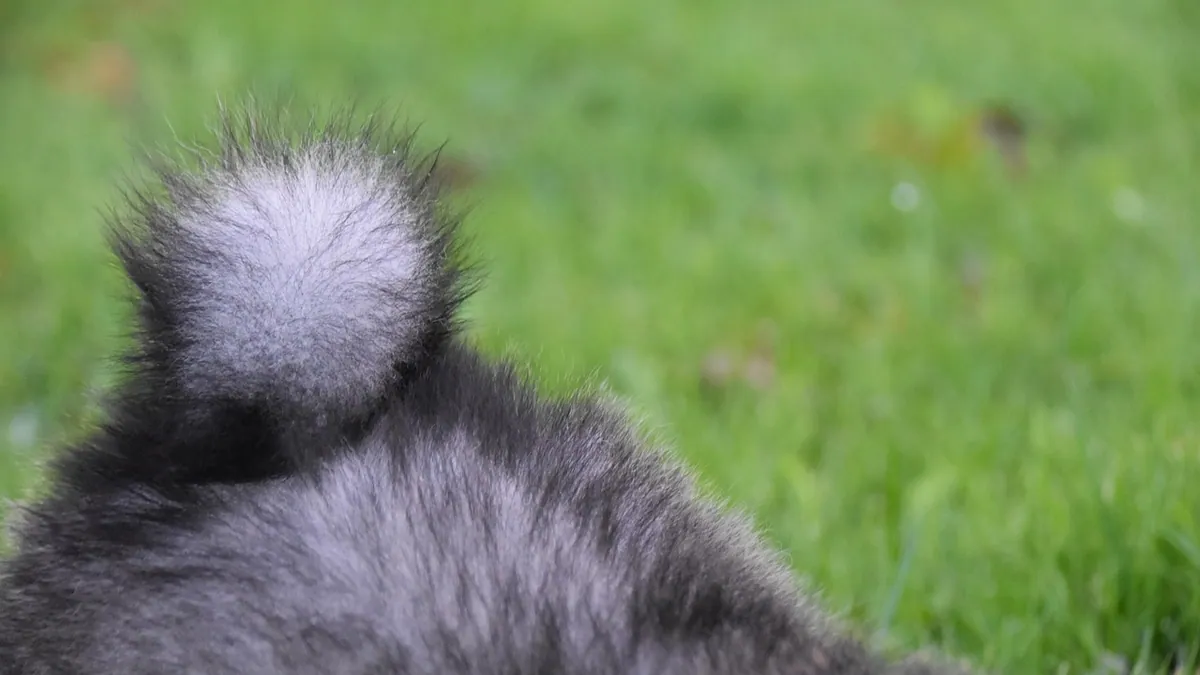
Stud tail in dogs causes a greasy, dull, hairless patch on the top of the tail near its base. It happens when the supracaudal gland, a normal oil gland on the upper tail, overproduces sebum. Both male and female dogs can develop it, though it is seen most often in intact males.
This article is educational and is not a substitute for veterinary diagnosis or treatment.
Quick Answer
- Stud tail is a gland problem, not an infection or a behavioral habit, and it can affect females as well as males.
- The classic sign is a waxy, yellowish or gray patch of missing hair on the top of the tail base, sometimes with a greasy feel or a stale odor.
- Intact male dogs are affected most often because male hormones drive the supracaudal gland, but spayed females and neutered males can still develop it.
- Most cases are managed with medicated shampoos, gentle cleaning, and sometimes neutering, and the hair often grows back once the gland calms down.
- Any bald, crusted, or oozing spot on the tail should be checked by a veterinarian, because skin infections, allergies, and other conditions can look similar.
What Is Stud Tail in Dogs?
Stud tail is the common name for a condition called supracaudal gland hyperplasia or supracaudal gland hyperkeratosis. The supracaudal gland sits on the top surface of the tail, a few inches from the base. It is a sebaceous gland, which means it makes oil. In most dogs this gland is quiet and you never notice it.
When the gland becomes overactive, it pumps out excess sebum. That oil clogs hair follicles, traps debris, and creates a waxy film on the skin. Hair in that small area thins and eventually falls out. The skin underneath may look dark, thickened, or greasy.
The name "stud tail" is misleading. It suggests the problem only happens to stud dogs, meaning intact males used for breeding. That is not true. Female dogs get it too, and so do neutered dogs. The name stuck because intact males are the most common patients.
Signs Owners Notice
The changes are usually limited to a patch on the upper tail. You may see:
- Hair loss on the top of the tail near the base, often in an oval or rectangular patch
- A greasy, waxy, or scaly texture to the skin in that spot
- Yellowish, gray, or brown material packed around the hair follicles (this is sometimes called a comedo or blackhead-like plug)
- A stale, oily, or musky odor
- Darkened skin (hyperpigmentation) in long-standing cases
- Mild redness or itchiness, though many dogs are not itchy at all
Some dogs develop a secondary bacterial or yeast infection in the area. That can bring on more redness, crusting, oozing, or discomfort when you touch the tail. If the skin breaks down, the patch can look like a hot spot. A hot spot on the tail is a separate problem with a different cause, so a veterinarian needs to tell them apart. You can read more about that in Dog Hot Spot on Tail: Causes and Treatment.
Hair loss on the tail can also come from allergies, parasites, thyroid disease, or pressure from chewing. A guide to those other possibilities is available at Dog Hair Loss on Tail: Causes and Treatment.
Stud Tail in Dogs Causes and Risk Factors
The core cause is hormone-driven overactivity of the supracaudal gland. Male hormones, especially testosterone, stimulate sebaceous glands throughout the body. The supracaudal gland is packed with androgen receptors, so it responds strongly to those hormones.
This is why intact male dogs top the list. Their testosterone levels are high and steady. Female dogs have androgens too, just at lower levels, which explains why stud tail in dogs female owners report is real and not a mistake. A female's hormone levels shift during the heat cycle, and that can trigger gland changes. The estrous cycle is driven by estrogen and progesterone, which rise and fall in a predictable pattern [1].
Risk factors that raise the odds include:
- Being an intact male
- Being a breed with a naturally oily coat or a prominent tail gland
- Poor grooming, especially in thick-coated dogs where oil and dead skin build up
- Obesity, because skin folds and reduced grooming let oil and debris collect
- Concurrent skin disease such as allergies or seborrhea, which adds to the oil load
- Age, since the gland tends to become more active after puberty
Hormones are not the only factor. Some dogs have a genetic tendency toward oily skin and sebaceous gland problems. In Poodles, for example, sebaceous adenitis, an inflammatory disease that destroys sebaceous glands, has been linked to inbreeding and reduced genetic diversity in the breed [2]. That condition is different from stud tail, but it shows how much breed genetics shape sebaceous gland health.
Other hormone-related conditions can appear alongside stud tail in intact males. Benign prostatic hyperplasia, an enlarged prostate, is the most common prostate disease in dogs and is driven by hormones [3]. The prostate is androgen-dependent, and removing the testicles causes measurable changes in prostate tissue over time [4]. These conditions do not cause stud tail, but they share the same hormonal backdrop, which is one reason veterinarians look at the whole dog.
How Veterinarians Diagnose Stud Tail
Most cases are diagnosed by physical examination alone. Your veterinarian will look at the tail base, feel the skin, and check for infection, parasites, or masses. They will also ask about your dog's sex, neuter status, age, diet, grooming routine, and any itching or odor.
Tests may be needed when the picture is unclear or when treatment is not working. Common tests include:
- Skin scraping to rule out mites
- Tape prep or cytology to check for bacteria and yeast
- Fungal culture if ringworm is a concern
- Blood work to look for thyroid or other hormonal disease
- Skin biopsy in stubborn or unusual cases, which can identify sebaceous adenitis or other inflammatory conditions
A biopsy is the only way to confirm some conditions. Granulomatous sebaceous adenitis, for example, has been confirmed by skin biopsy in breeds such as Vizslas, where it caused severe ear and skin lesions [5]. If your dog has widespread hair loss, scaling, or ear problems along with the tail patch, your veterinarian may recommend a biopsy to sort out the cause.
| What You See | Likely Cause | How It Is Confirmed |
|---|---|---|
| Greasy bald patch on top of tail base | Stud tail (supracaudal gland hyperplasia) | Physical exam |
| Red, oozing, painful sore | Hot spot or secondary infection | Exam plus skin cytology |
| Widespread scaling and hair loss | Sebaceous adenitis or seborrhea | Skin biopsy |
| Itchy skin, paws, and ears too | Allergies | History, exam, allergy testing |
| Bald patch with no grease or scale | Hormonal or thyroid disease | Blood work |
Treatment Options
Treatment depends on how severe the problem is and whether your dog is intact. The goals are to reduce oil, clear any infection, and calm the gland.
Topical Care
Medicated shampoos and cleansers are the first line. Your veterinarian may recommend a shampoo containing benzoyl peroxide, chlorhexidine, or sulfur and salicylic acid. These break down oil, remove plugs, and reduce bacteria. Most owners start with bathing every few days and then taper to once a week or less as the skin improves. Your veterinarian will tell you the exact schedule for your dog.
Wipes or pads designed for oily skin can be used between baths. Gently wipe the tail base without scrubbing, since friction can irritate the skin.
Treating Infection
If bacteria or yeast are present, your veterinarian will prescribe a medicated shampoo, ointment, or oral medication. The dose is calculated from your dog's weight and health status, so follow the label exactly. Do not stop treatment early, even if the skin looks better, because infection can rebound.
Neutering
For intact males, neutering often improves stud tail. Removing the testicles lowers testosterone, which reduces stimulation of the supracaudal gland. It is not a guaranteed cure, and some neutered dogs still have the condition, but many owners see clear improvement within a few months. Neutering also removes the risk of testicular cancer in retained testicles, which is a separate reason veterinarians recommend the procedure for cryptorchid dogs [6].
If your dog is intact and you are not planning to breed, talk with your veterinarian about timing. Neutering is a routine surgery with a short recovery.
Other Medications
In stubborn cases, veterinarians may use retinoid-type drugs, cyclosporine, or other immune-modulating medications. These are prescription-only and are chosen based on the specific diagnosis. Synthetic retinoids and cyclosporine have been used successfully in dogs with granulomatous sebaceous adenitis [5]. Your veterinarian will explain the risks and monitoring needed for these drugs.
Recovery, Outlook, and Long-Term Management
Stud tail is usually a manageable condition, not a dangerous one. Most dogs improve within a few weeks of starting treatment, and hair regrowth can take one to three months. Some dogs need ongoing maintenance baths to keep oil under control.
Long-term management often looks like this:
- Bathing with a medicated shampoo every one to four weeks
- Checking the tail base weekly for new oil, odor, or hair loss
- Keeping your dog at a healthy weight
- Treating any underlying allergies or skin disease
- Recheck visits with your veterinarian if the problem returns
If your dog was neutered, you may see gradual improvement over several months. If the condition persists after neutering, other factors such as genetics, skin disease, or grooming habits are likely involved.
Prevention
You cannot prevent every case, because hormones and genetics play a large role. You can lower the odds and catch problems early:
- Groom your dog regularly, especially if they have a thick or oily coat
- Bathe with a gentle or medicated shampoo as recommended by your veterinarian
- Keep your dog at a healthy weight
- Treat allergies and skin infections promptly
- Ask your veterinarian about neutering if your dog is intact and not used for breeding
- Check the tail base during your regular grooming routine so you notice changes early
If you are concerned about inherited traits in your dog's line, talk with your veterinarian. Breeding decisions matter, and conditions with a genetic basis should not be passed on. Cryptorchid dogs, for example, should not be used for breeding because the trait is inherited [6].
Limitations and When to Contact a Veterinarian
This article gives general information. Your dog's case needs a veterinarian who can examine the skin, run tests if needed, and prescribe treatment.
Contact your veterinarian the same day if you see:
- Rapidly spreading redness, swelling, or pain on the tail
- Pus, bleeding, or open sores
- A foul smell that gets worse despite bathing
- Your dog licking, chewing, or biting at the tail constantly
- Fever, lethargy, or loss of appetite
Seek emergency care now if:
- The tail is swollen, hot, and extremely painful
- Your dog cannot stop chewing and has broken the skin open
- You see a large, fast-growing mass on the tail
- Your dog seems systemically ill, weak, or unresponsive
Schedule a routine visit if:
- You notice a new bald or greasy patch on the tail base
- The patch has not improved after two weeks of home bathing
- Hair has not grown back after three months
- Your dog has other skin problems at the same time
Frequently Asked Questions
Can female dogs get stud tail?
Yes. Female dogs can develop stud tail, even though the name suggests otherwise. Their bodies make androgens at lower levels, and hormone shifts during the heat cycle can trigger the gland. Spayed females can also be affected.
Does neutering cure stud tail?
Neutering often improves stud tail in male dogs because it lowers testosterone, which drives the gland. It is not a guaranteed cure, and some dogs still have symptoms afterward. Many owners see gradual improvement over a few months.
Is stud tail contagious to other pets or people?
No. Stud tail is a gland and skin condition, not an infection, so it does not spread to other dogs, cats, or people. Secondary bacterial or yeast infections in the area are also not typically contagious under normal hygiene.
How long does it take for tail hair to grow back?
Hair regrowth usually starts within a few weeks of treatment and can take one to three months to fill in. If the gland stays calm and the skin stays healthy, the patch often shrinks or disappears. Some dogs keep a thinner spot permanently.
Can I just leave stud tail alone?
Mild cases may not bother your dog, but the oil buildup can lead to infection, odor, and discomfort over time. It is better to have a veterinarian check the area and start simple treatment. Leaving it alone also risks missing a different skin disease that looks similar.
Related Articles
- Dog Hair Loss on Tail: Causes and Treatment
- Male Inbred Dog Behavior Problems
- Hermaphrodite Dog Behavior Problems
- Female Inbred Dog Behavior Problems
- Dog Hot Spot on Tail: Causes and Treatment
- Breeding Soundness Examination of the Canine Male
- Stud Tail Infection in Dogs: Signs and Treatment
- Stud Tail in Dogs: Treatment and Home Remedies
- Stud Tail Treatment: Home Care and When to See a Vet
References
- The Gonads and Genital Tract of Dogs - Dog Owners. Merck Veterinary Manual.
- The effect of genetic bottlenecks and inbreeding on the incidence of two major autoimmune diseases in standard poodles, sebaceous adenitis and Addison's disease. Canine genetics and epidemiology, 2015.
- Negative impact of benign prostatic hyperplasia on fertility in dogs-a mini-review. Frontiers in veterinary science, 2025.
- Differential expression of prostatic androgen receptor and alpha-smooth muscle actin in castrated and non-castrated dogs. Research in veterinary science, 2025.
- Severe ulcerative and granulomatous pinnal lesions with granulomatous sebaceous adenitis in unrelated vizslas. Journal of the American Animal Hospital Association, 2011.
- Reproductive Disorders of Male Dogs - Dog Owners. Merck Veterinary Manual.