Cat Skin Loose and Hanging: Causes and Concerns
By Dr. Zubair Khalid, DVM, MS, PhD ·
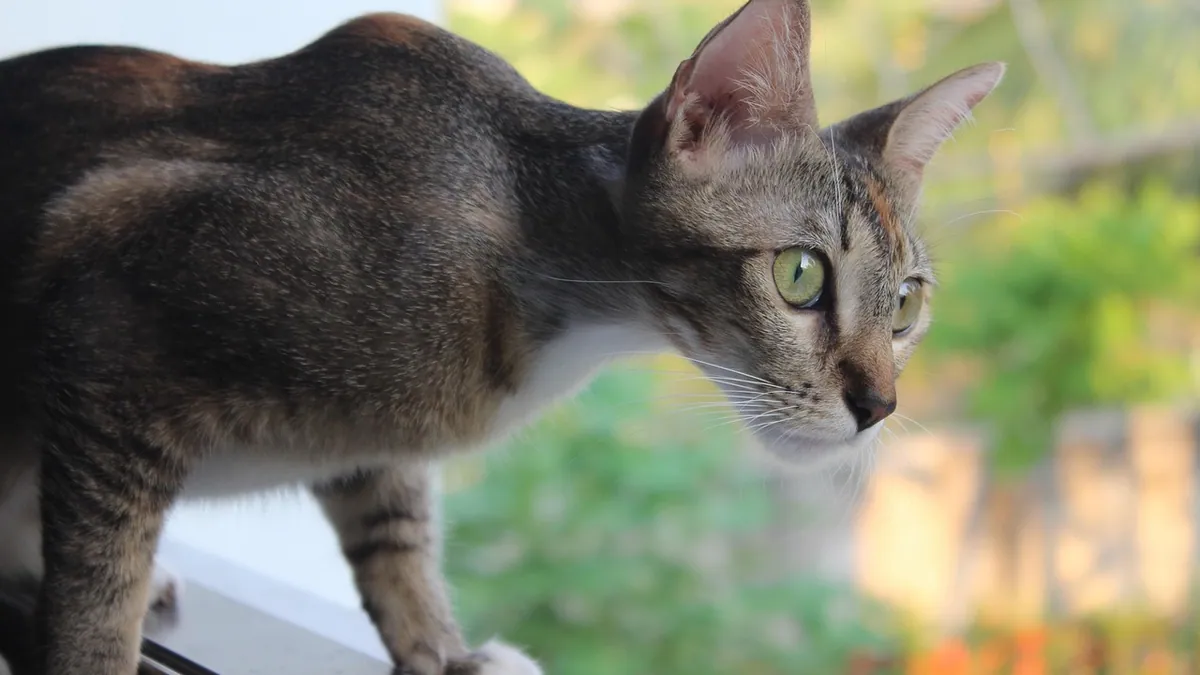
Loose or hanging skin in cats is often completely normal, especially along the belly or in older cats who have lost muscle tone or weight. In other cases, skin that hangs, stretches too far, or tears easily points to a connective tissue problem or an underlying illness. This article explains what is normal, what is not, and when to call your veterinarian.
This article is educational and is not a substitute for veterinary diagnosis or treatment.
Quick Answer
- Some looseness is normal. Cats have naturally elastic skin, and the belly flap (the primordial pouch) is a normal feature in many cats.
- Skin that stretches far beyond normal, feels paper-thin, or tears with minor handling can signal cutaneous asthenia, a rare inherited collagen disorder [1][2].
- Fragile skin that breaks easily can also be an acquired problem linked to liver, pancreatic, or adrenal disease, especially in older cats [3].
- A sudden change in how your cat's skin looks or feels, or any wound that will not heal, deserves a veterinary visit.
- If skin is torn, bleeding heavily, or your cat is having trouble breathing, treat it as an emergency and go to a vet right away.
What Loose or Hanging Skin Looks Like in Cats
Start by understanding what normal cat skin does. The skin is your cat's largest organ. It protects against the environment, helps control temperature, and provides the sense of touch [4]. It has three layers: the epidermis (outer), the dermis (middle), and the subcutis (innermost), plus hair, claws, and subcutaneous fat and muscle [4].
Normal cat skin is loose and flexible. When you gently lift the skin over the shoulders or back, it should spring back into place. Many cats also have a soft, hanging flap of skin along the lower belly. This is sometimes called the primordial pouch, and it is a normal part of cat anatomy, not a sign of illness.
What is not normal:
- Skin that stretches dramatically, as if it is made of rubber, and stays stretched when you let go.
- Skin that feels unusually thin, smooth, or fragile to the touch.
- Skin that tears, splits, or bruises with very minor trauma.
- New sagging or drooping that appears over days to weeks, especially with weight loss.
- Wounds or "holes" in the skin that appear without a clear cause.
If you are seeing skin wounds along with swelling or a bad smell, those are separate problems worth reading about in Cat Skin Rash with Swelling: When to Worry and Cat Skin Rash with Odor: Causes and When to Worry.
Main Causes of Loose, Hanging, or Fragile Cat Skin
Normal Anatomy and Aging
The most common reason for loose skin is simply normal cat biology. Cats are built with extra skin for flexibility and protection. As cats age, they can also lose muscle mass and subcutaneous fat, which makes existing skin look looser and more hanging. Gradual weight loss in an older cat is worth mentioning to your vet at the next visit, because it can have many causes.
Cutaneous Asthenia (Ehlers-Danlos-Like Syndrome)
Cutaneous asthenia is a rare inherited connective tissue disorder. It causes reduced tensile strength in the skin, so the skin is hyperextensible (stretches too far) and easily torn by minor trauma [1]. It is caused by abnormal collagen, the protein that gives skin its strength. In affected cats, microscopic examination of skin samples shows shortened and fragmented collagen fibers [1].
This condition has been reported as an inherited problem in Burmese cats in Australia, New Zealand, and Europe. In one report, a skin extensibility index greater than 23% supported the diagnosis in a Burmese kitten [2]. Affected cats may develop wounds, scars, and hernias because their tissues are weak [5]. Surgical repair is possible, and incisions can heal without complications in some affected cats [5].
Acquired Skin Fragility
Some cats develop fragile skin later in life instead of being born with it. This is called acquired skin fragility, and it has been associated with pancreatic, liver, or adrenal disorders [3]. In these cats, the skin becomes very fragile and breaks easily [3]. A staining study found that cats with acquired skin fragility had collagen changes that fell between normal cats and cats with inherited cutaneous asthenia [6].
Whole-Body (Systemic) Disease Affecting the Skin
Skin problems can be the first sign of an internal disease. Dermatitis (skin inflammation) sometimes appears with liver, kidney, or pancreas disorders [3]. Liver disease and diabetes can rarely cause death of skin tissue in old cats, with redness, crusting, oozing, and hair loss on the face, genitals, and lower legs, plus thickened skin and footpad ulcers [3]. Itching and skin infections can also occur in cats with diabetes, and the skin disease may show up before other signs of the internal disease [3].
Other Causes of Skin Changes
Hormone imbalances, poor nutrition, parasites, allergies, and infections can all change how skin looks and feels. Poor diet is an uncommon cause in cats fed modern, balanced diets, but it is possible [3]. If your cat has hair loss along with red or irritated skin, see Cat Hair Loss with Red Skin: Causes and Treatment.
| Cause | Typical clues | How urgent |
|---|---|---|
| Normal anatomy or aging | Soft belly flap, mild looseness, no wounds, cat acting normal | Routine |
| Cutaneous asthenia | Skin stretches far and stays stretched, tears with minor trauma, wounds and scars, often young cat [1][2] | See vet soon |
| Acquired skin fragility | Older cat, skin tears easily, possible internal disease signs [3] | See vet soon |
| Liver, pancreatic, or adrenal disease | Fragile skin plus weight loss, poor appetite, or other illness signs [3] | See vet soon |
| Diabetes or organ-related dermatitis | Crusting, oozing, hair loss on face or legs, itching [3] | See vet soon |
| Wound or skin tear | Open skin, bleeding, visible "hole" | Emergency if deep or bleeding heavily |
Red Flags That Make It an Emergency
Call an emergency veterinary hospital now if you see any of these:
- A skin tear or wound that is deep, gaping, or bleeding heavily.
- Skin that has split open on its own, leaving a visible hole.
- Trouble breathing, especially with a wound or a swollen belly. A diaphragmatic hernia has been reported in a cat with cutaneous asthenia, and it caused difficulty breathing [5]. A swollen belly can have many causes, which are covered in Cat Swollen Belly Causes.
- Pale gums, collapse, or severe weakness.
- A wound that is dirty, has a bad smell, or is turning black.
- Your cat is in obvious pain when touched.
If your cat is struggling to breathe or has something stuck in the airway, see Cat Choking Causes.
Safe Things You Can Do at Home While Waiting
You cannot diagnose fragile skin at home, but you can prevent harm.
- Handle your cat gently. Support the chest and hindquarters with both hands, and avoid lifting by the scruff.
- Keep the nails trimmed on all paws, including the hind feet, so scratching does less damage.
- Remove sharp objects from your cat's environment. Check for exposed nails, wire, and rough edges on furniture.
- Cover any small wound with a clean gauze pad and light pressure if it is bleeding. Do not use human antibiotic creams unless your veterinarian tells you to.
- Do not bathe your cat or apply alcohol, hydrogen peroxide, or human skin products to a wound.
- Do not give any medication, including over-the-counter pain relievers, without veterinary guidance. Many human drugs are toxic to cats.
- Take photos of the skin, including a close-up and a full-body shot, so your vet can see changes over time.
- Note your cat's appetite, water intake, litter box habits, and energy level. This information helps your vet.
If your cat has an open wound, keep them indoors and quiet until you can be seen.
What Your Veterinarian Will Check and Test
Your vet will start with a full physical exam. They will look at the skin all over, check its thickness and elasticity, and look for wounds, scars, bruising, and hair loss. They will also check your cat's weight, muscle condition, gums, and belly.
Your vet may measure skin extensibility. In Burmese cats, an index greater than 23% has been used to support a diagnosis of cutaneous asthenia [2]. This measurement is one piece of the picture, not a stand-alone test.
Other tests may include:
- Blood work and a urinalysis to look for liver, kidney, pancreatic, or adrenal disease [3].
- Skin scrapings and cultures to rule out infections and parasites.
- A skin biopsy. Microscopic examination of skin samples can show abnormal collagen fibers, which supports a diagnosis of cutaneous asthenia [1].
- Special collagen staining. A Masson's trichrome stain can show abnormal collagen patterns in cats with cutaneous asthenia or acquired skin fragility [6].
- Imaging such as X-rays or ultrasound if your vet suspects a hernia or internal disease [5].
Treatment depends on the cause. There is no simple cure for inherited cutaneous asthenia. Care focuses on preventing trauma, treating wounds, and managing any hernias or other complications [5]. If an underlying disease is found, treating that disease may improve the skin. Your veterinarian will set the treatment plan and any medication doses based on your cat's weight and health.
Prevention and Monitoring
You cannot prevent an inherited collagen disorder, but you can reduce the chance of serious injury.
- Ask your vet about skin extensibility if you have a Burmese cat or a cat with a family history of fragile skin [2].
- Keep your cat indoors to lower the risk of trauma, fights, and accidents.
- Schedule routine exams, especially for older cats. Skin changes can be the first sign of an internal problem [3].
- Track your cat's weight at home if you can. Unexplained weight loss is a reason to call your vet.
- Watch existing scars and wounds. Note any that reopen or fail to heal.
- Feed a complete, balanced commercial cat diet. Poor nutrition is an uncommon cause of skin disease in cats on modern diets, but good nutrition supports skin health [3].
- Tell your groomer or boarding staff if your cat has fragile skin, so they handle your cat carefully.
Limitations and When to Contact a Veterinarian
Loose skin is common and often harmless, but you cannot tell the difference between normal looseness and a collagen disorder just by looking. Only a veterinarian can examine your cat, run tests, and make a diagnosis. Individual cases need a veterinarian's assessment, because the same outward sign can have very different causes.
Contact your veterinarian the same day if you notice:
- New skin sagging or drooping.
- Skin that tears with gentle handling.
- A small wound that keeps reopening.
- Weight loss, poor appetite, or low energy along with skin changes.
Go to an emergency clinic now if you see:
- A deep or bleeding wound.
- Skin that has split open.
- Trouble breathing.
- Collapse, pale gums, or severe pain.
Call your vet for a routine visit if the looseness has been stable for a long time and your cat seems well, but you want peace of mind. It is reasonable to ask about skin extensibility and collagen disorders at that visit.
Frequently Asked Questions
Is loose skin on my cat's belly normal?
Yes, a soft hanging flap on the lower belly is normal in many cats. It is part of normal anatomy and is not a sign of illness by itself. If the skin also stretches too far, tears easily, or the belly looks swollen, have your vet check it.
Can cat skin tear on its own?
Yes, in cats with cutaneous asthenia or acquired skin fragility, the skin can tear with very minor trauma or even during normal activity [3][1]. Affected cats may develop wounds, scars, and hernias because their tissues are weak [5]. Any tear that is deep or bleeding needs urgent care.
What is cutaneous asthenia in cats?
Cutaneous asthenia is a rare inherited disorder that makes the skin hyperextensible and easily torn [1]. It is caused by abnormal collagen, and it resembles Ehlers-Danlos syndrome in people [7]. It has been reported as an inherited condition in Burmese cats in some countries [2].
Can an internal disease make my cat's skin fragile?
Yes. Fragile skin syndrome in cats has been associated with pancreatic, liver, or adrenal disorders [3]. Liver disease and diabetes can also cause skin changes in older cats, and the skin problem may appear before other signs of the internal disease [3]. Blood work helps your vet look for these conditions.
Should I worry if my older cat's skin looks looser?
Sometimes. Gradual looseness from aging and muscle loss is common and often harmless. But new looseness with weight loss, poor appetite, or fragile skin can point to an underlying illness [3]. A veterinary exam and blood work are the best way to sort this out.
Related Articles
- Cat Choking Causes
- Cat Swollen Belly Causes
- Cat Skin Rash with Swelling: When to Worry
- Cat Skin Rash with Odor: Causes and When to Worry
- Cat Hair Loss with Red Skin: Causes and Treatment
- Why Is My Cat Limping?
- Why Is My Cat's Skin Flaky? Causes and What to Do
- Cat Skin Cysts: What They Are and When to Worry
- Why Is My Cat's Skin Rolling or Moving? Causes and Next Steps
References
- Collagen dysplasia (cutaneous asthenia) in a cat. Veterinary pathology, 1999.
- Cutaneous asthenia (Ehlers-Danlos-like syndrome) of Burmese cats. Journal of feline medicine and surgery, 2015.
- Whole-body Disorders that Affect the Skin in Cats - Cat Owners. Merck Veterinary Manual.
- Structure of the Skin in Cats - Cat Owners. Merck Veterinary Manual.
- Diaphragmatic and perineal hernias associated with cutaneous asthenia in a cat. Journal of the American Veterinary Medical Association, 2004.
- Staining abnormalities of dermal collagen in cats with cutaneous asthenia or acquired skin fragility as demonstrated with Masson's trichrome stain. Veterinary dermatology, 1998.
- Increased elastic microfibrils and thickening of fibroblastic nuclear lamina in canine cutaneous asthenia. Veterinary dermatology, 2009.