Why Is My Cat's Skin Rolling or Moving? Causes and Next Steps
By Dr. Zubair Khalid, DVM, MS, PhD ·
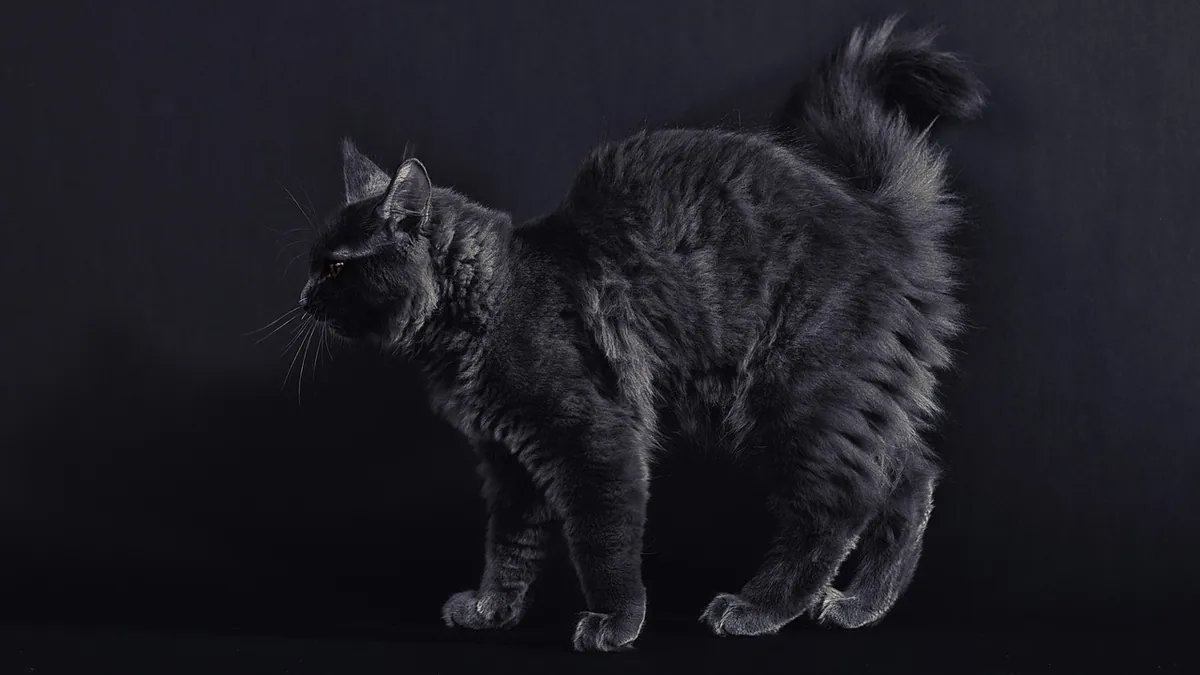
Cat skin rolling is usually a muscle or nerve phenomenon, not a skin problem. You may see a patch of fur ripple, twitch, or crawl across your cat's back while the rest of the body stays still. Most of the time this is a harmless muscle spasm or a brief nerve discharge, but repeated episodes can also point to feline hyperesthesia, pain, or a whole-body illness.
This article is educational and is not a substitute for veterinary diagnosis or treatment.
Quick Answer
- A single ripple or twitch that stops in seconds and does not bother your cat is usually normal muscle activity.
- Rolling that repeats in waves along the spine, comes with rippling skin, dilated pupils, or frantic grooming may be feline hyperesthesia syndrome.
- Skin that moves because your cat is itchy, twitching, or licking often points to dermatitis or a parasite, not a nerve problem [1].
- Pain elsewhere in the body, including arthritis, can make cats hypersensitive to touch and sound, which can look like skin movement [2].
- Call your veterinarian if the rolling is frequent, painful, or paired with hair loss, wounds, hiding, or appetite changes.
What Cat Skin Rolling Actually Looks Like
Owners describe this sign in different ways. Some say the skin "crawls." Others say it "rolls" in a wave down the back. You might see a small patch of fur lift and settle, or the whole flank ripple once.
The movement comes from the panniculus muscle, a thin sheet of muscle just under the skin. When it contracts, the skin twitches. Cats also have a skin twitch reflex that helps them shake off insects. A single twitch after a fly lands is normal.
What matters is the pattern. Normal twitching is brief, occasional, and easy to interrupt. Your cat stops, looks around, and goes back to napping. Abnormal rolling repeats in clusters, travels along the spine, and often comes with other signs like dilated pupils, tail swishing, or sudden licking and biting at the flank.
Main Causes of a Cat's Skin Moving
Muscle and Nerve Twitching
Small muscle spasms are common and usually harmless. They can follow a light touch, a draft, or a sudden noise. Some cats twitch more when they are relaxed or half asleep. If your cat seems comfortable and the twitching is rare, this is the most likely explanation.
Feline Hyperesthesia Syndrome
This condition goes by several names, including rolling skin disease. The classic picture is a cat whose back ripples in waves, whose pupils dilate, and who suddenly races around, vocalizes, or attacks its own tail or flank. The skin rolling is the visible part of an overactive sensory response. The exact cause is not well established in veterinary research, and it may overlap with seizures, compulsive behavior, or chronic pain.
Skin Disease and Itching
When skin moves because your cat is scratching, chewing, or twitching in response to itch, the underlying problem is dermatitis. Dermatitis is a general term for skin inflammation, and it can come from irritants, allergies, burns, trauma, or infection (bacterial, viral, parasitic, or fungal) [1]. Signs include itching, scaling, redness, thickened skin, color changes, oil buildup, odor, and hair loss [1]. If you also see bumps or scabs, see Cat Skin Rash with Bumps: Common Causes and Next Steps. If the main problem is scratching, see Why Is My Cat So Itchy?.
Pain and Central Sensitization
Chronic pain changes how the nervous system processes touch and sound. In a study of cats with osteoarthritis, hypersensitized cats showed stronger avoidance of unpleasant odors and lower sensitivity to repeated repulsive sounds [2]. In other words, a cat in pain may react oddly to normal sensations. That can look like skin rolling or twitching when you pet the back or flank. If your cat is also stiff or reluctant to jump, see Why Is My Cat Limping?.
Whole-Body (Systemic) Disease
Skin changes can be the first clue to an internal problem. Dermatitis sometimes appears with disorders of the liver, kidneys, or pancreas [3]. Liver disease and diabetes can rarely cause death of skin tissue in old cats, with redness, crusting, oozing, and hair loss on the face, genitals, and lower legs, plus thickened skin and footpad ulcers [3]. Itching and skin infections can also occur in cats with diabetes, and the skin disease may show up before other signs of the internal disease [3]. Fragile skin syndrome has been linked to pancreatic, liver, or adrenal disorders, and pancreatic cancer may cause footpad crusting and hair loss [3].
Table: Cause, Clues, and Urgency
| Cause | Typical clues | How urgent |
|---|---|---|
| Normal muscle twitch | One brief ripple, cat relaxed, no other signs | Not urgent |
| Feline hyperesthesia | Waves along the spine, dilated pupils, racing, tail biting | See your vet soon |
| Dermatitis or parasites | Itching, scabs, hair loss, odor, redness [1] | See your vet soon |
| Chronic pain (for example arthritis) | Stiffness, touch sensitivity, sound sensitivity [2] | See your vet soon |
| Systemic disease | Skin lesions plus weight loss, thirst, appetite change [3] | See your vet promptly |
| Nerve or spinal problem | Weakness, wobbling, loss of bladder control | Emergency |
Red Flags That Make It an Emergency
Most skin rolling is not an emergency. Some signs mean you should go now.
- Sudden inability to use the back legs, or dragging a limb.
- Loss of bladder or bowel control.
- A wound that will not stop bleeding, or skin that tears very easily [3].
- Open sores, oozing, or blackened skin, especially on the face, genitals, or lower legs [3].
- Collapse, seizures, or a cat that cannot be woken.
- Extreme distress, nonstop vocalizing, or self-mutilation that draws blood.
If your cat's abdomen also looks enlarged or tight, that is a separate concern. See Why Is My Cat's Belly Swollen?.
Safe Things You Can Do at Home While You Wait
You cannot diagnose this at home, but you can gather useful information.
- Record a short video of the episodes. Note how long each one lasts and how often they happen.
- Write down what happens right before. Does it follow petting, a noise, eating, or using the litter box?
- Check the skin under good light. Look for scabs, redness, fleas, or flea dirt.
- Note any changes in appetite, water intake, litter box habits, weight, or jumping ability.
- Keep the environment calm. Sudden changes can raise stress, and stress can worsen twitching and overgrooming. If your cat is hiding more than usual after a household change, see Cat Hiding After Moving: How to Help Your Cat Adjust.
- Do not start any medication, supplement, or topical product without asking your veterinarian. Some human products are toxic to cats.
- Do not punish the behavior. It is not under your cat's conscious control.
What Your Veterinarian Will Check and Test
Your veterinarian will start with a full physical exam. They will run their hands along the spine and flanks to see how the skin and muscle respond. They will check for pain, joint thickening, and muscle loss.
They will also look closely at the skin and coat. They may use a flea comb, skin scrapings, or a tape prep to look for parasites. If the skin is inflamed, they may recommend testing for infection [1].
Because skin signs can reflect internal disease, your veterinarian may recommend blood work and a urinalysis [3]. This helps rule out liver, kidney, pancreatic, and diabetic problems that can affect the skin [3]. In older cats, this step is especially common.
If hyperesthesia is suspected, your veterinarian will ask about behavior, episodes, and triggers. There is no single test for it. The diagnosis is made by ruling out other causes, including pain and skin disease.
If your cat shows signs of joint pain, your veterinarian may focus on the musculoskeletal system. Research in cats with degenerative joint disease has identified pain sensors in the dorsal root ganglia, including TRPV1, TRPV2, TRPA1, and TRPM8 channels, which supports the idea that feline joint pain has a real nerve basis [4]. This is why pain control matters even when the visible sign looks like a skin twitch.
Treatment depends on the cause. Options may include parasite control, diet changes, antibiotics or antifungals for infection, anti-itch medication, behavior support, or pain management. Your veterinarian calculates any drug dose from your cat's weight and health. Do not use a dose from the internet or from another pet.
Prevention and Monitoring
You cannot prevent every cause, but you can lower the odds and catch problems early.
- Keep up with flea, tick, and parasite prevention as your veterinarian advises.
- Feed a complete, balanced commercial diet. Skin problems from poor diet are uncommon in cats fed modern, balanced diets [3].
- Keep the home routine steady. Predictable feeding, play, and litter box care reduce stress.
- Weigh your cat monthly and track the number. Weight loss is easy to miss under long fur.
- Watch for early pain signs, such as hesitating before jumping, using stairs less, or sleeping more.
- Brush your cat gently and check the skin once a week. You will notice scabs, lumps, or hair loss sooner.
- Bring your notes and videos to every visit. Patterns help your veterinarian choose the right tests.
Limitations and When to Contact a Veterinarian
This article cannot tell you what is causing your cat's skin rolling. Individual cases need a veterinarian who can examine your cat, ask about the history, and run tests.
Call your veterinarian the same day if the rolling episodes are new and frequent, if your cat is licking or biting at the skin enough to cause hair loss, if you see scabs, redness, or odor, or if your cat seems painful when touched [1]. Also call the same day if your cat is eating less, drinking more, or losing weight, since skin signs can appear before other signs of internal disease [3].
Go to an emergency clinic now if your cat cannot walk, cannot urinate, has a seizure, collapses, has skin that tears easily, or has open oozing sores [3].
Schedule a routine visit if the twitching is mild but has been going on for more than a few weeks, or if you are unsure whether your cat is uncomfortable. Early visits are easier on your cat and often cheaper than waiting for a crisis.
Frequently Asked Questions
Is cat skin rolling always a sign of hyperesthesia?
No. Many cats have brief muscle twitches that mean nothing. Hyperesthesia is more likely when the rolling comes in waves along the spine and pairs with dilated pupils, racing, vocalizing, or tail biting. Your veterinarian can help sort out which pattern your cat has.
Can stress cause my cat's skin to move?
Stress can worsen twitching and overgrooming, and it can trigger episodes in cats prone to hyperesthesia. A calm, predictable routine helps. If a recent move or new pet started the behavior, tell your veterinarian.
Should I change my cat's food if the skin is moving?
Not on your own. Diet-related skin disease is uncommon in cats eating modern, balanced diets [3]. If your veterinarian suspects a food allergy or another diet-related problem, they will guide the switch and the timeline.
Can arthritis make a cat's skin twitch?
Yes, it can contribute. Cats with chronic joint pain can become hypersensitive to touch and sound, and that sensitivity can show up as twitching or rolling skin [2]. Treating the pain often improves the odd sensations too.
How long should I wait before calling the vet?
If episodes are brief, rare, and your cat acts normal, you can monitor for a few days and note the pattern. If they happen daily, last longer than a few seconds, or come with itching, hair loss, pain, or behavior changes, call your veterinarian now.
Related Articles
- Why Is My Cat Limping?
- Cat Skin Rash with Bumps: Common Causes and Next Steps
- Why Is My Cat's Belly Swollen?
- Cat Hiding After Moving: How to Help Your Cat Adjust
- Why Is My Cat So Itchy?
- Cat Limping on a Front Leg: Common Causes and Urgency Guide
- Lump Under a Cat's Skin That Moves: What It Means
- Cat Skin and Ear Twitching: Causes and When to Worry
- Why Is My Cat's Skin Flaky? Causes and What to Do
References
- Dermatitis and Dermatologic Problems in Cats - Cat Owners. Merck Veterinary Manual.
- Green light exposure reduces central sensitization in cats with osteoarthritis-associated somatosensory impairment. iScience, 2026.
- Whole-body Disorders that Affect the Skin in Cats - Cat Owners. Merck Veterinary Manual.
- Artemin/GFRA3 axis and TRP channels: molecular insights from a feline model of osteoarthritis. Frontiers in pain research (Lausanne, Switzerland), 2026.