Cat Ear Drooping: Causes and What to Do
By Dr. Zubair Khalid, DVM, MS, PhD ·
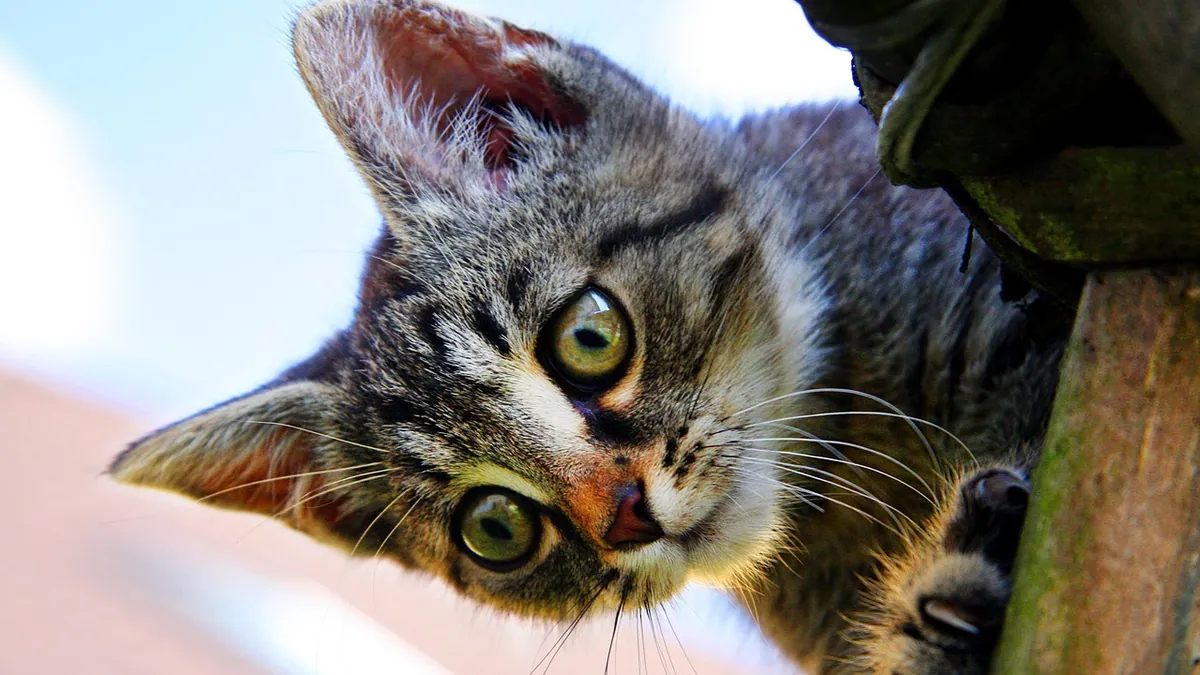
A drooping ear in a cat usually means something is irritating, inflaming, or injuring the ear flap or the nerves that hold it up. Common causes include ear infections, ear hematomas, nerve damage, and tumors. A cat ear drooping on one side or developing suddenly deserves a veterinary look, because the treatment differs a lot depending on the cause.
This article is educational and is not a substitute for veterinary diagnosis or treatment.
Quick Answer
- A drooping ear is a sign, not a diagnosis. The ear flap (pinna) can droop from infection, a blood-filled swelling called a hematoma, nerve damage, or a growth [1][2].
- One ear drooping is more common than both, and it often points to a problem on that side, such as an infection, a hematoma, or facial nerve trouble [1][3].
- A sudden droop with head shaking or scratching often means itch and inflammation, and that combination can lead to an ear hematoma [1].
- A droop with discharge, odor, redness, or pain needs a vet visit soon, because ear infections can spread to the middle ear [4][5].
- A droop with balance loss, circling, head tilt, or facial paralysis is urgent and needs same-day care [3].
What a Drooping Ear Looks Like and What Is Normal
A cat's ear has three parts: the outer ear (the pinna and ear canal), the middle ear (the eardrum and small bones), and the inner ear (the cochlea and the balance system) [2]. The pinna is the flap you see. It normally stands up or sits at the breed's usual angle, and it moves freely when your cat listens.
A drooping ear is a change from that normal position. It may hang lower, fold at the tip, or tilt to one side. Sometimes the whole ear looks heavy or flops forward. You may also see the ear canal itself look red, swollen, or dirty.
Some cats have ears that are shaped differently from birth. An inherited condition called fold-ears causes the tip of the pinna to bend sharply toward or away from the skull [2]. This is not usually linked to hearing loss, but cats with this kind of distortion often have skeletal problems too [2]. If your cat was born with folded ears and nothing has changed, that is different from a new droop.
The important question is whether the droop is new. A new droop, especially on one side, is the one that needs attention.
Main Causes of Cat Ear Drooping
Several problems can make a cat's ear droop. The table below groups the most common ones and what usually comes with them.
| Cause | Typical clues | How urgent |
|---|---|---|
| Ear infection (outer or middle ear) | Head shaking, scratching, discharge, odor, redness, pain when touched [1][4][5] | See a vet within a day or two. Same day if there is balance loss or facial weakness [3] |
| Ear hematoma | A soft, fluid-filled swelling on the pinna, sometimes so large it closes the ear canal [1] | See a vet soon. Hematomas often need drainage or surgery |
| Ear mites or mange | Itching, redness, hair loss, crusting, dark debris in the canal [1][6] | See a vet within a few days |
| Nerve damage (facial nerve) | Droop plus facial paralysis, drooling, inability to blink on that side [3] | Same-day or emergency visit |
| Tumor or growth | A lump or sore on the pinna, often in light-coated cats with sun exposure, or after long-term ear inflammation [7] | See a vet promptly for evaluation |
| Inherited fold-ears | Bent ear tip present since kittenhood, no pain or discharge [2] | Routine visit if you are unsure |
Ear Infections
Ear infections are a leading reason a cat's ear droops. Otodectic mange, caused by ear mites, is a common cause of external ear infection, and it affects the ears and skin with redness, hair loss, itching, and inflammation [1]. Other skin diseases can affect the pinna too, and most of them also show up elsewhere on the body [1].
Middle ear infections (otitis media) are deeper and often more serious. In a group of 38 cats with middle ear disease, otoscopy showed an abnormal eardrum in 93 percent of treated ears, including discoloration, bulging, rupture, or a protruding polyp [4]. Cats with middle ear disease may have chronic ear discharge and vestibular signs [5]. If your cat has a droop plus discharge that keeps coming back, the middle ear may be involved.
Ear Hematomas
An ear hematoma is a swelling filled with blood inside the pinna. It happens when scratching or head shaking breaks a blood vessel [1]. Cats often scratch or shake because of an ear infection, and that scratching can cause the hematoma [1]. The swollen ear feels soft and fluid-filled, and the cat can be uncomfortable [1]. A hematoma can be small or large enough to close off the ear canal [1]. If your cat's ear looks like a puffy pillow, this is a likely cause. You can read more about this in Cat Ear Hematoma: Causes and Treatment.
Nerve Damage
The facial nerve runs close to the ear and controls the muscles of the face and eyelid. If it is damaged, the ear on that side can droop and the face may look uneven. In one reported case, a cat with Horner's syndrome and right-sided facial paralysis was found to have otitis media on both sides and bone damage in the right middle ear [3]. A droop with a droopy eyelid, a lip that hangs, or trouble blinking points to nerve involvement and needs urgent care.
Tumors and Growths
Growths on the ear flap can change its shape and make it droop. Ear tumors are common in light-coated, unpigmented cats with long sun exposure, and constant tissue trauma from intense itching in chronic ear infections is another factor [7]. Any tissue in the pinna can develop abnormal cell growth [7]. One report described a 12-year-old white cat with a hemangiosarcoma of the ear that was treated with surgery after a prior pinnectomy and local recurrence [7]. A lump, sore, or non-healing spot on the ear should always be checked.
Other Skin and Parasite Problems
Notoedric mange, caused by Notoedres cati, is a rare but severe parasitic skin disease that mainly affects stray cats and can spread to people [6]. One cat with this mite had severe itching, hair loss, thick crusts, and inflammation of both ear canals [6]. Parasites and skin disease can make the ear droop through swelling and itch. If you also see hair loss, see Cat Hair Loss on Ears: Causes and What to Do.
Red Flags That Make It an Emergency
Some signs mean you should not wait. Get veterinary care right away if you see any of these:
- Loss of balance, circling, or a head tilt that came on suddenly [3][5]
- Facial paralysis, a drooping eyelid, drooling, or an eye that will not blink [3]
- Severe swelling of the head or neck, trouble breathing, or open-mouth breathing [3]
- A rapidly growing mass, bleeding sore, or open wound on the ear [7]
- A hematoma so large that the ear canal is closed off [1]
- Signs of severe pain, such as crying out, hiding, or refusing to be touched near the head [1]
Balance and facial nerve signs are the ones that worry veterinarians most, because they can point to middle ear or inner ear disease [3][5].
Safe Things You Can Do at Home While Waiting
You cannot treat most ear droops at home, but you can keep your cat comfortable and avoid making things worse.
- Do not put anything in the ear canal unless your veterinarian prescribed it. Home remedies and cotton swabs can push debris deeper or injure the eardrum.
- Do not try to drain a hematoma yourself. The swelling is blood, and opening it at home risks infection and bleeding [1].
- Stop the scratching if you can. A soft cone or an Elizabethan collar can prevent your cat from scratching the ear and making a hematoma worse [1].
- Keep the ear dry and clean on the outside only. Wipe the visible part of the pinna with a soft cloth if your vet has shown you how.
- Note the details. Write down when the droop started, which ear, and whether you saw head shaking, scratching, discharge, odor, or balance problems. This helps your vet a lot.
- Do not give human pain relievers. Many are toxic to cats. Your veterinarian will choose a safe medication and calculate the dose from your cat's weight and health.
If your cat is shaking its head a lot, that motion can worsen an existing problem. See Cat Head Shaking and Ear Problems: What to Know for more on that sign.
What the Veterinarian Will Check and Test
Your vet will start with a full physical exam, including the skin and both ears. Diagnosis of outer ear disease is best based on medical history, a full exam of the skin and ears, and targeted tests [1].
Expect some of these steps:
- Otoscopy. A scope looks into the ear canal and at the eardrum. In cats with middle ear disease, the eardrum may look discolored, bulging, ruptured, or have a polyp [4].
- Ear swabs and cytology. Samples check for mites, bacteria, yeast, and inflammatory cells [1][4].
- Skin scrapings. These check for mites such as Notoedres cati when mange is suspected [6].
- Imaging. CT, MRI, or radiography can show fluid or soft tissue in the middle ear [4][5].
- Biopsy. A sample of any lump or abnormal tissue is sent to a lab. In the reported hemangiosarcoma case, histopathology confirmed the diagnosis and clear margins after surgery [7].
Treatment depends on the cause. Ear infections are treated with cleaning and medication chosen for the specific organism. Middle ear disease may need a procedure to reach and flush the affected compartment, and these techniques continue to be refined [4][5]. Ear flushing is not risk-free. In one report, two cats developed serious upper airway swelling after an ear flush, and one needed intensive care and mechanical ventilation [3]. Your vet will weigh the benefits and risks for your cat.
Hematomas are often treated by draining the blood and, in many cases, surgery to prevent it from refilling. Tumors are usually removed, and the exact plan depends on the type and location [7].
Prevention and Monitoring
You cannot prevent every cause of a drooping ear, but you can lower the odds and catch problems early.
- Check your cat's ears weekly. Look for redness, discharge, odor, swelling, or a change in position. Early treatment of an infection can prevent a hematoma [1].
- Treat ear infections fully. Stopping medication early lets infection return, and chronic inflammation is linked to tumor development in the ear [7].
- Control parasites. Mites and mange cause intense itching that leads to scratching and trauma [1][6].
- Limit sun exposure for light-coated cats. Ear tumors are common in light-coated, unpigmented cats with prolonged sun exposure [7].
- Watch for recurrence. If your cat has had an ear problem before, a new droop may be the first sign it is back. Middle ear disease can recur after treatment in some cases [5].
- Keep follow-up visits. Your vet may want to recheck the ear after treatment, especially after a procedure [4][5].
If you notice redness along with the droop, see Cat Ear Infection with Redness: Causes and When to Worry. If there is also hair loss, Cat Ear Infection with Hair Loss: Causes and Treatment covers that pattern.
Limitations and When to Contact a Veterinarian
This guide cannot tell you what is causing your cat's drooping ear. Only a veterinarian who examines your cat can do that. Individual cases need a veterinarian, and the timing matters.
Contact your veterinarian the same day if your cat has a new droop with discharge, odor, pain, or a soft swelling on the ear flap [1]. Book a routine visit soon if the droop is mild, your cat is eating and acting normally, and there are no other signs.
Go to an emergency clinic now if you see loss of balance, circling, a head tilt, facial paralysis, trouble blinking, severe head swelling, breathing trouble, or a fast-growing mass on the ear [3][7]. These signs can point to middle ear or inner ear disease, nerve damage, or a tumor that needs prompt care [3][7][5].
Frequently Asked Questions
Why is only one of my cat's ears drooping?
A one-sided droop usually points to a problem on that side, such as an infection, a hematoma, or nerve damage [1][3]. Facial nerve problems often affect just one side of the face and ear [3]. Your vet will examine both ears even if only one looks wrong.
Can a cat's ear droop because of an ear infection?
Yes. Ear infections cause itching, redness, and inflammation, and cats often scratch and shake their heads in response [1]. That scratching can also cause a hematoma, which makes the ear swell and droop [1]. Middle ear infections can add balance and nerve signs [3][5].
Is a drooping ear in cats ever normal?
Some cats are born with folded or bent ear tips from an inherited condition called fold-ears [2]. That shape is present from kittenhood and is not usually linked to hearing loss [2]. A new droop in an adult cat is not normal and should be checked.
Can ear mites make a cat's ear droop?
Ear mites are a common cause of external ear infection, and they cause redness, hair loss, itching, and inflammation in the ears and skin [1]. That itch and swelling can change how the ear sits. Mange mites can also cause severe ear and skin disease [6].
How long can I wait before seeing a vet?
If your cat is otherwise acting normal and the droop is mild, a visit within a day or two is reasonable. If there is pain, discharge, a swelling on the flap, balance loss, or facial weakness, do not wait. Call your vet or an emergency clinic right away [1][3].
Related Articles
- Cat Hair Loss on Ears: Causes and What to Do
- Cat Head Shaking and Ear Problems: What to Know
- Cat Ear Infection with Hair Loss: Causes and Treatment
- Cat Ear Hematoma: Causes and Treatment
- Cat Ear Infection with Redness: Causes and When to Worry
- Cat Ear Infection with Swelling: What to Do and When to Worry
- Cat Ear Swollen: Causes, Symptoms, and Treatment
- Cat Ear Abscess: Causes, Symptoms, and Treatment
- Lump or Growth on Your Cat's Ear: Causes and Next Steps
References
- Disorders of the Outer Ear in Cats - Cat Owners. Merck Veterinary Manual.
- Feline Ear Disorders. Cornell University College of Veterinary Medicine.
- Unexpected upper airway obstruction after ear flushing in two cats. Veterinary anaesthesia and analgesia, 2025.
- EXPRESS: Modified transcanal perendoscopic myringotomy and septotomy technique for cats with otitis media - a retrospective study of 38 cats. Journal of feline medicine and surgery, 2026.
- Efficacy of video-otoscope-guided septum bulla fenestration and middle ear lavage for treating otitis media in cats. Journal of feline medicine and surgery, 2025.
- Notoedres cati-induced bilateral erythemato-ceruminous otitis externa in a cat. Parasitology international, 2026.
- Total ear canal ablation for the treatment of auricular hemangiosarcoma in a cat: case report. Brazilian journal of veterinary medicine, 2026.