Cat Ear Abscess: Causes, Symptoms, and Treatment
By Dr. Zubair Khalid, DVM, MS, PhD ·
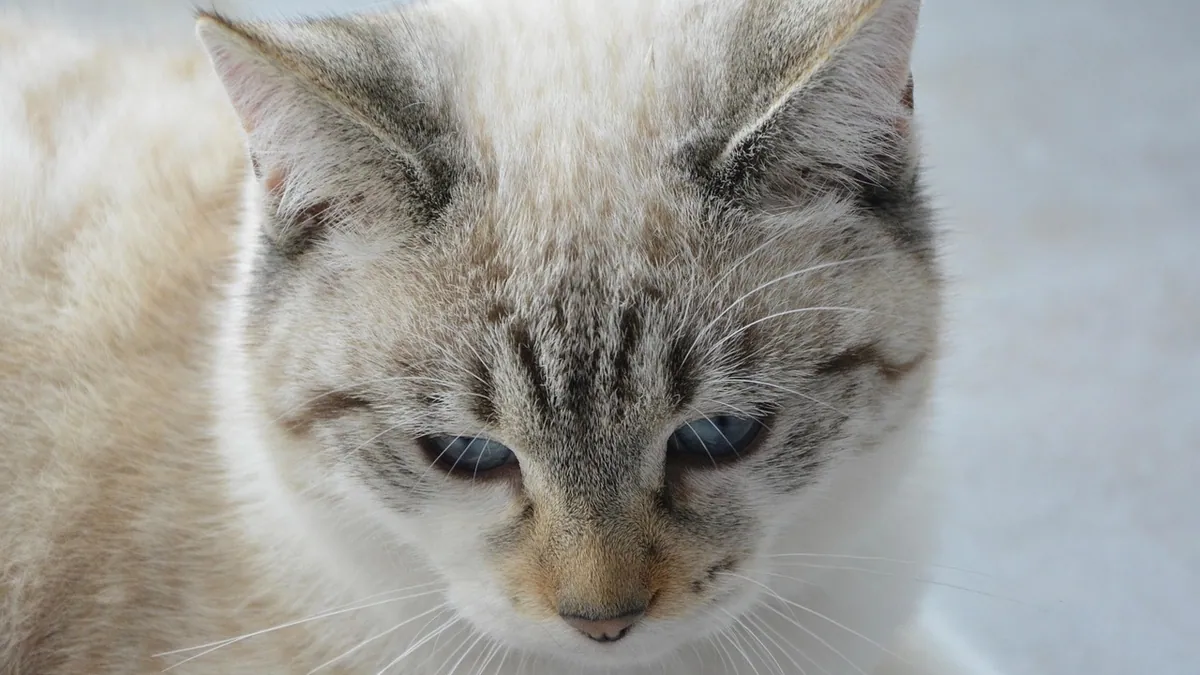
A cat ear abscess is a pocket of pus that forms under the skin of the ear flap or ear canal, usually after bacteria get into a scratch, bite, or blocked gland. It looks like a hot, tender, squishy lump, and it often appears fast. Abscesses need veterinary care because they rarely drain and heal on their own.
This article is educational and is not a substitute for veterinary diagnosis or treatment.
Quick Answer
- An abscess is infected and filled with pus. A hematoma is filled with blood from a broken vessel, and it usually follows head shaking or scratching [1].
- A tumor or other growth tends to feel firm and grows slowly, while an abscess is often soft, painful, and sudden.
- Any warm, rapidly growing, or painful lump on the ear should be seen by a veterinarian, often the same day.
- Do not squeeze, lance, or apply human ointments to the lump. You can push infection deeper or cause bleeding.
- Most abscesses need drainage plus antibiotics, and the dose is calculated by your veterinarian based on your cat's weight and health.
What Is a Cat Ear Abscess?
An abscess is a walled-off collection of pus. Pus forms when the immune system sends white blood cells to fight bacteria, and the dead cells and fluid build up in one spot. On the ear, that spot is usually the pinna, which is the ear flap, or the tissue around the ear canal.
The ear canal itself is a narrow tube that carries sound to the eardrum, and its lining can become inflamed in a condition called otitis externa [2]. Otitis externa is the most common ear canal disorder in cats, and it can affect the ear flap too [2]. When the canal stays inflamed or infected, cats scratch and shake their heads, and that trauma can open the door to an abscess.
An abscess on the ear is not the same as an infection inside the canal. A cat can have both at once. The canal infection causes the itching and discharge, and the abscess is a separate pocket of pus in the skin of the flap or the base of the ear.
Signs Owners Notice: Cat Ear Lump and Swelling
The first thing most owners see is a lump. It may be small at first and then double in size within a day. Common signs include:
- A soft or squishy swelling on the ear flap or at the base of the ear
- Warmth and redness over the lump
- Pain when you touch the ear, or flinching and pulling away
- Head shaking, scratching, or rubbing the ear on furniture
- A bad smell, especially if the abscess has started to drain
- Yellow, brown, or bloody discharge from a small opening
- Drooping of the ear on the affected side
- Reduced appetite or hiding if your cat feels unwell
Some cats with ear disease show redness, swelling, odor, discharge, and scaly skin, and one or both ears can be involved [2]. If your cat also has hair loss around the ear, that points to a skin or parasite problem on top of the ear issue, and you can read more in Cat Ear Infection with Hair Loss: Causes and Treatment.
Abscess, Hematoma, or Tumor?
This is the question owners ask most, and the answer often comes down to feel, speed, and history.
| Feature | Abscess | Hematoma | Tumor or growth |
|---|---|---|---|
| What fills it | Pus | Blood | Abnormal tissue |
| How it feels | Soft, warm, very painful | Soft and fluid-filled, less painful | Firm, sometimes bumpy |
| How fast it appears | Hours to a few days | Often overnight | Weeks to months |
| Common trigger | Scratch, bite, blocked gland, ear infection | Head shaking or scratching that breaks a blood vessel | Sun exposure, chronic irritation, unknown |
| Discharge | Pus, often smelly | Blood if it opens | Usually none unless ulcerated |
| Urgency | Same day | Soon, often within a day or two | Routine visit, sooner if growing fast |
An ear hematoma happens when scratching or head shaking breaks a blood vessel, and the ear flap fills with blood [1]. It can swell a little or enough to close off the ear canal, and it feels soft and fluid-filled [1]. Cats often scratch because of an ear infection, so a hematoma is frequently a sign that something else is going on in the ear [1]. For a full breakdown, see Cat Ear Hematoma: Causes and Treatment.
Tumors are different again. Ear growths are more common in light-coated, unpigmented cats with long sun exposure, and constant tissue trauma from intense itching in chronic otitis is another factor [3]. Any tissue in the pinna can develop abnormal cell growth [3]. A firm lump that has been there for weeks is more suspicious for a growth than an abscess.
Causes and Risk Factors
An abscess needs two things: bacteria and a way in. Common routes include:
- Scratches from itchy ears. Otitis externa causes inflammation, and parasites, foreign objects, and allergies can trigger it directly [2]. Bacteria, yeasts, and middle ear infections can make things worse [2].
- Bites and fight wounds. Outdoor and free-roaming cats are at higher risk. In one population of free-roaming cats, 40.5% had otitis externa based on mites, yeast, bacteria, or inflammatory cells on testing [4].
- Ear mites. Otodectes cynotis was found in 25.7% of free-roaming cats tested and was the primary cause of ear inflammation in most of those cases [4].
- Blocked glands or hair follicles. A small blocked pore on the ear flap can turn into an abscess, especially in cats with skin disease.
- Chronic ear disease. Ongoing inflammation keeps the skin irritated and easier to infect.
- Immune-mediated ear disease. Proliferative and necrotizing otitis externa causes thick, dark red, brown, or black crusts, most often on the inner ear flap and vertical canal on both sides [5]. Its cause is not known, and it is thought to be immune-mediated [5].
Ear problems are common even in owned cats. In a study of privately owned cats, the prevalence of otitis externa was 17%, and ear cytology was abnormal in 19% of cats [6]. Mites were found in 6%, and about half of those cats were exclusively indoor and completely asymptomatic [6]. That last point matters. Your cat can carry ear mites or yeast without you noticing anything until an abscess appears.
How Veterinarians Diagnose an Ear Abscess
Diagnosis starts with a history and a full exam. Your vet will look at both ears, the skin, and the lymph nodes, and will feel the lump to judge whether it is fluid, firm, or filled with pus.
A few tests are common:
- Otoscopy. The vet uses an otoscope to look inside the canal for foreign objects, polyps, debris, parasites, and eardrum problems [2]. Cats often need sedation or anesthesia for this if the ear is painful, blocked with discharge, or if the cat will not hold still [2].
- Ear swabs and cytology. A sample of wax and discharge is examined under a microscope to find bacteria, yeast, or mites [2].
- Culture and sensitivity. If the infection is deep or not responding, a sample of pus is sent to a lab to identify the bacteria and the right antibiotic. In one reported case, a deep ear and brain abscess in a cat grew Staphylococcus aureus that was sensitive to amoxicillin-clavulanic acid and metronidazole [7].
- Imaging. X-rays or a CT scan may be needed if the vet suspects the infection has spread beyond the ear canal into the middle ear or skull [7].
- Biopsy. If the lump is firm or does not respond to treatment, a tissue sample helps rule out a tumor [3].
If your cat has a head tilt, loss of balance, or seizures along with ear disease, tell your vet right away. Those signs can mean the infection has moved into the inner ear or brain, which is a serious problem that needs imaging and possibly surgery [7].
Treatment Options for a Cat Ear Abscess
Treatment depends on how deep the abscess is and what caused it.
Drainage
Most abscesses need to be opened and flushed so the pus can escape. Your vet will usually sedate your cat, make a small opening, flush the pocket, and leave a drain in place for a day or two if the pocket is large. Do not try this at home. Squeezing an abscess can spread infection and cause serious bleeding.
Antibiotics and Pain Relief
Antibiotics are standard after drainage. The choice depends on the bacteria involved and whether a culture was done. Your veterinarian calculates the dose from your cat's weight, the specific drug, and your cat's overall health, so never use leftover antibiotics from another pet or a previous illness.
Pain control matters too. Ear abscesses hurt, and untreated pain makes scratching worse, which can lead to a hematoma on top of the abscess [1].
Treating the Underlying Ear Disease
If the abscess came from an ear infection, the infection has to be treated or the problem will come back. That may mean ear cleaning, medicated drops, antiparasitic treatment for mites, or a diet and allergy plan. For a closer look at medical options, see Cat Ear Infection Treatment. If your cat has dark debris in the canal, Cat Ear Infection with Black Discharge: Causes and Treatment covers what that usually means.
Surgery
Surgery is reserved for severe or repeated cases. A hematoma that keeps refilling may need surgical repair. Deep infections that reach the middle ear or skull may need procedures such as a ventral bulla osteotomy, which opens the bony chamber of the middle ear to remove infected material [7]. In one cat with an intracranial abscess and otitis media and interna, surgery plus antibiotics resolved the problem, and the temporary balance problems and Horner's syndrome fully resolved within three months [7]. Tumors of the ear may require removing part or all of the ear canal, and in one reported case of a moderate grade hemangiosarcoma linked to chronic otitis, the cat stayed free of recurrence one year after surgery [3].
Recovery, Outlook, and Long-Term Management
Most simple ear abscesses improve quickly once they are drained and treated. You may see less pain within a day and much less swelling within a few days. Full healing of the skin can take one to two weeks.
What you do at home matters:
- Give all medications for the full course, even if the ear looks normal.
- Keep the drain site clean and dry if a drain was placed.
- Use an Elizabethan collar if your cat keeps scratching. This protects the surgical site and lowers the risk of a hematoma [1].
- Check the ear daily for new swelling, odor, or discharge.
- Keep follow-up appointments so your vet can confirm the infection has cleared.
Long-term outlook depends on the cause. A one-time abscess from a fight wound often heals with no lasting issues. An abscess tied to chronic otitis, allergies, or mites needs ongoing management, because the underlying inflammation keeps coming back [2]. Cats with immune-mediated ear disease such as proliferative and necrotizing otitis externa often need long-term topical and systemic immune-modulating treatment [5].
Hearing loss is possible with severe or untreated ear disease, and some conditions can cause partial or total deafness if they are not recognized and treated [8]. Most feline ear disorders are treatable and do not cause permanent hearing loss, so early care gives your cat the best chance [8].
Prevention
You cannot prevent every abscess, but you can lower the odds:
- Treat ear infections early. Itching and head shaking are the first signs, and they are also what causes hematomas [1].
- Check ears weekly. Look for redness, odor, discharge, or crusts [2].
- Keep parasite prevention current. Ear mites are a common trigger, and they can affect indoor cats too [6].
- Manage allergies. Allergies directly trigger ear inflammation, and identifying all the factors is key to keeping the infection from coming back [2].
- Limit sun exposure for light-colored cats. Ear growths are more common in light-coated, unpigmented cats with prolonged sun exposure [3].
- Keep cats indoors or supervise outdoor time. Fight wounds and mite exposure are more common in free-roaming cats [4].
- Do not use cotton swabs deep in the canal. You can pack debris and cause more irritation.
Limitations and When to Contact a Veterinarian
Call your veterinarian the same day if you notice a new lump on the ear, a swollen ear flap, a bad smell, pus, or if your cat is pawing at the ear and seems painful. These signs usually mean the abscess needs drainage and antibiotics.
Go to an emergency clinic right away if your cat has a head tilt, circling, loss of balance, vomiting, seizures, trouble eating, or a sudden collapse. These can signal that infection has spread to the inner ear or brain, which is a medical emergency [7].
Book a routine visit if a lump has been present for weeks, is firm, is slowly growing, or does not hurt. Firm, slow-growing lumps are more suspicious for a tumor than an abscess [3].
Every cat is different, and only a veterinarian who examines your cat can decide what treatment is right.
Frequently Asked Questions
Can a cat ear abscess burst on its own?
Yes, an abscess can rupture and drain on its own, but that does not mean it is cured. The pocket often refills, and the infection can spread deeper into the ear or skin. A veterinarian still needs to flush the area and prescribe antibiotics.
Is a cat ear abscess contagious to other pets?
The abscess itself is not contagious, but the underlying cause may be. Ear mites spread easily between cats, and bite wounds from fighting can pass infections. If mites are the trigger, all pets in the home usually need treatment.
How long does a cat ear abscess take to heal?
With drainage and antibiotics, most cats feel better within a day or two and the skin heals in one to two weeks. Deep infections or those tied to chronic ear disease take longer and may need repeat visits.
Can I treat a cat ear abscess at home?
No. Home treatment cannot drain a deep pocket of pus, and squeezing it can cause bleeding or push infection further into the tissue. Over-the-counter human ointments are not made for cats and some ingredients are toxic.
Will my cat need surgery for an ear abscess?
Most ear abscesses are treated with drainage, flushing, and medication, not surgery. Surgery is reserved for deep infections that reach the middle ear, tumors, or hematomas that keep refilling [7][3].
Related Articles
- Symptoms Of Cat Ear Infection
- Cat Ear Infection with Hair Loss: Causes and Treatment
- Cat Ear Infection Treatment
- Cat Ear Infection with Black Discharge: Causes and Treatment
- Cat Ear Hematoma: Causes and Treatment
- Ear Infections In Cats Symptoms
- Cat Ear Swollen: Causes, Symptoms, and Treatment
- Cat Paw Abscess: Causes, Signs, and Treatment
- Cat Lump With Pus: Abscess or Something Else?
References
- Disorders of the Outer Ear in Cats - Cat Owners. Merck Veterinary Manual.
- Otitis Externa (External Ear Infection) in Cats - Cat Owners. Merck Veterinary Manual.
- Total ear canal ablation for the treatment of auricular hemangiosarcoma in a cat: case report. Brazilian journal of veterinary medicine, 2026.
- Otitis externa in free-roaming cat population: Clinical examination, cytology, and mycology culture. Open veterinary journal, 2025.
- Proliferative and Necrotizing Otitis Externa of Cats and Kittens. The Veterinary clinics of North America. Small animal practice, 2025.
- Prevalence of Otitis Externa in a Population of Owned Cats in Northern Italy. Animals : an open access journal from MDPI, 2026.
- Intracranial abscess and otitis interna treated by temporal burr-hole craniotomy and ventral bulla osteotomy in a Maine coon cat. The Canadian veterinary journal = La revue veterinaire canadienne, 2026.
- Feline Ear Disorders. Cornell University College of Veterinary Medicine.