Cat Allergy Shots: How Immunotherapy Works
By Dr. Zubair Khalid, DVM, MS, PhD ·
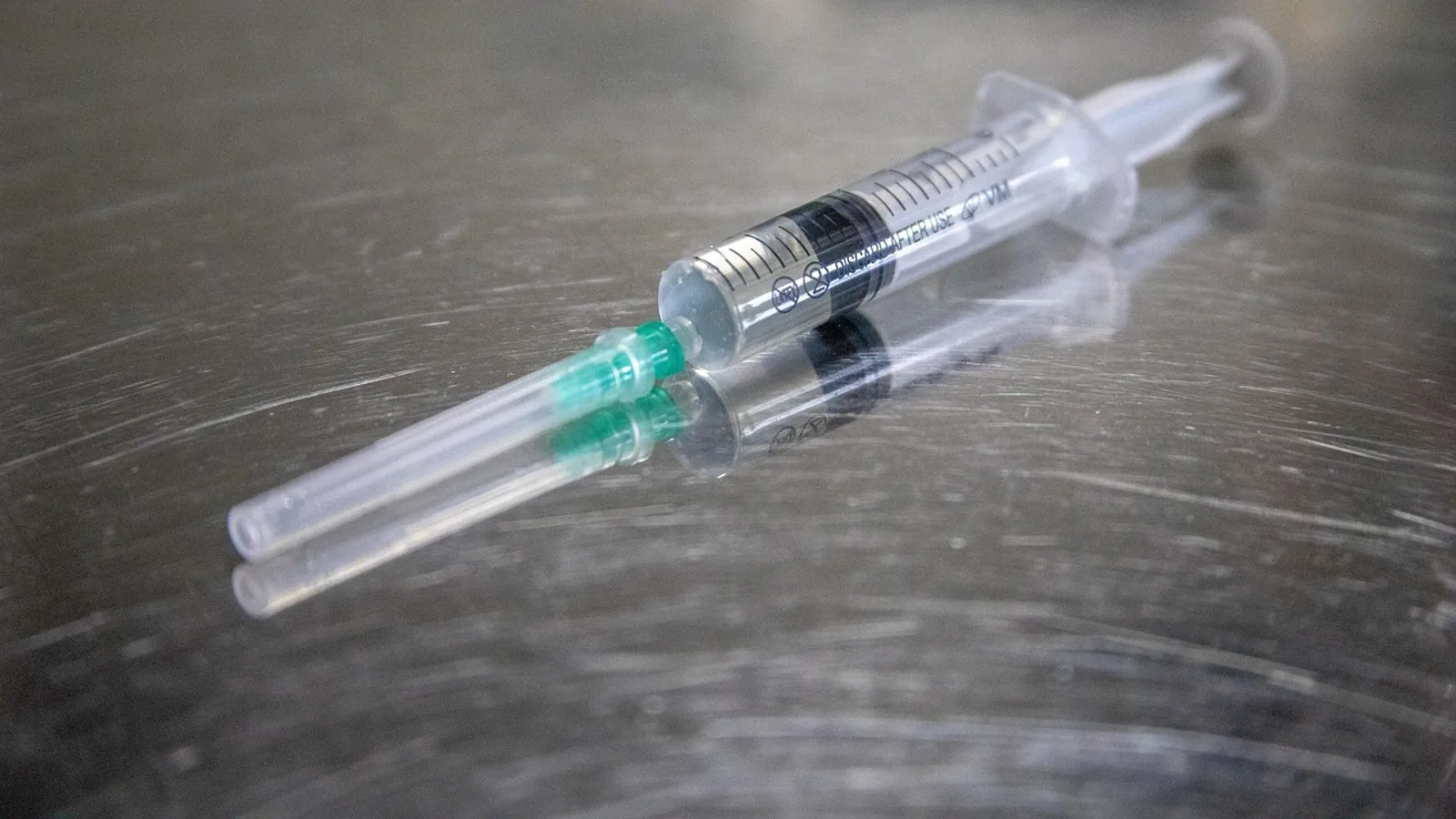
Cat allergy shots are the only treatment for feline atopic skin syndrome that targets the underlying cause of the disease rather than suppressing its symptoms. A course of allergen-specific immunotherapy (ASIT) starts with allergy testing to identify which environmental allergens trigger your cat's itch, then uses a series of subcutaneous injections to gradually teach the immune system to tolerate those allergens. The hands-on time is small, a few minutes per injection, but the commitment is long. Build-up can take weeks to months, maintenance injections continue every 2 to 4 weeks for at least a year, and most cats that respond show meaningful improvement between 3 and 6 months, with the response plateauing somewhere around 9 to 12 months [1].
This article walks through the clinical pathway from start to finish: how allergens are chosen, what the injection schedule looks like, what response rates the veterinary literature reports, and the decision points where owners and veterinarians need to talk honestly about whether to continue.
This article is educational and is not a substitute for veterinary diagnosis or treatment.
What Cat Allergy Shots Actually Do
Feline atopic skin syndrome (FASS) is an allergic skin disease driven by an exaggerated immune response to environmental allergens such as house dust mites, storage mites, pollens, molds, and insect allergens [2][3]. The cat's immune system treats these harmless proteins as threats and mounts an inflammatory response that shows up as itching, hair loss, crusting, and sometimes the classic reaction patterns of miliary dermatitis or eosinophilic lesions [4].
Symptomatic drugs, including glucocorticoids, cyclosporine, antihistamines, and essential fatty acids, reduce the inflammation after it starts [5]. They do not change the immune system's underlying tendency to overreact. Allergen immunotherapy works differently. By repeatedly exposing the immune system to the offending allergens in gradually increasing amounts, ASIT aims to induce a regulatory T-cell response that downregulates the exaggerated immune reaction [1]. In human and canine patients, this shift is associated with the production of "blocking" IgG antibodies and a dampening of the IgE-driven inflammatory cascade [6].
The practical consequence is that cat allergy shots are a disease-modifying treatment. When they work, they reduce the intensity of the allergic response itself, which can lower the amount of symptomatic medication a cat needs and, in some cases, reduce the frequency of flares [2]. They are not a cure, and they do not work in every cat. But for the right patient, they offer something no antihistamine or steroid can: a chance to change the trajectory of a lifelong disease.
The trade-off is time and commitment. Owners need to accept that the first few months may show little visible change, that injections must be given on schedule, and that the full assessment of whether the treatment is working takes close to a year.
Why Allergy Testing Comes First
Immunotherapy cannot be prescribed blindly. The allergen extract must contain the specific allergens that cat is sensitized to, and those allergens have to be identified through testing. Two methods are used in veterinary practice: intradermal testing (IDT) and serum allergen-specific IgE testing.
Intradermal testing involves injecting small amounts of individual allergens into the skin, usually on the lateral thorax, and reading the resulting wheals after a short waiting period. It is performed under sedation or anesthesia. A large retrospective study of 158 cats with FASS found that IDT was interpretable in 153 of them, or 97 percent, when intravenous fluorescein and a Wood's lamp were used to help read the reactions [2]. That is a high success rate and supports IDT as a reliable tool in experienced hands.
Serum IgE testing is a blood test. It is easier on the cat and does not require sedation, but the results need careful interpretation. Not every positive result on a serum test corresponds to a clinically relevant allergy, and not every clinically relevant allergy shows up as a positive result. The veterinary literature is clear that both IDT and serum IgE testing are used only to identify allergens for inclusion in the immunotherapy extract, not to make the diagnosis of atopy itself [5]. The diagnosis of FASS is made from history, clinical signs, and exclusion of other itchy diseases such as flea allergy and food allergy [5][4].
In the 158-cat study, 35 percent of cats had no detectable sensitization at all on IDT, and among the 65 percent that did, most were sensitized to more than one allergen. House dust mites were the most common, found in 74 percent of sensitized cats, followed by storage mites in 44 percent, weeds in 19 percent, tree pollens in 19 percent, grasses in 18 percent, fleas in 17 percent, and molds in 7 percent [2]. That pattern matters because it shapes what goes into the extract and how likely the cat is to encounter those allergens year-round.
The Food Allergy Distinction
One of the most common misunderstandings about cat allergy shots is that they treat food allergies. They do not. Immunotherapy is directed at environmental allergens. Food allergy is diagnosed and managed through elimination diet trials and then dietary avoidance. The 158-cat study specifically required that cats had undergone elimination diet trials before being included, precisely because food allergy has to be ruled out or managed separately [2]. A cat can have both environmental and food allergies at the same time, and in that case immunotherapy addresses only the environmental component.
The Build-Up Phase: Teaching the Immune System to Tolerate
The build-up phase, also called the induction phase, is when the allergen dose is increased step by step until a target maintenance dose is reached. The classical protocol uses subcutaneous injections of increasing doses and concentrations at short intervals over several weeks to months [1]. The exact schedule is tailored to the individual patient.
Two broad approaches exist. Conventional build-up spreads the dose increases over weeks or months, with injections typically given every few days to every week or two. Rush immunotherapy (RIT) compresses the induction phase into a single day, giving incrementally increasing doses every 30 minutes until the maintenance dose is reached [7][8][9].
Rush protocols have been studied in cats. A pilot study of four cats used a protocol that reached a maintenance dose of 15,000 protein nitrogen units per milliliter over a 5-hour period, with injections every 30 minutes and vital signs checked every 15 minutes [7]. Two of the four cats developed mild itching that resolved when the next injection was delayed by 30 minutes, and all four completed the protocol. A later case series of two cats used a similar approach with a maintenance dose of 20,000 protein nitrogen units per milliliter and premedication with an antihistamine, and both cats completed RIT without adverse reactions [9].
A larger retrospective review of 47 cats that underwent RIT found adverse events in 3 cats, or 6.4 percent. The events included rapid breathing, behavioral distress, and increased itching. In one cat, RIT was stopped before the protocol was completed. All affected cats later transitioned to maintenance immunotherapy without recurrence of adverse events [8]. That safety profile is reassuring, but it comes with an important caveat: rush protocols require hospitalization for the day, close monitoring, and premedication, and they are not appropriate for every cat.
Conventional build-up is slower but gentler. It spreads the same immune education over a longer period and is often chosen when a cat has other health conditions, when the owner cannot leave the cat for a full day, or when the veterinarian prefers a more conservative approach.
Why the Dose Increases Matter
The immune system does not tolerate an allergen overnight. Giving a large dose too soon can trigger the very reaction the treatment is trying to prevent. The gradual increase allows the immune system to adapt at each step. This is why the schedule is not arbitrary and why skipping or delaying doses can matter. If too much time passes between injections during build-up, the immune system may lose some of the tolerance it has built, and the veterinarian may need to step the dose back down.
Maintenance Phase: The Long Haul
Once the target dose is reached, the cat enters the maintenance phase. In classical immunotherapy, a fixed dose is given at longer intervals, typically every 2 to 4 weeks [1]. The dose and interval are tailored to the individual patient, and some cats can eventually stretch to longer intervals if they are doing well.
Maintenance is where the real test of owner commitment happens. The injections are not difficult to give at home for most owners, but they must be given consistently. Missing doses during maintenance is less risky than missing doses during build-up, but a pattern of missed injections can blunt the treatment's effect.
The table below summarizes the two phases side by side.
| Feature | Build-Up (Induction) Phase | Maintenance Phase |
|---|---|---|
| Goal | Reach target allergen dose safely | Sustain immune tolerance |
| Typical duration | Weeks to months (conventional) or one day (rush) | At least 12 months, often longer |
| Injection frequency | Every few days to every 1 to 2 weeks (conventional), or every 30 minutes over several hours (rush) | Every 2 to 4 weeks |
| Monitoring | Close observation, especially during rush protocols | Routine rechecks, typically every 3 to 6 months |
| Owner role | Hospital visits during rush, or at-home injections during conventional build-up | At-home injections and scheduled rechecks |
| Common adjustments | Dose held or reduced if reactions occur | Interval or dose adjusted based on response |
Expected Response Timeline and Success Rates
Owners want to know when they will see a difference. The honest answer is that immunotherapy is slow.
Improvement typically begins to appear around 3 to 6 months after starting treatment. The response then continues to build and generally plateaus by 9 to 12 months [1]. This means the first year is the assessment period. A cat that shows no improvement at 3 months is not necessarily a failure, and a cat that shows partial improvement at 6 months may continue to improve through the rest of the year.
The response rate in cats is roughly 60 to 70 percent. In the 158-cat study, ASIT was initiated in 78 cats, and one-year follow-up was available for 42. Among those 42, ASIT had no effect in 11 cats, or 26 percent, while the remaining 31 cats, or 74 percent, showed a significant reduction in medication needs [2]. That 74 percent figure is higher than the commonly quoted range, and it reflects a specific population of cats that were carefully diagnosed and tested. Other reviews describe the efficacy data in cats as sparse compared with dogs, where subcutaneous immunotherapy is an accepted treatment [6]. A reasonable expectation for owners is that roughly 6 to 7 out of 10 atopic cats will respond, with the caveat that individual results vary.
Sublingual immunotherapy (SLIT), which delivers allergens under the tongue rather than by injection, has also been studied in cats. A prospective trial of 22 cats with atopic dermatitis sensitized to dust and storage mites found significant reductions in both lesion scores and itch scores by the third month of treatment, with continued improvement through 12 months [10]. Sixteen of the 22 cats completed the study. That is a useful alternative for owners who cannot give injections, though it is a different route and a different protocol from the classical subcutaneous approach.
Response Milestones at a Glance
| Time Point | What to Expect |
|---|---|
| Weeks 0 to 12 | Build-up completed or well underway. Little to no visible improvement in most cats. |
| Month 3 | First signs of improvement may appear. Some cats show reduced itching or lower medication needs. |
| Month 6 | Clearer picture of response. Many responding cats show meaningful improvement. |
| Month 9 | Response continues to build in responders. |
| Month 12 | Response typically plateaus. This is the point at which the treatment's value is fairly assessed. |
What Else Has to Continue
Immunotherapy does not replace the rest of the allergy management plan. Three things have to keep going alongside the injections.
Flea control is non-negotiable. Flea allergy is one of the most common causes of itchy skin in cats, and the 158-cat study found flea sensitization in 17 percent of tested cats [2]. A cat with environmental allergies that also has fleas will keep itching regardless of how well the immunotherapy is working. Year-round flea prevention is standard.
Secondary infection management also continues. Atopic cats scratch, and scratched skin gets infected. The 45-cat retrospective study found superficial bacterial pyoderma in 49 percent of cats and Malassezia dermatitis in 7 percent [3]. These infections have to be treated when they occur, and they can flare during allergy season. Immunotherapy may reduce the frequency of these flares over time, but it does not eliminate the need to watch for them.
Symptomatic medication may still be needed, especially during the first year. The goal of immunotherapy is to reduce the need for steroids, cyclosporine, and other drugs, not necessarily to eliminate them entirely. The 158-cat study measured medication scores specifically because the value of immunotherapy in cats is often judged by how much other medication can be reduced [2]. A cat that still needs some symptomatic support but needs much less of it is a treatment success.
How the Decision Path Works
The flowchart below shows the main decision path from diagnosis through the first year of treatment.
flowchart TD
    A[Persistent itching in a cat] --> B[Rule out fleas and food allergy]
    B --> C[Diagnose feline atopic skin syndrome]
    C --> D[Intradermal or serum IgE testing]
    D --> E{Allergens identified}
    E -->|No| F[Manage symptoms and revisit testing]
    E -->|Yes| G[Build allergen extract]
    G --> H[Build-up phase]
    H --> I[Maintenance every 2 to 4 weeks]
    I --> J{Response at 3 to 6 months}
    J -->|Improving| K[Continue through 12 months]
    J -->|No change| L[Reassess at 9 to 12 months]
Materials and Reagents: What Goes Into a Cat Allergy Shot
Owners often ask what is actually in the syringe. The answer is a customized allergen extract.
The extract is prepared from commercially available allergen preparations. In the feline rush immunotherapy pilot study, extracts were supplied by Greer Laboratories and doses were measured in protein nitrogen units, with a maintenance concentration of 15,000 protein nitrogen units per milliliter [7]. The two-cat case series used a maintenance dose of 20,000 protein nitrogen units per milliliter [9]. These figures illustrate the range used in published feline protocols, but the specific concentration for any individual cat is determined by the veterinarian based on the cat's test results and the manufacturer's labeling.
The extract contains the specific allergens the cat is sensitized to. In the 158-cat study, the most common allergens included in feline extracts were house dust mites (Dermatophagoides farinae and D. pteronyssinus), storage mites (Tyrophagus putrescentiae, Acarus siro, and Lepidoglyphus destructor), grasses, weeds, tree pollens, molds, and flea allergen [2]. A cat sensitized to dust mites and grasses would get an extract containing those allergens. A cat sensitized only to storage mites would get a narrower extract.
Premedication is used in some protocols. The feline rush pilot study used triamcinolone and hydroxyzine before the first injection [7]. The two-cat case series used an antihistamine [9]. Premedication is intended to reduce the risk of adverse reactions during the rapid dose escalation of rush protocols. It is not used in every protocol and is not needed for conventional build-up in most cases.
Storage and handling matter. Allergen extracts are typically refrigerated and have a limited shelf life. Owners who give injections at home need clear instructions on storage, handling, and what to do if a vial is dropped or left out. The veterinarian or pharmacist who dispenses the extract provides these instructions.
Step-by-Step: The Injection Procedure
The following steps describe how a subcutaneous allergen injection is given. This is the procedure a veterinarian or trained owner follows.
- Confirm the dose and the cat's identity. The extract is customized, so giving the wrong vial to the wrong cat is a real risk in multi-cat households. Check the label against the cat's record every time.
- Prepare the syringe. Draw the prescribed volume from the vial using a new needle and syringe. Do not reuse needles. Do not draw from a vial that looks cloudy, discolored, or has particles in it.
- Position the cat. Most injections are given in the scruff or over the shoulder area, where the skin is loose. A second person can help hold a wiggly cat, or the cat can be wrapped in a towel with the injection site exposed.
- Lift a tent of skin. Pinch a fold of skin between thumb and forefinger. This creates a pocket for the needle and keeps the injection subcutaneous rather than into muscle.
- Insert the needle at a slight angle. A short, sharp insertion reduces discomfort. The needle should go into the tent of skin, not through it.
- Aspirate briefly. Pull back slightly on the plunger. If blood appears, withdraw and start over at a new site. This step confirms the needle is not in a blood vessel.
- Inject slowly. Push the plunger steadily. Rapid injection can cause discomfort and a larger local reaction.
- Withdraw and massage. Remove the needle and gently rub the site for a few seconds. This helps distribute the extract and reduces the chance of a local swelling.
- Observe the cat for 15 to 30 minutes. Watch for itching, swelling, vomiting, difficulty breathing, or behavioral changes. Most reactions, when they occur, happen within this window.
- Record the injection. Note the date, dose, site, and any reaction. This record helps the veterinarian adjust the protocol if needed.
The reason for each step is the same: reduce the risk of an adverse reaction and ensure the cat receives the intended dose. The observation period after injection is the single most important safety step.
Reading the Results: What Improvement Looks Like
Improvement in feline atopic skin syndrome is measured in two ways: clinical signs and medication needs.
Clinical signs include the extent and severity of skin lesions, the intensity of itching, and the frequency of flares. The Feline Dermatitis Extent and Severity Index (FEDESI) and a pruritus Visual Analog Scale (pVAS) are two tools used in feline studies to track these changes [11]. In the sublingual immunotherapy trial, SCORFAD lesion scores dropped from a median of 19 at baseline to 2.5 at 12 months, and pVAS itch scores dropped from a median of 8 to 2.3 over the same period [10]. Those are large changes, and they illustrate what a good response can look like.
Medication needs are the other measure. The 158-cat study compared medication scores between cats that received ASIT and those that did not over a one-year period, and found that cats receiving ASIT had significantly lower medication needs [2]. For owners, this often translates to fewer steroid courses, lower cyclosporine doses, or longer stretches between flares.
A partial response is still a response. A cat that goes from needing daily medication to needing it twice a week has benefited from immunotherapy even if the skin is not perfect. The veterinarian's job is to weigh the degree of improvement against the cost, effort, and risk of continuing.
Troubleshooting: When Something Goes Wrong
| Symptom | Likely Cause | What to Do |
|---|---|---|
| Itching or hives within 30 minutes of injection | Local or mild systemic reaction to the allergen dose | Note the reaction, contact the veterinarian. The next dose may be reduced or the interval extended. |
| Swelling at the injection site lasting more than a day | Local inflammatory response | Report to the veterinarian. A persistent swelling may require a dose adjustment. |
| Vomiting, diarrhea, or lethargy after injection | Systemic reaction | Contact the veterinarian immediately. Do not give the next dose until advised. |
| Difficulty breathing, facial swelling, collapse | Serious systemic reaction | This is an emergency. Seek veterinary care immediately. |
| No improvement after 6 months | The cat may be a non-responder, or the extract may not match the cat's allergens | Discuss with the veterinarian. Re-testing or adjusting the extract may be considered. |
| Increased itching after starting immunotherapy | Early flare or unrelated trigger such as fleas or food | Have the cat rechecked. Flea control and diet should be reviewed. |
| Missed a dose during build-up | The immune system may have lost some tolerance | Contact the veterinarian before giving the next dose. The dose may need to be stepped back. |
Variations on the Standard Protocol
Not every cat follows the same schedule. Several variations exist, and the choice depends on the cat, the owner, and the veterinarian's judgment.
Rush immunotherapy compresses build-up into a single day. It requires hospitalization, premedication, and close monitoring, but it reaches maintenance dosing much faster [7][8][9]. It is a reasonable option for owners who cannot manage a weeks-long build-up at home, provided the cat is healthy enough for the monitoring involved.
Sublingual immunotherapy delivers allergens under the tongue instead of by injection. A 12-month trial in 22 cats with dust and storage mite allergy found significant improvements in lesion and itch scores by month three [10]. SLIT avoids needles, which some owners prefer, but it is a different protocol with its own dosing schedule.
Recombinant and conjugated vaccines represent a newer direction. A study of a recombinant Der f 2 pullulan-conjugated immunotherapy vaccine in 11 cats found no evident adverse effects and significant improvements in lesion and itch scores after six weeks, with monthly dosing thereafter for a total of 18 weeks [11]. Cats with higher pretreatment Der f 2-specific IgE levels were more likely to improve. This is an area of active research and not yet a standard first-line option.
The common thread across all variations is the same: identify the allergens, expose the immune system to them gradually, and give the treatment enough time to work.
Storage and Stability Notes
Allergen extracts are biological products and they degrade over time. They are typically stored refrigerated, and the expiration date on the vial should be respected. Freezing is generally avoided unless the manufacturer specifies otherwise, because ice crystals can damage the allergen proteins.
Owners who give injections at home should keep the vial in a consistent location, away from direct light and heat. A vial that has been left at room temperature for an extended period may lose potency, and the veterinarian should be told so a replacement can be considered.
Needles and syringes should be stored in a clean, dry place and disposed of properly. Sharps containers are available at most pharmacies, and used needles should never be placed in household trash.
Cost and Commitment: The Owner's Decision
Immunotherapy is a long-term commitment. The costs include the initial testing, the extract itself, the injections, and the recheck visits. The extract is customized, which makes it more expensive than a standard medication, and the cost is ongoing for the duration of treatment.
The commitment is not just financial. Someone has to give the injections, observe the cat afterward, and keep the schedule. For owners who travel frequently or who have cats that are difficult to handle, this can be a real barrier. The survey of primary care practitioners found that only 16 percent reported recommending ASIT for cats, compared with 44.3 percent for dogs, and that fewer veterinarians referred atopic cats for specialist care than atopic dogs [12]. Some of that gap reflects the sparser evidence base in cats, and some reflects the practical difficulty of the treatment.
The decision to start immunotherapy should be made with a clear understanding of the timeline. A cat that starts treatment today will not look different next week. The first meaningful assessment happens at 3 to 6 months, and the full picture emerges at 9 to 12 months. Owners who are not prepared for that timeline may be disappointed. Owners who are prepared for it often find that immunotherapy is the most satisfying part of their cat's allergy management, because it is the only treatment that addresses the disease itself.
Limitations and When to Contact a Veterinarian
Immunotherapy is not appropriate for every cat, and it is not a guaranteed cure. Some cats do not respond, and the reasons are not always clear. The extract may not match the cat's allergens, the cat may have concurrent conditions that complicate the picture, or the immune system may simply not respond to the protocol.
Contact a veterinarian promptly if any of the following occur:
- Your cat has difficulty breathing, facial swelling, vomiting, or collapse after an injection. This is an emergency.
- Your cat develops a swelling at the injection site that lasts more than a day or grows larger.
- Your cat's itching gets significantly worse after starting immunotherapy.
- Your cat misses multiple doses during build-up.
- Your cat shows no improvement after 6 months of consistent treatment.
- Your cat develops new skin lesions, hair loss, or signs of infection.
- Your cat's overall health changes in any way that concerns you.
Individual cats vary, and the decisions about testing, extract composition, dosing, and whether to continue treatment belong with the veterinarian who knows the cat's history.
Frequently Asked Questions
How long do cat allergy shots take to work?
Most cats that respond show the first signs of improvement around 3 to 6 months, with the response continuing to build and typically plateauing by 9 to 12 months [1].
What percentage of cats respond to immunotherapy?
Roughly 60 to 70 percent of atopic cats respond. In one study of 42 cats with one-year follow-up, 74 percent showed a significant reduction in medication needs [2].
Do cat allergy shots cure allergies?
No. Immunotherapy reduces the intensity of the allergic response and can lower the need for other medications, but it does not cure the underlying tendency to develop allergies [1][2].
Can cat allergy shots treat food allergies?
No. Immunotherapy targets environmental allergens. Food allergy is managed through elimination diet trials and dietary avoidance [2].
How often are maintenance injections given?
Maintenance injections are typically given every 2 to 4 weeks, with the exact interval tailored to the individual cat [1].
What is rush immunotherapy?
Rush immunotherapy compresses the build-up phase into a single day by giving increasing doses every 30 minutes until the maintenance dose is reached. It requires hospitalization and monitoring [7][8][9].
Can I give the injections at home?
Yes, many owners give maintenance injections at home after training. The veterinarian provides instructions on dosing, storage, and what to watch for after each injection.
What happens if my cat does not respond?
If there is no improvement after 9 to 12 months of consistent treatment, the veterinarian may reconsider the extract, re-test the cat, or discuss other management options. Some cats simply do not respond to immunotherapy [2].
Related Articles
- Dog Allergy Shots: How They Work and What to Expect
- Neoantigen Prediction Algorithms in Cancer Immunotherapy
- Monitoring Immunotherapy in Veterinary Oncology: Response and Toxicity
- Melanoma Vaccine for Dogs: Canine Oral Melanoma Immunotherapy
- Cat Vaccination Schedule: Which Shots Are Essential for Your Cat?
- Dog Vaccination Schedule: What Shots Does Your Dog Really Need?
- Top Dog Food Allergies: Ingredients to Avoid
- LC-MS and LC-MS/MS: How They Work
- Minipreps: How They Work and When to Use Them
Sources
- A systematic review of allergen immunotherapy, a successful therapy for canine atopic dermatitis and feline atopic skin syndrome.
- A retrospective, multicentric controlled study of the effect of specific allergen immunotherapy on medication needs in cats with atopic skin syndrome.
- Feline atopic dermatitis: a retrospective study of 45 cases (2001-2012).
- [[Clinical symptomps, diagnosis and therapy of feline allergic dermatitis].](https://pubmed.ncbi.nlm.nih.gov/24973320/)
- Atopic dermatitis in cats and dogs: a difficult disease for animals and owners.
- Allergen immunotherapy in people, dogs, cats and horses - differences, similarities and research needs.
- Rush allergen specific immunotherapy protocol in feline atopic dermatitis: a pilot study of four cats.
- Retrospective Review of Rush Allergen-Specific Immunotherapy Safety in Cats With Atopic Skin Syndrome.
- Rush immunotherapy in two cats with atopic skin syndrome.
- Clinical efficacy of sublingual allergen-specific immunotherapy in 22 cats with atopic dermatitis.
- Open trial of recombinant Der f 2 pullulan-conjugated immunotherapy in cats.
- A survey of primary care practitioners' referral habits and recommendations of allergen-specific immunotherapy for canine and feline patients with atopic dermatitis.