Declawing Cats: Procedure, Risks and Alternatives
By Dr. Zubair Khalid, DVM, MS, PhD ·
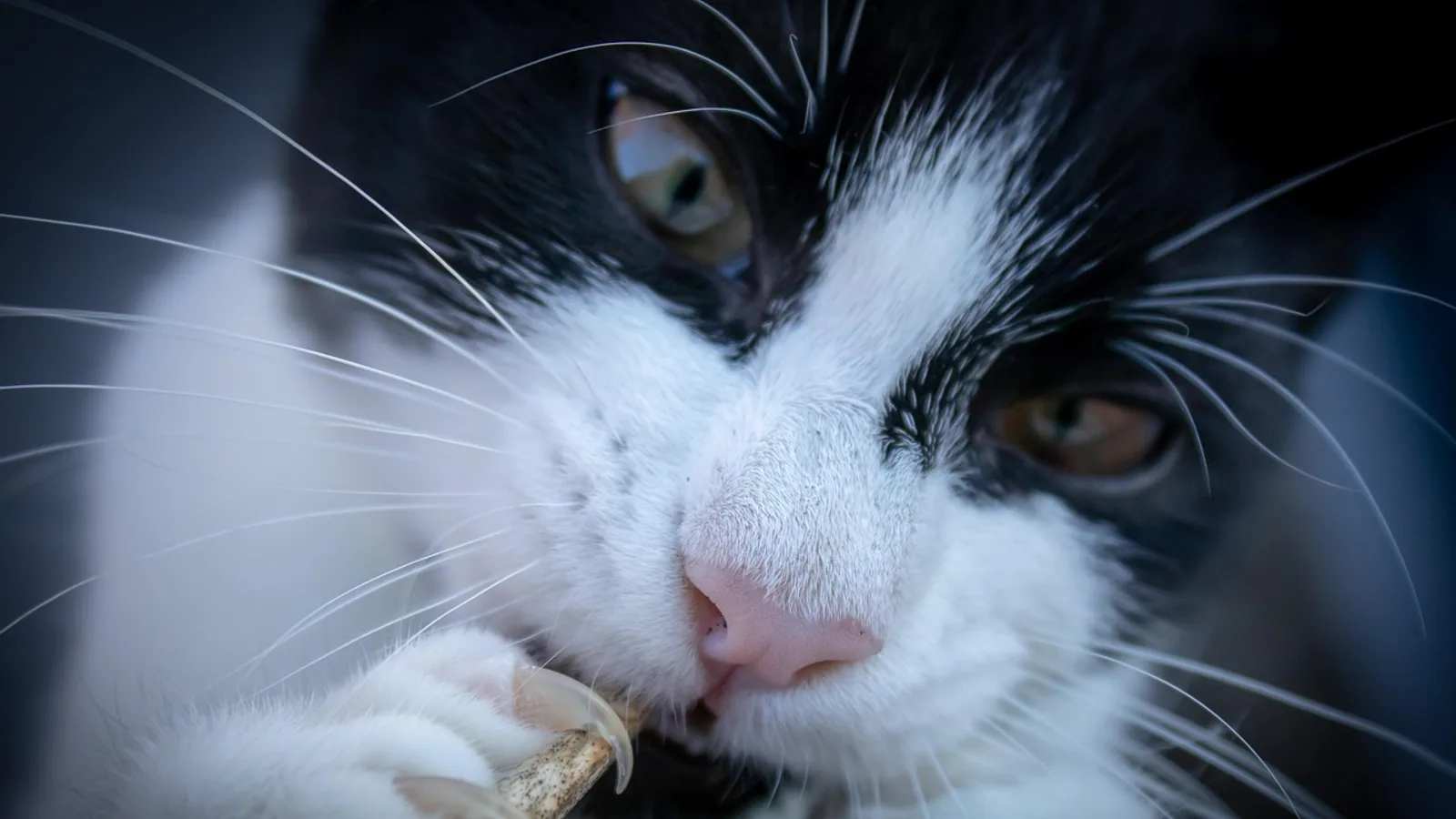
Declawing cats is not a nail trim. Feline declawing, properly called onychectomy, is the surgical amputation of the third phalanx (P3), the bone that carries the claw, along with the associated joint capsule, ligaments, and deep digital flexor tendon attachment. The procedure is banned or restricted in many countries and in several US cities, and the evidence base now links it to chronic pain, altered gait, and persistent behavior problems. This article reviews what the surgery actually removes, the acute and long-term complications, the welfare debate, and the nonsurgical alternatives that keep cats in their homes without amputating bone.
This article is educational and is not a substitute for veterinary diagnosis or treatment.
What Declawing Actually Removes
The claw of a cat is not a fingernail sitting on top of a fingertip. The claw is produced by the ungual crest of the third phalanx, the distal bone of each toe. The claw grows from the germinal epithelium at the base of that bone. To remove the claw permanently, a surgeon must remove the bone that produces it. That means onychectomy is a partial digital amputation, usually performed through the distal interphalangeal joint.
This distinction matters because owners often imagine a cosmetic procedure similar to trimming a toenail. Removing only the visible claw shell would leave the germinal tissue behind, and the claw would regrow, often deformed. Regrowth is not a rare curiosity. In a case series of 86 declawed cats, fragments of the third phalanx (P3) were found on radiographs in every cat, and the gross findings included fragmented growth of cornified and non-cornified nail tissue, osteophytes on the surface of the second phalanx, and calcification of the deep digital flexor tendon [1]. Nail regrowth was one of the historical complaints recorded by owners and shelter staff [1].
The deep digital flexor tendon attaches to the underside of P3. When the bone is amputated, that tendon loses its insertion. The tendon can pull the remaining toe into abnormal flexion, and the digital pad can shift. Both tendon contracture and malaligned digital pads were documented in the same case series [1]. This anatomy explains why the consequences of feline declawing go well beyond the loss of a claw.
A related operation, flexor tendonectomy (tenectomy), cuts the deep digital flexor tendon so the cat cannot extend the claws but the claws continue to grow. It preserves P3, but it is not a welfare improvement over onychectomy. It leaves a cat with claws that cannot be retracted normally and requires lifelong regular trimming to prevent the claws from curling into the pads. Tendonectomy is best understood as a salvage procedure for cats already suffering from a botched declaw, not as an acceptable alternative. In a study of 42 previously onychectomized cats with persistent pain or behavior problems, total flexor tenectomy was performed only in cats with hyperflexion of the proximal interphalangeal joint, and all 42 cats benefited [2]. That is a repair operation, not a preventive one.
How the Procedure Is Performed
Onychectomy removes P3 from each affected toe. It is most often performed on the front paws only, though some cats have all four paws declawed. The surgery is typically done under general anesthesia with a regional nerve block of the forelimb, because the toes are richly innervated and post-operative pain is substantial. Surgical time is short, and most cats go home the same day.
Surgical technique is not described here because the details belong to a veterinary surgeon and hospital protocol. What matters for an owner making a decision is the pain and recovery profile. A study using a unilateral forelimb onychectomy model measured pain scores and pressure-sensitive walkway data before and for 72 hours after surgery. Cats that received only saline showed clear post-surgical impairment, and the investigators set up a rescue analgesic protocol because the surgery reliably produces pain [3]. That is the expected baseline: the procedure hurts, measurably, for days.
Post-operative analgesia is not optional. In a randomized, masked, placebo-controlled trial of 349 cats undergoing forelimb onychectomy plus neutering, cats that received the nonsteroidal anti-inflammatory drug robenacoxib needed less rescue analgesia than cats that received placebo. About 19.7% of robenacoxib-treated cats required rescue versus 41.7% of placebo cats, giving treatment success rates of 80.3% and 58.3% respectively [4]. Even with good drugs, roughly one in five treated cats still needed additional pain relief. Without NSAIDs, nearly half did.
The takeaway is that declawing is a major orthopedic procedure dressed up as a minor one. It involves cutting bone, transecting a tendon's attachment, and managing an extremity that the cat must use to walk, jump, and land. According to the American Veterinary Medical Association (AVMA), declawing is not medically necessary for most cats and should be considered only after all nonsurgical alternatives have failed. The American Association of Feline Practitioners (AAFP) does not endorse the procedure as a routine solution for scratching behavior.
Acute Complications: Pain, Bleeding, Infection, and Regrowth
Complications after onychectomy are common. A study of elective surgeries in dogs and cats at a veterinary teaching hospital found post-operative complications in about 12.2% of cats when paper medical records were examined, compared with only 2.6% when computerized abstract records alone were used [5]. The paper-record rate was roughly four to seven times higher than the abstract-based rate, which means that if you only look at summary data, you will underestimate how often things go wrong [5]. The differences arose from how complications were coded and summarized, not from a change in the surgery itself.
In the acute window, owners may see:
- Pain on walking, reluctance to jump, and shifting of weight off the operated paws
- Swelling, bruising, and exudate around the incisions
- Reluctance to use the litter box, sometimes because the substrate hurts the paw
- Bleeding from the incision sites
- Infection, which can become chronic and recurrent
The case series of 86 declawed cats found digital subcutaneous swelling, ecchymosis (bruising), ulcerations, exudate, and chronic digit infection among the visible pathologies [1]. The exudate was sometimes bacterial and sometimes sterile, meaning inflammation alone without a culturable organism was enough to cause ongoing discharge [1]. Chronic digit infection was one of the historical problems reported by owners and shelter staff [1].
Nail regrowth is a distinct acute and chronic problem. Because P3 is removed in fragments, leftover germinal tissue can produce a deformed claw that grows into the pad or the side of the digit. Radiographs in the case series showed P3 fragments of varying sizes in all 86 cats [1]. Regrowth is often missed because the deformed claw does not look like a normal claw.
Chronic Pain and Neuroplastic Changes
The most consequential and well-documented harm of declawing cats is long-term pain. Persistent postsurgical pain can occur at any age and is seen in young cats after onychectomy [6]. That statement comes from a review of long-term pain in cats, which identified post-surgical pain as an underrecognized problem in a species that hides discomfort well [6].
A 2025 secondary analysis of eight feline osteoarthritis studies separated cats with chronic post-declaw pain from cats whose pain came from osteoarthritis alone. The declawed osteoarthritis group showed significant somatosensory alterations, including hyperalgesia (increased sensitivity to painful stimuli) and allodynia (pain from stimuli that normally do not hurt). They also had worse biomechanical and functional impairments than non-declawed cats with osteoarthritis, and the changes did not depend on whether two or four paws had been declawed. Objective nervous conduction testing showed abnormalities consistent with worsening axonopathy [7]. In plain terms, the nerves in the declawed paw were not just sensitive, they were measurably damaged.
That study also found the impairments were worse in heavier cats [7]. Body weight puts more load through an already altered paw, and the abnormal gait and postural changes that follow onychectomy likely compound over time. This is one reason a declawed cat that seems fine at one year can become a painful cat at eight years.
Because cats rarely limp in an obvious way, owners frequently miss chronic paw pain. Signs include reluctance to jump, sitting with the forelegs held differently, hiding, decreased grooming, house-soiling, and irritability when the paws are touched. All of these were recorded as improving in the case series after surgical repair of P3 fragments, tendon contracture, and pad malalignment [1]. That improvement is meaningful because it shows the pain and the behavior were linked, and both were caused by the original operation.
Behavior Changes After Declawing
Declawing changes behavior in ways owners may not anticipate. The case series of 86 cats recorded historical problems that included house-soiling, biting behavior, repelling behavior, barbering (over-grooming), lameness, chronic digit infection, and nail regrowth [1]. Not every cat showed every sign, but the clustering is instructive: pain in the paw and behavior problems travel together.
Biting and inappropriate elimination are the two behaviors most likely to end a cat's place in a home. A cat whose only defense against a perceived threat has been removed may switch to biting. A cat whose litter box hurts may stop using it. The study of previously onychectomized cats with inappropriate elimination or aggression was built on the premise that these cats may be responding to painful paw pathology even several years after the original surgery [2]. All 42 cats in that study benefited from flexor tenectomy, and the outcome measures improved [2]. The operation was not the cure for the behavior. It was the removal of the pain that was driving the behavior.
This is the core welfare concern. A declaw cat does not simply lose a claw. It can lose the ability to scratch, to climb normally, to land normally, and to defend itself. It can develop a chronic pain state and a set of behavior problems that were not present before surgery. Those problems in turn increase the odds of relinquishment or euthanasia, which is the opposite of the stated goal of keeping the cat in the home.
The Ban Landscape and What It Changes
Onychectomy is banned or restricted in many countries, including much of Europe, the United Kingdom, Australia, New Zealand, and parts of Canada. Several US cities and the state of Maryland restrict or prohibit the procedure. The bans reflect a professional and public consensus that amputating a healthy cat's toes for owner convenience is not acceptable veterinary practice.
A common objection to bans is that they will flood shelters with cats surrendered for scratching. The evidence does not support that fear. A study of a British Columbia shelter system compared cats admitted in the 36 months before and after a provincial ban on elective onychectomy. Total intake was 41,157 cats before the ban and 33,430 after. Destructive scratching was an uncommon surrender reason, accounting for 0.18% of surrendered cats, and there was no statistically significant increase in cats surrendered for destructive scratching after the ban. Owner-requested euthanasia actually decreased after the ban [8].
That result matters for two reasons. It shows that scratching is rarely the reason cats lose their homes, and it shows that removing declawing as an option did not produce a wave of abandoned cats. The pattern is consistent with what veterinarians see in practice: most scratching complaints are solvable with management and environmental change, and the small fraction that are not can usually be addressed with behavior support.
Comparing Scratch Management Options
The alternatives to declawing are not exotic. They are the standard tools of feline behavior management, and they work when they are applied early and consistently. The table below compares the practical options owners ask about, along with the tradeoffs.
| Option | What it is | Best for | Main limitations |
|---|---|---|---|
| Scratching posts | Vertical or horizontal surfaces sized for a full stretch | Redirecting scratching to an acceptable target | Must be the right height, stable, and placed where the cat already scratches |
| Nail trims | Regular trimming of the claw tips with a cat-specific trimmer | Reducing damage from normal scratching | Requires handling tolerance and a trim every 1 to 2 weeks |
| Soft nail caps | Adhesive covers placed over the trimmed claw | Protecting furniture while training continues | Need reapplication every few weeks and must be applied without stressing the paw |
| Pheromone sprays | Synthetic feline facial pheromone products | Reducing anxiety that drives scratching or marking | Supportive only, does not replace scratching surfaces |
| Environmental enrichment | Cat trees, perches, puzzle feeders, play sessions, window access | Reducing boredom and stress that trigger scratching | Requires ongoing effort and setup, not a one-time fix |
Each of these options addresses a different part of the problem. A scratching post alone will not help a cat that is scratching the couch out of anxiety. A pheromone spray will not help a cat that has no acceptable scratching surface. The strongest plan combines several.
Scratching is a normal, necessary feline behavior. Cats scratch to shed the outer husk of the claw, to stretch the muscles of the forelimb and back, to mark territory with scent from glands in the paw, and to communicate. Punishing a cat for scratching does not remove the motivation, it removes the cat's willingness to scratch in front of the owner and shifts the behavior somewhere less visible. Redirecting the behavior to an approved surface is the goal.
Practical setup details matter more than most owners expect. A scratching post should be tall enough for the cat to stretch fully upright with the front paws extended, and it should be stable enough not to wobble. Sisal rope, cardboard, and rough wood are common materials. Placing the post next to the furniture being damaged, and moving it gradually toward a preferred location, is more effective than placing it in a corner the cat never uses.
Owner Education and Informed Consent
The decision to declaw a cat belongs to the owner, but it must be an informed one. Canadian pet owners surveyed about anesthesia, pain, and surgery rated "being informed about procedures and risk" as very or extremely important at 98.5%, and being assured that all necessary analgesics would be used at 98.6% [9]. Most owners agreed that pain affects quality of life (94.2%) and behavior (89.5%) [9]. Cat owners in that survey were more likely than dog-only owners to believe analgesics were necessary for some procedures and conditions [9]. The message is clear: owners want to know what the surgery involves and what it will cost the cat in comfort.
Informed consent for onychectomy should cover the anatomy, because most owners do not know that bone is removed. It should cover the acute pain and the need for multi-day analgesia. It should cover the risk of chronic pain, altered gait, infection, regrowth, and behavior change. It should cover the alternatives in detail, with a realistic plan for implementing them. And it should cover the fact that many veterinarians and professional bodies no longer consider the procedure ethically justifiable for routine use.
Owner education is not a single conversation. It is a plan. Many scratching complaints resolve with a scratching post placed correctly, regular nail trims, and a few weeks of consistent redirection. Soft nail caps can protect furniture during the training period. Pheromone products and enrichment can address the anxiety component. Behavior consultation is appropriate when the cat is scratching destructively despite a good environment, or when there is concurrent house-soiling or aggression.
Outdoor access is sometimes proposed as a reason to declaw. The evidence does not support the assumption that declawed cats are kept indoors. In a study of owned cats at a referral center, onychectomy status was not significantly associated with outdoor access [10]. Cats that went outdoors were more likely to have been bitten by other cats [10]. Declawing does not reliably keep a cat inside, and a declawed cat that goes outside is at a serious disadvantage because it cannot climb or defend itself normally.
Clinical Relevance, Limitations and Common Mistakes
The clinical relevance of this topic is straightforward. Onychectomy is an elective amputation of the third phalanx, and it carries a measurable risk of chronic pain and behavior change. The evidence that declawed cats with osteoarthritis show worse sensory, biomechanical, and functional outcomes than non-declawed cats with osteoarthritis is strong and recent [7]. The earlier observation that persistent post-surgical pain occurs in young cats after onychectomy is consistent with that finding [6].
Common mistakes include assuming the procedure is a nail removal, underestimating the pain of recovery, stopping analgesia too early, missing regrowth because it does not look like a normal claw, and attributing new biting or house-soiling to the cat's personality rather than to a painful paw. Each of these has a practical fix, but only if the owner is told the risk in advance.
What is still uncertain is the precise prevalence of chronic post-declaw pain across the entire declawed population, and how individual cats differ in their sensitivity to the procedure. Some declawed cats appear comfortable for years. Others develop severe pain. The factors that determine which cat ends up in which group are not fully understood. What is clear is that the procedure is irreversible, that repair surgery exists but is not guaranteed, and that the risks fall on a cat that cannot consent.
This article is educational and is not a substitute for veterinary diagnosis or treatment.
Frequently Asked Questions
Does declawing remove the whole toe?
No. It removes P3, the third phalanx, which is the bone that carries the claw. The rest of the toe remains. Because P3 produces the claw, removing only the visible nail would allow the claw to regrow.
Is declawing painful for cats?
Yes. Studies measuring pain scores and gait after an onychectomy show clear post-surgical impairment, and pain control is required. Multiday analgesia is standard, and even with NSAIDs a substantial minority of cats still need rescue pain relief.
When were cat declawing bans introduced and where?
Bans and restrictions exist in many countries, including much of Europe, the United Kingdom, Australia, New Zealand, and parts of Canada, and in several US cities and the state of Maryland. A study of a British Columbia shelter system found no significant increase in cats surrendered for scratching after the provincial ban.
Can a declawed cat grow its claws back?
Yes. Nail regrowth happens when germinal tissue is left behind, and it is often deformed. In a case series of 86 declawed cats, all had P3 fragments on radiographs, and regrowth was one of the reported problems.
Is tendonectomy better than declawing?
No. Tendonectomy cuts the deep digital flexor tendon but leaves the bone and the claw. The claws keep growing and cannot retract normally, so they need lifelong trimming. It is best used as salvage surgery for a cat already suffering from a previous declaw.
What can I do instead of declawing my cat?
Use scratching posts sized for a full stretch, trim the claws every one to two weeks, apply soft nail caps during training, use pheromone products for anxiety, and add enrichment such as cat trees, perches, and play sessions. The best plan combines several of these.
How common is surrender for scratching behavior?
Scratching is rarely the reason cats are surrendered. In the British Columbia shelter study, destructive behavior accounted for 0.18% of surrendered cats during the study period.
Do declawed cats have more behavior problems?
They can. Historical reports in a case series of declawed cats included house-soiling, biting, repelling behavior, over-grooming, lameness, and chronic digit infection, and these improved after surgical correction of the paw pathology.
Related Articles
- Can Cats Have Peanut Butter? Risks and Healthier Alternatives
- Can I Give My Cat Imodium for Diarrhea? Risks and Safe Alternatives
- Toxoplasmosis in Cats: Zoonotic Risks and Feline Love
- Feline Respiratory Infections: Causes, Transmission, and Zoonotic Risk
- Feline Toxoplasmosis: Zoonotic Risks and Public Health Implications
- Feline Respiratory Infections: Etiology, Zoonotic Risk, and Diagnostic Approach
- Meloxicam for Cats: Safe Dosing and Risks
- Kicked by a Horse: Injury Risks and First Aid
- Flat-Faced Cats: Brachycephalic Breeds and Health Risks
Sources
- Surgical excision of P3 fragments in 86 declawed cats: case series (2013-2023).
- Flexor tenectomy: salvage surgery following feline onychectomy.
- Pilot evaluation of a novel unilateral onychectomy model and efficacy of an extended release buprenorphine product.
- Evaluation of injectable robenacoxib for the treatment of post-operative pain in cats: results of a randomized, masked, placebo-controlled clinical trial.
- Postoperative complications of elective surgeries in dogs and cats determined by examining electronic and paper medical records.
- Long-term pain in cats: how much do we know about this important welfare issue?
- Declawing in Cat is associated with neuroplastic sensitization and long-term painful afflictions.
- Effect of a provincial feline onychectomy ban on cat intake and euthanasia in a British Columbia animal shelter system.
- Perceptions and opinions of Canadian pet owners about anaesthesia, pain and surgery in small animals.
- Evaluation of cat and owner characteristics and their relationships to outdoor access of owned cats.