Cat Cremation Services: Process, Urns, and What to Ask
By Dr. Zubair Khalid, DVM, MS, PhD ·
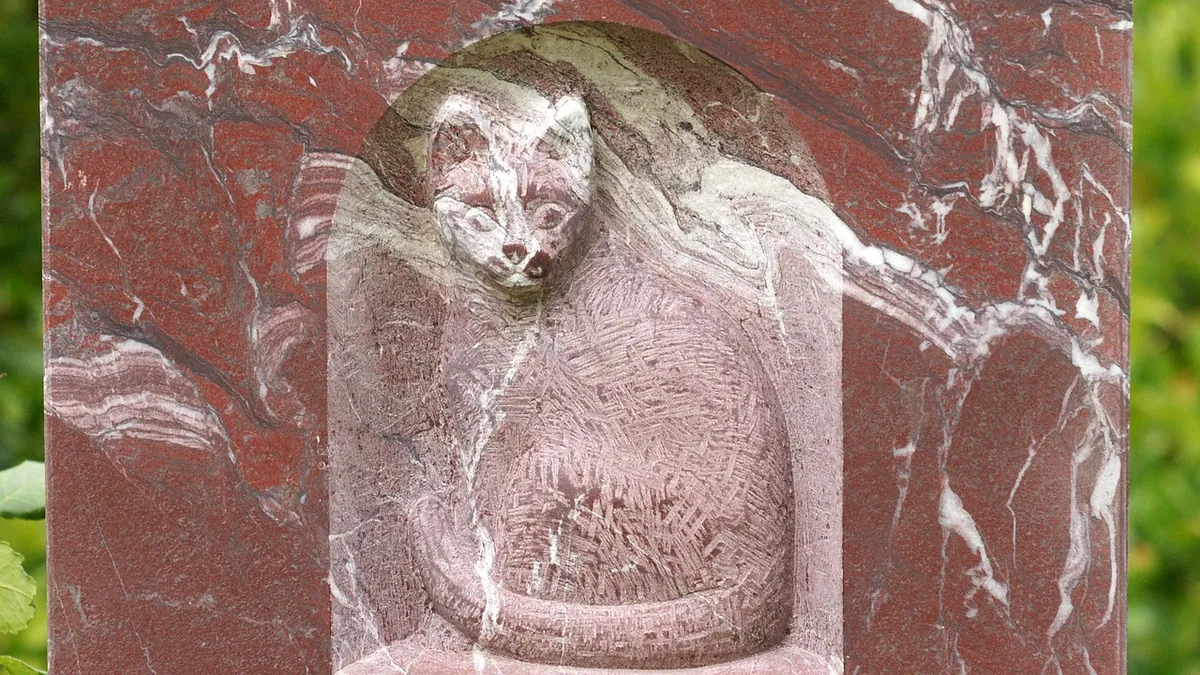
Cat cremation services handle your cat's body after death, either alone (private cremation, ashes returned to you) or with other pets (communal cremation, no ashes returned). Knowing how the process works and what questions to ask helps you choose a provider you trust during a hard time.
This article is educational and is not a substitute for veterinary diagnosis or treatment.
Quick Answer
- Private cremation means your cat is cremated alone and you receive only your cat's ashes. Communal cremation means your cat is cremated with other pets and no ashes are returned.
- Most U.S. pet owners who have made after-death decisions chose cremation (68%) over burial (32%) [1].
- Your veterinary team can often arrange pickup and cremation for you, and most owners rely on that team for end-of-life guidance [1].
- You can ask for a tour, a written price list, and a tracking or identification system before you commit.
- Grief after losing a cat is normal and has no set timeline, and it can feel as intense as grief after losing a person [2][3].
How the Cat Cremation Process Works, Step by Step
Step 1: Decide before or right after death
If your cat has a terminal illness, you may have time to plan. Many owners use that time to compare providers and choose an urn. If your cat dies suddenly or you choose euthanasia, the decision often happens the same day. Veterinarians typically explain the procedure and discuss what to expect beforehand, and most report that communication with owners during the process goes smoothly [4].
Step 2: Choose communal or private cremation
Communal cremation is usually the least expensive option. Your cat is cremated with other pets, and the ashes are not returned. Some crematories scatter communal ashes in a memorial area.
Private cremation costs more because your cat is cremated alone in a chamber. The ashes you receive should be only your cat's. Many providers also offer partitioned or semi-private cremation, where pets are separated by dividers in the same chamber. Ask exactly what "private" means at that business, because definitions vary.
Step 3: Arrange transport
Your veterinarian can usually hold your cat's body in a cool storage area until the crematory picks it up. You can also transport your cat yourself if you prefer. Ask how long the body will be held and how it will be identified. A reputable provider uses a tag, number, or barcode that stays with your cat through the entire process.
Step 4: The cremation itself
The body is placed in a cremation chamber and reduced to bone fragments and ash. The remains are then processed into a fine, consistent powder. For a cat, the ashes typically fit in a small container, often a few cubic inches. The provider returns them in a temporary container or the urn you choose.
Step 5: Receiving the ashes
With private cremation, you receive the ashes in person or by mail. Ask for a certificate of cremation and any identification tag used during the process. If you plan to scatter ashes, pick a place that matters to you, which is one of the memorial options many owners find meaningful [2].
Comparing Communal and Private Cat Cremation
| Feature | Communal cremation | Private cremation |
|---|---|---|
| Cremated alone | No | Yes |
| Ashes returned | No | Yes |
| Typical cost | Lowest | Highest |
| Identification tracking | Usually group-based | Individual tag or number |
| Certificate provided | Sometimes | Usually |
| Best for | Owners who do not want ashes | Owners who want ashes or a memorial |
Costs vary widely by region, so ask each provider for a written price list. Prices are not standardized, and a low price is not automatically a bad sign, but it is worth asking what is included.
Cat Cremation Urns and Memorial Options
Cat cremation urns come in many materials, including wood, ceramic, metal, and biodegradable options for burial or scattering. Size matters. A cat's ashes usually need only a small urn, so check the capacity in cubic inches before you buy. Many urns list a weight range, which is a rough guide, not an exact match.
You have hundreds of memorial choices online, including jewelry, garden stones, and other objects, and these items are meaningful for some owners while others prefer to keep their memories private [2]. There is no right answer. Choose what feels right for you.
If you want to keep ashes at home, a sealed urn with a tight lid protects the contents. If you plan to bury the urn, a biodegradable container is often a better fit. If you plan to scatter, a simple scattering tube may be easier to handle than a heavy urn.
What to Ask a Cat Cremation Provider
Ask these questions before you sign anything:
- Are you licensed or certified, and can you show documentation?
- Do you own your crematory, or do you subcontract to another facility?
- What is your identification and tracking system from pickup to return?
- Can I tour the facility or see the cremation chamber?
- What is the exact difference between your private, partitioned, and communal options?
- Will I get a certificate of cremation, and does it include an ID number?
- What is your pickup schedule, and how is my cat stored before cremation?
- What is the total price, including pickup, urn, and delivery?
- What happens if I change my mind or want to witness the cremation?
Most owners say it matters to work with a specific crematory they chose, and over 95% of owners in one survey rated working with their preferred after-death provider as important [1]. That is a strong reason to ask questions instead of accepting the first option offered.
Signs Something Is Wrong With a Provider
Watch for these red flags:
- No written price list or vague answers about costs
- No identification system, or a system that relies on memory alone
- Refusal to let you tour or see the facility
- No certificate of cremation for a private cremation
- Ashes returned in a container that seems far too large or too small for a cat
- Pressure to decide immediately without time to ask questions
- No clear answer about whether your cat is cremated alone
If something feels off, you can switch providers. You are allowed to ask for your cat's body back before cremation begins if you have not signed an authorization.
Common Mistakes Owners Make
The most common mistake is choosing a provider based only on price. A low price can mean communal cremation when you expected private ashes. Ask what the price includes before you agree.
Another mistake is waiting until the last moment to decide. If your cat is seriously ill, planning ahead reduces stress. Talk with your veterinarian about after-death options while you still have time to compare.
Some owners assume their veterinarian handles everything. Many clinics do arrange cremation, and most owners rely on their veterinary team for end-of-life decisions and arrangements [1]. Still, you can ask which crematory the clinic uses and whether you can choose a different one.
A final mistake is rushing the grief. Grief is a healthy, natural response to loss, and there is no normal timeline. It takes as long as it takes [2]. Some people feel sad, anxious, tired, guilty, or relieved, and all of these are normal [2].
Supplies and Setup That Matter
You do not need much equipment, but a few items help.
For transport, a sturdy box or carrier lined with a towel works. If you are driving your cat to a crematory, keep the body cool and out of direct sun.
For ashes at home, choose an urn with a tight seal and a stable shelf or cabinet. Keep it away from areas where it could be knocked over.
For memorial items, decide whether you want jewelry, a garden stone, or a simple container. These items help some owners and not others, and either choice is fine [2].
For your own wellbeing, line up support. Grief after pet loss can produce real physical and emotional symptoms. In one survey of people at pet cremation centers, more than half showed signs of neurotic symptoms shortly after their pet's death [5]. That does not mean something is wrong with you. It means pet loss can hit hard, and support helps.
If you are struggling, tell your veterinarian. They see this often and can point you to grief resources. Online communities can also help, since research shows pet loss and human loss share many of the same words for anger, sadness, and negative emotion [3].
Limitations and When to Contact a Veterinarian
This article covers after-death care, not treatment. If your cat is still alive and showing signs of illness, contact your veterinarian. Individual cases need a veterinarian who can examine your cat.
Contact your veterinarian the same day if your cat stops eating, hides constantly, breathes rapidly, or seems painful. These can signal serious illness that needs prompt care.
Seek emergency care now if your cat is straining to urinate, crying out, vomiting repeatedly, collapsing, or having trouble breathing. Urinary blockage in male cats is a life-threatening emergency. For related reading, see Cat Peeing Blood: What Should You Do? and Cat Urinary Problems Home Treatment: Safe Steps and Red Flags.
Schedule a routine visit if your cat has gradual changes in appetite, weight, thirst, or litter box habits. Early care is easier than emergency care. If your cat has a urinary issue, these guides can help you prepare questions: Cat Urinary Tract Infection Care and Cat Uti Treatment.
If your cat has already died and you are deciding on cremation, you can call your veterinarian for guidance even if you are not a current client. Many clinics help with after-death arrangements.
Frequently Asked Questions
What is the difference between communal and private cat cremation?
Communal cremation means your cat is cremated with other pets and no ashes are returned to you. Private cremation means your cat is cremated alone and you receive only your cat's ashes. Ask each provider to define these terms in writing, because practices vary.
How do I know the ashes I get are really my cat's?
Choose a provider with a clear identification system, such as a numbered tag that stays with your cat from pickup through cremation. Ask for a certificate of cremation and confirm that the tag number matches your paperwork. A facility tour can also help you judge how carefully the process is run.
How much do cat cremation services cost?
Prices vary by region, provider, and whether you choose communal or private cremation. Private cremation costs more because your cat is cremated alone. Ask for a written price list that includes pickup, the urn, and delivery so there are no surprises.
Can I watch my cat's cremation?
Some providers allow owners to witness the cremation, and others do not. Ask about this before you choose a provider if witnessing matters to you. If you cannot attend, ask for an identification number and a certificate instead.
How long does grief after losing a cat last?
There is no normal timeline, and grief takes as long as it takes [2]. Feelings of sadness, anxiety, guilt, or relief are all normal responses to loss [2]. If your grief is interfering with daily life, talk with your veterinarian or a mental health professional for support.
Related Articles
- Cat Peeing Blood: What Should You Do?
- Cat Urinary Tract Infection Care
- What To Do For A Urinary Tract Infection In A Cat
- Cat Uti Treatment
- Cat Urinary Problems Home Treatment: Safe Steps and Red Flags
- Treatment Of Urinary Tract Infection In Cats
- Cat Died at Home: What to Do Next
- Cat End of Life Care: A Practical Checklist for Owners
- Cat Euthanasia Process: What Happens Step by Step
References
- Pet Owners' Expectations for Pet End-of-Life Support and After-Death Body Care: Exploration and Practical Applications. Topics in companion animal medicine, 2021.
- Grieving the Loss of Your Cat. Cornell University College of Veterinary Medicine.
- Expressions of Grief in Online Discussion Forums-Linguistic Similarities and Differences in Pet and Human Bereavement. Omega, 2022.
- Veterinary euthanasia of dogs and cats in Flanders: an online survey of current practices and perspectives. American journal of veterinary research, 2026.
- Frequency of neurotic symptoms shortly after the death of a pet. The Journal of veterinary medical science, 2014.