Is My Bearded Dragon Hungry? Appetite Cues and Overfeeding
By Dr. Zubair Khalid, DVM, MS, PhD ·
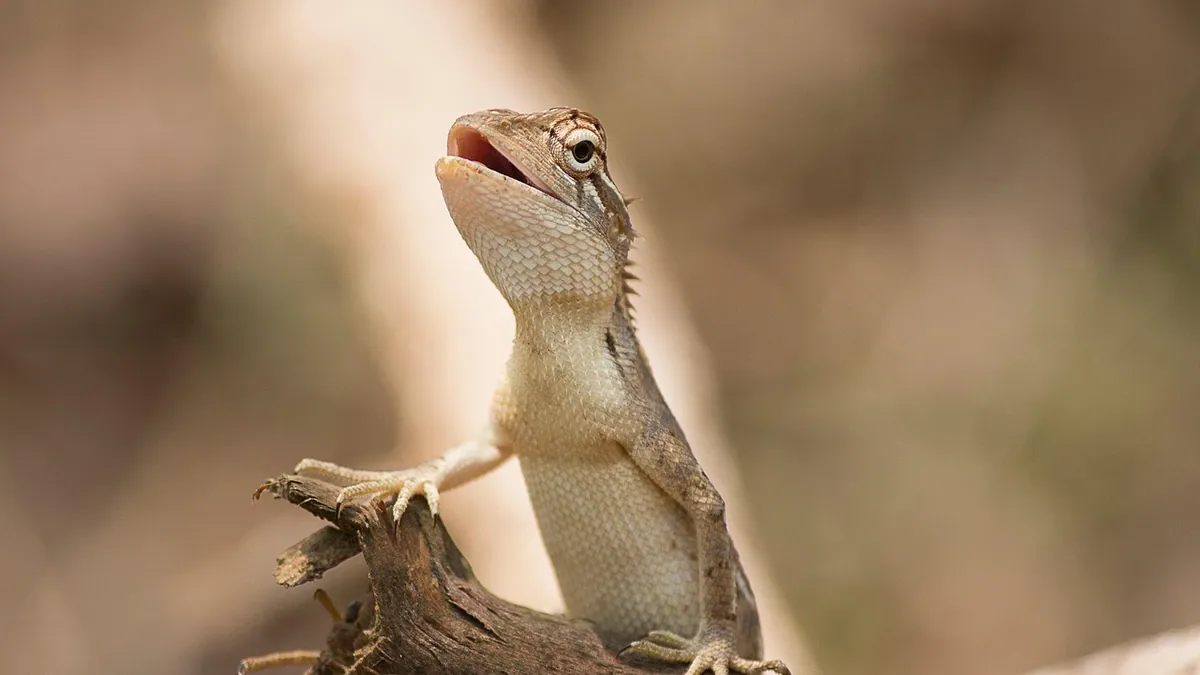
If your bearded dragon is staring at you, glass-surfing, or lunging at the tweezers, it may be hungry. But begging and true hunger are not always the same thing, and knowing how to tell if your bearded dragon is hungry means watching body condition, age, season, and behavior together. This article is educational and is not a substitute for veterinary diagnosis or treatment.
Quick Answer
- A healthy adult bearded dragon should eat insects a few times a week and fresh greens daily, not a large insect meal every day.
- Real hunger looks like active hunting, alert basking, steady growth in juveniles, and a body that is neither bony nor bulging.
- Constant begging is often a routine problem, not a calorie problem, especially in adults that have learned that glass-surfing gets a feeder insect.
- A sudden loss of appetite that lasts more than a few days, or comes with lethargy, weight loss, or abnormal droppings, needs a veterinary exam.
- Never punish a dragon for begging and never restrict food in a growing juvenile without veterinary guidance.
Why Is My Bearded Dragon Always Hungry?
Some dragons really are hungry. Others have trained you very well.
Normal reasons a dragon begs
Juveniles grow fast and genuinely need more food than adults. A young dragon that hunts aggressively, basks after eating, and gains weight steadily is doing exactly what it should.
Adults also go through natural appetite shifts. Many bearded dragons slow down in winter, even indoors, and eat less for weeks at a time. Others ramp up in spring. Females may eat heavily before producing eggs, and a dragon recovering from illness or a recent surgery can show a strong return of appetite as it heals. In one reported case, a bearded dragon's appetite returned to normal only after surgery and extended antibiotic treatment resolved a serious bloodstream infection and reproductive tract disease [1].
Learned begging
Bearded dragons learn fast. If every time your dragon scratches the glass you drop in a Dubia roach, you have created a begging loop. The behavior is real, the hunger may not be. This is the most common reason owners say their adult dragon "always seems hungry."
The biology behind appetite
Appetite in reptiles is controlled by hormones and brain signals, and those systems differ across species. Ghrelin, often called the hunger hormone, has been lost entirely in snakes, chameleons, and toadhead agamas, which suggests appetite control in reptiles is more varied than once assumed [2]. Other regulators, including leptin and the brain peptides that drive or suppress feeding, shift with fasting and refeeding in fish [3][4]. The practical point for you: appetite is not a simple fuel gauge. It is a moving target shaped by species, season, and body condition.
Bearded Dragon Not Hungry: Medical Causes to Rule Out
When a normally eager dragon stops eating, the list of possible causes is long. Husbandry problems come first because they are the most common and the easiest to fix.
Husbandry causes
- Basking temperature too low or too high
- UVB bulb older than about six months or the wrong type
- Cage too small, or too much traffic and handling
- Recent move, new enclosure, or new tank mate
- Food that is too large, or prey that is not moving enough to trigger a strike
Medical causes
- Impaction from substrate or oversized prey
- Respiratory infection, often with wheezing, mucus, or open-mouth breathing
- Stomatitis (mouth rot)
- Parasites, which may show up as abnormal droppings
- Reproductive disease in females, including preovulatory follicular stasis, folliculitis, and coelomitis, which have been documented in a bearded dragon alongside septicemia [1]
- Systemic infection. Lactococcus garvieae, an emerging zoonotic bacterium with high antimicrobial resistance, caused septicemia in a central bearded dragon and was confirmed by whole-blood PCR and sequencing [1]
- Metabolic bone disease, often with tremors, soft jaw, or difficulty walking
Any of these can kill appetite. A dragon that refuses food for more than a few days, or that looks unwell in any other way, needs a veterinarian who treats reptiles.
When Does Appetite Become a Problem?
Appetite is a problem when it stops matching the dragon's body condition.
Signs of overfeeding
- Fat pads bulging over the eyes and behind the head
- A belly that stays round even when the dragon is not basking flat
- Difficulty walking or dragging the belly
- Refusing greens entirely because insects are always available
- Rapid weight gain in an adult that has stopped growing
Overfeeding is not harmless. In mammals, chronic overconsumption is linked to obesity, lipotoxicity, and heart and metabolic disease. Burmese pythons, which normally eat large meals infrequently, showed sustained high blood lipids for eight weeks under a chronic frequent feeding regimen, yet their hearts were protected by enhanced fat storage and altered lipid metabolism [5]. That protection appears to be a python specialty. Do not assume your bearded dragon shares it.
Signs of underfeeding
- Visible hip bones, spine, or tail base
- Sunken eyes
- Slow or absent growth in a juvenile
- Weak grip, tremors, or trouble lifting the head
The middle ground
Weigh your dragon monthly on a kitchen scale and track the number. Look at the tail base and the fat pads behind the head. A healthy adult has a slightly plump tail base, a flat belly when relaxed, and clear muscle tone in the legs. If the number is climbing and the fat pads are growing, cut back. If the number is falling, book an exam.
How to Tell If Your Bearded Dragon Is Hungry: Step by Step
Step 1: Check the calendar and the season
Note your dragon's age, sex, and the time of year. A juvenile in summer and an adult in midwinter have completely different baseline appetites. Do not judge today's appetite against a memory from six months ago.
Step 2: Score the body
Run your fingers along the spine and tail base. Check the fat pads behind the head and above the eyes. Weigh the dragon and write the number down. This takes two minutes and tells you more than any behavior does.
Step 3: Review the last 72 hours
What did you feed, how much, and how did the dragon respond? Did it eat greens, or only insects? Did it poop normally? A healthy bearded dragon poop guide can help you judge what you are seeing.
Step 4: Fix the environment before the food
Confirm the basking temperature with an infrared gun or a digital probe, replace old UVB bulbs, and reduce traffic around the enclosure. Many appetite problems resolve once the setup is right.
Step 5: Build a feeding routine
Feed at the same times each day. Offer greens in the morning and insects at a set time, then remove uneaten insects. A predictable schedule reduces begging because the dragon learns when food actually arrives.
Step 6: Add enrichment instead of extra food
Give your dragon something to do. Offer a varied salad, hide food in a shallow dish, rearrange cage furniture, or provide supervised time outside the enclosure. A bored dragon begs. A busy dragon often does not.
Step 7: Track the response
Give any change at least two weeks. If appetite improves and body condition holds steady, you have your answer. If it does not, call your veterinarian.
For diet specifics, see our bearded dragon diet guide and our analysis of Dubia roaches as a staple feeder. To understand why your dragon behaves the way it does, read about the wild bearded dragon and its natural habitat.
What Not to Do
Do not punish begging
Never tap the glass, spray the dragon, or withhold food as a punishment. Bearded dragons do not connect punishment to the behavior you dislike. You will only create stress, which suppresses appetite and immune function.
Do not free-feed an adult
Leaving insects in the enclosure all day leads to overfeeding and lets loose feeders nibble on your dragon. It also destroys any chance of a feeding routine.
Do not assume a fat dragon is a healthy dragon
A round belly is not a sign of good care. It is often the first sign of a problem.
Do not use appetite as a substitute for a scale
Begging tells you what your dragon wants. The scale tells you what your dragon needs.
Do not skip the vet because the dragon "seems fine otherwise"
Some serious conditions, including septicemia, can be present while the only obvious sign is a change in appetite [1]. Early bloodwork and imaging catch problems that behavior alone cannot.
When to Involve a Veterinarian or Behavior Professional
Call a reptile veterinarian if your dragon has not eaten for more than a few days, if it is losing weight, or if you see any of the red flags below. If your dragon is a juvenile and stops eating, treat it as urgent, because young animals decline quickly.
A certified behavior professional can help if your veterinarian has cleared your dragon medically and the begging continues. That is a training and enrichment problem, and it is solvable.
Limitations and When to Contact a Veterinarian
This article cannot diagnose your individual dragon. Appetite changes have many causes, and only a veterinarian who examines your pet, reviews the husbandry, and runs appropriate tests can tell you what is actually happening.
Contact a veterinarian the same day if you see:
- No food intake for more than three days in an adult, or more than one day in a juvenile
- Weight loss you can see or measure
- Lethargy, weakness, or a dragon that will not lift its head
- Open-mouth breathing, wheezing, or mucus around the nose or mouth
- Swelling in the mouth, jaw, or limbs
- Straining to poop, or no poop for several days
- A female that is nesting, pacing, or has a swollen abdomen
Go to an emergency clinic now if your dragon is unresponsive, gasping, having seizures, or has prolapsed tissue from the vent. Do not wait for a regular appointment.
Book a routine visit if your dragon is eating but you are unsure about the amount, if you cannot get the basking and UVB setup right, or if you want a baseline weight and blood panel. Your veterinarian will calculate any medication dose from your pet's weight and health status. Never give a medication or a dose on your own.
Frequently Asked Questions
How often should an adult bearded dragon eat?
Most healthy adults do well with insects a few times per week and fresh greens every day. Juveniles need insects more often because they are growing. Your veterinarian can tailor a schedule to your dragon's age, weight, and health.
Why does my bearded dragon act hungry right after eating?
This is usually a learned behavior, not real hunger. If you feed again when the dragon begs, you reinforce the begging. Hold the routine steady and offer enrichment instead.
Can a bearded dragon be hungry but still refuse food?
Yes. Illness, stress, low basking temperatures, and mouth pain can all suppress appetite even when the body needs calories. A dragon that refuses food while losing weight needs an exam.
Is it normal for a bearded dragon to stop eating in winter?
Many adults slow down in cooler months, and some go off food for weeks. This is common but not automatically harmless. Track weight during the slowdown, and call your veterinarian if the dragon loses condition.
How do I know if I am overfeeding my bearded dragon?
Watch the fat pads behind the head and above the eyes, the belly shape, and the monthly weight trend. If the fat pads are bulging and the weight keeps climbing in an adult, reduce insect meals and increase greens.
Related Articles
- Bearded Dragon Diet: Safe Foods, Insects, and Greens
- Understanding the Wild Bearded Dragon: Natural Habitat and Behavioral Insights
- Dubia Roaches as a Staple Feeder Insect for Bearded Dragons: Nutritional Analysis and Gut-Loading Protocols
- Healthy Bearded Dragon Poop: A Veterinary Observation Guide
- Bearded Dragon Enclosure Setup, Sizing, and Heating
- Why Is My Bearded Dragon Not Eating? Causes and Next Steps
- Bearded Dragon Weight Loss or Gain: What to Do
- Bearded Dragon Not Digesting Food: Regurgitation and Slow Digestion
References
- Lactococcus garvieae-associated septicemia in a central bearded dragon. Journal of veterinary diagnostic investigation : official publication of the American Association of Veterinary Laboratory Diagnosticians, Inc, 2024.
- Ghrelin and MBOAT4 are lost in Serpentes. Open biology, 2026.
- Exploration of Appetite Regulation in Yangtze Sturgeon (Acipenser dabryanus) During Weaning. International journal of molecular sciences, 2025.
- Characterization of Leptin and Leptin Receptor Gene in the Siberian Sturgeon (Acipenser baerii): Molecular Cloning, Tissue Distribution, and Its Involvement in Feeding Regulation. International journal of molecular sciences, 2025.
- Python cardiomyocytes store lipids to buffer against hyperlipidemia. Annals of the New York Academy of Sciences, 2025.