Why Does My Bearded Dragon Move His Head Up and Down?
By Dr. Zubair Khalid, DVM, MS, PhD ·
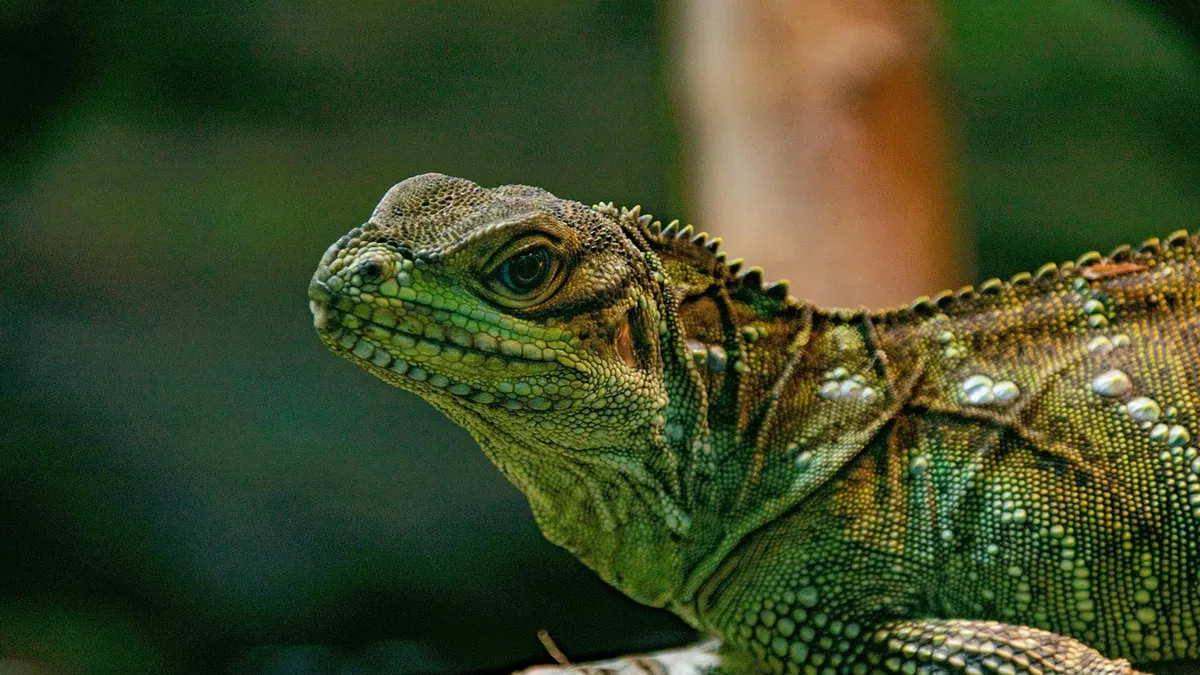
Why does my bearded dragon move his head up and down? In most cases, this is head bobbing, a normal social signal that bearded dragons use to communicate with other lizards and sometimes with people. It can also show up during courtship, territorial displays, or simply as part of everyday movement. This article is educational and is not a substitute for veterinary diagnosis or treatment.
Quick Answer
- Head bobbing up and down is usually a normal bearded dragon behavior, not a sign of illness.
- A slow, deliberate bob often means confidence, dominance, or a territorial claim.
- A fast, repeated bob is often part of mating or excitement behavior.
- A single head bob was seen in 1 of 26 healthy adult bearded dragons during a formal neurological exam, so it can occur in completely normal animals [1].
- If the movement comes with a head tilt, loss of balance, appetite loss, or trouble moving, contact an exotic veterinarian.
Why Does My Bearded Dragon Move His Head Up and Down?
Head Bobbing Is a Social Signal
Bearded dragons are highly visual lizards. They read body posture, arm waving, beard color, and head position to figure out who is nearby and what that animal intends to do. Head bobbing is one of their clearest signals.
A slow, exaggerated bob usually says "this is my space." A faster series of bobs often shows up during breeding season. Males bob more than females in many households, but females bob too, especially when they are gravid or defending a basking spot.
This behavior is so normal that it appeared in healthy lizards during a standardized neurological examination. In a study of 26 healthy adult inland bearded dragons, a head bob was recorded in 4% of them (1 of 26), and the authors classified it as normal bearded dragon behavior instead of a neurological abnormality [1].
Head Movement Helps With Vision and Balance
Bearded dragons have eyes set on the sides of the head, which gives them wide coverage but less depth perception straight ahead. Many reptiles and birds move the head to scan, judge distance, and track movement. In a study of diurnal raptors, head movement rate varied by species and habitat, and regular head movements helped birds track prey in cluttered environments [2]. The same general principle applies to many reptiles: moving the head changes what the eyes can see.
The inner ear also plays a role in how any animal responds to head movement. The utricle, part of the vestibular system, senses acceleration and head position, and natural head movements can reach higher magnitudes and frequencies than once assumed [3]. A bearded dragon that bobs, tilts, or turns its head is feeding information into that system constantly.
Courtship and Breeding Season
During breeding season, a male bearded dragon may bob his head, stamp a front foot, and darken his beard. A female may answer with slower bobs or arm waves. If you have two dragons housed together or within sight of each other, expect more of this behavior. It is communication, not a medical problem.
Excitement, Food, and Routine
Some dragons bob when they see a favorite feeder insect, when a person they know walks in, or when they are moved to a new enclosure. The movement can be brief and stop once the trigger is gone. If your dragon bobs, eats normally, basks, and passes stool, the behavior alone is not a reason to worry.
Medical Causes to Rule Out
Head Tilt Versus Head Bob
A head tilt is different from a head bob. A tilt means the head stays rotated or leaning to one side. In the same study of 26 healthy bearded dragons, a head tilt was present in 12% (3 of 26) and was considered normal bearded dragon behavior, not a sign of disease [1]. That does not mean every tilt is harmless. A tilt that appears suddenly, comes with circling, or stops your dragon from eating needs a veterinary exam.
If you want to compare how head tilt and head movement look in another species, see My Dog Has A Head Tilt. The anatomy is different, but the idea of "tilt versus bob" is similar.
Neurological Disease
Metabolic bone disease, low calcium, and vitamin A deficiency can affect nerves and muscles. A dragon with these problems may tremble, twitch, drag a limb, or hold the head in odd positions. Head bobbing alone is not proof of neurological disease, but bobbing plus weakness or poor grip is a reason to call your vet.
Ear Infection or Vestibular Problem
Infection or fluid in the ear can affect balance. Signs include a persistent head tilt, circling, rolling, or refusing to right itself. These signs are not normal and should be checked quickly.
Respiratory Infection
A bearded dragon with a respiratory infection may breathe with an open mouth, stretch the neck upward, or make clicking sounds. The head may move as the animal tries to breathe. This is different from a social bob. If you see mucus, wheezing, or a gaping mouth at rest, contact a veterinarian.
Pain or Injury
Trauma to the neck or spine, a bite wound, or a fall can change how a dragon holds and moves the head. If the behavior started after an injury or a fight, treat it as urgent.
Impaction and Gut Problems
A dragon that is straining to pass stool may posture oddly, including lifting or moving the head. If your dragon has not passed stool, has a hard belly, or is off food, read Bearded Dragon Impaction: Signs, Causes, and Veterinary Care and call your vet.
When Head Movement Becomes a Problem
Ask yourself three questions.
First, is the movement new? A dragon that has bobbed since you got him is probably fine. A dragon that started bobbing or tilting this week needs a closer look.
Second, is the movement interfering with normal life? A dragon that bobs, then eats, basks, and poops is likely normal. A dragon that cannot eat, cannot walk straight, or cannot hold its head level has a problem.
Third, are there other signs? Watch for weight loss, appetite change, eye discharge, swollen limbs, tremors, or a change in stool. One sign alone is often harmless. Several signs together point to illness.
What to Do Step by Step
1. Observe and Record
Write down when the bobbing happens, how long it lasts, and what is going on around your dragon. Note the time of day, the temperature in the enclosure, and whether another dragon is visible. A short video on your phone is very useful for your veterinarian.
2. Check the Enclosure
Review basking temperature, cool-side temperature, humidity, and UVB bulb age. Replace UVB bulbs on the schedule the manufacturer recommends, because output drops over time even when the bulb still glows. A dragon that cannot warm up or get proper UVB is more likely to develop health problems.
3. Review the Diet and Supplements
Make sure your dragon gets appropriate calcium and vitamin supplementation for its age and diet. Your veterinarian can tell you the right product and schedule for your specific animal. Do not guess at doses.
4. Reduce Social Stress
If two dragons are housed together or can see each other, separate them or block the line of sight. Head bobbing between cagemates can escalate to fighting, bites, and stress. A single dragon housed alone is usually calmer.
5. Keep Handling Calm and Predictable
Approach from the side, support the body, and avoid grabbing the head or tail. A dragon that feels threatened may bob, hiss, or bite. Calm, routine handling lowers stress.
6. Offer Enrichment
Provide climbing branches, a hide, and safe items to explore. Enrichment gives your dragon something to do besides watching a rival. A busy, comfortable dragon bobs less often out of stress.
7. Schedule a Veterinary Visit if Signs Persist
If the behavior is new, worsening, or paired with any other sign, book an appointment with a veterinarian who treats reptiles. Bring your notes and video.
What Not to Do
Do not punish your dragon for bobbing. Head bobbing is communication, not misbehavior. Spraying, tapping, or yelling will only increase stress and may lead to biting.
Do not assume every head movement is a seizure or a neurological disease. In healthy bearded dragons, head bob and head tilt can both be normal findings on examination [1].
Do not house two males together to "let them work it out." Head bobbing between males can turn into serious injury.
Do not give calcium, vitamin, or medication doses on your own. Your veterinarian calculates the dose from your pet's weight and health.
Do not rely on internet photos to diagnose a head tilt. A veterinarian needs to examine the ears, eyes, limbs, and reflexes in person.
When to Involve a Veterinarian or Behavior Professional
Call a veterinarian who treats reptiles if the bobbing is new, if it comes with a head tilt that does not go away, if your dragon stops eating, or if you see tremors, weakness, or trouble walking. A certified behavior professional can help if the problem is aggression between cagemates or stress from handling.
If you are comparing your dragon's head movement to what you have seen in mammals, these articles may help you understand the difference between normal movement and a sign of disease: Dog Shaking Head Up And Down and Dog Keeps Shaking Head And Tilting To One Side. Reptile and mammal anatomy differ, so use these only as general background, not as a diagnostic guide.
Limitations and When to Contact a Veterinarian
No article can tell you whether your specific dragon is healthy. A veterinarian needs to examine your pet, ask about husbandry, and possibly run tests. Individual cases need a veterinarian.
Contact a veterinarian the same day if your dragon has a sudden head tilt, cannot walk straight, has tremors, or stops eating.
Go to an emergency clinic now if your dragon is gasping, has a prolapse, is bleeding, has a suspected fracture, or cannot right itself after a fall.
Schedule a routine visit if the bobbing is new but your dragon is otherwise eating, basking, and passing stool normally. Bring a video and a written log of temperatures, diet, and supplements.
Frequently Asked Questions
Is head bobbing in bearded dragons always normal?
No, but it is normal in most cases. Head bobbing is a common social signal, and it was recorded as a normal finding in healthy adult bearded dragons during a neurological exam [1]. If bobbing comes with weakness, appetite loss, or balance problems, it needs a veterinary check.
Can a female bearded dragon bob her head?
Yes. Females bob during breeding season, when defending a basking spot, or when they are gravid. The behavior is not limited to males.
How can I tell a head bob from a seizure?
A head bob is rhythmic, brief, and stops when the trigger goes away. A seizure often involves stiffening, loss of balance, paddling, or a period of confusion afterward. If you are unsure, record a video and call your veterinarian.
Should I separate two bearded dragons that bob at each other?
Yes, separating them or blocking the line of sight is the safest choice. Bobbing between cagemates can escalate to biting and stress. Housing bearded dragons alone is usually the calmest option.
Does UVB lighting affect head movement?
UVB lighting affects overall health, including bone and nerve function, but it does not directly cause head bobbing. Poor UVB and calcium balance can lead to weakness and tremors that change how a dragon holds its head. Review your lighting schedule with your veterinarian.
Related Articles
- Bearded Dragon Impaction: Signs, Causes, and Veterinary Care
- Bearded Dragon Black Beard: What It Means and When to Worry
- Why Is My Bearded Dragon Bobbing His Head? Meaning and Causes
- Bearded Dragon Not Head Bobbing: Is It Normal?
- Why Is My Bearded Dragon Puffing Its Beard? Meaning
References
- Neurological examination in healthy adult inland bearded dragons (Pogona vitticeps). Journal of the American Veterinary Medical Association, 2022.
- Hawk eyes II: diurnal raptors differ in head movement strategies when scanning from perches. PloS one, 2010.
- Multiscale modeling of mechanotransduction in the utricle. Journal of neurophysiology, 2019.