Dogs and Pools: Safety, Chlorine, and Swim Tips
By Dr. Zubair Khalid, DVM, MS, PhD ·
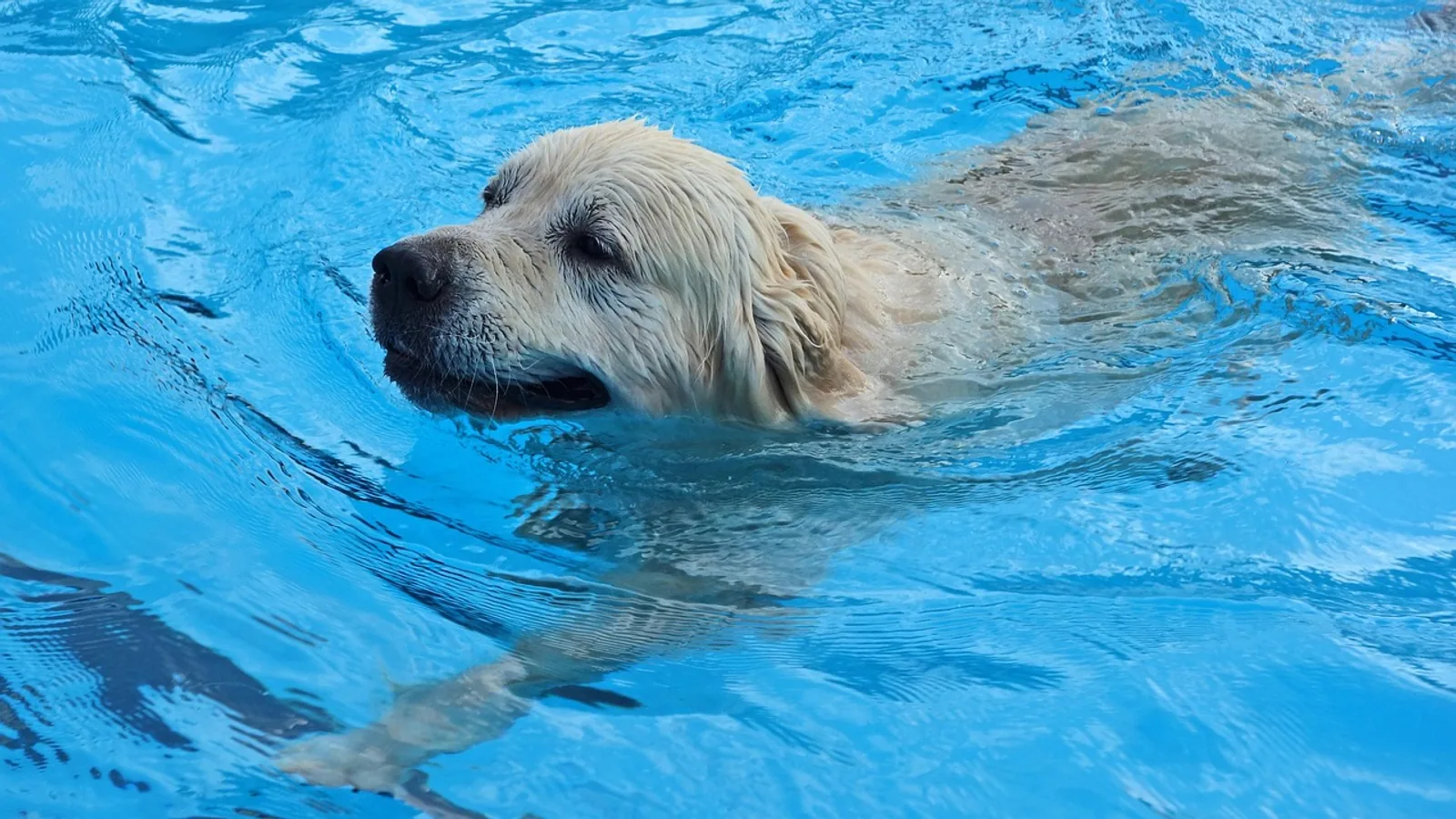
Most dogs can enjoy a backyard pool safely when three conditions are met. A person watches the dog every second it is near or in the water. The dog knows how to get out on its own. The pool water is properly maintained and the dog does not drink it in large amounts. Chlorine at normal operating levels of roughly 1 to 3 parts per million (ppm) is generally tolerated if a dog swallows only small amounts during a swim. The serious hazards are unsupervised access, a dog that cannot find the exit, concentrated pool chemicals, and drinking pool water as a primary water source. This guide covers prevention, water chemistry, swimming technique, and the warning signs that mean a dog needs a veterinarian.
This article is educational and is not a substitute for veterinary diagnosis or treatment.
At a Glance: Pool Safety Checklist for Dog Owners
Use this table as a daily operating checklist. Each row pairs a hazard with the sign it produces and the action to take.
| Hazard | What you may see | Action |
|---|---|---|
| Unsupervised pool access | Dog found in or beside the pool alone, wet dog with no swim session | Fence the pool, latch gates, never leave a dog unattended near water |
| No safe exit route | Dog paddling at the wall, clawing at the edge, tiring | Teach one exit (steps or ramp) and rehearse it every session |
| Drinking pool water | Frequent gulping, bloated abdomen, vomiting, loose stool | Offer fresh water before and after swimming, limit time in the pool |
| Concentrated pool chemicals | Drooling, mouth pawing, vomiting, reluctance to eat after contact | Rinse the mouth, remove the dog from the chemical, call a veterinarian |
| Chlorine byproducts in water | Long-term exposure concern in dogs with repeated pool contact | Maintain correct chemistry, rinse the coat after swimming |
| Saltwater or bromine pool | Salt or bromine residue on the coat, dry or itchy skin | Rinse with fresh water after every swim |
| Flat-faced breeds and puppies | Rapid panting, slowing down, struggling to stay level | Shorten sessions, use a life vest, supervise closely |
| Ear and skin moisture | Head shaking, ear odor, itching, redness | Dry the ears and coat thoroughly after swimming |
| Slip on wet decking | Sliding, splayed legs, reluctance to walk on the deck | Use non-slip mats or a textured path to the pool |
| Post-swim lethargy or vomiting | Weakness, repeated vomiting, not acting normal | Stop swimming and contact a veterinarian |
Why Dogs Need Pool Rules, Not Just Pool Access
A dog in the pool is not a small human swimmer. Dogs use a different stroke, tire at different rates, and cannot call for help. Many dogs enter the water confidently the first time and then panic when they cannot find the way out. Others love the water and will swim until they are exhausted if no one stops them.
The core risk is drowning, and the core prevention is supervision plus a rehearsed exit. A dog that has learned exactly where the steps are can leave the pool on its own even when tired. A dog that has not learned this will swim toward the nearest wall, find no footing, and keep paddling. That is the pattern that ends badly.
Pool water chemistry adds a second layer of risk. Normal pool chlorine is not the same as a bucket of pool shock. A dog that swims in a properly balanced pool is in a very different situation from a dog that laps at undiluted chemicals in a storage area or drinks pool water as its main water supply. Understanding that difference helps owners make calm, correct decisions.
Chlorine and Pool Water: What Is Actually Risky
Normal pool chlorine levels
Recreational pools are typically maintained with free chlorine in the range of 1 to 3 ppm. At these levels, a dog that swallows a small amount of water during a swim is generally not at risk of acute chlorine poisoning. The bigger practical issue is that some dogs treat the pool as a water bowl. A dog that drinks large volumes of chlorinated water can develop stomach upset, and repeated heavy intake is not something to encourage.
A published case series described two dogs that developed lithium toxicity after lithium hypochlorite chlorinated water was their sole source of drinking water [1]. The dogs showed polyuria (increased urination), polydipsia (increased thirst), loss of body mass, dehydration, diarrhea, weakness, and in one case seizures. Withdrawal of that water led to complete recovery. This is a specific scenario, a dog drinking chlorinated water as its only water source, and it is a useful reminder that pool water should never replace fresh drinking water.
Concentrated pool chemicals
The more immediate chlorine hazard for dogs is concentrated product. Pool shock, chlorine tablets, granular chlorine, and liquid chlorine are far stronger than pool water. A dog that licks or mouths these products can suffer chemical burns to the mouth and esophagus. Signs include drooling, pawing at the mouth, vomiting, and refusal to eat. If you suspect your dog contacted concentrated pool chemicals, rinse the mouth with fresh water if it is safe to do so, remove the dog from the source, and contact a veterinarian or pet poison service immediately.
Chlorine gas is a separate inhalation hazard. Chlorine is a respiratory irritant, and inhalation injury from chlorine and related irritants is a recognized toxicologic problem [2]. A dog that breathes strong chlorine fumes in a poorly ventilated pump room or near a chemical spill can develop coughing, difficulty breathing, and eye irritation. Move the dog to fresh air and seek veterinary care.
Chlorination byproducts and long-term exposure
Chlorine disinfection creates byproducts, including trihalomethanes. A case-control study of dogs with urothelial cell carcinoma found that affected dogs were more likely to swim in a pool than control dogs, and case households had higher reported municipal water concentrations of chlorination byproducts [3]. This is a small study and it does not prove that pool swimming causes cancer. It does suggest that repeated chlorinated water exposure is worth taking seriously as an environmental factor. The practical takeaway is not to ban swimming. It is to maintain correct pool chemistry, avoid excessive drinking of pool water, and rinse the dog after swimming.
Saltwater and bromine pools
Saltwater pools and bromine pools are common alternatives to chlorine. They still require rinsing after a swim. Salt residue left on the coat can dry and irritate the skin, and bromine is still a disinfectant that should not be consumed in quantity. The same rules apply. Supervise, teach the exit, provide fresh water, and rinse the dog afterward.
Teaching a Dog to Exit the Pool Safely
The single most protective skill a pool dog can learn is how to get out. Teach it before you let the dog swim freely.
- Choose one exit. Use the pool steps or a ramp. Do not teach multiple exits at first.
- Start shallow. Stand with the dog on the top step or on the ramp in shallow water.
- Guide the dog to the exit from the water. Support the body, and let the dog feel the step or ramp under its feet.
- Repeat from increasing distance. Move a few feet away and guide the dog back to the same exit.
- Rehearse from the water, not just the deck. The dog must practice finding the exit while swimming, not only while standing.
- Mark the exit visually. Keep the same steps or ramp in the same place every time.
- Practice every session. Short repetitions build the habit.
A dog that reliably finds the exit is far safer than a dog that only knows how to swim. If your dog uses a ramp, check that the ramp is stable and that the dog can grip it with wet paws. If your dog uses steps, confirm the dog can climb them while tired.
Supervision Rules That Prevent Drowning
Supervision is not the same as being nearby. It means watching the dog, with your attention on the dog, for the entire time the dog is in or near the water.
- Put the phone down. A dog can slip under the surface in seconds.
- Assign one watcher. In a group, one adult is responsible for the dog at all times.
- Keep the dog out of the pool area when you cannot watch. Use a fence and a self-latching gate.
- Do not rely on another dog to rescue a struggling dog. Dogs do not perform rescues.
- End the session before the dog is tired. Tired dogs make mistakes.
- Never leave a dog on a float, raft, or pool cover. These are not resting places.
- Check the pool area after guests leave. Gates get propped open.
A pool cover is a particular hazard. A dog that walks onto a cover can become trapped underneath. Treat covers as a barrier to keep dogs out, not a surface to walk on.
Flat-Faced Breeds, Puppies, and Dogs That Tire Quickly
Brachycephalic breeds (flat-faced dogs such as bulldogs, pugs, and Boston terriers) have a harder time breathing during exertion. Swimming is exertion. These dogs can overheat and struggle to breathe even in cool water. Keep sessions short, watch for noisy breathing, and stop at the first sign of distress.
Puppies also tire quickly. They have less stamina, less body mass, and less experience in the water. A puppy that is enjoying its first swim can go from happy to exhausted in a short time. Keep first sessions very short, use a life vest, and stay within arm's reach.
Other dogs that need extra caution include seniors, dogs with heart or respiratory disease, dogs with obesity, and dogs recovering from surgery or illness. Ask your veterinarian whether swimming is appropriate for your dog and how long sessions should be.
Equipment and Setup: What Helps
You do not need much equipment, but the right items make a difference.
- A properly fitted canine life vest. Look for a handle on the back, secure straps, and a fit that does not ride up. This is essential for flat-faced breeds, puppies, and weak swimmers.
- A pool ramp or non-slip steps. These give the dog a reliable exit. Check stability and grip.
- Non-slip mats on wet decking. Slipping on wet concrete can cause injury.
- Fresh water bowls at the poolside. Offer water before and after swimming so the dog is not thirsty enough to drink pool water.
- A rinse station. A hose or outdoor shower for rinsing the coat after every swim.
- Ear-drying supplies. A towel or veterinary-recommended ear cleaner for drying the ear canals.
- Secure chemical storage. Keep pool chemicals in a locked cabinet away from the pool area and away from where the dog can reach.
Step-by-Step: A Safe Swim Session
- Check the pool chemistry. Confirm chlorine is in the normal range and the water is clear.
- Offer fresh water. Let the dog drink before entering the pool.
- Fit the life vest if the dog needs one.
- Enter the water with the dog for the first sessions.
- Guide the dog to the exit and practice it once or twice.
- Let the dog swim in short bursts, with rest breaks on the steps or deck.
- Watch for signs of fatigue, and end the session before the dog is tired.
- Rinse the dog with fresh water.
- Dry the coat and the ears.
- Offer fresh water again and let the dog rest.
Common Mistakes Owners Make
- Assuming a dog that can swim can also get out. Swimming and exiting are different skills.
- Leaving the dog unattended "just for a minute." Most pool drownings happen in unattended moments.
- Letting the dog drink pool water freely. Provide fresh water instead.
- Skipping the rinse. Chlorine, salt, and bromine residue stay on the coat.
- Ignoring ear drying. Moisture in the ear canal promotes infection.
- Using the pool as exercise for a dog that is not fit for it. Ask your veterinarian first.
- Storing pool chemicals where a dog can reach them. Concentrated products cause burns.
- Assuming a life vest is a substitute for supervision. It is not.
Troubleshooting: When Something Goes Wrong
The dog will not use the steps
Rehearse the exit in shallow water with support. Guide the dog's feet onto the step. Reward calm behavior. Do not force the dog into deep water until the exit is reliable.
The dog drinks pool water constantly
Remove the dog from the pool, offer fresh water, and shorten sessions. If the behavior continues, keep the dog out of the pool and discuss it with your veterinarian.
The dog vomits after swimming
Vomiting after a swim can reflect swallowed pool water, swallowed debris, or another problem. If vomiting is repeated, if the dog is lethargic, or if the dog is not acting normal, contact a veterinarian.
The dog has itchy skin or a dull coat after swimming
Rinse the dog with fresh water after every swim. If skin irritation persists, have the dog examined.
The dog shakes its head or scratches its ears
Moisture in the ear canal can lead to infection. Dry the ears after swimming. If head shaking, odor, or redness continues, see a veterinarian.
The dog seems weak or wobbly after a swim
Stop swimming and let the dog rest in a safe, shaded area. If weakness, breathing difficulty, or collapse occurs, seek veterinary care immediately.
Welfare and Safety Points
- Water safety is a welfare issue. A dog cannot consent to a swim and cannot rescue itself from a poorly designed pool area.
- Heat and exertion matter. Swimming in hot weather can cause overheating, especially in flat-faced breeds.
- Cold water matters too. Very cold water can chill a small or thin-coated dog quickly.
- Ear and skin health matter. Rinse and dry after every swim.
- Chemical safety matters. Store pool chemicals securely and never let a dog near an open container.
- Senior dogs and dogs with medical conditions need a veterinarian's input before swimming.
Limitations and When to Contact a Veterinarian
This article provides general guidance. Individual dogs vary, and a veterinarian who knows your dog should make decisions about swimming for dogs with heart disease, respiratory disease, orthopedic problems, seizures, or other conditions.
Contact a veterinarian promptly if your dog:
- Is coughing, wheezing, or having difficulty breathing after being near chlorine fumes or concentrated chemicals
- Has drooling, mouth pain, vomiting, or refusal to eat after contact with concentrated pool chemicals
- Has repeated vomiting, diarrhea, weakness, or collapse after swimming
- Is lethargic, disoriented, or not acting normal after a swim
- Has ear odor, head shaking, or ear pain after swimming
- Has skin redness, itching, or hair loss after repeated pool exposure
- Was found in or near the pool unsupervised and may have inhaled or swallowed water
If you suspect your dog swallowed concentrated pool chemicals or inhaled chlorine gas, treat it as an emergency. Call your veterinarian or a pet poison control service right away.
How Veterinarians Think About Pool Exposure in Dogs
When a dog is brought in after a pool incident, the clinical picture is rarely a single, clean diagnosis. It is a puzzle assembled from the owner's account, the dog's physical examination, and a working knowledge of what pool water and pool chemicals actually do to a dog's body. Understanding how a veterinarian approaches that puzzle helps owners give better information, ask better questions, and recognize when a situation is more serious than it first appears.
The first branch point is exposure type. Did the dog swallow pool water, or did it contact concentrated chemicals? Did it inhale fumes, or did it simply get water in its airways during a near-drowning event? These are four different problems with four different clinical courses. A dog that drank a modest amount of balanced pool water during a normal swim is usually a watch-and-wait case. A dog that licked a chlorine tablet is a chemical burn case that needs immediate care. A dog pulled from the bottom of the pool is a resuscitation and aspiration case. A dog that spent time in a pump room with strong fumes is a respiratory case.
The second branch point is timing. Chlorine and its byproducts cause injury through direct contact with tissue, and the severity depends on concentration and duration. A brief splash of dilute pool water on the tongue is trivial. Prolonged contact with a concentrated product, or repeated swallowing of water with high disinfectant byproduct levels, is a different matter. Vomiting that starts within minutes of a swim points toward swallowed water or debris. Vomiting that starts hours later, especially with lethargy, raises broader questions.
The third branch point is the dog itself. A young, healthy Labrador that swam for twenty minutes and is now coughing may simply have aspirated a small amount of water. A senior dog with known heart disease that swam for the same twenty minutes may be showing early signs of respiratory compromise. A flat-faced dog that became distressed in the water may be showing the effects of upper airway obstruction rather than water inhalation. The same event produces different concerns in different patients.
This is why the veterinary history matters so much. Owners who can describe the water chemistry, the duration of exposure, the dog's behavior in the water, and the timeline of signs give the veterinarian a much clearer starting point. The sections below walk through what that evaluation looks like and what owners can do to prepare.
The Clinical Evaluation After a Pool Incident
History taking: what the veterinarian needs to know
A focused history after a pool incident covers several specific points. The veterinarian will want to know what the dog was exposed to (pool water, concentrated chemical, fumes, or a combination), how long the exposure lasted, and whether the dog was supervised. They will ask about the pool's maintenance, including the type of disinfectant and whether the water was recently shocked or had chemicals added. They will ask whether the dog drank pool water and roughly how much. They will ask about the dog's behavior during and after the swim, including any coughing, gagging, retching, or changes in breathing.
The timeline of signs is critical. A dog that vomited once immediately after swallowing water and is now bright and alert is very different from a dog that vomited three times over two hours and is now quiet and reluctant to move. Owners should note the time of the swim, the time each sign appeared, and whether signs are worsening, stable, or improving.
Owners should also report any pre-existing conditions. Heart disease, respiratory disease, laryngeal paralysis, obesity, and orthopedic problems all change how a dog tolerates water exposure and exertion. Medications matter too, particularly diuretics, sedatives, and any drug that affects breathing or swallowing.
Physical examination priorities
The physical examination after a pool incident focuses on the systems most likely to be affected. The veterinarian will assess the mouth and throat for chemical burns, ulcers, or swelling. They will listen to the lungs for crackles, wheezes, or diminished breath sounds that could indicate aspiration or fluid accumulation. They will check respiratory rate and effort, because an increased rate or visible effort is an early sign of respiratory compromise. They will assess hydration, because vomiting, diarrhea, and increased urination can all lead to dehydration.
The neurologic examination matters in cases involving heavy pool water intake. The case series describing lithium toxicity in two dogs that drank lithium hypochlorite chlorinated water as their sole water source reported polyuria, polydipsia, loss of body mass, dehydration, diarrhea, weakness, and in one case seizures [1]. A dog with any of these signs after heavy pool water consumption warrants a careful neurologic assessment. The same case series noted that withdrawal of the water source led to complete recovery, which is an important prognostic point.
The skin and coat examination is relevant for dogs with repeated pool exposure. Chlorine, salt, and bromine residues can cause contact irritation, and moisture trapped against the skin can promote secondary problems. The ears deserve specific attention, because moisture in the ear canal is a well-recognized predisposing factor for otitis externa.
Diagnostic reasoning and testing
Diagnostics are guided by the history and examination, not ordered indiscriminately. A dog with mild vomiting after a normal swim and a normal examination may need no testing at all beyond observation and supportive care. A dog with respiratory signs after a near-drowning event may need thoracic imaging to look for aspiration pneumonia. A dog with severe gastrointestinal signs, neurologic signs, or dehydration may need blood work to assess electrolytes, kidney values, and overall metabolic status.
The evidence base for specific diagnostic thresholds after pool exposure in dogs is limited. Much of what is known comes from case reports, case series, and toxicology principles rather than large controlled studies. This is an important limitation to acknowledge. The lithium toxicity case series involved only two dogs [1], and the urothelial cell carcinoma study was a case-control design that can identify associations but not prove causation [3]. Veterinarians therefore rely on general principles of toxicology, respiratory medicine, and dermatology when managing these cases, adapting them to the individual dog.
Owners can help by bringing information rather than assumptions. If the dog was exposed to a specific product, bringing the product label or a photograph of it is far more useful than a guess about what it contained. If the dog was in a pool, knowing the disinfectant type and the approximate water chemistry helps the veterinarian assess risk.
Owner Observation: What to Watch For and What It Means
Owners are the first observers, and their observations shape the entire clinical picture. The challenge is that many post-swim signs are nonspecific. Coughing, vomiting, lethargy, and changes in appetite can all have benign explanations or serious ones. The skill is in recognizing patterns that warrant a call to the veterinarian.
Respiratory signs
Coughing after a swim can mean a small amount of water was inhaled, or it can mean aspiration pneumonia is developing. The distinction is not always obvious at home. Warning features include coughing that persists or worsens, increased respiratory rate at rest, visible effort to breathe, noisy breathing, and a bluish or pale tinge to the gums. A dog that is coughing but otherwise bright, eating, and breathing comfortably at rest is usually a monitor-at-home situation. A dog that is coughing and working harder to breathe needs prompt evaluation.
Exposure to chlorine fumes is a separate respiratory concern. Chlorine is a respiratory irritant, and inhalation injury from chlorine and related irritants is a recognized toxicologic problem [2]. A dog that was in a poorly ventilated area near a chemical spill or an over-chlorinated pool may develop coughing, eye irritation, and difficulty breathing. Move the dog to fresh air and seek veterinary care if signs are present.
Gastrointestinal signs
Vomiting and diarrhea after a swim are common owner complaints. Swallowed pool water, swallowed debris, and the physical effects of exertion can all contribute. A single episode of vomiting in an otherwise bright dog is usually not an emergency. Repeated vomiting, vomiting with lethargy, vomiting with abdominal pain or a distended abdomen, and vomiting with diarrhea and dehydration are all reasons to call a veterinarian.
The lithium toxicity case series is a reminder that heavy, sustained pool water intake can produce serious gastrointestinal and systemic signs, including diarrhea and dehydration [1]. The key word is sustained. A dog that takes a few gulps during a swim is in a different category from a dog that drinks pool water as its primary water source over days or weeks.
Neurologic signs
Weakness, wobbliness, disorientation, and seizures after pool exposure are red flags. These signs can reflect severe metabolic derangement, toxin exposure, or a near-drowning event with hypoxia. Any dog with neurologic signs after a swim should be evaluated promptly. The case series reported seizures in one of the two dogs with lithium toxicity [1], which underscores that neurologic signs in this context are not trivial.
Skin and ear signs
Itching, redness, and hair loss after repeated pool exposure suggest contact irritation or a flare of underlying skin disease. Head shaking, ear odor, ear redness, and pain when the ear is touched suggest otitis externa. These signs are usually not emergencies, but they warrant a veterinary visit if they persist or worsen. Owners should note whether signs appear after every swim or only occasionally, because that pattern helps distinguish pool-related irritation from other causes.
Behavioral signs
A dog that becomes reluctant to enter the pool, hesitant on the steps, or anxious around the water may be communicating discomfort or a bad experience. Behavioral changes are easy to dismiss, but they can be the first sign of pain, fatigue, or fear. A dog that was previously eager to swim and now avoids the pool deserves attention.
Preparing for a Veterinary Visit After a Pool Incident
Preparation makes a veterinary visit more efficient and more accurate. Owners who arrive with organized information help the veterinarian reach the right conclusion faster.
What to bring
Bring the product label or a photograph of any pool chemical the dog may have contacted. Bring a note with the timeline of events: when the dog was in the water, how long it was in, what signs appeared and when, and whether signs are improving or worsening. Bring a list of the dog's medications and any known medical conditions. If the dog vomited or had diarrhea, note the frequency, appearance, and whether blood was present.
If the dog was unsupervised near the pool and may have inhaled or swallowed water, say so clearly. This changes the veterinarian's index of suspicion for aspiration and near-drowning complications.
What to expect
The veterinarian will take a focused history, perform a physical examination, and decide whether diagnostics are needed. Depending on the findings, they may recommend blood work, imaging, or observation. They may also recommend supportive care such as fluids, anti-nausea medication, or oxygen therapy if respiratory compromise is present. The specific plan depends on the dog's condition and the veterinarian's clinical judgment.
Owners should feel comfortable asking questions. What signs should I watch for at home? When should I call back? What is the expected course? These questions help owners participate in the dog's care and recognize when a situation is changing.
What not to do
Do not induce vomiting unless a veterinarian instructs you to. Do not give human medications without veterinary guidance. Do not assume that a dog that seems fine immediately after a swim will stay fine, because some signs develop over hours. And do not delay care because the dog "seems okay" if there are respiratory, neurologic, or persistent gastrointestinal signs.
Prevention: Designing a Pool Environment for Dogs
Prevention is the most effective intervention, and it operates at several levels: the physical environment, the dog's training, the owner's habits, and the pool's maintenance.
Physical barriers
A fence around the pool with a self-latching, self-closing gate is the foundation of prevention. The fence should be tall enough that the dog cannot jump over it and secure enough that the dog cannot push through it. Gates should latch reliably and should not be propped open. Pool covers are not a substitute for a fence and can be a hazard if a dog walks onto them. A dog that falls through or onto a cover can become trapped.
For dogs that are allowed in the pool area, a designated exit such as steps or a ramp should be permanently in place and clearly identifiable. The exit should be stable, have good grip for wet paws, and be in the same location every time.
Training and habituation
Training is a form of prevention. A dog that has rehearsed the exit many times is far less likely to panic if it enters the water unexpectedly. Training should be positive, gradual, and repeated. Short, frequent sessions are better than long, infrequent ones. The goal is a dog that can find the exit reliably even when tired.
Owners should also train the dog to wait at the pool edge until released. This simple impulse-control exercise prevents a dog from launching into the water before the owner is ready to supervise.
Owner habits
The most important owner habit is active supervision. This means watching the dog, not just being present. Phones, conversations, and chores all compete for attention. Assigning one person to watch the dog during group gatherings is a practical way to maintain supervision.
Other habits that reduce risk include offering fresh water before and after swimming, rinsing the dog after every swim, drying the ears thoroughly, and ending sessions before the dog is tired. Owners should also check the pool area after guests leave, because gates are often left open.
Pool maintenance
Correct pool chemistry reduces the risk of irritant exposure and byproduct formation. Chlorine should be maintained in the normal operating range, and the pool should be kept clean and clear. Pool chemicals should be stored in a locked cabinet away from the pool area and away from where dogs can reach them. Chemical additions should be made when the dog is not in the area, and the dog should not be allowed back into the water until the chemicals have fully dispersed according to the product instructions.
The urothelial cell carcinoma study is a reminder that chlorination byproducts are a legitimate area of research interest [3]. While the evidence does not establish causation, maintaining correct chemistry and limiting pool water consumption are reasonable precautions.
Special Populations: Dogs That Need Modified Plans
Not every dog can follow the same pool routine. Some dogs need shorter sessions, more support, or a different approach entirely.
Brachycephalic breeds
Flat-faced dogs have anatomic features that make breathing harder during exertion. Swimming increases respiratory demand while the dog's airway anatomy limits airflow. These dogs can overheat and struggle to breathe even in cool water. Sessions should be short, a life vest should be used, and the dog should be watched closely for noisy breathing, increased effort, or distress. Owners should ask their veterinarian whether swimming is appropriate for their specific dog.
Puppies
Puppies have less stamina, less body mass, and less experience in the water. They also have less reliable thermoregulation, which means cold water can chill them quickly. First sessions should be very short, with a life vest and close supervision. Owners should not assume that a puppy that enjoys the water has the endurance for a long session.
Senior dogs
Older dogs may have arthritis, reduced muscle mass, heart disease, or respiratory disease. Swimming can be excellent low-impact exercise for some senior dogs, but it can also be exhausting or risky for others. A veterinarian who knows the dog's condition should advise on whether swimming is appropriate and how long sessions should be.
Dogs with heart or respiratory disease
Dogs with cardiac or respiratory conditions may not tolerate the exertion or the water exposure well. These dogs need individualized guidance from a veterinarian. Some may be able to swim in short, supervised sessions. Others should avoid the pool entirely.
Dogs with skin disease
Dogs with allergies, seborrhea, or other skin conditions may be more sensitive to chlorine, salt, and bromine residues. Rinsing after every swim is especially important for these dogs. Owners should also watch for flares of underlying skin disease after swimming.
Dogs with a history of seizures
Seizure-prone dogs need special consideration around water. A seizure in the pool would be catastrophic. Owners should discuss water safety with their veterinarian and consider whether the risk is acceptable for their dog.
Overweight dogs
Obesity increases the workload on the heart and lungs and reduces exercise tolerance. Swimming can be a useful low-impact exercise for overweight dogs, but sessions should be short and supervised, and the dog should be evaluated by a veterinarian before starting a swimming routine.
Prognosis and Long-Term Outlook
The prognosis after a pool incident depends on the type and severity of exposure. Dogs with mild gastrointestinal signs after swallowing a small amount of pool water typically recover with supportive care. Dogs with chemical burns to the mouth and esophagus may need longer treatment and monitoring. Dogs with aspiration pneumonia may require antibiotics, oxygen therapy, and hospitalization. Dogs with severe neurologic signs from toxin exposure have a more guarded prognosis, though the lithium toxicity case series reported complete recovery in both dogs after the water source was withdrawn [1].
For dogs that swim regularly, the long-term outlook is generally good when owners maintain correct pool chemistry, supervise sessions, teach a reliable exit, and rinse and dry the dog after swimming. The main long-term concerns are skin and ear health, and the theoretical concern about repeated chlorinated water exposure raised by the urothelial cell carcinoma study [3]. Owners can manage these concerns with consistent after-swim care and by limiting how much pool water the dog consumes.
Owners should also monitor for changes over time. A dog that used to love swimming and now avoids the water may be developing pain, fatigue, or another problem. A dog that develops recurrent ear infections after swimming may need a different ear-care routine. A dog that develops skin irritation after every swim may need a different rinse or drying protocol. These patterns are worth discussing with a veterinarian.
Evidence Limitations and Honest Uncertainty
It is important to be clear about what the veterinary literature does and does not establish. Much of the guidance in this article rests on general principles of toxicology, respiratory medicine, and dermatology rather than large controlled studies specific to pool exposure in dogs. The case series on lithium toxicity involved two dogs [1], and while it is instructive, it describes a specific and unusual scenario. The case-control study on urothelial cell carcinoma identified an association between pool swimming and affected dogs, but case-control designs cannot establish causation, and the study had limitations including its size and reliance on owner-reported exposure [3].
The toxicology literature supports the general principle that chlorine is a respiratory irritant and that inhalation injury is a recognized problem [2]. This principle is well established, but the specific thresholds at which dogs develop respiratory signs after chlorine fume exposure are not precisely defined. Similarly, the relationship between chlorination byproducts and long-term health outcomes in dogs is an area of active research interest rather than settled science.
What this means for owners is that decisions should be made with a combination of evidence, clinical judgment, and attention to the individual dog. A veterinarian who knows the dog can weigh the general principles against the specific circumstances. Owners should feel empowered to ask about the strength of the evidence behind any recommendation and to seek a second opinion if they have concerns.
Building a Sustainable Pool Routine
A safe pool routine is not a single decision. It is a set of habits that become automatic over time. The dog learns the exit. The owner learns the dog's limits. The pool stays properly maintained. The after-swim care becomes routine.
Owners who build this routine reduce risk without eliminating the joy of swimming. The goal is not to keep dogs out of the pool. It is to make the pool a place where dogs can safely enjoy the water, with the owner's attention, a reliable exit, and consistent care before and after every swim.
The most important habits are the simplest ones. Watch the dog. Teach the exit. Offer fresh water. Rinse and dry. Store chemicals safely. Know the signs that mean it is time to call a veterinarian. These habits, repeated consistently, are what keep a pool of dogs safe.
This article is educational and is not a substitute for veterinary diagnosis or treatment. Owners with specific concerns about their dog should consult a veterinarian who can evaluate the individual patient.
Frequently Asked Questions
Is pool chlorine safe for dogs?
Normal pool chlorine at about 1 to 3 ppm is generally tolerated if the dog swallows only small amounts during a swim. Concentrated pool chemicals are a different matter and can cause burns to the mouth and esophagus.
Can dogs drink pool water?
Dogs should not drink pool water as a water source. Offer fresh water before and after swimming. A published case series linked lithium hypochlorite chlorinated water used as the sole drinking water to serious toxicity in two dogs [1].
How do I teach my dog to get out of the pool?
Choose one exit, such as steps or a ramp, and rehearse it every session. Guide the dog to the exit from the water and practice until the dog finds it reliably on its own.
Do saltwater pools need rinsing for dogs?
Yes. Saltwater and bromine pools still leave residue on the coat. Rinse the dog with fresh water after every swim.
Are flat-faced dogs safe in pools?
Flat-faced breeds tire and overheat more easily. Keep sessions short, use a life vest, and supervise closely. Ask your veterinarian if your dog is fit for swimming.
Should puppies swim in pools?
Puppies tire quickly and have less experience in the water. Keep first sessions very short, use a life vest, and stay within arm's reach.
What should I do if my dog swallows pool shock?
Rinse the mouth with fresh water if it is safe to do so, remove the dog from the chemical, and contact a veterinarian or pet poison service immediately.
Can swimming in a pool cause health problems in dogs?
Repeated chlorinated water exposure has been studied as an environmental factor in dogs with urothelial cell carcinoma, though the evidence does not prove cause [3]. Maintain correct chemistry, limit pool water drinking, and rinse the dog after swimming.
Related Articles
- Gene Pool
- Cat Cafe: Health and Safety Tips for Visitors and Cats
- Goldfish Swim Bladder Problem
- Multiplexing in Sequencing: How to Pool Samples Efficiently
- Dog Park 101: Essential Etiquette and Safety Tips for Happy Play
- Goldfish Care: Swim bladder disorder dietary treatment guide
- Can Cats Eat Apples? Safety, Seeds and Serving Tips
- Cat at Christmas: Holiday Hazards and Safety Tips
- Are Roses Toxic to Cats? Pet Safety Guide
Further Reading
- Species- and tissue-specific profiles and potential risks of polychlorinated biphenyls (PCBs) and their metabolites in dogs and cats.
- Subchronic and chronic toxicity of ingested 1,3-dichloropropene in dogs.
- Live in same region, respond differently: Canine and human response to pollutants in placental accumulation.