Split Nail in Cats: Causes and What to Do
By Dr. Zubair Khalid, DVM, MS, PhD ·
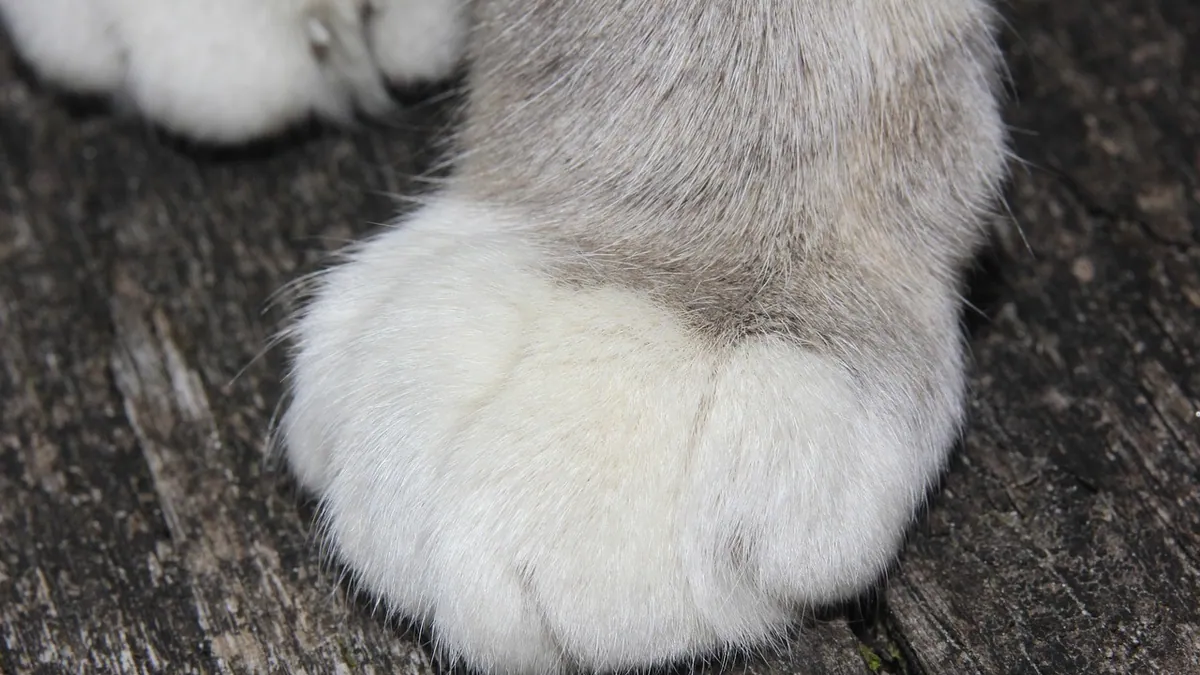
A split nail in cats happens when the hard outer shell of a claw cracks, peels, or tears away from the quick underneath. Most splits are minor and grow out on their own, but a nail that is torn at the base, bleeding, or infected needs veterinary care. The cause matters too, because repeated splitting can point to injury, nail disease, or an underlying health problem.
This article is educational and is not a substitute for veterinary diagnosis or treatment.
Quick Answer
- A small crack near the tip is usually minor and can be monitored at home while it grows out.
- A nail split down to the base, hanging loose, or bleeding from the quick is painful and needs a vet visit.
- Signs of infection include swelling, redness, pus, foul odor, and limping that gets worse instead of better.
- Never pull a loose nail off yourself. You can cause more damage to the nail bed and quick.
- If your cat is bleeding heavily, crying, or holding the paw up, treat it as urgent and call your veterinarian.
What a Split Nail Looks Like and What Is Normal
A cat's claw is a curved shell of keratin that covers a sensitive core called the quick, which contains blood vessels and nerves. When the shell splits, you may see a visible crack, a jagged edge, or a piece of the nail sticking out at an angle. Sometimes the split runs lengthwise. Sometimes the nail breaks across, leaving a sharp fragment.
Normal claws are smooth, slightly curved, and translucent near the tip. They retract when your cat is relaxed. A healthy nail does not smell, does not bleed, and does not cause your cat to limp.
Cats shed the outer layer of their claws regularly, so you may find thin, curved nail sheaths around scratching posts or on the floor. That is normal. A true split is different because the nail is cracked or torn while still attached to the toe.
Some cats have nails that split in half or split in two. When a nail splits in two, one piece may stay attached while the other hangs free. This is often more painful than a simple crack because the loose piece can catch on carpet, bedding, or furniture and pull on the quick.
What Causes Split Nails in Cats?
Several things can cause cat nails to split. The cause often determines how serious the problem is and whether it will keep happening.
| Cause | Typical clues | How urgent |
|---|---|---|
| Trauma (catching a nail on carpet, furniture, or a carrier) | Sudden onset, one nail affected, bleeding, cat pulls the paw back | Urgent if bleeding heavily or the nail is torn at the base |
| Overgrown nails | Long, curved nails that catch on surfaces, often in older or less active cats | Routine, but needs trimming |
| Dry or brittle nails | Multiple nails crack easily, no swelling or discharge | Routine |
| Fungal or bacterial nail infection | Swelling at the toe, discharge, odor, dark or crumbly nail | Same-day to routine, depending on severity |
| Immune-mediated nail disease | Multiple nails affected, nails loosen or fall out, often with skin problems elsewhere | Routine to urgent, needs diagnosis |
| Nutritional imbalance | Poor coat, weight loss, other health signs | Routine |
| Previous declaw surgery complications | Nail regrowth, bony remnants, pain at the paw | Routine to urgent, needs veterinary evaluation |
| Tumor of the nail bed | Swelling that does not heal, one toe affected, sometimes bloody discharge | Urgent, needs evaluation |
Trauma is the most common cause of a single split nail. Cats catch claws on carpet, screens, toys, and loose threads. The nail bends backward or sideways and cracks.
Overgrown nails are a common reason cat nails split. When nails get too long, they curve into the pad or catch on everything. Older cats, cats with arthritis, and cats who no longer scratch much are at higher risk.
Nail infections can start after a split. Once the protective shell is broken, bacteria and fungi can get into the nail bed. You may see swelling, redness, and a bad smell.
Immune-mediated nail disease is less common but serious. The body attacks the nail bed, causing multiple nails to become brittle, split, or fall out. This often happens along with skin or gum problems.
Declawed cats can develop nail problems years later. In one study, cats that had undergone onychectomy (declaw) and showed behavior problems or pain were found to have painful paw pathology, sometimes several years after the original surgery [1]. Another study found that claw regrowth was significantly associated with bony remnants left behind after declaw, and that laser onychectomy had fewer post-operative complications than other methods [2]. A separate study identified onychectomy technique as a risk factor for house soiling, with non-laser techniques linked to a higher risk [3]. If your declawed cat has a split or regrown nail, that nail can be painful and may need veterinary care.
Tumors of the nail bed are rare but possible. One case report described a 12-year-old declawed cat with swelling and bloody discharge on one toe, later diagnosed with osteosarcoma associated with a retained bone fragment [4]. Any toe swelling that does not heal deserves a veterinary exam.
Red Flags That Make It an Emergency
Some nail injuries need immediate care. Call your veterinarian or an emergency clinic right away if you see any of these:
- Bleeding that does not stop after 5 to 10 minutes of gentle pressure.
- The nail is torn at the base or hanging by a thread.
- The toe is swollen, hot, or draining pus.
- Your cat is crying, hiding, or will not let you touch the paw.
- Your cat is limping badly or not putting weight on the leg.
- You see exposed tissue or bone at the nail bed.
- The toe looks deformed or bent at an odd angle.
- Your cat has a fever, is not eating, or seems depressed.
A nail torn at the base can expose the quick and the nail bed to infection. It is also very painful. Do not try to remove the nail yourself. Your veterinarian can numb the toe and remove the damaged piece safely.
If your cat is limping, see Cat Limping Paw and Why Is My Cat Limping? for more on what limping can mean.
Safe Things You Can Do at Home While Waiting
If the split is minor and your cat is comfortable, you can take a few safe steps at home.
Stay calm and assess the nail
Look at the nail without forcing your cat to hold still. A second person can offer treats or gentle distraction. Note whether the nail is cracked at the tip or torn near the base. Check for bleeding, swelling, and odor.
Control minor bleeding
If the nail is bleeding a little, apply gentle pressure with a clean gauze pad or cloth for a few minutes. Most minor bleeds from the tip of the nail stop with pressure. If bleeding continues past 5 to 10 minutes, call your veterinarian.
Keep the area clean
Rinse the paw with plain warm water or saline if your cat will allow it. Pat dry. Do not use hydrogen peroxide, alcohol, or human antibiotic ointments unless your veterinarian tells you to. Some of these can irritate the tissue or are toxic if your cat licks them off.
Prevent catching and pulling
Keep your cat indoors and away from carpeted stairs, loose rugs, and dangling toys. A loose nail can catch and tear further. If your cat will tolerate a soft cone or recovery collar, it can keep them from chewing the paw.
Do not pull the nail
Never pull a split or loose nail off. You can tear the quick, cause heavy bleeding, and open the nail bed to infection. Let your veterinarian decide whether the nail needs to be trimmed or removed.
Trim only what is clearly safe
If the split is a small snag at the very tip and your cat is calm, you may be able to snip the loose tip with clean nail clippers. Do not cut into the pink area (the quick). If you are unsure, wait for your vet. For general nail care, see How to Safely Trim a Cat's Nails at Home: Tips for a Stress-Free Experience.
Watch for changes
Check the nail daily for the next few days. Mild splits should look better as the nail grows. If the nail looks worse, the toe swells, or your cat starts limping, call your veterinarian.
What Your Veterinarian Will Check and Test
Your veterinarian will start with a full physical exam. They will look at all four paws, not just the sore toe. They will check for swelling, discharge, loose nails, and pain. They may watch your cat walk to see how the leg is used.
Questions your vet may ask
- When did you first notice the split?
- Has your cat been limping or licking the paw?
- Has the nail been bleeding?
- Has your cat had nail problems before?
- Has your cat had a declaw procedure?
- What do you feed your cat?
- Has your cat been scratching on rough surfaces or catching nails?
Tests your vet may recommend
- Nail and nail bed exam under good lighting.
- X-rays to check for bone damage, retained bone fragments, or tumors. In declawed cats, high-resolution radiographs can show pathological changes in the toes [1].
- Cultures or cytology if infection is suspected.
- Blood work if your vet suspects an immune or metabolic problem.
- Biopsy if a tumor is possible.
Treatment depends on the cause. A minor split may just need trimming and monitoring. An infected nail may need antibiotics or antifungal medication. A torn nail may need to be removed under local or general anesthesia. A tumor may need surgery.
Your veterinarian will calculate any medication dose based on your cat's weight and health. Do not give human pain relievers to your cat. Many are toxic to cats.
Prevention and Monitoring
You can lower the chance of future split nails with a few simple habits.
Keep nails trimmed
Trim your cat's nails every 2 to 4 weeks, or as often as your veterinarian recommends. Regular trimming prevents overgrowth and reduces catching. If you are not comfortable trimming, ask your vet or a groomer to show you how.
Provide scratching posts
Give your cat sturdy scratching posts and pads. Sisal rope, cardboard, and carpet scraps work well. Place them near where your cat likes to scratch. Scratching helps shed old nail sheaths and keeps nails healthy.
Check paws weekly
Look at each paw once a week. Check for long nails, cracks, swelling, and discharge. Catching problems early makes them easier to treat.
Manage underlying conditions
If your cat has arthritis, diabetes, or a skin condition, follow your veterinarian's treatment plan. These conditions can affect nail health and grooming.
Watch declawed paws closely
If your cat was declawed, check the paws regularly for regrown nails, swelling, or pain. Declawed cats can have long-term paw problems, including pain and behavior changes [1][3]. A regrown nail can split or grow into the pad.
Feed a balanced diet
Feed a complete and balanced cat food. Nutritional deficiencies are uncommon in cats on good commercial diets, but they can happen with homemade diets or poor-quality food. Ask your veterinarian if you are unsure about your cat's diet.
If your cat has other skin or coat problems along with nail issues, see Why Is My Cat Losing Hair in Patches? Causes and Solutions and Cat Hair Loss on Ears: Causes and What to Do.
Limitations and When to Contact a Veterinarian
This article covers common causes and general care. It cannot tell you what is wrong with your cat's specific nail. Individual cases need a veterinarian who can examine your cat, see the nail, and run tests if needed.
Contact your veterinarian the same day if:
- The nail is torn at the base or hanging loose.
- Bleeding does not stop with 5 to 10 minutes of pressure.
- The toe is swollen, red, hot, or draining pus.
- Your cat is limping or refusing to walk on the leg.
- Your cat is licking or chewing the paw constantly.
- You see a bad smell from the paw.
Go to an emergency clinic now if:
- Bleeding is heavy or spurting.
- Your cat is crying in pain or cannot be comforted.
- The toe looks deformed or bent.
- Your cat is weak, collapsed, or having trouble breathing.
- You see exposed bone or deep tissue.
Schedule a routine visit if:
- The split is minor but not improving after a few days.
- Your cat has had multiple split nails.
- Your cat has a declawed paw with a regrown or abnormal nail.
- You notice any lump or swelling on a toe that does not go away.
Frequently Asked Questions
Can a split nail in cats heal on its own?
A minor split near the tip often heals as the nail grows out, as long as your cat does not catch it again. A split that reaches the quick or the nail base usually needs veterinary care. If the nail is loose, bleeding, or infected, it will not heal well on its own.
Should I pull off a loose cat nail?
No. Pulling a loose nail can tear the quick, cause heavy bleeding, and damage the nail bed. Your veterinarian can safely trim or remove the damaged part with proper pain control. If the nail is hanging, keep your cat quiet and call your vet.
Why do my cat's nails keep splitting?
Repeated splitting can come from overgrown nails, dry nails, trauma, infection, or an immune-mediated nail disease. It can also happen in declawed cats with regrown nails or retained bone fragments. Your veterinarian can examine the nails and decide if testing is needed.
Is a split nail painful for cats?
Yes, a split that reaches the quick or the nail bed is painful because the quick has nerves and blood vessels. Even a small crack can hurt if it catches on something. Signs of pain include limping, licking the paw, hiding, and pulling away when you touch the foot.
Can I use human antibiotic ointment on my cat's nail?
Do not use human antibiotic ointments unless your veterinarian specifically recommends one. Some ingredients are toxic if your cat licks them off, and ointments can trap moisture and worsen infection. Keep the paw clean and dry, and follow your vet's instructions.
Related Articles
- Cat Limping Paw
- Why Is My Cat Limping?
- Why Is My Cat Losing Hair in Patches? Causes and Solutions
- Cat Hair Loss on Ears: Causes and What to Do
- How to Safely Trim a Cat's Nails at Home: Tips for a Stress-Free Experience
- Cat Broken Leg: How to Tell and What to Do
- Cat Broken Nail: What to Do When a Claw Splits or Tears
- Torn or Broken Nail in Cats: What to Do and When to Vet
- Cat Losing Claws or Nails: Causes and What to Do
References
- Flexor tenectomy: salvage surgery following feline onychectomy. Journal of feline medicine and surgery, 2023.
- Comparison of 3 methods of onychectomy. The Canadian veterinary journal = La revue veterinaire canadienne, 2014.
- Telephone survey to investigate relationships between onychectomy or onychectomy technique and house soiling in cats. Journal of the American Veterinary Medical Association, 2016.
- Late-onset osteosarcoma after onychectomy in a cat. JFMS open reports, 2019.