Cat Nail Cut Too Short: Stopping the Bleeding Safely
By Dr. Zubair Khalid, DVM, MS, PhD ·
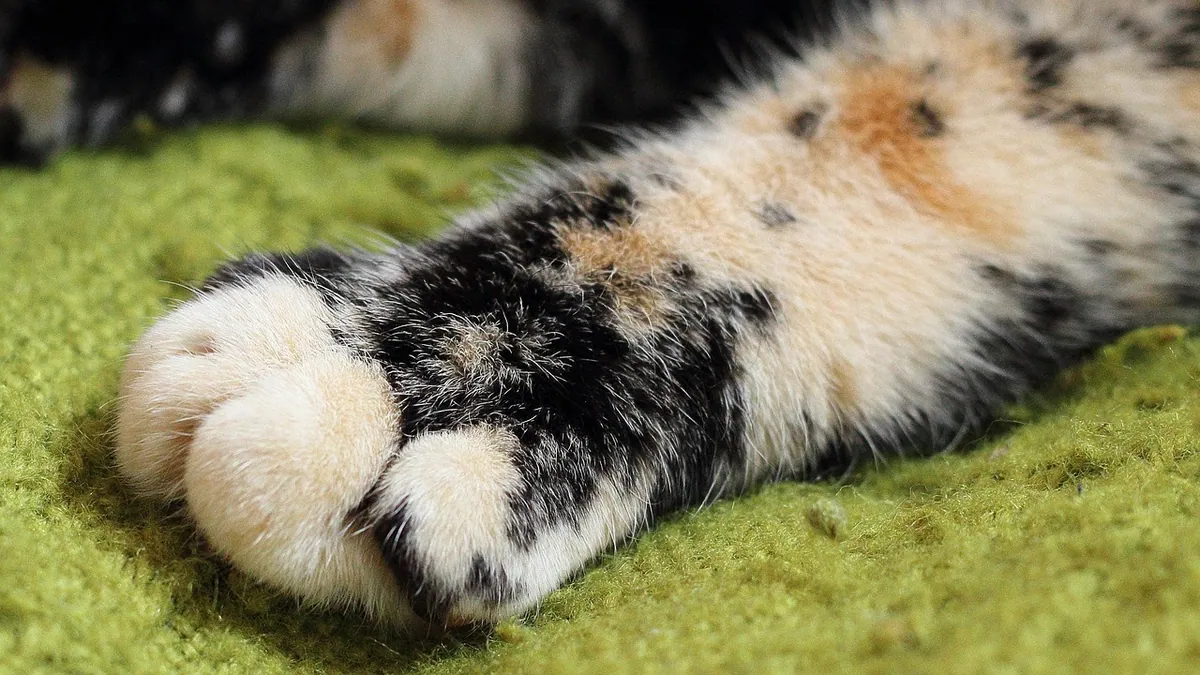
A nail cut too short exposes the quick, the sensitive tissue inside the claw that contains blood vessels and nerves. When that happens, the nail bleeds heavily and hurts, but you can usually stop it at home with styptic powder or plain cornstarch and steady pressure. Knowing how to treat cat nail cut too short calmly and quickly makes the whole event shorter and less frightening for both of you.
This article is educational and is not a substitute for veterinary diagnosis or treatment.
Quick Answer
- Press styptic powder or cornstarch firmly onto the bleeding tip for 30 to 60 seconds without lifting to check.
- If bleeding continues, reapply and hold pressure longer, then call your veterinarian if it still will not stop.
- Keep your cat quiet and away from litter for a few minutes so grit does not stick to the wound.
- Watch the nail for swelling, discharge, or a bad smell over the next few days, since these suggest infection.
- Never use human nail clippers on a cat, and replace clippers as soon as the blades feel dull [1].
What Is the Quick and Why Does It Bleed So Much?
The quick is the living core of the claw. It holds nerves and blood vessels, which is why nicking it causes pain and brisk bleeding [1]. On a clear or light-colored nail, you can often see the quick as a pink core inside the translucent shell. On dark nails, you cannot see it, so you estimate where it ends.
The quick extends further down the nail than many owners expect, and it grows longer when nails go untrimmed for a while. That is one reason a nail that was easy to trim last month can suddenly bleed. It is also why trimming small amounts more often is safer than taking off a big chunk at once.
Bleeding from a quicked nail can look alarming because claws have a good blood supply. In most healthy cats, the bleeding stops within a few minutes with pressure and a clotting aid. Cats with clotting problems or certain illnesses may bleed longer, and your veterinarian can assess that if it happens.
How to Treat a Cat Nail Cut Too Short
Step 1: Stay calm and get supplies
Your cat will pick up on your tension. Speak softly, move slowly, and have everything within reach before you start. You need styptic powder or a styptic stick, which are sold in most pet stores, or plain cornstarch from your kitchen as a backup [1]. A clean cloth or gauze and a treat are also helpful.
Step 2: Apply the clotting agent
Dip the bleeding tip of the nail into the styptic powder, or press a pinch of powder or cornstarch directly onto the tip. Hold steady pressure for 30 to 60 seconds. Do not lift to peek, because that breaks the clot that is forming.
Step 3: Add pressure if needed
If the powder alone is not enough, press a clean cloth or gauze against the nail tip and hold for another minute or two. Keep the paw slightly elevated if your cat tolerates it. Most quicked nails stop bleeding with this combination.
Step 4: Clean up and reward
Once bleeding stops, wipe away excess powder gently. Give your cat a treat and a quiet place to settle. Many cats get excited about bits of tuna, cooked chicken liver, or smelly cheese, and reserving a special treat for nail care helps future trims go better [1].
Step 5: Watch for a few days
Check the nail daily. A small amount of tenderness is normal for a day or two. Swelling, redness that spreads, pus, or a foul odor are not normal and point toward infection.
If your cat keeps licking or chewing at the paw, that can reopen the wound. A short break from the cone-free life may be needed, and you can read more about managing self-trauma in Cat Scratching Until Bleeding: Emergency or Manageable?.
How to Prepare for a Safer Trim Next Time
Gather the right tools
Cat claws are best trimmed with a guillotine-style clipper, and dull blades make the whole process more uncomfortable for your cat, so replace clippers as soon as you notice wear [1]. Do not use human nail clippers, which are shaped for flat nails and can crush or split a curved claw [1].
Set up a calm space
Pick a time when your cat is relaxed, not right after a wild play session. A non-slip surface, good lighting, and a helper for wiggly cats all help. If your cat hates being held, try trimming just one or two nails per session and stopping while things are still calm.
Learn where the quick ends
On light nails, trim only the clear hook at the tip, staying a couple of millimeters away from the pink core. On dark nails, take tiny slivers off the tip and look at the cut surface after each snip. A pale gray or white center means you are still in the dead shell. A pink or dark dot means you are at the quick and should stop.
Use the one-nail rule
Trim one nail, then count to one, release the paw, and give a treat right away [1]. This pattern teaches your cat that the clipper predicts something good. Over time, many cats tolerate full trims with far less struggle. If you want a fuller walkthrough, see How to Safely Trim a Cat's Nails at Home: Tips for a Stress-Free Experience.
Start young if you can
The best way to build tolerance is to begin while your cat is still a kitten [1]. Kittens also have less control over their claws, so regular trims help them and your furniture. Adult cats can still learn, it just takes more patience and smaller steps.
What Happens During a Veterinary Visit for a Quicked Nail
Most quicked nails do not need a vet visit. You call your veterinarian when bleeding will not stop after 10 to 15 minutes of steady pressure, when the nail is torn or hanging, or when your cat is limping badly.
At the clinic, your veterinarian examines the nail and the surrounding toe. If the nail is fractured, the damaged portion may need to be trimmed back, which often requires a local numbing agent or light sedation. The vet may apply a stronger clotting product, bandage the paw, or place a protective wrap. If infection is suspected, antibiotics may be prescribed, and the dose is calculated from your cat's weight and health.
Bloodwork is rarely needed for a simple quicked nail. It becomes more likely if your cat bleeds easily, has a history of bleeding problems, or has an illness that affects clotting. Cats with hyperthyroidism, for example, have shown measurable differences in some clotting and platelet function tests compared with euthyroid cats, though what this means for everyday nail trims is not well established [2].
Recovery Timeline and Home Care
| Time After Injury | What to Expect | What to Do |
|---|---|---|
| First 5 to 15 minutes | Active bleeding from the nail tip | Apply styptic powder or cornstarch with steady pressure |
| First hour | Bleeding stopped, paw may be tender | Keep your cat quiet, limit jumping, offer a treat |
| First 24 hours | Mild soreness, possible sensitivity when walking | Check the nail once or twice, keep litter clean |
| Days 2 to 3 | Discomfort fading, nail tip hardening | Watch for swelling, discharge, or odor |
| Days 4 to 7 | Nail regrowing, quick receding slightly | Resume normal handling if the paw looks normal |
| Weeks 2 to 4 | Nail back to normal length | Trim more often in smaller amounts |
Keep the litter box scooped well during recovery so debris does not stick to the healing tip. If your cat fusses at the paw, a brief distraction with play or food usually helps more than restraint. For minor paw wounds that are not nail related, How to Treat a Cat's Minor Wound at Home: Safe Steps covers basic home care.
Possible Complications and Warning Signs
Bleeding that will not stop
If pressure and a clotting agent do not stop the bleeding within 10 to 15 minutes, call your veterinarian. Prolonged bleeding can signal a clotting problem. Research on cats with acute trauma has shown that severe injuries can be associated with changes in clotting and fibrinolysis markers, and non-survivors in that study had higher lactate and lower body temperature [3]. That study looked at trauma, not nail trims, but it shows that bleeding behavior can reflect a cat's overall health.
Infection
Signs of infection include swelling that gets worse after day two, warmth, pus, a bad smell, or a cat that will not put the paw down. These need a veterinary visit, usually within a day or two. Do not apply human antibiotic ointments unless your veterinarian tells you to, since some ingredients are toxic to cats when licked off.
Torn or broken nail
A nail that is cracked, torn, or hanging by a thread needs veterinary attention. Home removal risks more bleeding and pain. Your vet can assess whether the nail needs to be trimmed back under numbing.
Limping that persists
A little tenderness for a day is normal. Limping that lasts more than 48 hours, or that gets worse, suggests something more than a simple quick. Your veterinarian can examine the toe and check for fractures or infection.
Bleeding from other sites
If your cat is bleeding from the gums, nose, or rectum along with the nail, that is an emergency. Call your veterinarian or an emergency clinic right away.
Questions to Ask the Veterinarian
- Does this nail need to be trimmed back, or will it heal on its own?
- Should I bandage the paw, and if so, for how long?
- Are there signs of infection that I should watch for specifically?
- Is my cat's bleeding pattern normal, or should we check clotting?
- How often should I trim my cat's nails to keep the quicks from growing long?
- What is the safest way to hold my cat for trims at home?
Limitations and When to Contact a Veterinarian
A quicked nail is usually a minor injury, but some situations need same-day or emergency care. Call your veterinarian the same day if bleeding continues past 10 to 15 minutes of steady pressure, if the nail is torn or hanging, if your cat is limping badly, or if you see swelling or discharge. Go to an emergency clinic right away if bleeding is heavy and does not slow, if your cat is pale or weak, if there is bleeding from other sites, or if your cat seems painful and distressed despite home care.
Schedule a routine visit if the nail looks abnormal after a week, if the paw stays sensitive, or if your cat has repeated quicked nails despite careful trimming. Repeated quicking can mean the quicks have grown long, and your veterinarian can show you a trimming schedule that shortens them gradually.
Every cat is different, and a nail injury that looks minor can behave differently in a cat with an underlying illness. Your veterinarian is the only one who can examine your cat and decide what is right for them.
Frequently Asked Questions
How long does a quicked nail bleed?
Most quicked nails stop bleeding within a few minutes with styptic powder or cornstarch and steady pressure. If bleeding continues past 10 to 15 minutes despite pressure, call your veterinarian. Prolonged bleeding can point to a clotting issue that needs evaluation.
Can I use flour instead of styptic powder?
Plain cornstarch works as a household backup, and flour can also help in a pinch. Styptic powder or styptic sticks sold at pet stores work faster and are the better first choice [1]. Whatever you use, hold steady pressure for at least 30 to 60 seconds.
Will my cat's nail grow back normally after cutting the quick?
Yes, the nail usually regrows normally over a few weeks. The quick may recede slightly as the nail grows out. Keep trimming small amounts regularly so the quick does not extend too far down the nail again.
How do I know if my cat's nail is infected?
Look for swelling that worsens after the first day or two, warmth, pus, a bad smell, or a cat that refuses to bear weight on the paw. These signs need a veterinary visit, usually within a day or two. Mild tenderness alone for a day is normal.
Should I trim my cat's nails more often to prevent this?
Yes, shorter and more frequent trims are safer than occasional big cuts. Trimming one nail at a time with a treat after each one builds tolerance and reduces the chance of hitting the quick [1]. If your cat has dark nails, take very thin slivers and check the cut surface each time.
Related Articles
- Cat Scratching Until Bleeding: Emergency or Manageable?
- How to Safely Trim a Cat's Nails at Home: Tips for a Stress-Free Experience
- How to Treat a Cat's Minor Wound at Home: Safe Steps
- Cat Flea Treatment Safety
- Dog Chewing Paws Until Bleeding Treatment
- Cat Peeing Blood: What Should You Do?
- Torn or Broken Nail in Cats: What to Do and When to Vet
- Cat Broken Nail: What to Do When a Claw Splits or Tears
- Do Cat Quicks Recede? How to Shorten Overgrown Claws
References
- Trimming Your Cat’s Claws. ASPCA Animal Poison Control Center.
- Assessment of hemostasis in hyperthyroid and euthyroid cats using two viscoelastic assays and platelet aggregometry. Journal of veterinary internal medicine, 2024.
- Evaluation of hematologic and coagulation changes associated with hyperfibrinolysis in feline acute trauma. Journal of advanced veterinary and animal research, 2026.