Is Petroleum Jelly Safe for Cats to Lick?
By Dr. Zubair Khalid, DVM, MS, PhD ·
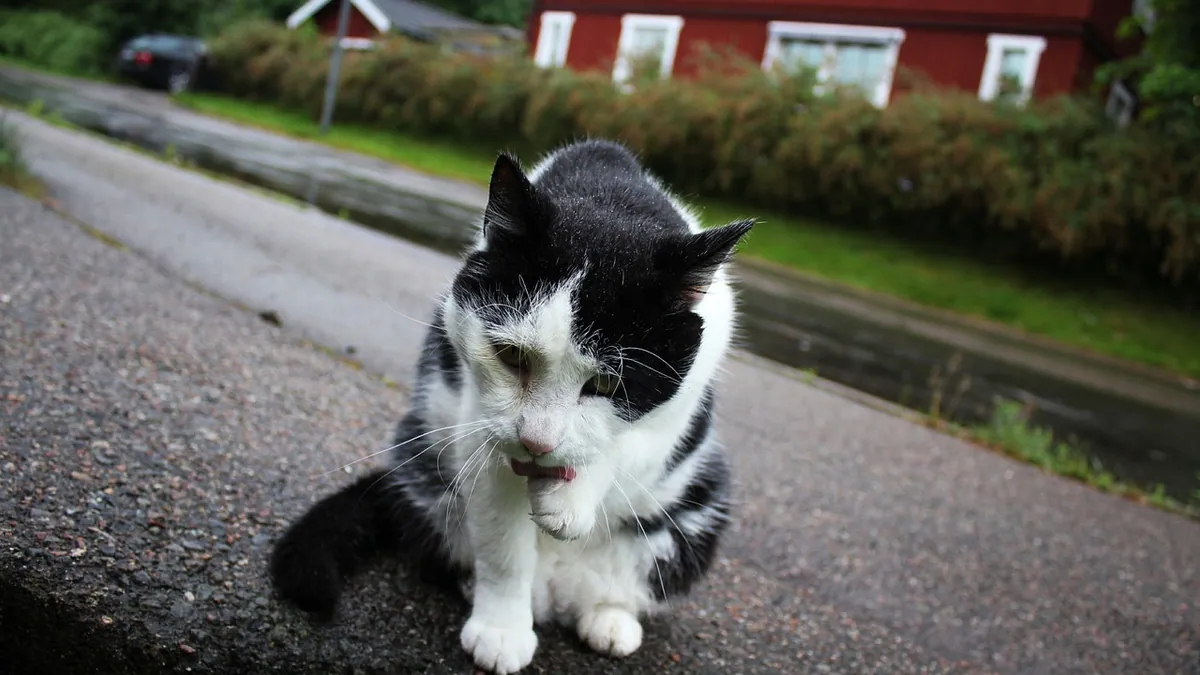
Small licks of petroleum jelly are usually not dangerous for cats. The bigger risk is stomach upset if your cat swallows a large amount, since petroleum jelly is not meant to be eaten. This article explains when petroleum jelly is safe to use around cats, what happens if they lick it, and when to call your veterinarian.
This article is educational and is not a substitute for veterinary diagnosis or treatment.
Quick Answer
- A tiny lick of petroleum jelly from your hands or from a small dab on the skin is generally not a problem.
- Eating a large amount can cause greasy diarrhea, vomiting, or a stomachache because the body cannot digest it.
- Petroleum jelly is not a treat, a hairball remedy, or a laxative for cats unless your veterinarian specifically tells you to use it.
- Never use petroleum jelly on a cat's eyes or eyelids unless your veterinarian directs you to, and never let your cat lick it off a wound or medication site.
- If your cat ate a large amount, is vomiting, or seems lethargic, call your veterinarian or a pet poison hotline right away.
What Petroleum Jelly Is and What Veterinarians Use It For
Petroleum jelly is a thick, clear ointment made mostly of petrolatum, a purified mixture of mineral oils and waxes. It is sold under many brand names and as a generic product. It is not a drug. It has no active ingredient that kills bacteria, viruses, or parasites. It works by sitting on top of skin and holding moisture in.
Veterinarians and pet owners use petroleum jelly in a few limited ways around cats. It can be used as a barrier on the skin to protect against moisture or irritation. It can be used to lubricate a thermometer or a small instrument before a procedure. It can also be used to coat the fur around a wound so that stool, urine, or medication does not stick to the skin.
Petroleum jelly is also used in eye ointment bases. One study looked at four different ointment bases applied to healthy cat eyes three times a day for 28 days. Two of those bases contained white petrolatum and liquid paraffin [1]. That study was about the base ingredients, not about petroleum jelly as a treatment for eye disease. It does not mean you should put petroleum jelly in your cat's eye.
Petroleum jelly has been studied in other animals as a coating. In rats, coating surgical devices with petrolatum did not change the rate of closure or the amount of inflammation compared with uncoated devices [2]. That is a laboratory finding and does not tell us much about cats licking petroleum jelly at home.
How Petroleum Jelly Works
Petroleum jelly is an occlusive. That means it forms a physical film on the surface it touches. Water cannot easily pass through that film, so moisture stays in the skin instead of evaporating. This is why it helps with dry, cracked skin in people.
When a cat licks petroleum jelly, the jelly does not get broken down by stomach acid the way food does. It passes through the gut mostly unchanged. A small amount usually slides through without causing problems. A large amount can act like a grease slick in the intestines and lead to loose stool.
Petroleum jelly is not absorbed into the bloodstream in any meaningful way. It does not treat infections, allergies, or pain. If your cat has a skin problem, the petroleum jelly is only covering it up, not fixing the cause.
Dosing Basics for Petroleum Jelly in Cats
There is no standard dose of petroleum jelly for cats. Your veterinarian decides whether to use it, where to use it, and how much. The amount depends on your cat's weight, the size of the area being treated, and the reason for using it.
If your veterinarian tells you to apply petroleum jelly to your cat's skin, use a thin layer. A pea-sized amount is often enough for a small area. Rub it in gently. Do not let your cat lick it off right away if it was placed to protect a wound or to keep a medication in place.
If your veterinarian tells you to give petroleum jelly by mouth, follow the exact amount and schedule given. Do not guess. Do not use a human product that has added fragrance, menthol, camphor, or other ingredients, because those additives can be toxic to cats.
If you miss a dose, do not double up. Call your veterinarian's office and ask what to do. For a topical product, a missed dose is usually not an emergency. For an oral product, your veterinarian will tell you whether to skip it or give it late.
Common and Serious Side Effects
| Side effect | How common or serious | What to do |
|---|---|---|
| Greasy stool or mild diarrhea | Common if a large amount is swallowed | Stop giving it, offer water, and call your vet if it lasts more than a day |
| Vomiting | Possible after eating a large amount | Withhold food for a few hours, then call your vet if vomiting continues |
| Stomach discomfort or gurgling | Possible | Watch for appetite loss and call your vet if it does not improve |
| Choking or gagging | Uncommon but serious | Stop and call your vet or an emergency clinic right away |
| Aspiration pneumonia | Rare but very serious | This happens when material goes into the lungs. Seek emergency care immediately |
| Skin irritation or rash | Uncommon | Stop using the product and call your vet |
Most cats that lick a small amount of petroleum jelly have no signs at all. The problems start when a cat eats a lot, such as licking a whole jar or a thick layer off its own fur. Because petroleum jelly is greasy and hard to wash out, a cat may keep grooming and swallowing more of it.
If your cat is licking petroleum jelly off its skin, that is a sign the product should not be there. Cats groom to keep clean, and they will remove anything that feels odd on their coat. If the petroleum jelly was placed to protect a wound, ask your veterinarian for a safer alternative or a cone collar.
Who Should Not Take Petroleum Jelly and Drug Interactions
Petroleum jelly is not appropriate for every cat. Do not use it on a cat that has an open, draining wound unless your veterinarian says it is okay. Do not use it on a cat with a known allergy to petrolatum or mineral oil. Do not use it in or around the eyes unless your veterinarian directs you to.
Do not use petroleum jelly on a cat that is wearing a topical medication, such as a flea product or an antibiotic ointment, unless your veterinarian approves. The petroleum jelly can trap the other product against the skin or spread it to areas where it should not go.
Petroleum jelly can weaken some types of latex and rubber. If your cat has a bandage, a feeding tube, or a medical device made with those materials, keep petroleum jelly away from it.
There is no well-established list of drug interactions for petroleum jelly in cats. It is not absorbed like a pill, so it does not change how most medicines work inside the body. The bigger concern is that it can block a medication from reaching the skin if you apply it over the top.
If your cat is on any medication, tell your veterinarian before you use petroleum jelly anywhere on your cat.
Overdose and When to Call a Veterinarian or Poison Control
A true overdose of petroleum jelly is uncommon because the product is thick and hard to eat in large amounts. Still, some cats will try. A cat that eats a large amount may vomit, have diarrhea, or stop eating.
If your cat ate a large amount of petroleum jelly, call your veterinarian or a pet poison hotline. In the United States, you can call the ASPCA Animal Poison Control Center at (888) 426-4435 or the Pet Poison Helpline at (855) 764-7661. These services may charge a consultation fee.
Call right away if your cat is coughing, gagging, having trouble breathing, or acting very tired. These can be signs that material went into the lungs, which is a medical emergency.
If your cat only licked a small amount and is acting normal, you can watch it at home. Offer fresh water. Do not force your cat to eat or drink. Do not give any human medication to settle the stomach unless your veterinarian tells you to.
Limitations and When to Contact a Veterinarian
Petroleum jelly is not a treatment for any cat disease. It does not cure hairballs, constipation, skin infections, or allergies. If your cat has a health problem, the petroleum jelly is at best a cover-up and at worst a delay in getting real care.
Call your veterinarian the same day if your cat has vomiting, diarrhea, or a poor appetite after licking petroleum jelly. Call the same day if your cat keeps licking at a spot where you applied it, or if the skin looks red, swollen, or irritated.
Go to an emergency clinic right away if your cat is having trouble breathing, is coughing repeatedly, is gagging, or is limp and unresponsive. These signs can point to aspiration or another serious problem.
Schedule a routine visit if your cat has dry, flaky skin, a dull coat, or a habit of licking odd surfaces. Licking walls, floors, or non-food items can be a sign of a medical or behavioral issue. You can read more about that in Cat Licking Walls or Floors: Pica or Medical Issue?.
Every cat is different. Your veterinarian needs to see your cat to decide what is safe and what is not.
Frequently Asked Questions
Is it safe for cats to lick petroleum jelly off their paws?
A small lick from a paw is usually not a problem. The concern is how much your cat swallows over time. If your cat keeps licking the same spot, remove the petroleum jelly and call your veterinarian.
Can I use petroleum jelly to help my cat pass a hairball?
No. Petroleum jelly is not a proven hairball remedy for cats, and giving it by mouth can cause diarrhea. Ask your veterinarian about safe hairball products instead. You can also read about other things cats eat in Can Cats Eat Cream Cheese? Dairy Fat and Additive Risks.
What happens if my cat eats a whole jar of petroleum jelly?
A whole jar is a large amount and can cause vomiting, diarrhea, and stomach pain. Call your veterinarian or a pet poison hotline right away. Do not wait for signs to start.
Is petroleum jelly safe to put on my cat's eyes?
Only if your veterinarian tells you to. Petroleum jelly is not an eye medicine. Putting it in the eye can trap dirt and bacteria and can irritate the surface. Eye ointment bases that contain petrolatum have been studied in cats, but that does not mean plain petroleum jelly is safe for eyes [1].
Can petroleum jelly be toxic to cats?
Petroleum jelly is not considered toxic in the way that antifreeze or lilies are. The risk is physical, not poisonous. A large amount can block or irritate the gut, and inhaling it can cause serious lung problems.
Should I use petroleum jelly on my cat's dry nose?
It is sometimes used for that purpose, but your cat will likely lick it off. If the nose is cracked, bleeding, or not improving, see your veterinarian. Dry nose can be a sign of dehydration or another health issue.
Can petroleum jelly help with catnip or toy safety?
No. Petroleum jelly has nothing to do with catnip or toys. If you want to learn about those topics, see Can Cats Eat Catnip? Nepetalactone and Safe Use Guide and Are Jelly Cats Safe for Pets? A Complete Safety Guide.
My cat licked petroleum jelly and seems fine. Do I need to do anything?
If your cat licked a small amount and is acting normal, you can watch it at home for the next 24 hours. Offer water and keep an eye on appetite, stool, and energy. Call your veterinarian if anything changes.
Related Articles
- Are Jelly Cats Safe for Pets? A Complete Safety Guide
- Can Cats Eat Catnip? Nepetalactone and Safe Use Guide
- Can Cats Eat Dog Ice Cream? Safety and Ingredients to Avoid
- Cat Licking Walls or Floors: Pica or Medical Issue?
- Can Cats Eat Cream Cheese? Dairy Fat and Additive Risks
- Are Essential Oils Safe for Cats and Dogs?
- Is Vaseline Safe for Cats? Nose, Eyes, Wounds, and Skin
- Can You Give a Cat Petroleum Jelly for Hairballs?
- Is Neosporin Safe for Cats to Lick?
References
- Clinical effect of four different ointment bases on healthy cat eyes. Veterinary ophthalmology, 2016.
- Effect of petrolatum coating on the rate of occlusion of ameroid constrictors in the peritoneal cavity. Veterinary surgery : VS, 2004.