Can You Give a Cat Petroleum Jelly for Hairballs?
By Dr. Zubair Khalid, DVM, MS, PhD ·
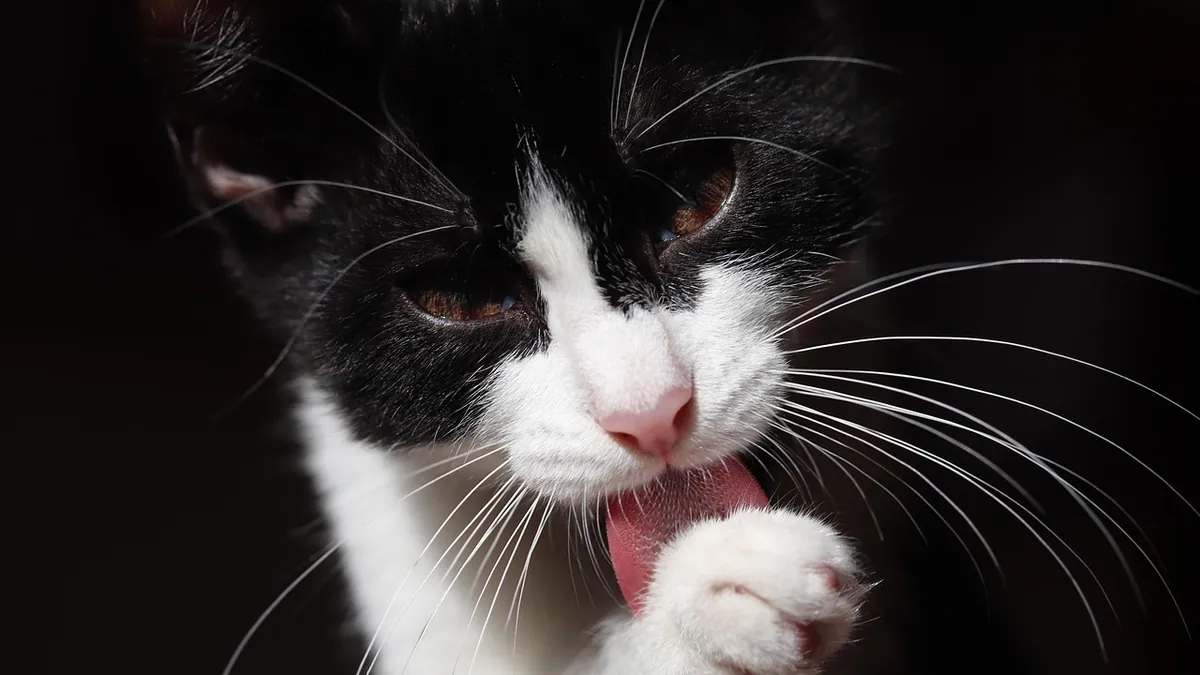
Can I give my cat petroleum jelly for hairballs? You can physically get it into your cat, but you should not, and veterinarians do not recommend it. Petroleum jelly is not a hairball treatment, it can cause diarrhea, and if it gets into the lungs it can cause serious pneumonia. This article is educational and is not a substitute for veterinary diagnosis or treatment.
Quick Answer
- Petroleum jelly (Vaseline) is not an approved or recommended hairball remedy for cats, and no veterinary source supports using it for that purpose.
- The main danger is aspiration. Oily jelly placed on a paw or the nose can be inhaled into the lungs, and that can lead to a life-threatening pneumonia.
- Swallowed petroleum jelly can cause greasy diarrhea and loose stools, and it does not break down the hair mass itself.
- Safer options exist. Fiber-based diets and commercial hairball products are the standard approach, and your veterinarian can pick the right one for your cat.
- If your cat is gagging, retching, vomiting repeatedly, or not eating, stop home remedies and call your veterinarian the same day.
What Petroleum Jelly Is and What Veterinarians Actually Use It For
Petroleum jelly is a thick, greasy, semi-solid mixture of hydrocarbons. It is sold as a skin protectant and lubricant. In people, it has a long history of use on skin and eyelids, and one hypothesis paper describes volunteers rubbing unmedicated petroleum jelly into the eyelid margins at bedtime to interrupt the life cycle of eyelash mites [1]. That is a human skin and eyelid use. It has nothing to do with hairballs in cats.
Veterinarians do not prescribe petroleum jelly as a hairball remedy. There is no dosing information for it in cats for that purpose, and it is not a drug with a veterinary label for hairball control. When a cat has a true hairball problem, your veterinarian reaches for diet changes, fiber, and sometimes other medical or surgical options.
One case report describes a 16-year-old neutered male domestic longhair with trichobezoars (hair masses) in the stomach, duodenum, and jejunum. The cat was treated by instilling Coca-Cola through an endoscopic injection catheter to break up the mass, and the cat recovered without complications [2]. That is a hospital procedure performed by a veterinarian with an endoscope. It is not something you can do at home, and it is not a reason to try soda or jelly on your own.
If you are looking for a hairball product your veterinarian might actually suggest, see Cat Hairball Remedy. If you want to understand how diet fits in, read Cat Food Anti Hairball.
How Petroleum Jelly Works (and Why That Does Not Help Hairballs)
The idea behind petroleum jelly for hairballs is simple. It is slippery, so people assume it will coat the hair and help it slide through the gut. That logic falls apart for a few reasons.
First, petroleum jelly is not digested or absorbed in any meaningful way. It passes through as a grease. It does not dissolve hair, and hair is made mostly of keratin, a tough protein. Research on hairball control has focused on breaking down or moving that keratin, not on coating it with grease. One study tested the combined use of sugarcane fiber and a protease enzyme complex from Bacillus licheniformis PWD-1 given orally in gastro-resistant capsules to reduce hairball excretion in cats [3]. That is a very different approach from smearing jelly on a paw.
Second, hairballs form because of grooming. Cats swallow loose hair, and the hair can clump in the stomach. Hairball formation may cause vomiting and intestinal obstruction in predisposed cats [4]. A slippery grease does not address the underlying clumping, and it does not prevent new hair from being swallowed.
Third, the delivery method is the problem. To get petroleum jelly into a cat, owners often put it on a paw or the nose so the cat licks it off. That is exactly the setup for aspiration, where the jelly goes down the windpipe instead of the esophagus. A cat who is already gagging or retching from a hairball is at even higher risk.
Dosing Basics: Who Decides, How It Is Given, and Missed Doses
There is no standard dose of petroleum jelly for hairballs in cats. Your veterinarian calculates any medication dose from your pet's weight and health, and that applies to real hairball treatments too. Do not guess a dose from a human product, a forum, or a friend.
If your veterinarian does recommend a hairball product, follow the label or the clinic's instructions exactly. Most commercial hairball gels and pastes are given by mouth, often smeared on a paw or offered from a syringe. Ask your veterinarian which method is safest for your cat, because some cats tolerate one method much better than another.
For a missed dose of a prescribed product, call your veterinary clinic for guidance. Do not double up to make up for a missed dose. If you are not sure whether your cat swallowed the product or inhaled it, treat that as an emergency and call for advice right away.
If you want to know which home methods are safe and which are not, read Cat Hairball Remedy Home and Cat Hairball Remedy Homemade.
Side Effects and Risks of Petroleum Jelly in Cats
| Side effect | How common or serious | What to do |
|---|---|---|
| Greasy diarrhea and loose stool | Common when a cat swallows petroleum jelly | Stop giving it. Offer water and call your veterinarian if diarrhea lasts more than a day or your cat seems unwell |
| Vomiting | Possible after swallowing grease | Stop the product. Call your veterinarian if vomiting repeats or your cat cannot keep water down |
| Aspiration into the lungs | Uncommon but serious and potentially life-threatening | This is an emergency. Go to a veterinary hospital now if your cat coughs, breathes fast, or struggles to breathe after being given jelly |
| Poor appetite or stomach upset | Possible with any greasy oral product | Stop giving it and call your veterinarian |
| No improvement in hairballs | Expected, since petroleum jelly does not treat the cause | Ask your veterinarian about fiber-based diets and hairball products instead |
The aspiration risk deserves its own paragraph. Petroleum jelly is thick and oily, and a cat who is gagging, retching, or breathing hard may inhale it. Aspiration pneumonia is a serious condition that needs veterinary care. If you see coughing, noisy breathing, open-mouth breathing, or a blue tinge to the gums after giving any oily product, go to an emergency clinic.
Who Should Not Get Petroleum Jelly and What It Interacts With
Cats with any breathing difficulty, any history of aspiration, or any condition that causes vomiting should never be given petroleum jelly by mouth. Cats who are already vomiting from a suspected hairball are the worst candidates, because the jelly can be inhaled during a retch.
Cats with diarrhea or sensitive stomachs should avoid it too, since greasy products can make loose stool worse. Kittens and cats who are already ill or not eating should not receive home hairball remedies without veterinary guidance.
Drug interactions with petroleum jelly are not well established in veterinary research. The bigger issue is that it can coat the mouth and throat and make it harder to give other oral medications. If your cat takes any prescription medicine, ask your veterinarian before adding any oral grease or hairball product.
Overdose and When to Call a Veterinarian or Poison Control
A large amount of petroleum jelly swallowed at once can cause significant diarrhea, vomiting, and stomach upset. If your cat ate a large quantity, or if you are unsure how much was swallowed, call your veterinarian or a pet poison control hotline right away. Have the product container and your cat's weight ready.
If your cat inhaled petroleum jelly, do not wait for symptoms. Aspiration can worsen quickly. Go to the nearest emergency veterinary hospital.
Limitations and When to Contact a Veterinarian
Petroleum jelly is not a proven hairball remedy, and the evidence for real hairball control points to fiber and diet strategies instead. One study found that some insoluble fibers, such as sugarcane fiber and cellulose, can help prevent hairball formation [4]. Another study looked at beet pulp, a moderate soluble and fermentable fiber source, and its effect on hairball excretion in adult shorthaired cats fed kibble diets [4]. A third study compared fiber sources and found that cats fed a beet pulp diet had higher dry matter, organic matter, gross energy, and total dietary fiber digestibility than cats fed Miscanthus grass or cellulose diets [5]. These are the kinds of options your veterinarian can match to your cat.
Call your veterinarian the same day if your cat is retching without producing a hairball, vomiting more than once or twice, has a poor appetite, or seems uncomfortable. Go to an emergency clinic now if your cat is breathing hard, open-mouth breathing, collapsing, drooling heavily, or has a swollen, painful belly. A routine visit is reasonable if your cat brings up hairballs often, has a dull coat, or you want help choosing a hairball diet or product. Individual cases need a veterinarian who can examine your cat and see the whole picture.
Frequently Asked Questions
Is Vaseline safe for cats?
Vaseline is not a safe hairball remedy for cats. The main risk is aspiration into the lungs, which can cause pneumonia, and swallowing it can cause greasy diarrhea. There is no veterinary dosing for petroleum jelly as a hairball treatment.
Does petroleum jelly help cats pass hairballs?
No, petroleum jelly does not break down or move hairballs in a reliable way. Hair is mostly keratin, and research on hairball control has focused on fiber and enzyme approaches instead. If your cat has frequent hairballs, ask your veterinarian about a fiber-based diet.
What can I give my cat for hairballs instead of petroleum jelly?
Ask your veterinarian about a commercial hairball diet or a hairball gel made for cats. Fiber sources such as sugarcane fiber, cellulose, and beet pulp have been studied for hairball control. Your veterinarian can pick the option that fits your cat's weight, health, and eating habits.
How do I give a hairball product to a cat?
Follow the label or your clinic's instructions, and ask which method is safest for your cat. Many products are smeared on a paw or given from a syringe. Never force an oily product into a cat who is gagging or struggling to breathe.
When should I worry about my cat's hairballs?
Worry if your cat retches without producing anything, vomits repeatedly, stops eating, or seems painful or bloated. These signs can point to an obstruction, which is a medical emergency. Call your veterinarian the same day, or go to an emergency clinic if breathing or energy level changes.
Related Articles
- Cat Food Anti Hairball
- Cat Hairball Remedy
- Cat Hairball Remedy Homemade
- Cat Hairball Remedy Diy
- Cat Hairball Remedy Home
- Cat Hairball Remedy Reddit
- Is Petroleum Jelly Safe for Cats to Lick?
- Vaseline for Cats: Hairballs, Skin, Paws, and Ears
- Can Cats Eat Coconut Oil? Hairballs, Skin and Dosage
References
- Reducing ocular Demodex using petroleum jelly may alleviate dry eye syndrome, blepharitis, facial dermatoses, ocular and respiratory allergies, and decrease associated prescribing: a hypothesis. Frontiers in allergy, 2025.
- Endoscopic administration of Coca-Cola for medical management of a wedged intestinal trichobezoar in a cat. The Canadian veterinary journal = La revue veterinaire canadienne, 2023.
- Effects of combined use of keratinolytic enzymes and sugarcane fibre on the hairball excretion in cats. Journal of animal physiology and animal nutrition, 2021.
- Beet pulp intake and hairball faecal excretion in mixed-breed shorthaired cats. Journal of animal physiology and animal nutrition, 2017.
- The effects of diets varying in fibre sources on nutrient utilization, stool quality and hairball management in cats. Journal of animal physiology and animal nutrition, 2020.