CBD Oil for Cats With Kidney Failure: Safety and Use
By Dr. Zubair Khalid, DVM, MS, PhD ·
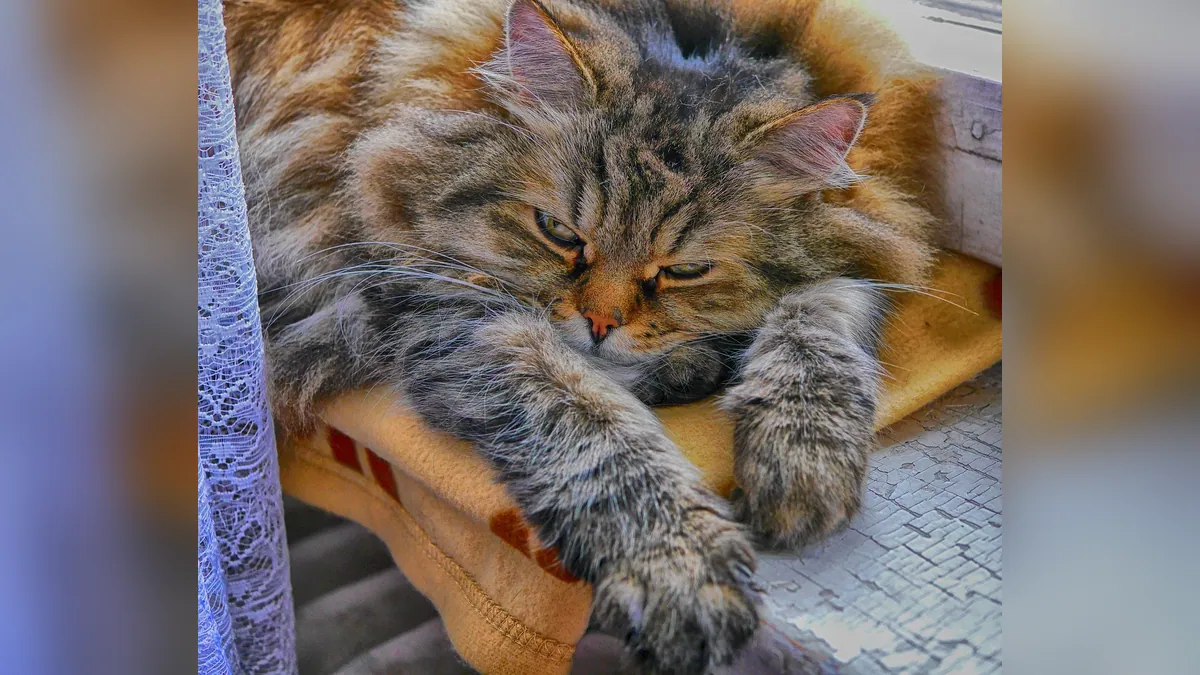
CBD oil for cats with kidney failure is not a proven treatment, and no veterinary research has established a safe or effective dose for cats with chronic kidney disease. Because CBD is processed by the liver and can interact with other drugs, giving it to a cat with kidney disease carries real risks that you should discuss with your veterinarian first. This article is educational and is not a substitute for veterinary diagnosis or treatment.
Quick Answer
- No study has shown that CBD improves kidney function, slows kidney disease, or extends life in cats with kidney failure.
- CBD is not risk-free in cats. Reported problems include vomiting, diarrhea, lethargy, and incoordination, and products may contain THC or other contaminants [1].
- CBD can interact with medications your cat may already take, including some pain drugs and sedatives.
- Never adjust or stop your cat's kidney treatment to try CBD. Any change should go through your veterinarian.
- If your cat shows wobbling, tremors, vomiting, or extreme sleepiness after any CBD product, call your veterinarian or a pet poison hotline right away.
What Is CBD and What Do Veterinarians Use It For?
Cannabidiol, or CBD, is a nonintoxicating compound from the cannabis plant [1]. It does not produce the "high" that THC does. Hemp-derived cannabis in the United States contains no more than 0.3% delta-9-tetrahydrocannabinol (THC) on a dry matter basis, and typically 0.3% to 4.2% CBD [1]. Plants bred for higher CBD can contain more, and plants bred for THC can contain as little as 0.15% CBD [1].
Most veterinary CBD research has focused on pharmacokinetics (how the drug moves through the body) or on treating osteoarthritis and epilepsy [1]. Cannabinoids have been considered for many companion animal conditions, including skin, neurologic, eye, endocrine, and respiratory diseases [1]. Kidney failure is not among the conditions with solid supporting evidence.
In cats specifically, the evidence is thin. A systematic review of cannabis-based products in dogs and cats found only a limited number of studies, most involving CBD-based formulations [2]. Another review looking at CBD for feline osteoarthritis found no relevant studies at all and concluded there is no evidence to recommend CBD for that use in cats [3]. If the evidence is that weak for a common problem like arthritis, it is even weaker for kidney failure.
How CBD Works in the Body
CBD interacts with the endocannabinoid system, a network of receptors and signaling molecules involved in pain, mood, appetite, and inflammation. That is the theory behind most proposed uses. What actually happens in a cat's body is still being mapped out.
One study gave healthy cats CBD oil at 2 mg/kg by stomach tube and measured how much isoflurane anesthesia they needed. CBD reduced the minimum alveolar concentration of isoflurane by about 11%, meaning the cats needed slightly less anesthetic gas [4]. The same study found a significant decrease in blood urea nitrogen (BUN) two weeks after administration, and one cat had a mild increase in alanine aminotransferase (ALT), a liver enzyme [4]. That BUN finding is interesting but comes from a small study of healthy cats, not cats with kidney disease, so it does not prove CBD helps failing kidneys.
A separate study in healthy cats using 8 mg/kg CBD by capsule found mild sedation and less resistance to handling, with no change in pain thresholds, heart rate, respiratory rate, or body temperature [5]. These are short-term observations in healthy cats. They tell us something about how CBD behaves in cats, but nothing about long-term safety in cats whose kidneys are already struggling.
CBD Dosing for a Renal Cat: Who Decides?
Your veterinarian decides the dose, if CBD is used at all. There is no established dosing protocol for CBD in cats with kidney disease, and no published research provides a dose for that situation. Any number you see online is not backed by evidence for a kidney cat.
Dosing in cats is complicated by a few things:
- Product labels are unreliable. CBD products are not held to the same standards as veterinary prescription drugs, so the amount on the label may not match what is in the bottle.
- Absorption varies. How much CBD a cat absorbs depends on the form (oil, capsule, paste), whether food is in the stomach, and the individual cat.
- Kidney disease changes drug handling. A cat with reduced kidney function may clear drugs differently, which can affect how long a substance stays in the body.
If your veterinarian does recommend CBD, they will calculate the amount based on your cat's weight, kidney stage, other medications, and the specific product. Give it exactly as directed. Do not double up if you miss a dose. If you forget, skip the missed dose and give the next one on schedule, unless your veterinarian tells you otherwise.
While you sort this out, keep your cat's kidney care on track. Diet matters more than any supplement for most kidney cats, and you can read more about that in What Cat Food Is Best For Kidney Disease and What Is A Good Cat Food For Kidney Disease. Omega-3 fatty acids are another topic owners ask about, and you can review Omega-3 Fish Oil for Cats: Dose for Skin Kidney and Joints.
Side Effects of CBD in Cats
CBD toxicosis in dogs and cats is a recognized problem, and the Merck Veterinary Manual lists it as a clinical concern [1]. Side effects range from mild to serious, and they can be hard to distinguish from kidney disease symptoms in a cat that is already unwell.
| Side effect | How common or serious | What to do |
|---|---|---|
| Vomiting, diarrhea | Common in reported toxicosis cases [1] | Stop the product and call your veterinarian |
| Lethargy, sleepiness | Common, and mild sedation was seen in healthy cats at 8 mg/kg [5] | Stop the product and call your veterinarian the same day |
| Wobbling, incoordination, tremors | Serious, can indicate THC exposure or overdose [1] | Call your veterinarian or a pet poison hotline now |
| Low heart rate or breathing changes | Serious | Emergency visit |
| Liver enzyme changes | Possible, one healthy cat had a mild ALT increase after 2 mg/kg [4] | Report to your veterinarian, who may recheck blood work |
Because CBD products can contain THC or other cannabinoids, some reactions are actually THC toxicosis instead of a CBD effect [1]. THC is far more dangerous for cats than CBD. If you want to understand that risk in more detail, see CBD Oil for Cats: Feline Safety Profile and THC Toxicity.
Who Should Not Take CBD, and What Interacts With It?
Cats with certain conditions or medication regimens should not receive CBD without direct veterinary supervision. This includes:
- Cats with liver disease or elevated liver enzymes, since CBD is processed by the liver and one healthy cat showed a mild ALT rise after a single dose [4].
- Cats taking sedatives, anesthetics, or certain pain medications. CBD reduced the amount of isoflurane needed for anesthesia in healthy cats [4], which suggests it can add to the effects of other sedating drugs.
- Cats on multiple medications for heart, seizure, or behavioral conditions. Drug interactions are possible and not well studied in cats.
- Cats whose kidney disease is advanced or unstable. Any new substance adds stress to a body that is already working hard.
Tell your veterinarian about every product your cat receives, including supplements, because interactions are not always obvious. If your cat is in later-stage kidney disease, ask about Treatment For Kidney Failure In Older Cats so you understand the full picture before adding anything new.
Overdose and When to Call for Help
If your cat ate a CBD product, especially a human product or one with unknown THC content, treat it as an emergency. Signs of cannabinoid toxicosis include vomiting, dribbling urine, wobbling, tremors, agitation, and profound sleepiness [1]. These can appear within minutes to hours.
Call your veterinarian or one of these hotlines right away:
- ASPCA Animal Poison Control Center: (888) 426-4435
- Pet Poison Helpline: (855) 764-7661
Bring the product container with you if you go to a clinic. The label, the amount your cat ate, and your cat's weight all help the veterinarian decide on treatment. Do not wait to see if symptoms improve on their own, especially in a cat with kidney disease.
Limitations and When to Contact a Veterinarian
The honest state of the evidence is this: CBD has not been shown to treat kidney failure in cats. Research in cats is limited to small studies in healthy animals looking at anesthesia, sedation, and handling [4][5], plus reviews that found too little evidence to recommend CBD for common feline conditions [3][2]. No study here tested CBD in cats with chronic kidney disease. That means safety and dosing in kidney cats are simply not well established.
Contact your veterinarian at these times:
- Same day: vomiting, diarrhea, sleepiness, or any behavior change after starting CBD.
- Emergency now: wobbling, tremors, collapse, trouble breathing, or a suspected overdose.
- Routine visit: before starting CBD, to review your cat's medications, kidney values, and whether any supplement is appropriate.
Every cat is different, and only your veterinarian can evaluate your cat's kidney stage, blood work, and medication list together. Individual cases need a veterinarian's judgment.
Frequently Asked Questions
Is CBD safe for kidney cats?
There is no evidence that CBD is safe for cats with kidney disease. No study has tested it in that group, and CBD can cause vomiting, lethargy, and incoordination even in healthy cats. Talk to your veterinarian before giving any CBD product.
Can CBD cure or reverse kidney failure in cats?
No. CBD has not been shown to reverse or cure kidney failure in cats. Kidney disease in cats is managed with diet, hydration, blood pressure control, and other treatments your veterinarian selects. CBD is not a substitute for any of those.
Will CBD help my kidney cat feel better?
That is not known. No research supports CBD for appetite, nausea, or pain in cats with kidney disease. If your cat seems uncomfortable, ask your veterinarian about treatments that are actually studied for kidney cats.
Can I give my cat CBD oil meant for people?
No, that is risky. Human CBD products may contain THC or other ingredients that are toxic to cats, and the label may not match the contents [1]. Cats also metabolize these compounds differently than people do.
What should I do if my cat ate CBD?
Call your veterinarian or a pet poison hotline immediately, even if your cat seems fine. Signs of toxicosis can take time to appear, and early treatment is safer [1]. Keep the product container so the veterinarian knows what was ingested.
Related Articles
- CBD Oil for Cats: Feline Safety Profile and THC Toxicity
- Omega-3 Fish Oil for Cats: Dose for Skin Kidney and Joints
- What Cat Food Is Best For Kidney Disease
- What Is A Good Cat Food For Kidney Disease
- Treatment For Kidney Failure In Older Cats
- Chronic Kidney Disease CKD in Cats: Stage 1-4 Renal Management Guide
- Cat Kidney Failure: What You Can Give and Do
- Benazepril for Cats: Uses for CKD and HCM
- Enalapril for Cats: Kidney Disease and Heart Use
References
- Toxicosis in Dogs and Cats From Cannabidiol (CBD) - Toxicology. Merck Veterinary Manual.
- Cannabis-based products for medicinal use in dogs and cats: a systematic review. The Journal of small animal practice, 2025.
- The therapeutic effectiveness of oral cannabidiol in addition to current treatment in cats with osteoarthritis. Veterinary evidence, 2024.
- Effects of Cannabidiol Oil on Anesthetic Requirements in Cats: MAC Determination and Serum Profiling via Nanoscale Liquid Chromatography-Tandem Mass Spectrometry. Animals : an open access journal from MDPI, 2025.
- Evaluation of Cannabidiol Oil's Effects on Sedation, Behavioral Responses to Handling, and Nociceptive Thresholds in Healthy Cats. Animals : an open access journal from MDPI, 2025.