CBD Oil for Dogs With Seizures: Does It Really Help?
By Dr. Zubair Khalid, DVM, MS, PhD ·
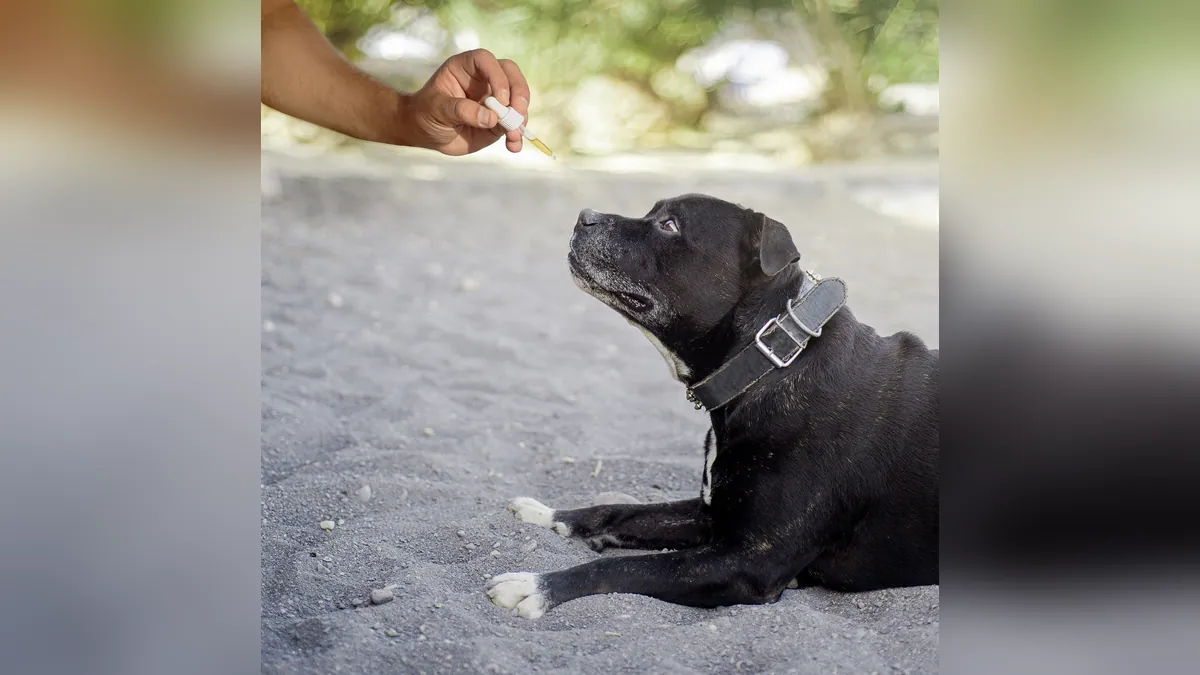
If you have been reading CBD oil for dogs with seizures reviews, you will see a mix of hopeful stories and disappointing ones. The honest answer is that CBD may help some dogs with hard-to-control epilepsy, but it is not a cure and it does not replace proper veterinary seizure treatment. This article is educational and is not a substitute for veterinary diagnosis or treatment.
Quick Answer
- CBD is an extract of the cannabis plant that does not cause a "high," and veterinarians can legally discuss and recommend it for your dog [1][2].
- In a small study of 13 dogs with drug-resistant epilepsy, CBD added to their existing anticonvulsants reduced median seizure frequency from 11 to 5, and about 61.5% of dogs had at least a 50% drop in seizures [3].
- Results vary between dogs, and CBD is used as an add-on to anticonvulsants, never as a replacement for them [3][4].
- CBD can interact with other drugs, so your veterinarian needs to know everything your dog takes before you start it [2].
- Mild side effects like stomach upset and sleepiness are the most common problems reported in dogs [4].
What Is CBD and What Do Veterinarians Use It For?
CBD stands for cannabidiol. It comes from the Cannabis sativa or Cannabis indica plant, and it is described as non-psychotropic, which means it does not produce the "high" that THC does [1]. Most CBD products sold for pets come from hemp, a type of cannabis bred to contain very little THC (less than 0.3% on a dry weight basis) [1]. The rest of the hemp plant usually goes into fabric, paper, and construction materials [1][2].
Veterinarians in most states can now recommend and discuss CBD oil with clients [2]. In small animal practice, CBD has been studied as an add-on therapy for several conditions, including osteoarthritis, epilepsy, and anxiety-related disorders [4]. The seizure evidence is the part most dog owners care about, and it is also the part where results are most variable [4].
It helps to understand where CBD sits in seizure care. Standard anticonvulsant drugs remain the foundation of treatment for canine epilepsy. CBD is considered an adjunctive therapy, which means it is added on top of those drugs, not used instead of them [3][4].
How Does CBD Work for Seizures?
CBD has anticonvulsant properties, which means it can calm the abnormal electrical activity in the brain that produces seizures [3]. The exact way it does this is not fully understood. CBD interacts with the endocannabinoid system, a network of receptors and signaling molecules in the body, and that interaction is thought to play a role in its effects [5].
What the research shows so far is modest but real. In one prospective pilot study, 13 dogs with refractory epilepsy (epilepsy that had not responded well to standard drugs) were given CBD alongside their existing anticonvulsants. All of the dogs were already taking 2 to 6 anticonvulsant drugs. The median seizure frequency dropped from 11 seizures during the pre-intervention period to 5 at follow-up, a statistically significant change [3].
That same study found that 61.5% of the dogs achieved at least a 50% reduction in seizures [3]. That is a meaningful improvement for dogs who were not doing well on medication alone. It also means that roughly 4 in 10 dogs in that study did not reach that threshold, so you should not expect CBD to work for every dog.
A separate review of the clinical evidence notes that CBD may reduce seizure frequency in refractory epilepsy, but results remain variable across studies [4]. In other words, some dogs improve, some improve a little, and some do not improve at all. Your veterinarian can help you set realistic expectations.
CBD Oil for Dogs With Seizures Reviews: What Owners Report
Owner surveys give a different kind of picture than clinical trials. They tell you what people actually do and what they believe, not what was measured under controlled conditions.
In a survey of 2,050 pet owners in France, 29% of dog owners reported giving CBD to their dogs [6]. That rate is lower than what has been reported in the United States, Canada, and Slovenia [6]. Use was more common among younger owners and people who had personal experience with CBD or other alternative treatments [6]. Owners generally held positive views of CBD's safety and benefits, even though use was not widespread [6].
Data from the Dog Aging Project in the United States showed that CBD use tended to be higher in states where medical cannabis was legal [7]. This tells you that access and legality shape owner behavior as much as medical need does.
Here is the practical takeaway from owner reports. Many people describe calmer dogs, fewer seizures, or better sleep. Those reports are worth listening to, but they are not proof. Seizure frequency naturally fluctuates in many dogs, and owners who are hopeful about a new product may notice improvements more readily. The clinical studies are what tell us whether the average dog truly benefits, and those studies show a real but variable effect [3][4].
Dosing Basics: Who Decides and How It Is Given
Your veterinarian decides the dose. Never start CBD on your own for a dog with seizures, and never adjust the dose of your dog's anticonvulsants without veterinary guidance.
In the epilepsy study described above, CBD was titrated starting at 0.5 mg/kg twice daily and increased up to 2.5 mg/kg every 12 hours [3]. That is one specific protocol used in one specific study. It is not a universal recipe. Your veterinarian will calculate the right amount based on your dog's weight, health status, other medications, and the product you are using.
How it is given matters too. Oral CBD has poor bioavailability, which means a large portion of it is broken down by the liver before it reaches the bloodstream [8]. This is one reason dosing is not simple and why different products can behave very differently in the body. A liposomal injectable form has been studied for osteoarthritis, but that is a different route and a different purpose [8].
If you miss a dose, do not double up. Ask your veterinarian what to do for your specific schedule. In general, giving the next dose at the normal time is safer than trying to catch up, but your veterinarian should confirm this for your dog.
Before you buy anything, read the label carefully. CBD products are not held to the same standards as prescription drugs, and the amount of CBD in the bottle may not match what is printed on it. Your veterinarian can help you choose a product from a manufacturer that provides third-party testing.
Common and Serious Side Effects
CBD is generally well tolerated in dogs, but side effects do happen. A review of the clinical evidence reports that mild adverse effects, including gastrointestinal disturbances and sedation, have been reported in dogs [4]. Increases in serum alkaline phosphatase activity (a liver enzyme) have also been reported repeatedly in dogs, though the clinical significance of this is still unclear [4].
| Side effect | How common or serious | What to do |
|---|---|---|
| Stomach upset (vomiting, diarrhea, poor appetite) | Mild and reported in dogs [4] | Stop the product and call your veterinarian |
| Sleepiness or sedation | Mild and reported in dogs [4] | Tell your veterinarian, especially if your dog seems unsteady |
| Elevated liver enzymes | Repeatedly reported in dogs, significance unclear [4] | Your veterinarian may want blood work to monitor this |
| Worsening seizures | Possible when CBD is used incorrectly or interactions occur | Call your veterinarian the same day |
| Severe lethargy, collapse, or trouble breathing | Serious | Treat as an emergency |
One more safety point. Pet Poison Helpline reported that calls about CBD products increased by more than 150% from 2018 to 2019 [1]. Accidental overdoses happen, often when a dog eats a whole container of edibles or oil. Keep all CBD products, including treats, locked away from your dog.
Who Should Not Take CBD and What Interacts With It
CBD is not right for every dog. Talk to your veterinarian before starting it if your dog has liver disease, is pregnant or nursing, is very young, or is already on multiple medications.
Drug interactions are the biggest concern. CBD is processed by some of the same liver enzymes that handle many prescription drugs. When two drugs compete for the same pathway, they can interact and change how each medication performs [2]. This can affect the levels of your dog's anticonvulsants in the bloodstream, which matters a great deal when those drugs are controlling seizures.
This is why you must tell your veterinarian about every product your dog receives, including prescription anticonvulsants, flea and tick preventives, joint supplements, and any other CBD or hemp product. Do not assume that because CBD is sold over the counter, it is safe to combine with anything [2].
If your dog is already on anticonvulsants, ask your veterinarian whether blood levels of those drugs should be checked before and after starting CBD. Seizure medications can also cause their own side effects, and it helps to know what to watch for. You can read more about that in What Are the Side Effects of Seizure Medication in Dogs?.
For a broader look at product selection and safety, see CBD Oil for Dogs: Dose Safety and Drug Interaction Warnings.
Overdose and When to Call a Veterinarian or Poison Control
If your dog eats a large amount of CBD, call for help right away. You can reach the Pet Poison Helpline at (855) 764-7661 or the ASPCA Animal Poison Control Center at (888) 426-4435. Both are available 24 hours a day, and a consultation fee may apply.
Signs of a CBD overdose in dogs can include vomiting, drowsiness, unsteadiness, and in severe cases, tremors or changes in breathing. Do not wait to see if your dog "sleeps it off." Call poison control or your veterinarian and follow their instructions.
If your dog is having a seizure right now, keep your hands away from your dog's mouth, clear the area of hard objects, and time the seizure. If it lasts more than a few minutes, repeats, or your dog does not wake up normally afterward, this is an emergency. For step-by-step guidance, see What Can You Do For Dog Having Seizures and What Can I Do For Dog Seizures.
Limitations and When to Contact a Veterinarian
The evidence for CBD in canine epilepsy has real limits. Most studies are small, and results vary between dogs [3][4]. CBD is not a replacement for anticonvulsant medication, and stopping or reducing your dog's seizure drugs to try CBD alone could be dangerous.
Contact your veterinarian the same day if your dog's seizure frequency increases after starting CBD, if your dog seems sedated or unsteady, if your dog stops eating, or if you notice any new behavior that worries you.
Go to an emergency clinic now if a seizure lasts longer than a few minutes, if your dog has three or more seizures in 24 hours, if seizures are coming one after another without full recovery in between, or if your dog has trouble breathing or collapses.
Schedule a routine visit if you want to discuss whether CBD is appropriate for your dog, if you want help choosing a product, or if you want to review your dog's current seizure control. Your veterinarian may also want to check blood work to monitor liver values and drug levels.
Every dog is different, and individual cases need a veterinarian who knows your dog's history and medications.
Frequently Asked Questions
Can CBD cure my dog's epilepsy?
No, CBD does not cure epilepsy. It may reduce seizure frequency in some dogs when added to standard anticonvulsant treatment, but results vary and it is not a replacement for prescription medication [3][4].
Will CBD stop my dog's seizures completely?
For most dogs, no. In one study, about 61.5% of dogs with drug-resistant epilepsy had at least a 50% reduction in seizures, which means many dogs still had seizures, just fewer of them [3].
Can I give CBD with my dog's seizure medication?
Only with your veterinarian's guidance. CBD can interact with other drugs and change how they perform in the body, so your veterinarian needs to know about every medication and supplement your dog takes [2].
How long does CBD take to work for seizures?
The timing is not well established in veterinary research. In the epilepsy study, dogs were followed after a period of dose titration, and improvements were measured at follow-up instead of on a fixed day [3]. Ask your veterinarian how long to wait before judging whether it is helping.
Is CBD safe for dogs?
CBD is generally well tolerated, with mild stomach upset and sedation being the most commonly reported side effects [4]. It is not risk-free, and it is not right for every dog. Your veterinarian can tell you whether it is safe for yours.
What should I do if my dog has a seizure while on CBD?
Time the seizure, keep your dog safe, and call your veterinarian or an emergency clinic. If the seizure lasts more than a few minutes or your dog has several in a row, treat it as an emergency. For more guidance, see What Can Be Done For Dog Seizures.
Related Articles
- What Can You Do For Dog Having Seizures
- What Can Be Done For Dog Seizures
- CBD Oil for Dogs: Dose Safety and Drug Interaction Warnings
- What Are the Side Effects of Seizure Medication in Dogs?
- What Can I Do For Dog Seizures
- What To Do When Dog Gets Seizures
- How Long Does CBD Oil Last for Dogs? Duration Explained
- Keppra for Dogs With Seizures or Brain Tumors
- Phenobarbital vs Keppra for Dogs: Which Seizure Drug?
References
- Cbd and Pets. Pet Poison Helpline.
- CBD: What you need to know about its uses and efficacy. Cornell University College of Veterinary Medicine.
- An Exploratory Study of Cannabidiol as an Adjunctive Treatment for Refractory Epilepsy in Dogs. Animals : an open access journal from MDPI, 2025.
- Cannabidiol in small animal practice: current evidence, clinical applications and practical recommendations for dogs and cats. The Journal of small animal practice, 2026.
- Potential antitumor effect of cannabidiol (CBD) in canine oncology: a systematic review. Frontiers in veterinary science, 2026.
- Perception and use of cannabidiol (CBD) by French pet owners. Veterinary journal (London, England : 1997), 2026.
- Demographic features, health status, and behavioral changes associated with cannabidiol use in the Dog Aging Project. Frontiers in veterinary science, 2025.
- Efficacy, pharmacokinetics and safety of liposomal synthetic cannabidiol injected subcutaneously in dogs: a randomized, blinded, placebo-controlled, crossover clinical trial. Frontiers in veterinary science, 2025.